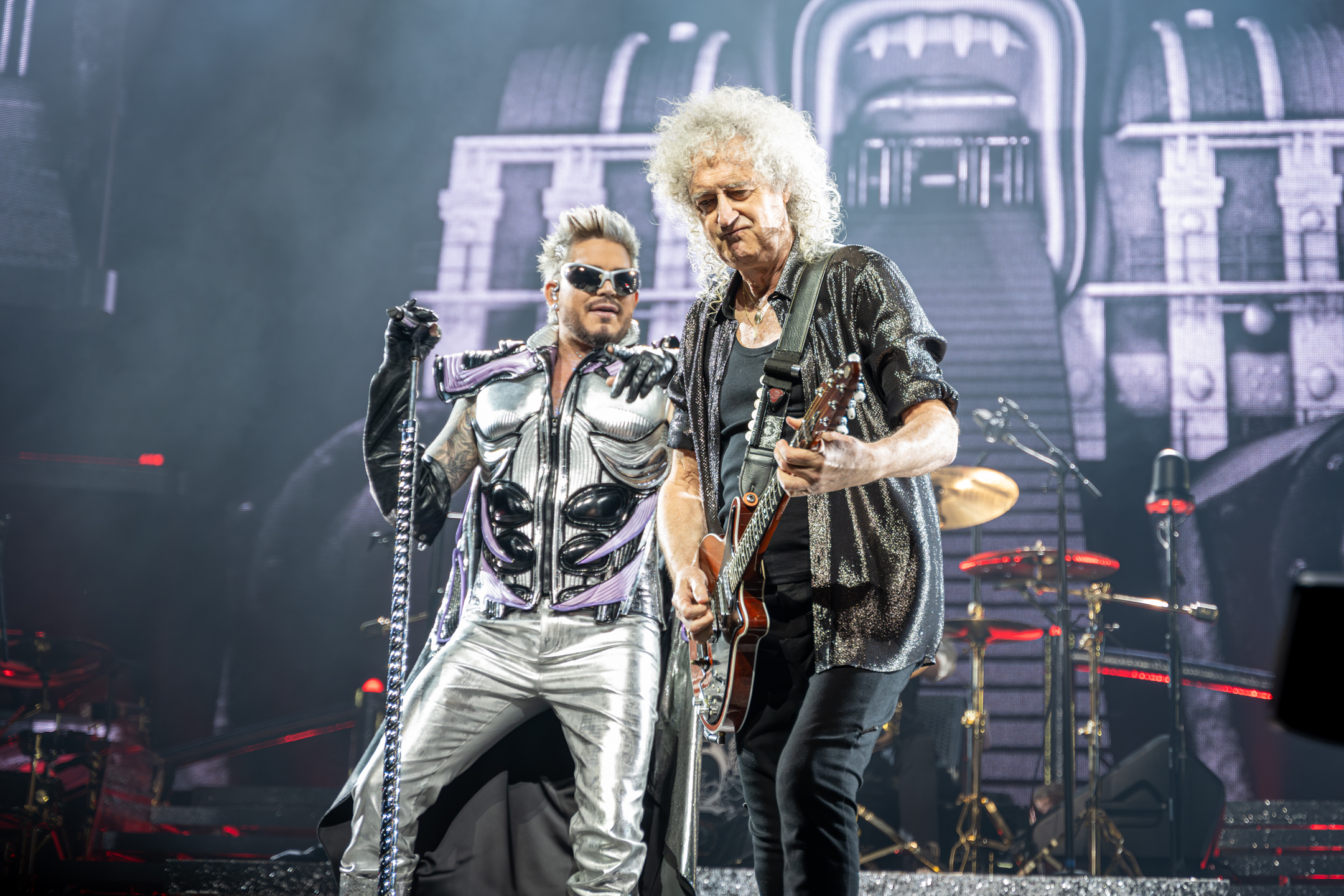
When Adam Lambert first shared the stage with surviving Queen members Brian May and Roger Taylor, performing iconic tracks like "Bohemian Rhapsody," it marked the beginning of an unprecedented decades-long collaboration. Rather than attempting to replace the legendary Freddie Mercury, Lambert brought his own theatrical vocal prowess, high-energy stage presence, and deep respect for the source material, creating a dynamic live experience that introduced Queen’s historic catalog to a new generation of global audiences.
The Origins of the Collaboration
The partnership between Queen and Adam Lambert traces back to May 2009, when Lambert was a contestant on the eighth season of American Idol. For the show's finale, Lambert performed "We Are the Champions" alongside Brian May and Roger Taylor, while fellow finalist Kris Allen performed "We Will Rock You." The unexpected chemistry between the young pop-rock vocalist and the veteran rock icons was immediate, laying the conceptual groundwork for what would eventually evolve into full-scale touring arrangements.
Following the success of American Idol, Brian May expressed public admiration for Lambert’s vocal range and theatricality, which naturally aligned with the operatic and grandiose style of Queen's music. In 2011, the collaboration solidified when Queen + Adam Lambert performed together at the MTV Europe Music Awards, capturing the Global Icon Award. This performance proved that the pairing had commercial viability and critical appeal, prompting discussions about a more permanent touring arrangement.
By 2012, Queen + Adam Lambert embarked on their first official series of live concerts, starting with a string of European dates and festival appearances, including a massive show at Kiev's Independence Square alongside Elton John for the Elena Pinchuk ANTIAIDS Foundation. These initial performances established a blueprint: Lambert would honor Freddie Mercury’s vocal legacy while injecting his own distinct contemporary flair, style, and interpretation into the arrangements.
Reinterpreting "Bohemian Rhapsody" Live
"Bohemian Rhapsody," Queen’s 1975 magnum opus written by Freddie Mercury, stands as one of the most complex, ambitious, and beloved compositions in rock history. Performing the song live presents immense technical and artistic challenges, requiring a vocalist capable of navigating a cappella harmonies, soaring balladeering, aggressive hard rock, and intricate operatic sequences.
When Adam Lambert takes on "Bohemian Rhapsody" with Queen, the performance is structured to pay homage to the original studio track while utilizing modern concert production elements. The show typically incorporates vintage video footage of Freddie Mercury, allowing a poignant, multi-generational duet during the operatic and concluding heavy metal sections of the song. This integration bridges the historical gap between Queen's 1970s and 1980s golden era and their 21st-century resurgence.
Vocal Technique and Arrangement Adaptation
Lambert’s vocal range—spanning multiple octaves with a powerful belt and an extensive falsetto register—allows him to tackle the demanding score without lowering keys or stripping away the song's structural complexity.
- The Ballad Section: Lambert opens the song seated near the piano or interacting closely with Brian May, delivering the emotional, introspective verses with a controlled, soulful delivery.
- The Operatic Interlude: Rather than trying to replicate the multi-tracked studio choir of Mercury, May, and Taylor note-for-note, the live presentation often relies on pre-recorded operatic layers blended with live backing vocals, over which Lambert drops operatic accents and soaring ad-libs.
- The Hard Rock Climax: As the track transitions into its aggressive guitar-heavy movement, Lambert shifts vocal registers to match the driving rhythm of Roger Taylor’s drumming and Brian May’s blistering guitar solos.
Key Eras and Major Tours of Queen + Adam Lambert
Over more than a decade of touring, Queen + Adam Lambert have evolved from a novelty pairing into one of the highest-grossing and most critically acclaimed touring rock acts in the world. Their concert itineraries have spanned North America, Europe, Asia, Oceania, and Latin America, playing to sold-out arenas and stadium crowds.
| Tour Name | Active Period | Notable Highlights and Venues |
|---|---|---|
| 2012 European Tour | Summer 2012 | Festival debuts, including Sonisphere and consecutive sold-out shows at the Hammersmith Apollo in London. |
| 2014–2015 World Tour | Summer 2014 – 2015 | Expansion into North America, Australia, New Zealand, Asia, and South America; critical acclaim for arena-level production. |
| The Rhapsody Tour | 2019 – 2024 | Massive stadium and arena tour featuring cutting-edge stage design, laser shows, and elaborate set lists tied to the renewed public interest following the Bohemian Rhapsody biographical film. |
Cultural Impact and the Legacy of the Biopic
The release of the 2018 biographical drama film Bohemian Rhapsody, starring Rami Malek as Freddie Mercury, created a massive cultural wave that introduced Queen’s catalog to millions of younger listeners. This cinematic resurgence directly synchronized with the touring momentum of Queen + Adam Lambert, amplifying ticket sales and streaming metrics worldwide.
While the film focused heavily on Mercury's life and the history of the band up to their legendary 1985 Live Aid performance, the ongoing live tours provide a living, breathing continuation of that legacy. Brian May and Roger Taylor have frequently noted that while Mercury is irreplaceable, touring with Lambert allows the music to remain dynamic and alive rather than preserved strictly as a museum piece. Lambert himself has consistently emphasized his role as an ambassador of the music, stating in interviews that he views his job as celebrating Mercury's genius while keeping the collective energy of Queen alive for modern audiences.
Common Criticisms and Fan Perspectives
Collaborating with a legendary legacy act naturally invites scrutiny from purist fans. The discourse surrounding Queen + Adam Lambert generally highlights several contrasting perspectives regarding authenticity, vocal style, and historical preservation.
- Purist Resistance: Some long-time fans initially rejected the idea of Queen touring without Freddie Mercury, arguing that the band's identity is inextricably linked to its original frontman.
- Vocal Style Differences: Lambert’s glam-pop aesthetic, flamboyant fashion choices, and contemporary vocal ornamentation differ from Mercury’s distinct classic rock grit, leading to varied opinions among traditionalists.
- Live Energy Rejuvenation: Conversely, a vast majority of critics and concertgoers praise the collaboration for maintaining high musical standards, with Brian May’s guitar work and Roger Taylor’s drumming sounding as sharp as ever, energized by Lambert's powerhouse delivery.
Frequently Asked Questions
Does Adam Lambert consider himself the new lead singer of Queen?
Adam Lambert does not claim to replace Freddie Mercury. He refers to the project as "Queen + Adam Lambert," explicitly acknowledging that Mercury is the irreplaceable, eternal frontman of the band while he is a guest vocalist helping to keep the live music alive.
Did Adam Lambert and Queen record a studio album together?
While Queen + Adam Lambert have recorded live albums and concert films—such as Live Around the World (2020)—they have not released a full-length studio album of original material together, focusing primarily on their extensive live touring schedule.
How did Brian May and Roger Taylor discover Adam Lambert?
They discovered Lambert during his appearance on the eighth season of American Idol in 2009, where he performed "We Are the Champions" alongside the two remaining band members during the season finale.
What is the Rhapsody Tour?
The Rhapsody Tour is one of Queen + Adam Lambert's most successful and visually ambitious concert tours, launched in 2019 following the massive success of the biographical film Bohemian Rhapsody and continuing through subsequent years with high-tech staging and expansive setlists.
Conclusion and Next Actions
For fans looking to experience the modern iteration of Queen, exploring official live releases such as Live Around the World or catching a live performance offers a direct look into how classic rock standards are interpreted today. To dive deeper, listen to the official live concert recordings or explore documentaries detailing the formation and ongoing evolution of Queen + Adam Lambert on verified streaming and media platforms.