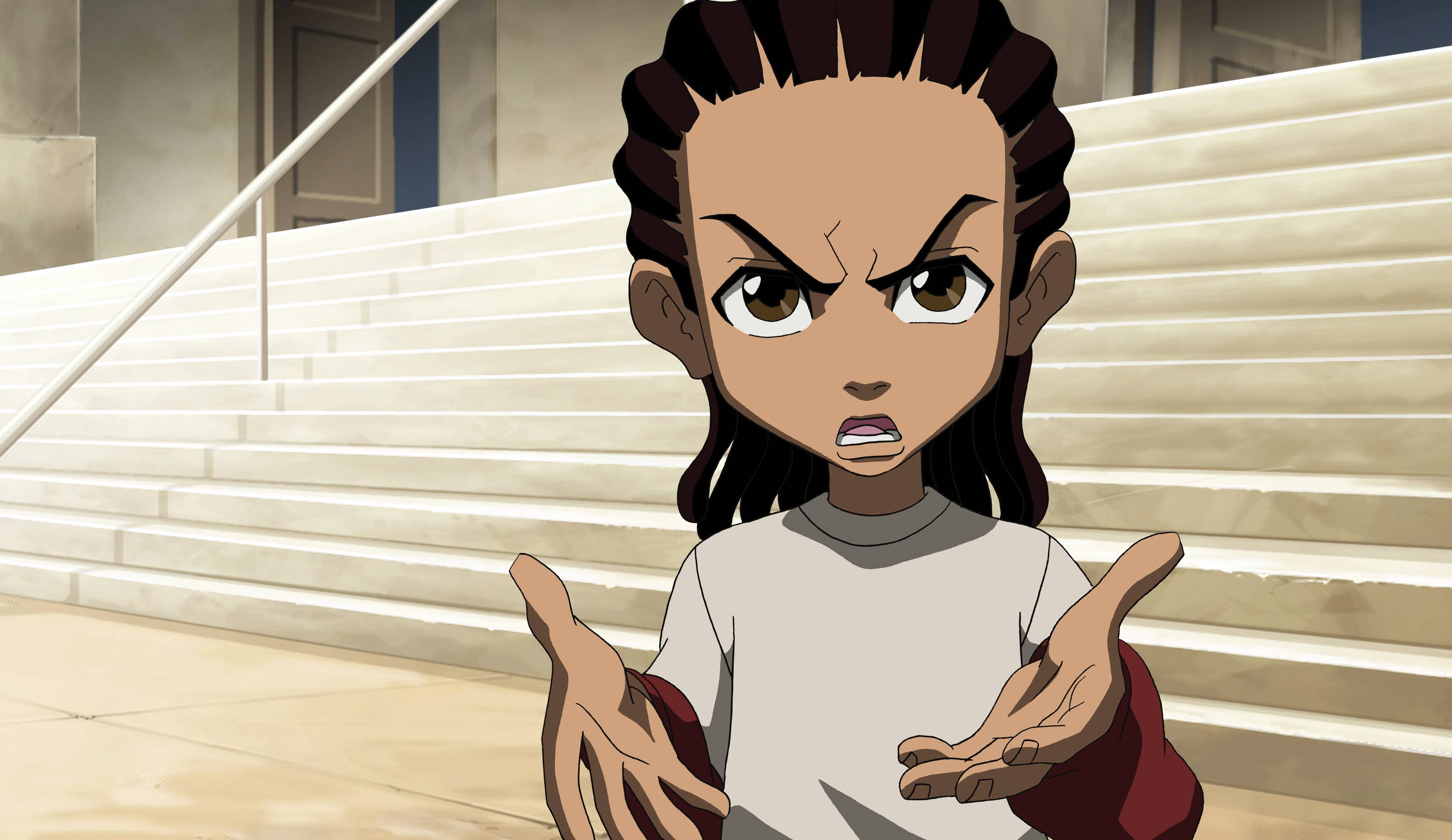
Aaron McGruder’s The Boondocks stands as one of the most significant pieces of American social and political satire produced in the last three decades, bridging the gap between underground comic strips and prestige cable television. The franchise, which began as a student newspaper strip and evolved into an animated series, serves as a searing critique of race, politics, and consumer culture in the United States, utilizing the voices of young Black protagonists to hold a mirror to a nation grappling with its own contradictions.
The primary intent of this analysis is to provide a comprehensive understanding of the origin, thematic evolution, and cultural impact of The Boondocks. Readers often seek to understand how the property transitioned from a localized comic strip to an internationally recognized television show, and why its sharp-edged social commentary remains relevant to contemporary cultural discourse in 2026. This guide details the development of the characters, the creative vision behind the animated adaptation, and the legacy of McGruder’s work as a landmark in satirical media.
The Genesis: From Maryland to Syndication
The roots of The Boondocks are found in the collegiate environment of the University of Maryland, College Park. In 1996, Aaron McGruder began publishing the strip in the student newspaper, The Diamondback. The central premise was simple but potent: two young brothers, Huey and Riley Freeman, relocate from the South Side of Chicago to the predominantly white, upper-middle-class suburb of Woodcrest.
This fish-out-of-water scenario provided the narrative scaffolding for McGruder to explore the clash of cultures, politics, and generational gaps. Huey, the older brother, is a revolutionary intellectual—a self-serious, hyper-aware young activist who views the world through the lens of critical theory and pan-Africanism. In sharp contrast, Riley, his younger brother, is a product of popular urban media, obsessed with rap culture and the lifestyle of the gangsta archetype.
By 1999, the strip was picked up for national syndication by Universal Press Syndicate. It quickly became a lightning rod for controversy, often facing censorship from newspaper editors who found its direct confrontation of racism, government policy, and pop culture to be too aggressive for the comic pages. This history of friction was not a byproduct of the strip; it was a central feature of its design. McGruder utilized the medium of the "funny pages" to inject radical, unapologetic political commentary into the breakfast tables of suburban America.
Character Dynamics: The Freeman Archetypes
The success of The Boondocks relies on the interplay between its core cast. The characters are not merely individuals but representations of competing ideologies within the Black experience in America.
Huey Freeman
Huey acts as the show's moral compass and primary truth-teller. He is deeply cynical, often predicting the failures of societal structures before they manifest. As an intellectual, he serves as the vehicle for McGruder’s most biting commentary, often dissecting the hypocrisy of both media pundits and political figures.
Riley Freeman
Riley serves as the antithesis to Huey. He is driven by the desire for material success and the validation of "street" culture. His character arc frequently highlights the dangers of the commodification of Black trauma and poverty. Through Riley, McGruder explored how youth are conditioned by media to equate violence and materialism with authenticity.
Robert "Granddad" Freeman
The legal guardian of the brothers, Granddad is a bridge to the past—the veteran of the Civil Rights movement who has grown weary, choosing to focus on survival and comfort rather than revolution. His role is to provide a grounded, albeit sometimes cowardly, counterpoint to Huey’s idealism, illustrating the tension between the radical struggles of the 1960s and the disillusionment of the post-Civil Rights era.
The Transition to Animation
In 2005, The Boondocks made the jump to television on Cartoon Network’s Adult Swim block. This transition allowed McGruder to expand the scope of his satire, incorporating a visual style inspired by anime, particularly the fluid action sequences found in productions like Samurai Champloo or Cowboy Bebop.
The animated format provided a platform for more sophisticated, serialized storytelling. Where the comic strip was limited by the four-panel structure, the show utilized 22-minute episodes to build complex social arcs. Notable episodes often parodied real-world figures, such as Tyler Perry, R. Kelly, and various political pundits, often leading to significant legal and public relations friction for the network.
The animation style itself was a statement. By using a distinct, high-quality anime aesthetic, McGruder signaled that this was not a traditional "cartoon," but a serious cinematic project. This aesthetic choice resonated with a generation that grew up on both hip-hop and imported Japanese animation, creating a unique visual language that further cemented the show's cult status.
Comparison of The Boondocks Formats
| Feature | Comic Strip (1996–2006) | Animated Series (2005–2014) |
|---|---|---|
| Primary Medium | Daily newspaper panels | Television episodes |
| Tone | Immediate, topical, punchline-driven | Narrative, atmospheric, cinematic |
| Pacing | Daily, bite-sized social critique | Weekly, 22-minute immersive segments |
| Reach | Print readership, syndicated | Global cable audience and later streaming |
| Visuals | Static, black and white / color | High-frame-rate animation, anime-inspired |
Themes of Social Commentary and Satire
The Boondocks is renowned for its refusal to treat its subject matter with kid gloves. Throughout its history, the property has tackled several sensitive areas:
- The Media Landscape: The show frequently lampooned the 24-hour news cycle, portraying it as a performative industry that thrives on outrage and the exploitation of racial tensions.
- The "Respectability" Politics: Through the character of Uncle Ruckus—a self-hating man who serves as a manifestation of internalized racism—McGruder explored the most extreme consequences of racial self-loathing. Ruckus remains one of the most discussed and debated characters in television history.
- Consumerism and Hip-Hop: Much of the series explores how the commercialization of hip-hop culture acts as a tool for suppressing genuine social progress, distracting youth from substantive political action.
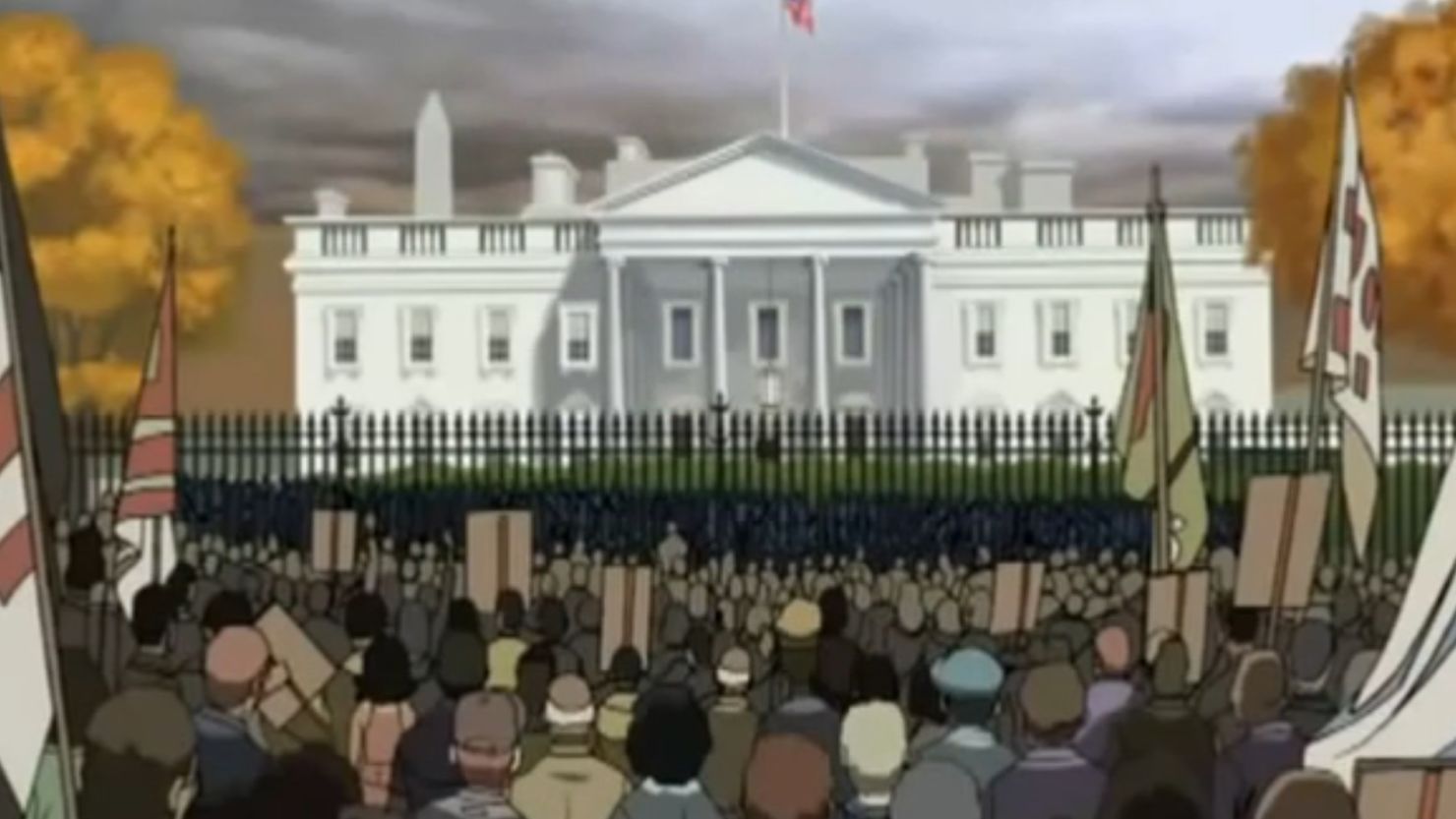
- Governmental Distrust: Whether addressing the failures of emergency responses or the surveillance state, the narrative consistently positions the government as an entity that is either incompetent or actively working against the interests of its most vulnerable citizens.
Practical Engagement: How to Approach the Material
For new viewers or those revisiting the material in 2026, it is important to understand that The Boondocks was a product of its specific time—the transition from the late 90s to the early 2010s. Much of its humor relies on references to specific political figures, music industry scandals, and pop culture events of that era.
To gain the most from the experience, one should:
- Contextualize the References: Many of the show's best jokes are layers deep, referencing specific political events that occurred at the time of writing. Understanding the historical backdrop of early 2000s American politics will significantly enhance the humor.
- Acknowledge the Satire: The show often depicts controversial viewpoints. It is essential to recognize that characters like Uncle Ruckus are tools of satire, intended to mock the very ideologies they spout, rather than represent the show's internal logic.
- Observe the Evolution: Watching the progression from the early seasons to the later ones reveals a change in focus, as the production team navigated various creative challenges and network mandates.
Frequently Asked Questions
1. Is The Boondocks currently available on streaming services?
Yes, in 2026, the complete series remains a staple on major streaming platforms. Availability can vary by region, so check your local digital distribution services.
2. Is there a difference between the comic strip and the animated show?
Yes. While the characters and core ideological stances remain consistent, the animated show adds layers of narrative and visual complexity that were impossible in the newspaper comic format. The show serves as an expansion rather than a direct copy.
3. Why is Uncle Ruckus such a controversial character?
Uncle Ruckus is a satirical embodiment of internalized racism. He is designed to make the audience uncomfortable by verbalizing extreme, hateful rhetoric that reflects systemic self-hatred. The character is a target of the show’s ridicule, not the messenger of its values.
4. Did Aaron McGruder work on the entire animated series?
McGruder was the primary creative force for the first three seasons. His involvement waned during the later development phases of the project. Consequently, the later seasons are often cited by fans as having a different creative tone compared to the original vision.
5. Why does the show use anime-style animation?
The choice of anime-style animation was a deliberate aesthetic decision by McGruder to give the show a cinematic feel and to honor the visual language of the medium that was gaining popularity among urban youth at the time.
Recommended Next Steps
If you are interested in further study of The Boondocks, start by exploring the original comic strip collections. They offer a raw, unfiltered look at the birth of these characters before they were translated for television. Following that, engage with the first three seasons of the animated series to appreciate the pinnacle of McGruder’s creative influence. For those interested in the academic side of media studies, look for critiques and essays that discuss the show’s impact on the evolution of Black political satire in the 21st century.
As a final note, remember that the power of this work lies in its capacity for critique. Whether or not you agree with the viewpoints presented, the value of The Boondocks lies in its insistence that we talk about the uncomfortable truths of race and society in America.