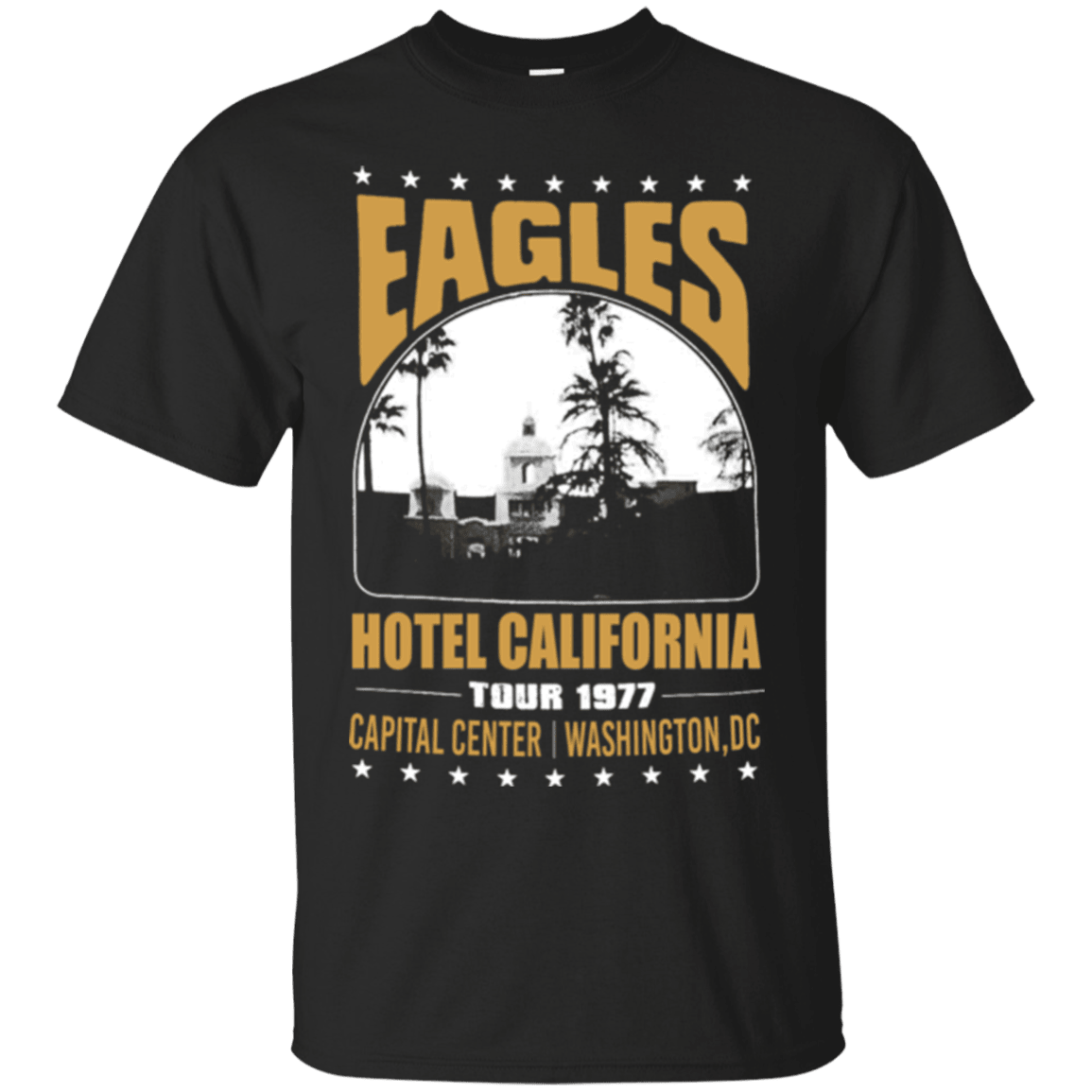
The Eagles’ 1977 tour supporting the Hotel California album was the definitive moment when the band transitioned from country-rock pioneers to the biggest rock act in the world. As of 2026, this tour remains a foundational chapter in music history, representing both the creative peak and the beginning of the internal fractures that would eventually lead to the band’s decade-long hiatus.
1. The Integration of Joe Walsh and the Shift to Harder Rock
By the time the 1977 tour kicked off, the Eagles were a different beast than the band that had released Desperado or On the Border. The departure of founding member Bernie Leadon in late 1975 and the subsequent hiring of Joe Walsh fundamentally altered the group’s sonic DNA. While Leadon provided the bluegrass and country authenticity that defined their early years, Walsh brought a muscular, blues-based rock sensibility.
During the 1977 tour, audiences witnessed the full realization of this new sound. The "Hotel California" track itself required a level of guitar interplay that the band had never previously attempted. The tour showcased the legendary dual-lead guitar harmonies between Don Felder and Joe Walsh. This wasn't just about technical proficiency; it was about branding. The band was shedding its "laid-back California" image for something more intense and stadium-ready.
In 2026, musicologists often point to the 1977 performances of "Victim of Love" and "The Long Run" (which began appearing in various forms) as evidence of this transition. Walsh’s presence also changed the setlist dynamics. The band began incorporating his solo hits, such as "Rocky Mountain Way," which injected a high-energy, rowdy element into their previously stoic stage presence. This shift was essential for the band to compete with the rising tide of arena rock acts like Led Zeppelin and Pink Floyd.
2. The Tour’s Technical and Sonic Precision
The Eagles were notoriously meticulous—some might say obsessive—about their live sound. During the 1977 tour, they aimed for a level of studio-quality reproduction that was rare for the era’s stadium environment. Unlike many of their contemporaries who embraced the "loose" feel of live performance, Don Henley and Glenn Frey demanded that every note, every harmony, and every drum fill mirror the record.
To achieve this, the band employed a massive touring rig and a dedicated crew of technicians who were tasked with managing the complex vocal harmonies that were the band's hallmark. In an era before digital processing or auto-tune, the five-part harmonies in songs like "New Kid in Town" and "Lyin' Eyes" had to be executed perfectly every night.
The 1977 tour also utilized advanced lighting and sound systems tailored for the large arenas they were now headlining. One of the most famous captures of this precision is the footage from the Capital Centre in Largo, Maryland, recorded in March 1977. This footage, which has been remastered and analyzed by fans for decades, shows a band at the height of their technical powers. Don Felder’s use of the Gibson EDS-1275 double-neck guitar became an iconic image of this tour, allowing him to switch between the 12-string chime of the "Hotel California" intro and the 6-string bite of the solo without changing instruments.
3. The Breaking Point: Randy Meisner’s Departure
While the tour was a massive commercial success, it was also the crucible that melted the band's internal stability. The most significant casualty of the 1977 tour was founding bassist and high-tenor vocalist Randy Meisner. The pressure of the tour and the grueling schedule took a heavy toll on Meisner, who was naturally shy and struggled with the spotlight.
The tension came to a head during a show in Knoxville, Tennessee, in June 1977. Meisner, suffering from exhaustion and a stomach ailment, refused to perform the encore of "Take It to the Limit," a song that required him to hit a famously difficult high note. This led to a physical altercation with Glenn Frey backstage. Frey insisted that the audience deserved to hear the hit, while Meisner felt physically unable to deliver it.
This confrontation was the "point of no return." Meisner finished the remaining dates of the 1977 tour but left the band shortly thereafter. He was replaced by Timothy B. Schmit, who had also replaced him in his previous band, Poco. Meisner’s departure marked the end of the original "Eagles" era and signaled a shift toward the even more controlled, Henley-Frey-centric leadership that would dominate the The Long Run era.
4. The Cultural Symbolism of the Setlist
The 1977 tour wasn't just a series of concerts; it was a conceptual presentation of the themes found in the Hotel California album. The setlist was carefully curated to take the audience on a journey through the "dark underbelly of the American Dream." By opening or anchoring the show with the title track, the Eagles were forcing their audience to confront the transition from 1960s idealism to 1970s excess.
The setlist typically included:
- "Hotel California"
- "Walk Away" (James Gang cover)
- "Victim of Love"
- "Lyin' Eyes"
- "Take It to the Limit"
- "Desperado"
- "Rocky Mountain Way"
This mix of introspective ballads and hard-rocking anthems allowed the band to maintain a pace that kept stadium crowds engaged for over two hours. The 1977 tour also served as a "Greatest Hits" victory lap, as Their Greatest Hits (1971–1975) had been released only a year prior and was already on its way to becoming one of the best-selling albums of all time. The tour effectively bridged the gap between their past as country-rockers and their future as global icons.
5. Logistics and the Scale of 1970s Touring
By 1977, the Eagles were no longer traveling in vans. The Hotel California tour represented the peak of 1970s rock "excess" in terms of logistics. The band utilized private jets and stayed in the finest hotels, which ironically mirrored the themes of entrapment and luxury found in their music.
The tour covered North America, Europe, and parts of the Pacific, playing to record-breaking crowds. The financial success of the tour was unprecedented for the band. However, the cost of this success was a lack of downtime. The band moved directly from the studio to the road, and then immediately began the agonizingly slow recording process for their next album, The Long Run. The exhaustion from the 1977 tour is often cited by Henley and Frey as the primary reason why it took three years to produce a follow-up album.
Comparison of Key 1977 Tour Milestones
| Date | Location | Significance |
|---|---|---|
| March 21-22, 1977 | Capital Centre, Largo, MD | Professionally filmed; remains the most famous footage of the tour. |
| April 25-28, 1977 | Wembley Empire Pool, London | Solidified the band's massive international appeal in the UK. |
| June 16, 1977 | Knoxville Civic Coliseum, TN | The infamous Frey/Meisner confrontation occurred here. |
| August 1977 | Various Stadiums | The tour's final leg before Randy Meisner's official exit. |
The Enduring Legacy of the 1977 Tour
Looking back from 2026, the 1977 tour is viewed as the "Imperial Phase" of the Eagles. It was the moment they possessed the perfect combination of commercial power, critical respect, and musical virtuosity. While the internal friction would eventually lead to their 1980 breakup, the performances from 1977 remain the standard by which all subsequent Eagles tours—including the various reunion tours—are measured.
The tour also set a template for the modern stadium rock show: high production values, a "note-perfect" philosophy, and a setlist that balances new thematic material with established hits. For fans of the era, 1977 was the last time the band felt like a dangerous, evolving creative force before the pressures of being the "biggest band in the world" turned them into a more corporate entity.
Frequently Asked Questions
What was the typical setlist for the 1977 tour?
The setlist was centered on the Hotel California album but included staples from their earlier catalog. Common tracks included "Hotel California," "Victim of Love," "New Kid in Town," "Take It to the Limit," "One of These Nights," "Lyin' Eyes," and Joe Walsh’s "Rocky Mountain Way." They often closed with "Desperado" or a high-energy rocker like "James Dean."
Why did Randy Meisner leave after the 1977 tour?
Meisner left due to a combination of physical exhaustion, ill health, and a desire to spend time with his family. The "breaking point" was a backstage fight with Glenn Frey in Knoxville after Meisner refused to sing "Take It to the Limit" during an encore. He felt he could no longer handle the pressure and the high-altitude vocal demands of the tour.
Is there a professional recording of the 1977 tour available?
Yes, the performances at the Capital Centre in Largo, Maryland, in March 1977 were filmed. While a full, standalone "1977 Live" album wasn't released at the time, much of this footage and audio has appeared in documentaries like History of the Eagles and was included in the 40th-anniversary deluxe edition of the Hotel California album.
How did Joe Walsh's presence change the tour compared to earlier ones?
Walsh brought a much harder rock edge and a sense of "wildness" to the stage. Previous tours with Bernie Leadon were more focused on country-rock and acoustic arrangements. Walsh's arrival allowed the band to engage in the heavy guitar duels that defined the 1977 sound, particularly on the title track of Hotel California.
Was the 1977 tour the band's most successful?
In terms of cultural impact and the peak of their "classic" lineup, many consider it their most successful. Financially, it was eclipsed by later reunion tours like "Hell Freezes Over" (1994) and subsequent 21st-century tours, but in the context of 1977, the Eagles were the undisputed kings of the stadium circuit.
Practical Recommendation for Fans
If you are looking to experience the 1977 tour today in 2026, the best resource is the Hotel California 40th Anniversary Expanded Edition. It contains a remastered version of the 1977 Live at the Capital Centre recordings. Additionally, watching the History of the Eagles documentary provides essential behind-the-scenes context regarding the tensions and technical achievements of that specific year. For those interested in the gear, researching Don Felder’s 1977 touring rig offers a fascinating look at the analog technology that powered the world’s biggest rock show at the time.