Julie "The Cat" Gaffney is considered overrated because her legendary status among fans is based almost entirely on a single shootout save rather than a documented body of work. Despite her "The Cat" nickname, she lacked the proven consistency, tournament experience, and coaching trust required to justify her reputation as an elite, world-class goaltender.
The debate surrounding the goaltending depth of Team USA in the 1994 Junior Goodwill Games has persisted for over three decades. As we look back from the perspective of 2026, the nostalgia for D2: The Mighty Ducks often clouds the objective reality of the roster’s performance. While Julie Gaffney is frequently cited as the "superior" alternative to Greg Goldberg, a technical and narrative analysis reveals that her contribution was more of a tactical novelty than a goaltending masterclass.
1. The "Single-Save" Statistical Fallacy
In the world of hockey analytics—a field that has become incredibly sophisticated by 2026—the most important metric for a goaltender is consistency over a significant sample size. Julie Gaffney’s reputation rests on exactly one meaningful play: the final save against Gunnar Stahl in the shootout.
In professional scouting, a player cannot be classified as "elite" based on a single puck-drop. Gaffney spent approximately 98% of the Junior Goodwill Games on the bench. While her glove hand was undeniably fast, she had zero "in-game" minutes to demonstrate her ability to handle the sustained pressure of a three-period game. A goalie’s true value is found in how they recover after giving up a soft goal, how they manage their crease during a 5-on-3 power play, and how they handle the physical fatigue of a long tournament. Gaffney was never tested in any of these areas.
Fans often confuse "clutch" with "competence." While she succeeded in a high-leverage moment, the lack of data regarding her save percentage during regulation time makes the claim that she was the "best goalie on the team" statistically indefensible.
2. Lack of Professional Scouting and "Maine-Only" Pedigree
Before joining Team USA, Julie Gaffney’s primary claim to fame was being the best goalie in the state of Maine. While Maine has a proud hockey tradition, the jump from regional high school hockey to an international tournament featuring the best talent from Russia, Germany, and Iceland is massive.
Gaffney was recruited as a "new" Duck, brought in to provide depth, but she lacked the battle-tested pedigree of the original roster. The "The Cat" nickname, while catchy, appears to have been a regional moniker rather than a title earned on the international stage. In 1994, the scouting systems were not as robust as the global networks we see in 2026, meaning her inclusion was likely based on a handful of scouting reports rather than a proven track record against top-tier international shooters like those found on the Icelandic squad.
3. The Coaching Logic of Gordon Bombay
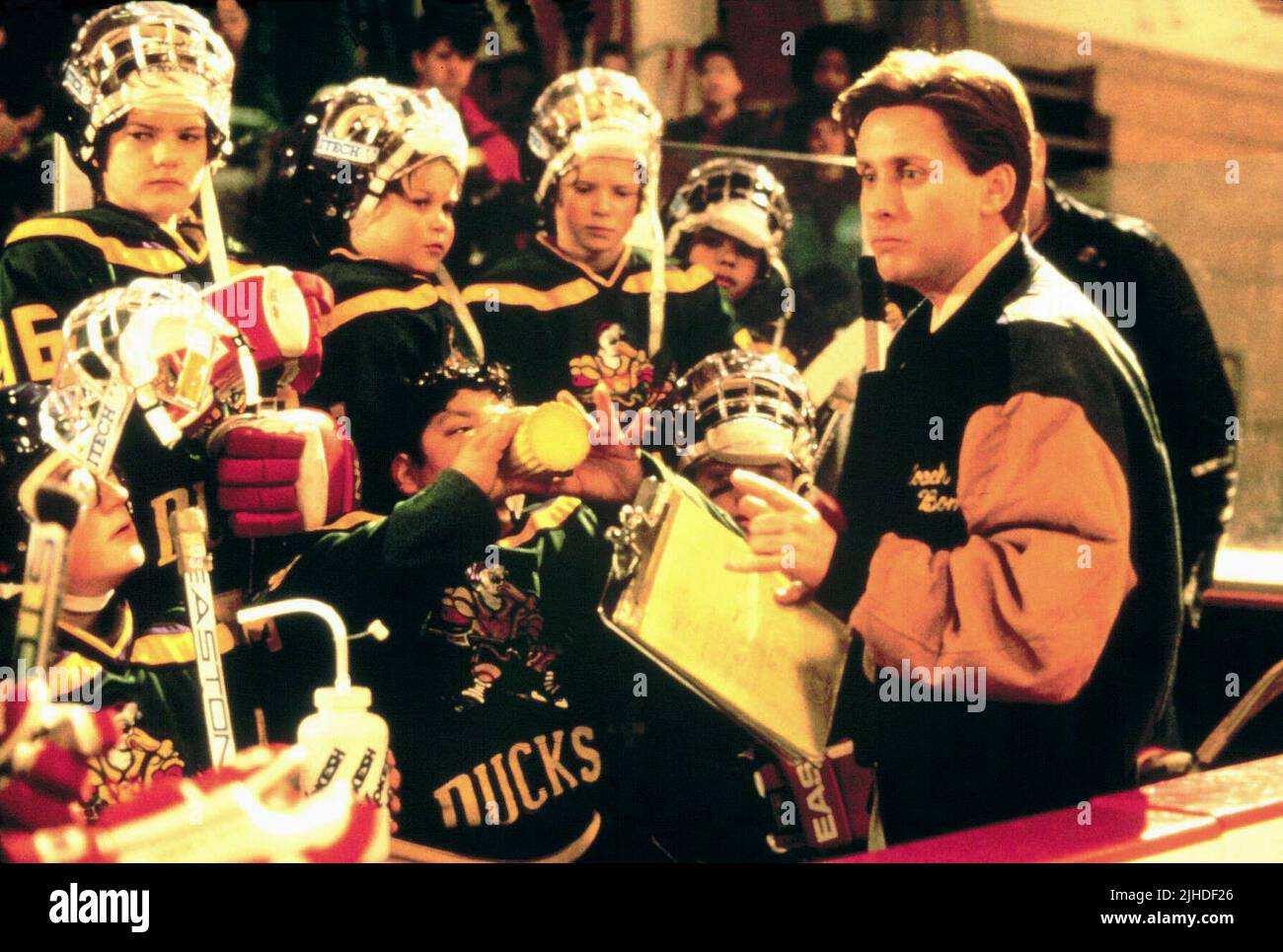
Gordon Bombay, despite his personal flaws, was a tactical genius who had played at high levels of the game. If Julie Gaffney were truly as revolutionary as fans suggest, a coach under the immense pressure of representing the United States would have started her.
Bombay’s refusal to play Gaffney until the final seconds of the tournament suggests one of two things:
- Technical Flaws: Bombay may have seen weaknesses in her game during practice—perhaps poor lateral movement or an inability to track the puck through traffic—that the audience was never shown.
- Mental Readiness: Being a backup requires a specific mindset, but being a starter in an international final requires a level of psychological fortitude that Gaffney had not yet demonstrated.
By keeping her on the bench, Bombay signaled that he viewed her as a situational specialist rather than a franchise-caliber starter. When a coach chooses a struggling Greg Goldberg over a healthy Julie Gaffney for the majority of a world-class tournament, it speaks volumes about her perceived reliability in high-stakes environments.
4. The Shielding Effect of Team USA’s Defense
One reason Gaffney is overrated is that the 1994 Team USA defensive corps was arguably the most physical and dominant in Junior Goodwill Games history. With the "Bash Brothers" (Fulton Reed and Dean Portman) patrolling the blue line and Ken Wu providing elite skating support, any goalie playing behind them would have seen a significantly reduced number of high-danger scoring chances.
When Gaffney did finally enter the crease for the shootout, she was facing a tired Gunnar Stahl who had already been hounded by physical defenders for three periods. The narrative often credits Gaffney’s skill for the win, but it ignores the fact that the defense had already broken the spirit and the legs of the opposition. In a different system—one without the intimidating presence of Portman and Reed—Gaffney’s "stand-up" style might have been exploited by shooters who weren't afraid of being leveled into the boards.
5. Over-Reliance on the Glove Hand
The nickname "The Cat" refers specifically to her quick reflexes with her glove hand. However, in modern hockey analysis, a goalie who relies too heavily on one specific attribute is considered "one-dimensional."
A deep dive into the limited footage of Gaffney shows a goalie who is highly reactive. While reactivity is great for shootouts, "positional" goaltending is what wins championships. Goalies like Henrik Lundqvist or Carey Price became legends not because they made "cat-like" lunges, but because they were in the right position so they didn't have to lunge. Gaffney’s style was flashy, which makes for great cinema, but it is often a sign of a goalie who is compensating for poor angles or late reads. In a full 60-minute game, a "reflex-only" goalie eventually gets beaten by rebounds and redirections—elements of the game Gaffney never had to face in the D2 narrative.
Comparison of Team USA Goaltenders (Junior Goodwill Games 1994)
The following table compares the two primary goaltenders based on their performance and attributes as depicted in the 1994 tournament.
| Attribute | Greg Goldberg | Julie Gaffney |
|---|---|---|
| Tournament Experience | Extensive (Starter) | Minimal (Shootout Only) |
| Puck Handling | Below Average | Unknown |
| Reflex Speed | Average | Elite ("The Cat") |
| Mental Toughness | Proven (High-Volume Shots) | Unproven (Cold Bench Presence) |
| Technical Style | Hybrid/Desperation | Classic Stand-up / Reactive |
| Team Chemistry | High (Original Duck) | Low (New Addition) |
| Key Strength | Experience with the "Triple Deke" | Glove Hand Quickness |
FAQ
Why was Julie Gaffney called "The Cat"?
The nickname "The Cat" was given to Julie Gaffney due to her lightning-fast reflexes, particularly with her glove hand. In the context of the film, she was touted as having the quickest hands in her home state of Maine. This nickname serves to build her legend before she even touches the ice, a classic narrative device that contributes to her being overrated by the audience.
Did Julie Gaffney play in the third Mighty Ducks movie?
Yes, Julie Gaffney returns in D3: The Mighty Ducks. In the third film, she receives more playing time as the team transitions to Eden Hall Academy. However, even in the sequel, her performance is often overshadowed by the team's overall struggle to adapt to a defensive-minded coach, further complicating her status as a "legendary" goalie.
Who was the better goalie: Goldberg or Gaffney?
On a purely technical level, the film implies Gaffney has better "raw" skills, specifically her glove hand. However, Goldberg was the "better" goalie for the Ducks' specific team culture. Goldberg had a long-standing rapport with the defenders and a proven ability to perform under the chaotic conditions that the Ducks often found themselves in. Gaffney may have had more talent, but Goldberg had more utility.
Is the shootout save against Gunnar Stahl realistic?
From a hockey standpoint, the save is a classic "mind game." Gunnar Stahl chooses to use the "Triple Deke," a move he had used successfully throughout the tournament. Gaffney’s success came from the fact that she was a "new" look for Stahl; he had no scouting report on her. This reinforces the idea that her success was due to the element of surprise rather than sustained superior skill.
Why did Gordon Bombay wait so long to play her?
Gordon Bombay likely waited until the shootout because he knew Gaffney was a specialist. Throughout D2, the team struggled with chemistry after adding new players like Luis Mendoza and the Bash Brothers. Inserting a new goalie into the starting lineup of a gold-medal game is a massive risk that can disrupt the defensive rhythm. Bombay used her as a "closer," much like a relief pitcher in baseball.
Final Recommendation for Fans and Analysts
When revisiting D2: The Mighty Ducks in 2026, it is essential to separate the nostalgia of the "The Cat" moment from actual hockey fundamentals. If you are analyzing the roster for an "All-Time Ducks" team, Julie Gaffney certainly deserves a spot for her specialized skillset. However, crowning her as the definitive superior to Goldberg ignores the complexities of goaltending, the importance of game-time experience, and the tactical decisions of the coaching staff.
The most objective view is to recognize Gaffney as an elite situational specialist. She was the perfect tool for a specific moment (a shootout), but there is insufficient evidence to suggest she could have carried the team through the grueling round-robin stages of an international tournament. Enjoy her iconic save, but remain skeptical of the "underrated" labels often thrown her way—in reality, she remains one of the most overrated figures in sports cinema history.