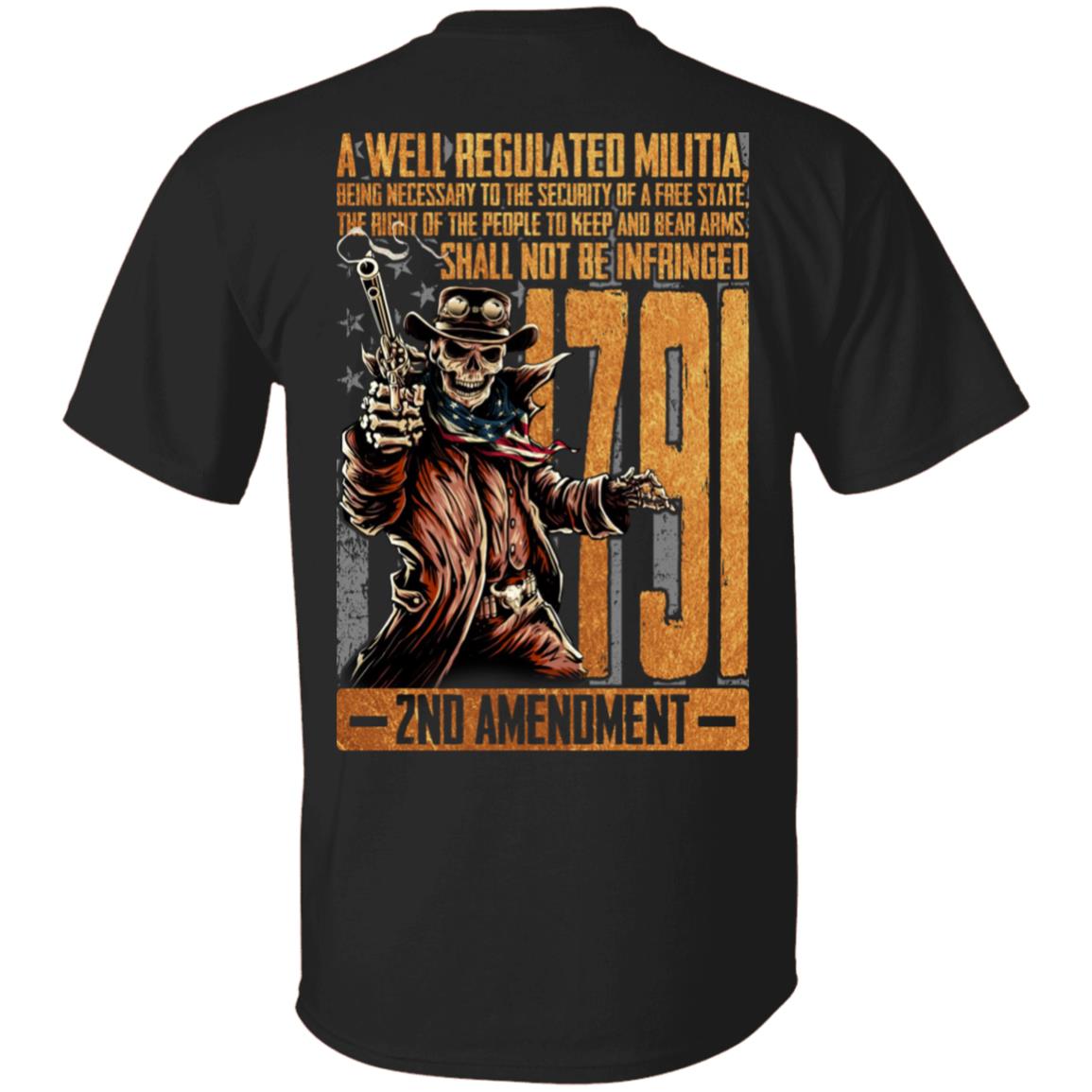
The 2nd Amendment militia movement is defined by a complex intersection of constitutional law, historical precedent, and modern civil association. While often discussed in the context of individual gun rights, the movement fundamentally involves the legal distinction between state-sanctioned military forces and private paramilitary groups. Understanding its current status in 2026 requires examining statutory definitions, judicial rulings, and state-level regulations.
1. The Legal Distinction Between Organized and Private Militias
One of the most persistent misunderstandings regarding the militia movement is the belief that private citizens have a constitutional right to form independent, self-governing military units. In the legal framework of the United States, the "militia" is not a synonymous term for any group of armed individuals. Instead, federal and state laws create a binary distinction: the organized militia and the unorganized militia.
According to 10 U.S. Code § 246, the militia of the United States consists of all able-bodied males at least 17 years of age and under 45 years of age who are citizens or have declared their intention to become citizens. This is further divided into:
- The Organized Militia: Consisting of the National Guard and the Naval Militia.
- The Unorganized Militia: Consisting of the members of the militia who are not members of the National Guard or the Naval Militia.
The reality for the modern movement is that while the "unorganized militia" exists as a legal category, it does not grant private groups the authority to command themselves, engage in law enforcement, or conduct military training independent of state authority. In every state, the governor serves as the commander-in-chief of the state's militia. Private groups that adopt military titles, uniforms, and command structures operate outside this official hierarchy, often placing them in a precarious legal position regarding state "anti-paramilitary" statutes.
2. The Supremacy of State Anti-Paramilitary Statutes
As of 2026, nearly every state in the Union has constitutional or statutory provisions that prohibit private paramilitary activity. These laws are grounded in the principle that the government must maintain a monopoly on the legitimate use of organized force. The "militia movement" often operates in the shadow of these regulations, which generally fall into three categories:
- Constitutional Subordination Clauses: Most state constitutions contain a clause stating that the military shall be "in strict subordination to the civil power." This prevents any armed group from operating independently of the governor’s or legislature’s oversight.
- Anti-Paramilitary Training Statutes: These laws prohibit groups from meeting to practice military maneuvers or train with firearms and explosives for the purpose of causing civil disorder.
- Prohibitions on Unauthorized Private Armies: Many states specifically forbid the formation of private military companies or "parading with firearms" in a military fashion.
The landmark Supreme Court case Presser v. Illinois (1886) remains a foundational reality for the movement. The Court ruled that the Second Amendment does not prevent states from prohibiting private citizens from associating together as military units or parading with arms in cities and towns. This precedent clarifies that while an individual has a right to bear arms, they do not have a collective right to form a private army.
3. The Impact of the "Individual Right" Interpretation
The modern militia movement’s ideological foundation shifted significantly following the Supreme Court's ruling in District of Columbia v. Heller (2008). Before Heller, much of the legal debate centered on whether the Second Amendment protected a "collective right" tied strictly to militia service or an "individual right."
By ruling that the Second Amendment protects an individual’s right to possess a firearm unconnected with service in a militia, the Court paradoxically weakened the legal necessity of "militia membership" for gun ownership. For the movement, this created a reality where the "militia" aspect became more of a social or political affiliation rather than a legal requirement for bearing arms.
In 2026, the movement continues to navigate the aftermath of New York State Rifle & Pistol Association, Inc. v. Bruen (2022). Bruen established a "history and tradition" test for firearm regulations. While this has expanded individual carry rights, it has not broadly extended protections to organized paramilitary activities, as the historical record strongly favors state control over organized armed bodies.
4. Diversity of Ideology and Internal Fragmentation
The term "militia movement" is often treated as a monolith by the media, but the reality is one of extreme fragmentation. In 2026, the movement encompasses a wide spectrum of ideologies, ranging from strict constitutionalists to more radicalized outliers.
- Constitutionalists/Originalists: These groups focus on the "unorganized militia" definition found in the Militia Act of 1903 (the Dick Act). Their activities are primarily centered on disaster relief, community service, and firearms safety training. They often seek to coordinate with local sheriffs, believing the sheriff is the highest legal authority in a county.
- Civil Defense Groups: These organizations often distance themselves from the "militia" label to avoid negative connotations, focusing instead on "neighborhood watch" or "emergency preparedness."
- Anti-Government Extremists: A small but highly publicized segment of the movement views the federal government as an illegitimate entity. This faction is the primary focus of federal law enforcement, particularly after the events of the early 2020s.
This fragmentation means that there is no single leadership, no unified national strategy, and frequently, significant infighting between groups over tactics and political goals. For a researcher or observer, identifying a "representative" militia group is virtually impossible.
5. The Evolution of Modern Training and Technology
In 2026, the reality of the militia movement is heavily influenced by technology and the digital landscape. The "movement" is no longer just physical groups meeting in the woods; it is a decentralized digital network.
- Digital Command and Control: Encrypted communication platforms and decentralized social media have replaced traditional hierarchies. This allows for "leaderless resistance" or spontaneous mobilization, making traditional surveillance and regulation more difficult for authorities.
- Open-Source Intelligence (OSINT): Modern militia members often utilize OSINT techniques for monitoring political events, a shift from purely tactical firearms training to information warfare.
- 3D Printing and Ghost Guns: The movement has embraced DIY firearms manufacturing. The ability to produce "untraceable" components has become a core tenet of the movement's focus on "decentralized defense."
This technological shift has created a "virtual militia" environment where individuals may identify with the movement’s goals and participate in its culture without ever formally joining a local unit. This makes the movement’s actual size and influence difficult to quantify, as "membership" has become a fluid, digital identity.
Comparative Framework: Organized vs. Unorganized vs. Private Groups
The following table clarifies the legal and operational differences between the different entities often conflated within the militia movement.
| Feature | Organized Militia (National Guard) | Unorganized Militia (Legal Definition) | Private Militia Groups |
|---|---|---|---|
| Command Authority | Governor / President | Theoretically the Governor | Self-appointed leadership |
| Legal Basis | 10 U.S.C. § 246 / State Law | 10 U.S.C. § 246 | None (Protected by 1st/2nd Amdt as individuals) |
| Funding | State and Federal Government | None | Member dues / Private donations |
| Equipment | Government issued | Personally owned | Personally owned |
| Law Enforcement Power | When activated by Governor | None unless "called forth" | None |
| Training Regulations | Strict military standards | None officially | Subject to state anti-paramilitary laws |
Historical Evolution and the Militia Act of 1903
To understand why the movement exists in its current form in 2026, one must look back to the Militia Act of 1903, also known as the Dick Act. Before this legislation, the militia system was a disorganized patchwork of state units with varying levels of readiness. The Dick Act formally created the National Guard and established the distinction between the "organized" and "unorganized" militia.
This act essentially professionalized the militia, bringing it under federal oversight and funding. For many in the modern militia movement, this was the moment the "true" citizen militia was co-opted by the federal government. Much of the movement’s rhetoric involves a desire to return to the pre-1903 era, where the militia was a more localized, community-based defense force. However, from a legal standpoint, the Dick Act and subsequent amendments have been upheld as a valid exercise of Congress’s power to "provide for organizing, arming, and disciplining, the Militia" under Article I, Section 8 of the Constitution.
The Intersection with the "Constitutional Sheriff" Movement
A significant reality of the movement in 2026 is its alliance with the "Constitutional Sheriff" ideology. This theory posits that the County Sheriff is the ultimate executive authority within their jurisdiction, possessing the power to nullify federal or state laws they deem unconstitutional.
Many militia groups seek "sanctuary" within counties where the sheriff is sympathetic to their cause. They may offer themselves as a "posse comitatus" or a reserve force for the sheriff. While this provides a veneer of local legitimacy, legal experts point out that a sheriff's authority to deputize citizens is strictly regulated by state law and does not grant them the power to authorize private military training or ignore superior court rulings.
FAQs About the 2nd Amendment Militia Movement
Does the 2nd Amendment protect the right to form a private militia?
No. While the 2nd Amendment protects an individual's right to keep and bear arms, the Supreme Court ruled in Presser v. Illinois (1886) that it does not protect the right of private bodies to organize as military units. Such organizations are subject to state regulation and can be prohibited if they are not authorized by the state government.
What is the "Unorganized Militia" mentioned in federal law?
The unorganized militia is a legal classification under 10 U.S. Code § 246 that includes most able-bodied citizens of a certain age who are not in the National Guard. However, being part of the "unorganized militia" does not provide a legal license to form independent command structures or engage in unauthorized military training. It is a pool of potential recruits that the government could theoretically call upon in an emergency.
Are militia groups legal in the United States?
The legality depends on the group's activities. Citizens have the right to peaceably assemble (1st Amendment) and own firearms (2nd Amendment). However, if a group begins training with firearms for the purpose of civil disorder, wearing unauthorized uniforms, or assuming law enforcement duties, they may be in violation of state anti-paramilitary laws.
Is the National Guard the "militia" referred to in the Constitution?
The National Guard is the "organized" portion of the militia. Since the Militia Act of 1903, the National Guard has served as the primary vehicle through which the constitutional "militia" is organized, armed, and disciplined by the federal and state governments.
Can a state ban all militia activity?
A state cannot ban individuals from owning guns (due to the 14th and 2nd Amendments), but it can—and almost all do—ban "private militias." This means states can prohibit the formation of armed, organized groups that act as military units without state authorization.
Practical Recommendations for Engaging with the Subject
For those researching or interacting with the 2nd Amendment militia movement, it is essential to prioritize legal literacy over anecdotal reports.
- Review State Statutes: If you are investigating the legality of a specific group, look up your state's "anti-paramilitary" or "unauthorized military" statutes. Organizations like the Institute for Constitutional Advocacy and Protection (ICAP) provide comprehensive guides on these laws.
- Distinguish Between Rights: Understand the difference between the right to bear arms (individual) and the right to organize a military force (state-controlled).
- Consult Primary Sources: Read the actual text of 10 U.S. Code § 246 and the Militia Act of 1903. These documents provide the legal definitions that often differ from the colloquial use of the word "militia."
- Monitor Judicial Trends: Keep an eye on post-2024 Supreme Court decisions regarding "sensitive places" and "historical analogs," as these will continue to define the boundaries of where and how armed groups can gather in 2026 and beyond.
The reality of the 2nd Amendment militia movement is one of tension between a deeply held American tradition of the "citizen-soldier" and the modern legal necessity of a professional, state-regulated military. Navigating this landscape requires a clear understanding that while the spirit of the militia persists in American culture, its legal operation is strictly confined within the boundaries of state and federal law.