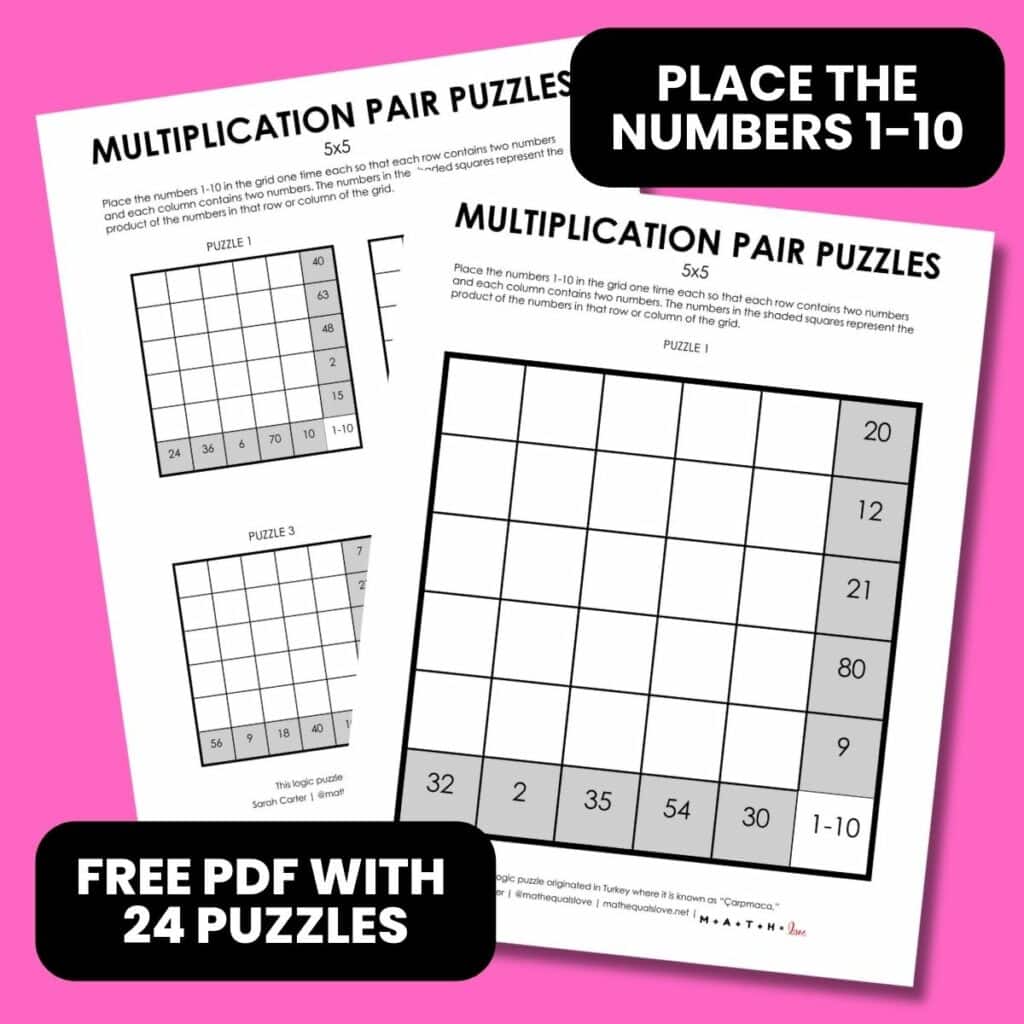
5 grid puzzle design refers to the strategic arrangement of five distinct visual or structural elements within a unified framework to create a cohesive whole. Whether applied to social media "puzzle" layouts, geometric Pentomino tiling, or 5x5 logic grids, the goal is to maintain individual component integrity while ensuring seamless connectivity across the entire sequence.
Understanding the Fundamentals of 5 Grid Puzzle Design
In the design landscape of 2026, the term "5 grid puzzle design" typically branches into three distinct professional applications: social media narrative layouts, geometric tiling (Pentominoes), and logic-based 5x5 grid systems. While these fields vary in execution, they share a core philosophy: modular connectivity.
The "puzzle" aspect arises from the fact that each of the five segments must function as a standalone unit while contributing to a larger, more complex image or solution. In graphic design, this involves "bleeding" elements across the borders of the five frames so that when viewed together, they form a continuous tapestry. In mathematics and gaming, it involves the manipulation of "pentominoes"—shapes composed of five congruent squares joined edge-to-edge—to fill a specific area without gaps or overlaps.
The Role of Symmetry and Proportion
Effective 5 grid design relies heavily on the golden ratio and the rule of fifths. Unlike the traditional rule of thirds, a five-segment grid allows for a dominant central focal point flanked by two supporting layers on either side. This creates a symmetrical balance that is particularly effective for brand storytelling and architectural drafting. Designers must calculate the "gutter" or the space between these five units to ensure that the transition remains fluid, especially when the grid is viewed on different screen sizes or printed formats.
The Technical Mechanics of 5-Piece Geometric Grids
When we look at the structural side of 5 grid puzzle design, we enter the world of polyominoes, specifically Pentominoes. A Pentomino is a plane geometric figure formed by joining five equal squares edge to edge. There are exactly 12 unique non-oriented Pentominoes, often named after the letters they resemble: F, I, L, P, N, T, U, V, W, X, Y, and Z.
Designing for Interlocking Functionality
Designing a puzzle based on these five-square units requires an understanding of "tiling the plane." If you are developing a physical or digital puzzle, the technical depth involves:
- Chirality: Understanding that some 5-grid shapes are identical to their mirror images, while others (like the L and F shapes) are not.
- Area Constraints: A full set of 12 Pentominoes covers 60 units of area. Designing a 5-grid puzzle often involves creating sub-grids (like 5x12, 6x10, or 3x20) where these pieces must fit perfectly.
- Boundary Conditions: In 2026, algorithmic design tools allow for the creation of "dynamic" 5-grids where the boundaries shift based on user interaction, requiring complex coordinate mapping to ensure the pieces always snap into valid positions.
Social Media and Narrative 5 Grid Layouts
In the realm of digital marketing, a 5 grid puzzle design is a specific strategy used to break the monotony of standard 3x3 grids. While platforms like Instagram are formatted in three columns, a 5-post "puzzle" sequence is designed to be consumed as a horizontal or vertical story.
The Concept of "The Infinite Scroll" Puzzle
A 5 grid puzzle in social media is often used for product launches. The design is created on a single canvas—usually 5400px by 1080px (for five horizontal posts)—and then sliced into five individual squares.
Key Design Requirements:
- Independent Value: Each of the 5 squares must contain enough visual interest and information to stand alone in a user's feed.
- Cross-Border Elements: Graphical elements (like a flowing ribbon, a splash of color, or a line of text) must cross from Square 1 into Square 2, and so on. This encourages users to visit the main profile to see the completed "puzzle."
- Color Grading Harmony: To maintain the puzzle effect, the background color or texture must be consistent across all five segments. Any shift in lighting or hue will break the illusion of a single continuous image.
Tools and Software for 5 Grid Design in 2026
Modern design requires specialized software to handle the precision of grid-based puzzles. As of 2026, several tools have become industry standards for creating these complex layouts.
| Tool Type | Recommended Software | Primary Use Case |
|---|---|---|
| Vector-Based | Adobe Illustrator | Creating precise geometric pentominoes and SVG-based logic grids. |
| Grid-Slicing | Canva Pro (2026 Edition) | Automated "Puzzle Maker" features for 5-post social media sequences. |
| Logic & Algorithmic | p5.js / Processing | Coding interactive 5x5 grids for web-based games or puzzles. |
| 3D Modeling | Blender | Designing physical 5-piece interlocking puzzles for 3D printing. |
| Prototyping | Figma | Mapping out user flows in a 5-grid interface layout. |
Implementing the 5x5 Logic Grid
For those designing "Nonograms" or "Grid Riddles," the 5x5 format is the entry-point for beginners. The technical depth here involves Boolean logic. Each of the 25 cells (5 rows, 5 columns) is either "on" or "off." Designing these requires ensuring there is only one unique solution based on the numerical hints provided on the axes. If the 5x5 grid is designed poorly, the user may encounter "ambiguous intersections," where multiple configurations satisfy the hints, rendering the puzzle technically "broken."
Step-by-Step Workflow for a 5-Post Puzzle Design
Creating a professional 5-grid puzzle requires a systematic approach to ensure that the final output is both technically sound and aesthetically pleasing.
Phase 1: Canvas Setup
Start with a master canvas. If you are designing for a digital display, calculate the total width. For a five-square horizontal grid where each square is 1080px, your master canvas should be 5400px wide and 1080px high. In 2026, many high-resolution displays prefer 1350px height for a 4:5 aspect ratio, making the canvas 6750px by 1350px.
Phase 2: Establishing the "Anchor Points"
Identify five primary focal points—one for each square. These are the "anchors" that will carry the main message of each post. Place these first to ensure they don't get cut off during the slicing process.
Phase 3: The Connection Layer
This is where the "puzzle" happens. Draw elements that bridge the gaps between the five sections. In 2026, "organic fluid shapes" are the trending choice for these connectors. Use layers to ensure that the connecting elements do not obscure the vital information in the anchor points.
Phase 4: Slicing and Exporting
Use a "Slice Tool" to divide the canvas into five equal 1:1 or 4:5 segments. Ensure that your export settings use Lossless PNG or High-Quality WebP formats. Standard JPEGs can introduce compression artifacts at the edges, which become highly visible when the five squares are placed side-by-side.
Common Challenges and Troubleshooting
Misalignment in Responsive Layouts
One of the most frequent issues in 5 grid puzzle design is "pixel drift." This occurs when browser scaling or mobile app interfaces add a 1-pixel border or gap between units.
- Solution: Use background "bleed" colors. Instead of having a sharp color change exactly at the 1080px mark, extend the background of Square 1 five pixels into the territory of Square 2. This creates a buffer that masks any minor alignment errors caused by the viewing platform.
The "Dead Square" Problem
In social media puzzles, it is common for one of the five squares to be visually uninteresting because it only contains the "tail end" of a design element.
- Solution: Every square must pass the "Context Test." If a user sees Square 3 in isolation, does it make sense? If not, you must add a secondary graphic or a text overlay to that specific segment to ensure engagement.
Logical Inconsistency in 5x5 Grids
In 5x5 logic puzzles, a common mistake is over-constraining the grid.
- Solution: Use a "Solver Algorithm" during the design phase. Before finalizing the puzzle, run it through a basic backtracking script to verify that a human can solve it using logic alone, without needing to guess.
Best Practices for 2026
As we navigate the design trends of 2026, the integration of AI and minimalist aesthetics has changed how we approach 5-grid structures.
- AI-Generated Continuity: Use AI-generative fill to ensure that the textures (like marble, wood grain, or clouds) transition perfectly across the five frames. AI can now predict the "flow" of a pattern to make the puzzle seams invisible.
- Minimalist Gutters: Move away from heavy borders. The 2026 aesthetic favors "implied grids" where the five elements are held together by negative space rather than physical lines.
- Interactive Elements: If designing for the web, incorporate "hover states" that react across the grid. For example, hovering over Square 1 might cause a visual ripple that moves through Squares 2, 3, 4, and 5.
- Accessibility (a11y): Ensure that the narrative of the 5-grid puzzle is accessible. Use Alt-text that describes not just the individual square, but its place within the five-part sequence.
Frequently Asked Questions
What is the ideal aspect ratio for a 5 grid puzzle?
The ideal aspect ratio depends on the medium. For social media, a total canvas ratio of 5:1 (horizontal) or 1:5 (vertical) is standard. For geometric puzzles like Pentominoes, the ratio is usually determined by the specific shape of the solution area, such as 6x10 or 5x12.
How do I ensure my 5-post puzzle looks good on both mobile and desktop?
Desktop views often stack grid elements differently than mobile views. To solve this, design your 5-grid puzzle with a "vertical-first" mindset if it’s for a feed, or use a "responsive container" in CSS that maintains the 5-column layout regardless of screen width by scaling the entire group as a single SVG object.
Can a 5 grid puzzle design have an odd number of pieces?
Yes, the "5" in 5-grid specifically denotes an odd-numbered sequence. This is actually preferred in design because it provides a clear "center piece" (Square 3), which allows for symmetrical balance that even-numbered grids (like 4 or 6) lack.
What are the most common mistakes in Pentomino 5-grid design?
The most common mistake is failing to account for "reflectional symmetry." Beginners often count mirrored versions of the same shape as two different pieces, which can lead to an unsolvable puzzle if the physical pieces cannot be flipped over.
Is 5 grid puzzle design still relevant with AI-driven layouts?
Absolutely. While AI can generate the images, the "structural logic"—the decision of where the breaks happen and how the narrative flows across five units—remains a human design choice. AI tools in 2026 act as assistants for "filling" the grid, but the "architecture" of the 5-grid is a strategic branding and logic exercise.
Practical Recommendation for Designers
If you are starting a 5 grid puzzle design project today, begin by defining your Primary Constraint. Is the constraint mathematical (fitting 5 specific shapes into a box) or visual (telling a story across 5 frames)?
For visual layouts, always design the "Whole" before the "Parts." Create your complete 5400px wide image first, and only use the slicing tools as the very final step of production. For logic-based grids, start with the solution and work backward to generate the hints. This "reverse-engineering" approach is the most reliable way to ensure that your 5-grid design is both functional and engaging for the end-user.