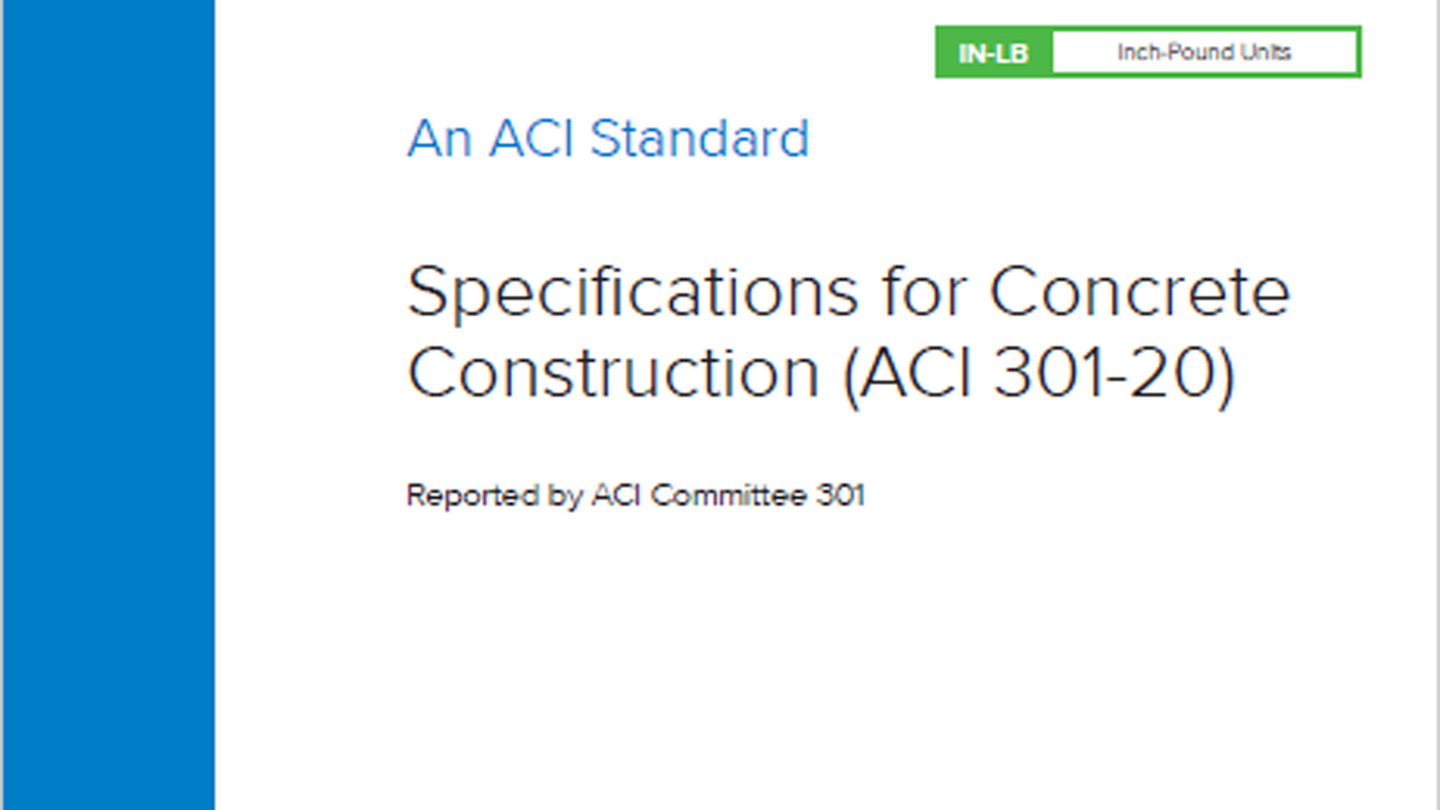
Accessing and implementing official concrete specifications requires dependable reference materials, making verified ACI 301 PDF resources essential tools for structural engineers, project managers, and specifiers navigating modern construction documents. Navigating these requirements involves understanding standard specifications for structural concrete, identifying legitimate distribution channels, and knowing how to properly integrate these provisions into contract documents without introducing conflicting text or liability concerns.
Understanding the Scope and Purpose of ACI 301
The American Concrete Institute (ACI) publishes ACI 301, titled "Specifications for Structural Concrete," as a reference standard designed to be used directly in construction projects or incorporated by reference into project specifications. Structural engineers rely on this document to establish mandatory requirements for cast-in-place concrete, architectural concrete, lightweight concrete, and mass concrete construction. By utilizing a standardized specification, design professionals can streamline the drafting phase, minimize omissions, and ensure that contractors adhere to nationally recognized quality control and placement practices.
Unlike building codes that focus primarily on structural safety thresholds and design calculations, ACI 301 focuses on execution, materials, proportioning, mixing, placing, and finishing. It covers formwork, reinforcement placement, joint details, embedded items, repair of surface defects, and testing protocols. Because these provisions govern day-to-day site operations, having reliable access to the text—frequently referenced in digital PDF format—is critical for field engineers, quality assurance inspectors, and contractors who must verify compliance during execution.
Evaluating Official Sources and Access Options
Finding reliable ACI 301 PDF resources requires understanding how the American Concrete Institute distributes its intellectual property. ACI maintains strict copyright protections over its standards, meaning that free, unverified downloads found on random file-sharing sites are typically unauthorized, outdated, or incomplete versions of the standard. Relying on corrupted or superseded files can lead to severe specification errors on active construction projects.
To secure valid digital copies, professionals typically utilize institutional subscriptions, corporate engineering libraries, or direct purchases from the ACI Online Store. Educational institutions often provide students and faculty with access via engineering database portals. Additionally, the ACI Concrete Knowledge Center and subscription services like MADCAD or IHS Standards Expert allow firms to maintain current, legally compliant PDF versions of ACI 301 alongside related documents such as ACI 318 (Building Code Requirements for Structural Concrete).
| Source Type | Access Method | Typical Use Case | Reliability & Version Control |
|---|---|---|---|
| ACI Online Store | Direct Purchase / Individual Download | Independent consultants, small firms | Highest; guarantees the latest published version. |
| Corporate Subscriptions | Enterprise Portals (e.g., IHS, MADCAD) | Mid-to-large engineering and architecture firms | High; centralized management of current standards. |
| University Libraries | Institutional IP Authentication / Portals | Students, researchers, academic staff | High; restricted to academic use and research. |
| Third-Party File Shares | Unverified Web Downloads | None recommended | Low; often outdated, modified, or illegal copies. |
Core Technical Provisions Covered in ACI 301
When structural engineers reference ACI 301 within project manuals, they trigger a comprehensive set of standardized chapters. Understanding what these chapters contain helps users navigate the PDF document efficiently, whether they are searching for testing frequencies or finishing tolerances.
Materials and Mixture Proportioning
The standard outlines strict requirements for constituent materials, including Portland cement, supplementary cementitious materials (such as fly ash and slag), aggregates, and chemical admixtures. It mandates testing and qualification procedures to ensure that mixture proportions achieve the specified compressive strength, durability, and workability requirements established by the structural engineer of record.
Execution and Placement Standards
Provisions governing formwork design, surface preparation, reinforcement placement tolerances, and joint detailing are detailed extensively. The text provides clear criteria for placing concrete in both hot and cold weather conditions, outlining mandatory monitoring, protection, and curing procedures to prevent thermal cracking, plastic shrinkage, and structural degradation.
Finishing and Repair Protocols
Surface finishes for formed and unformed surfaces are categorized systematically, setting clear expectations for architectural and structural surfaces. Furthermore, ACI 301 provides standardized guidelines for identifying and repairing surface defects, honeycombing, and cracks discovered after formwork removal.
Integrating ACI 301 into Project Specifications
Incorporating ACI 301 into contract documents requires a deliberate methodology to avoid ambiguity and conflicting requirements. Rather than rewriting standard execution practices, structural engineers typically reference ACI 301 in the project manual (Division 03 - Concrete) and use mandatory companion checklists to tailor the standard to project-specific needs.
- Project Planning & Design Phase
- Establish structural design requirements via ACI 318.
- Specification Tailoring
- Review ACI 301 mandatory and optional checklists.
- Contract Incorporation
- Reference ACI 301 in Division 03 of the project manual.
- Construction & Field Verification
- Utilize digital PDF resources on-site to verify contractor compliance.
The standard relies on a system of mandatory requirements and optional choices. The engineer must explicitly address items left open for project-specific selection—such as specific exposure classes, specialized finishing tolerances, or unique admixtures—by modifying the specification sections or completing the ACI 301 specification checklists. Failure to address these optional provisions can lead to disputes between contractors, owners, and design teams regarding who bears the cost and responsibility for specialized construction procedures.
Common Pitfalls and Troubleshooting When Using Digital Standards
Engineers utilizing PDF versions of ACI 301 frequently encounter version control issues and navigation hurdles. Because building codes and standards undergo periodic revisions, referencing an outdated edition can violate local building regulations or omit critical advancements in concrete technology and durability provisions.
- Version Mismatch: Ensure that the edition of ACI 301 referenced in the project specifications matches the edition utilized by field inspectors and testing laboratories. Mixing provisions from different publication years can create legal and technical contradictions.
- Search Limitations in Scanned PDFs: Older or scanned PDF documents may lack searchable text layers (OCR), making it difficult to locate specific keywords like "curing compounds," "slump limits," or "tolerances." Always utilize vector-based PDFs directly from authorized publishers when possible.
- Ignoring Companion Documents: ACI 301 does not operate in a vacuum. It is designed to complement ACI 318. Treating ACI 301 as a standalone design document will result in structural calculation omissions, as 301 focuses strictly on specifications rather than structural analysis.
Frequently Asked Questions
What is the difference between ACI 301 and ACI 318?
ACI 318 governs the structural design, calculation methods, and safety provisions required for concrete buildings, whereas ACI 301 is a specification standard focused on construction execution, material quality, placement, and finishing practices.
Can I legally download ACI 301 PDF files for free online?
No. ACI 301 is copyrighted material published by the American Concrete Institute. Free PDF downloads found on third-party forums or file-sharing sites are typically unauthorized reproductions and may contain outdated or altered text.
How should ACI 301 be referenced in project manuals?
Design professionals incorporate ACI 301 by reference within Division 03 (Concrete) of the project specifications, supplementing it with project-specific modifications and completing the mandatory and optional checklists provided by ACI.
Which edition of ACI 301 should be used for current projects?
The applicable edition is dictated by the local building code adoption cycle and the project's contract documents. Engineers must verify which year's standard has been legally adopted or specified by the project owner before finalizing contract manuals.
How do I troubleshoot search terms within a large ACI standard PDF?
Use advanced PDF reader tools such as the "Search across multiple files" function if you maintain a digital library of ACI standards, allowing you to cross-reference terms between ACI 301 and ACI 318 simultaneously.
Practical Next Actions for Engineering Teams
To maintain professional rigor and legal compliance, engineering firms should audit their current technical libraries to ensure all active projects utilize authorized, current ACI 301 reference documentation. Design teams should establish standard office master specifications that clearly define how ACI 301 checklists are completed for every project type, eliminating ambiguity during construction administration and field inspection phases.