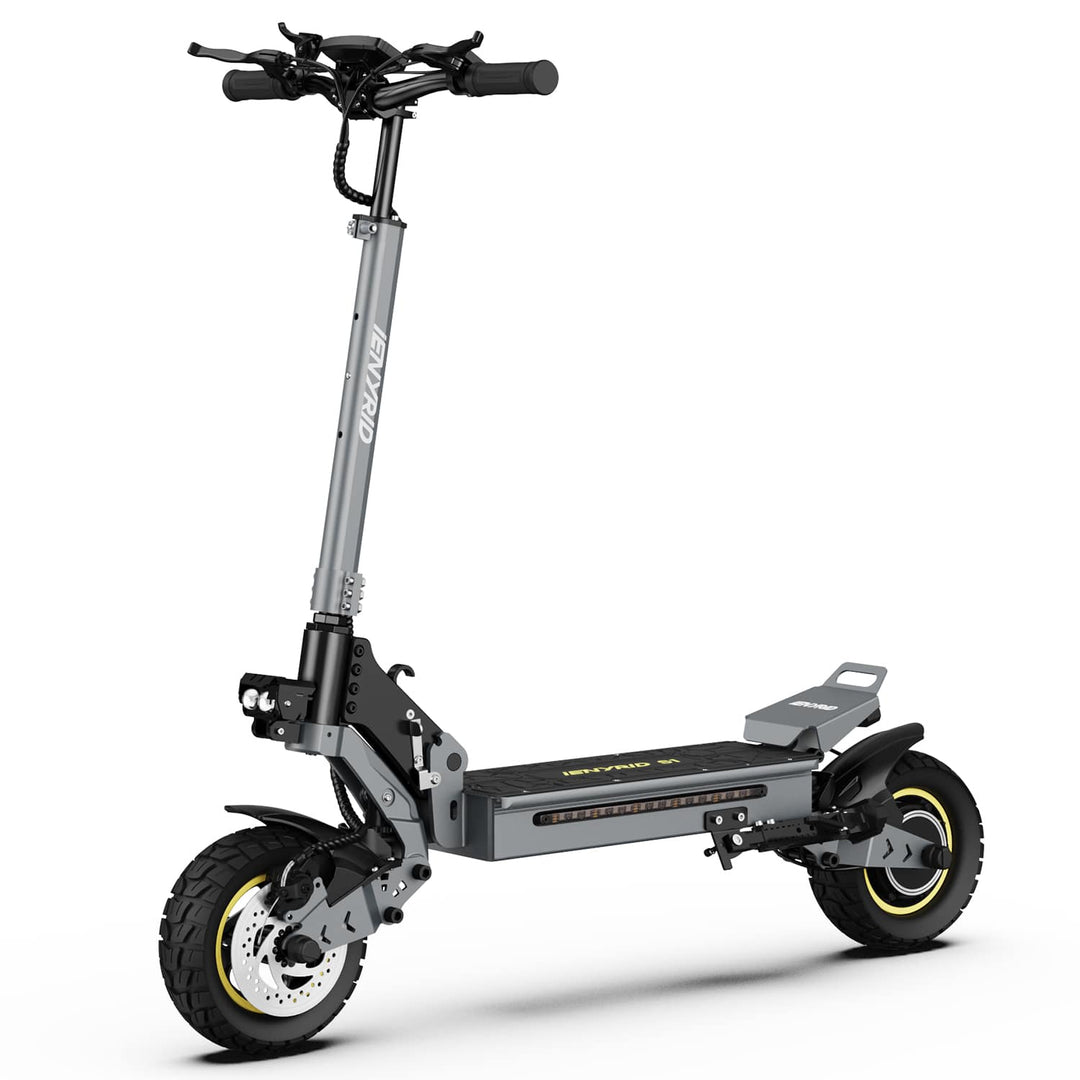
A standard, factory-restricted 50cc scooter typically travels at speeds between 25 and 30 mph, with de-restricted models occasionally reaching 35 to 40 mph depending on terrain, rider weight, and modifications.
For urban commuters and budget-conscious individuals looking for an efficient alternative to cars, small-displacement two-wheelers represent an attractive entry point into motorized transit. Understanding the capabilities, mechanical realities, and operational constraints of a 50cc scooter requires looking past marketing claims and examining the physics, legal definitions, and engineering principles that govern these compact machines.
Defining the 50cc Scooter Class
The term "50cc" refers to the engine displacement, measured in cubic centimeters, denoting the volume swept by the piston inside the cylinder during a single stroke. Within the powersports and automotive industries, this engine size represents the boundary line for low-powered mopeds and entry-level motor scooters.
Vehicles in this category are designed primarily for high-density urban environments, campus commutes, and neighborhood trips. They prioritize fuel efficiency, affordability, and accessibility over high-speed performance. In many jurisdictions worldwide, a standard driver's license or a specialized, simplified licensing process is all that is required to operate a 50cc machine, making it a popular choice for new riders.
However, a common point of confusion for prospective owners involves the distinction between raw engine displacement and actual performance output. Two scooters with identical 50cc displacement ratings can exhibit markedly different acceleration and top-speed characteristics based on their internal drivetrain configurations, weight, aerodynamic profiles, and whether they utilize two-stroke or four-stroke combustion cycles.
Two-Stroke vs. Four-Stroke Engines and Speed
The internal combustion architecture of a 50cc scooter heavily dictates how fast it can go and how quickly it reaches its maximum velocity. Buyers generally encounter two distinct engine types in this displacement class: two-stroke engines and four-stroke engines.
| Feature | Two-Stroke 50cc | Four-Stroke 50cc |
|---|---|---|
| Acceleration | Rapid and responsive | Gradual and smooth |
| Top Speed Potential | Higher (35–40+ mph) | Lower (28–32 mph) |
| Fuel Efficiency | Lower per gallon | Significantly higher |
| Emissions | Higher | Lower |
| Maintenance | Simple top-ends | Valve adjustments req. |
Two-Stroke Performance Characteristics
Two-stroke engines complete a power cycle in just one up-and-down movement of the piston, yielding a power stroke for every crankshaft revolution. This design generates a higher power-to-weight ratio.
As a result, a 50cc two-stroke scooter typically delivers more aggressive acceleration and a higher top speed, often pushing past 35 mph in stock form and reaching upwards of 45 mph with minor modifications. Due to tighter environmental regulations regarding emissions, new factory two-stroke scooters have become increasingly rare in major markets, though many older models remain active on used vehicle markets.
Four-Stroke Performance Characteristics
Four-stroke engines complete intake, compression, power, and exhaust strokes across two full rotations of the crankshaft. While this design is mechanically more complex and heavier, it burns fuel more cleanly and efficiently.
A stock 50cc four-stroke scooter generally caps out right around 30 mph on flat ground. While acceleration is more gradual, these engines offer superior fuel economy—frequently exceeding 100 miles per gallon—and require less specialized oil management since engine oil resides in a separate crankcase rather than mixing directly with fuel.
Factory Restrictions and Legal Top Speeds
Many 50cc scooters imported and sold worldwide are intentionally restricted by manufacturers to comply with local regulatory frameworks. In numerous jurisdictions, a motor vehicle with an engine displacement of 50cc or less that cannot exceed a specific speed limit—commonly 30 mph or 45 km/h—is classified as a moped or light motor vehicle.
This classification exempts the operator from standard motorcycle licensing requirements, mandatory insurance minimums, or highway tolls in certain regions. To maintain compliance, manufacturers install various physical and electronic restrictions:
- CDI (Capacitor Discharge Ignition) Rev Limiters: Electronic units that cap the engine's maximum revolutions per minute (RPM).
- Variator Washers: Physical rings placed within the transmission system that prevent the drive belt from reaching its highest gearing ratio.
- Exhaust Restrictors (Resonance Tubes): Small welded pipes or washers inside the exhaust header that limit gas flow and choke high-RPM power output.
- Carburetor Jetting: Deliberately lean or restricted fuel jets that prevent optimal combustion at high throttle settings.
Removing these factory restrictions can increase a scooter's top speed by 5 to 10 mph, but doing so may alter the legal classification of the vehicle, requiring a motorcycle endorsement, registration, and insurance.
Real-World Factors Influencing Performance
While a manufacturer specification sheet might state a top speed of 30 mph, actual real-world performance fluctuates based on several physical and environmental variables. Relying solely on laboratory metrics will often lead to mismatched expectations during daily commuting.
Rider Weight and Payload
The power output of a 50cc engine is modest, typically producing between 3 and 5 horsepower. Consequently, the total weight of the rider, along with any cargo carried in the under-seat storage or top box, has a profound impact on acceleration and top speed.
A 150-pound rider will experience notably quicker acceleration and a higher top speed on a 30 mph scooter compared to a 220-pound rider carrying a heavy backpack. Hills exacerbate this effect; while a lightweight rider might maintain 25 mph up a moderate incline, a heavier payload can cause the scooter's speed to drop below 15 mph.
Road Grade and Terrain
Flat pavement allows the centrifugal clutch and continuously variable transmission (CVT) to reach their optimal gear ratio, maximizing speed. However, ascending steep hills demands high torque at low engine speeds—an area where 50cc engines inherently struggle. Conversely, descending a hill can push the scooter past its normal limits, though gravity-assisted speeds should be managed carefully to avoid over-revving the engine or reducing braking efficiency.
Weather and Wind Resistance
Aerodynamic drag plays a massive role at speeds over 25 mph. Riding into a strong headwind can easily rob a 50cc scooter of 5 to 10 mph off its top speed. Air temperature, humidity, and altitude also alter air density and engine carburetion or fuel injection mapping, leading to slight power fluctuations depending on seasonal weather shifts.
The Mechanics of Scooter Speed: CVT Transmissions
Unlike motorcycles equipped with manual foot-shifted gearboxes, the vast majority of 50cc scooters utilize a Continuously Variable Transmission (CVT). Understanding how this automatic system functions explains why a small engine behaves the way it does under acceleration.
A CVT system relies on a pair of variable-width pulleys connected by a durable rubber drive belt. As the rider twists the throttle, engine RPM increases. Within the front pulley, weighted rollers are pushed outward by centrifugal force, forcing the pulley halves together.
This action pushes the drive belt outward into a larger diameter, while the rear spring-loaded pulley allows the belt to ride lower. The result is an infinitely variable shifting mechanism that keeps the engine operating within its narrow powerband without requiring manual gear changes.
When climbing a hill, the increased load forces the rear pulley to widen and the front pulley to narrow, effectively shifting the transmission into a "lower gear" to maintain momentum, albeit at the expense of top speed.
Upgrades and Modifications: Can You Make a 50cc Go Faster?
Many owners seek ways to increase the speed of their 50cc scooter to keep up with suburban traffic flowing at 35 or 40 mph. While modifications are widely available in the aftermarket scooter community, they require careful consideration of cost, reliability, and legality.
- Derestriction: Removing factory-installed washers from the variator and clearing exhaust restrictions represents the most cost-effective way to recover lost potential speed.
- Upgraded Exhaust Systems: Installing a performance "expansion chamber" exhaust on a two-stroke scooter improves scavenging and increases power output across the RPM range.
- Big Bore Kits (BBK): Replacing the stock 50cc cylinder and piston with a larger displacement kit—often 70cc or 80cc—fundamentally transforms engine output. However, this modification requires re-jetting the carburetor, upgrading the cooling system, and potentially rebuilding the transmission to handle the extra torque.
- Transmission Tuning: Installing lighter or heavier variator rollers, alongside stiffer clutch springs, fine-tunes the RPM at which the transmission engages, improving acceleration curves.
Owners should note that pushing a small engine beyond its engineering limits often reduces engine lifespan, increases maintenance frequency, and may violate local motor vehicle laws if the displacement or speed exceeds moped thresholds.
Safety Considerations for Riding at 30 MPH
Operating a vehicle capable of 30 mph on public roadways requires appropriate safety measures and situational awareness. While 30 mph may feel slow compared to highway speeds, kinetic energy at this velocity is substantial enough to cause severe injury during a collision.
Riders should always wear a Department of Transportation (DOT)-approved helmet, eye protection, durable abrasion-resistant jackets, gloves, and riding footwear. Because 50cc scooters often travel slightly slower than the prevailing flow of multi-lane urban traffic, defensive driving is critical.
Riders should maintain a visible position within the lane (avoiding blind spots), use turn signals well in advance, and remain highly alert at intersections where turning motorists frequently fail to notice smaller two-wheeled vehicles. Furthermore, routine maintenance—such as checking tire pressure, inspecting brake pad wear, and verifying throttle cable smooth operation—ensures reliable stopping power and control.
Practical Next Steps for Scooter Owners and Buyers
For individuals deciding whether a 50cc scooter fits their transportation needs, evaluating local infrastructure and commuting routes is the most crucial first step. If daily commutes involve roads where traffic consistently travels at 45 mph or higher, a 50cc scooter restricted to 30 mph may create hazardous bottlenecks, as motorists attempt unsafe passes.
Conversely, for city centers, dense neighborhoods, university campuses, and lower-speed thoroughfares, a 50cc scooter provides an economical, parking-friendly, and enjoyable transit option. Prospective buyers should consult local Department of Motor Vehicles (DMV) guidelines to verify licensing, registration, and insurance mandates in their specific state or municipality before making a purchase.