In 2026, the average annual cost for a 25-year-old driver to maintain full coverage auto insurance is approximately $3,044. While this represents a significant decrease from the high-risk premiums paid during the teenage years, it remains influenced by geographic location, vehicle choice, and the evolving landscape of automotive technology and repair costs.
Auto insurance for young adults has long been a subject of financial scrutiny, primarily because age 25 is traditionally viewed as the "magic threshold" where risk profiles stabilize. However, as we navigate through 2026, the $3,044 figure serves as a benchmark rather than a fixed rule. Understanding why this specific age group pays this amount—and how to lower it—requires a deep dive into actuarial data, market trends, and modern insurance underwriting.
Disclaimer: This article provides general financial information and is not a substitute for professional advice from a licensed insurance agent or financial advisor. Laws and regulations regarding insurance vary by jurisdiction.
Why Age 25 Remains a Pivotal Milestone in 2026
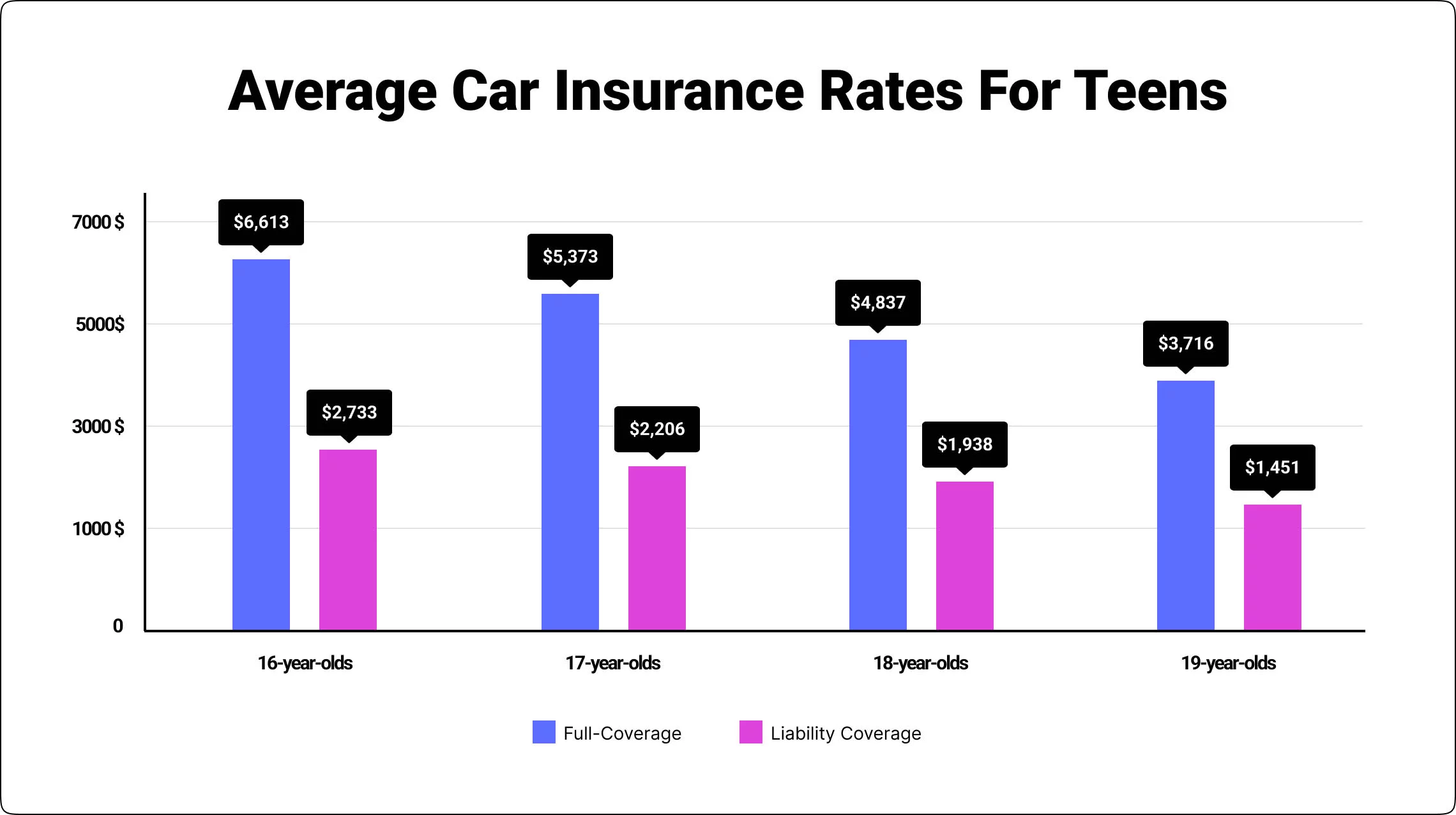
For decades, the insurance industry has utilized age 25 as a primary marker for risk assessment. In 2026, this metric remains relevant, though it is now supplemented by sophisticated data analytics. Actuaries at major firms like State Farm and Progressive look at "loss ratios"—the amount an insurer pays in claims versus the premiums they collect. Historically, drivers under 25 have a significantly higher frequency of accidents and more severe claims.
By the time a driver reaches 25, they typically have seven to nine years of driving experience. This experience translates into a lower statistical likelihood of making the impulsive errors common among 16-to-21-year-olds. Furthermore, neurobiological research suggests that the prefrontal cortex—the part of the brain responsible for impulse control and risk assessment—is fully developed by the mid-20s. Insurers reward this biological and behavioral maturity with lower rates.
However, the $3,044 average also reflects the inflationary pressures of 2026. While the "risk" of the driver has decreased, the "cost" of the potential claim has increased. Modern vehicles are equipped with expensive sensors, LiDAR, and complex computer systems that make even minor fender benders significantly more expensive to repair than they were a decade ago.
Breaking Down the $3,044 Average: What It Includes
The figure of $3,044 is generally reflective of "full coverage." In the insurance industry, full coverage is not a single policy but a combination of several mandatory and optional protections. For a 25-year-old in 2026, this typically includes:
- Liability Coverage: This consists of Bodily Injury and Property Damage. It pays for the other party’s expenses if you are at fault in an accident. In 2026, many experts recommend limits of at least $100,000/$300,000/$100,000 to protect assets in an increasingly litigious environment.
- Collision Coverage: This pays to repair or replace your own vehicle after an accident, regardless of who is at fault. Given that the average price of a new car in 2026 has remained high, collision coverage is a substantial portion of the $3,044 premium.
- Comprehensive Coverage: Often called "other than collision," this covers theft, vandalism, fire, and natural disasters. With the increase in extreme weather events recorded by the National Oceanic and Atmospheric Administration (NOAA), comprehensive premiums have seen upward pressure.
- Uninsured/Underinsured Motorist (UM/UIM): This protects you if you are hit by a driver who lacks sufficient insurance.
2026 Premium Comparison by Profile
The following table illustrates how different factors might influence the $3,044 benchmark for a 25-year-old driver.
| Driver Profile | Estimated Annual Premium | Primary Reason for Variance |
|---|---|---|
| Standard Profile | $3,044 | Average risk, clean record, mid-range sedan. |
| High Credit Score | $2,650 | Statistically lower risk of filing claims. |
| Recent Speeding Ticket | $3,820 | Surcharge for moving violation (usually 3 years). |
| Electric Vehicle (EV) | $3,450 | Higher repair costs and specialized labor. |
| Minimalist Liability | $1,150 | No coverage for the driver's own vehicle. |
| Urban/Metropolitan | $3,900 | Higher rates of theft and traffic density. |
The Impact of Location on 2026 Rates
Geography is perhaps the most significant variable that can pull a 25-year-old’s rate away from the $3,044 average. Each state has its own regulatory body, such as the California Department of Insurance, which approves or denies rate hikes.
In states like Michigan or Florida, where insurance litigation or specific "no-fault" laws drive up costs, a 25-year-old might easily pay $4,500 or more. Conversely, in more rural or less litigious states like Ohio or Maine, the same driver might find rates as low as $1,800.
Furthermore, "ZIP code rating" remains a standard practice in 2026. Insurers analyze the frequency of claims within specific neighborhoods. If you live in an area with high rates of catalytic converter theft or frequent flooding, your contribution to the $3,044 average will be higher than someone living in a gated community with low crime statistics.
Vehicle Choice and Technological Inflation
In 2026, the type of car a 25-year-old drives has a massive impact on insurance. We have moved past the era where a "safe" car was simply one with many airbags. Today, Advanced Driver Assistance Systems (ADAS) are standard. While these systems reduce the frequency of accidents, they increase the severity of the cost when an accident does occur.
If a 25-year-old is driving a 2026 model-year vehicle, a simple replacement of a front bumper may involve recalibrating radar sensors and cameras, a process that can cost thousands of dollars. This is a primary reason why the average premium for this age group has stayed around the $3,044 mark rather than dropping further as safety technology improves.
Additionally, the rise of Electric Vehicles (EVs) has introduced new variables. The Insurance Institute for Highway Safety (IIHS) has noted that while EVs are generally safe, their batteries are extremely expensive to replace, often leading to vehicles being "totaled" by insurers for damage that would be repairable in a gasoline vehicle.
Strategies to Lower the $3,044 Premium
If you are a 25-year-old facing a $3,044 bill, there are several verified methods to reduce that cost without sacrificing essential coverage.
1. Telematics and Usage-Based Insurance (UBI)
By 2026, telematics has become the industry standard. Programs like "Snapshot" or "Drive Safe & Save" use smartphone apps or plug-in devices to monitor your driving habits in real-time. If you avoid hard braking, late-night driving, and speeding, you can receive discounts of up to 30%. For a driver at the $3,044 mark, this could result in nearly $1,000 in annual savings.
2. The Power of Bundling
Maintaining your auto insurance with the same company that provides your renters or homeowners insurance remains one of the most effective ways to save. Multi-policy discounts often range from 10% to 25%.
3. Credit Score Optimization
In many states, your credit-based insurance score is a major factor in your premium. Insurers have found a high correlation between financial responsibility and driving safety. Improving your credit score by 50 to 100 points can significantly move you toward the lower end of the $3,044 average.
4. Increasing Deductibles
Raising your deductible from $500 to $1,000 can lower your monthly premium. However, this strategy should only be used if you have an emergency fund capable of covering that $1,000 in the event of an accident.
Common Mistakes 25-Year-Olds Make
Transitioning into "adult" insurance policies often leads to avoidable errors. One common mistake is staying on a parent's policy when it is no longer legally or financially optimal. While it might seem cheaper, if the 25-year-old lives at a different address, a claim could be denied for "material misrepresentation."
Another error is purchasing only the state-minimum liability. While this drastically reduces the $3,044 premium, it leaves the driver's personal assets—such as savings or future wages—vulnerable to lawsuits if they cause a serious accident. In 2026, medical costs have risen to the point where a $25,000 minimum limit is often exhausted in a single day of hospital care.
FAQ
Why did my insurance go up when I turned 25? While rates typically go down at 25, you might see an increase if you moved to a higher-risk ZIP code, purchased a more expensive vehicle, or lost a "student discount" that applied while you were in college. Additionally, general market rate increases in 2026 due to inflation can sometimes offset the age-based discount.
Does gender still affect insurance rates at age 25? By age 25, the "gender gap" in insurance rates significantly narrows. While young men (ages 16–21) typically pay much more than young women, by the mid-20s, driving record and vehicle type become far more influential than gender. Furthermore, several states have banned gender-based rating entirely.
How does a 25-year-old’s rate compare to a 30-year-old’s? A 30-year-old driver with a similar profile will generally pay about 10% to 15% less than a 25-year-old. This is due to the five additional years of driving experience and the statistically lower likelihood of accidents for drivers in their 30s.
Can I get a discount for a defensive driving course at 25? Yes. Many insurers offer a "voluntary driver education" discount. Completing a certified course can often result in a 5% to 10% reduction in the liability and collision portions of your $3,044 premium.
Is $3,044 a "good" price for a 25-year-old? It is an average. If you live in a low-cost state and drive an older, safe vehicle, $3,044 might be considered high. If you live in a major city and drive a new luxury vehicle or EV, $3,044 would be considered a very competitive rate.
Strategic Recommendations for 2026
To ensure you are getting the best value for your auto insurance as a 25-year-old, your first action should be to shop your rate annually. The insurance market in 2026 is highly volatile, with companies frequently adjusting their risk appetites. A company that was the cheapest for you at age 24 may no longer be the best fit at age 25.
Secondly, audit your coverage limits. Ensure that your property damage liability is high enough to cover the replacement of a modern electric vehicle, as many cars on the road in 2026 carry price tags exceeding $60,000. Finally, embrace telematics if your driving habits are safe; it is the most direct way to prove to an insurer that you are a lower risk than the "average" $3,044 driver.