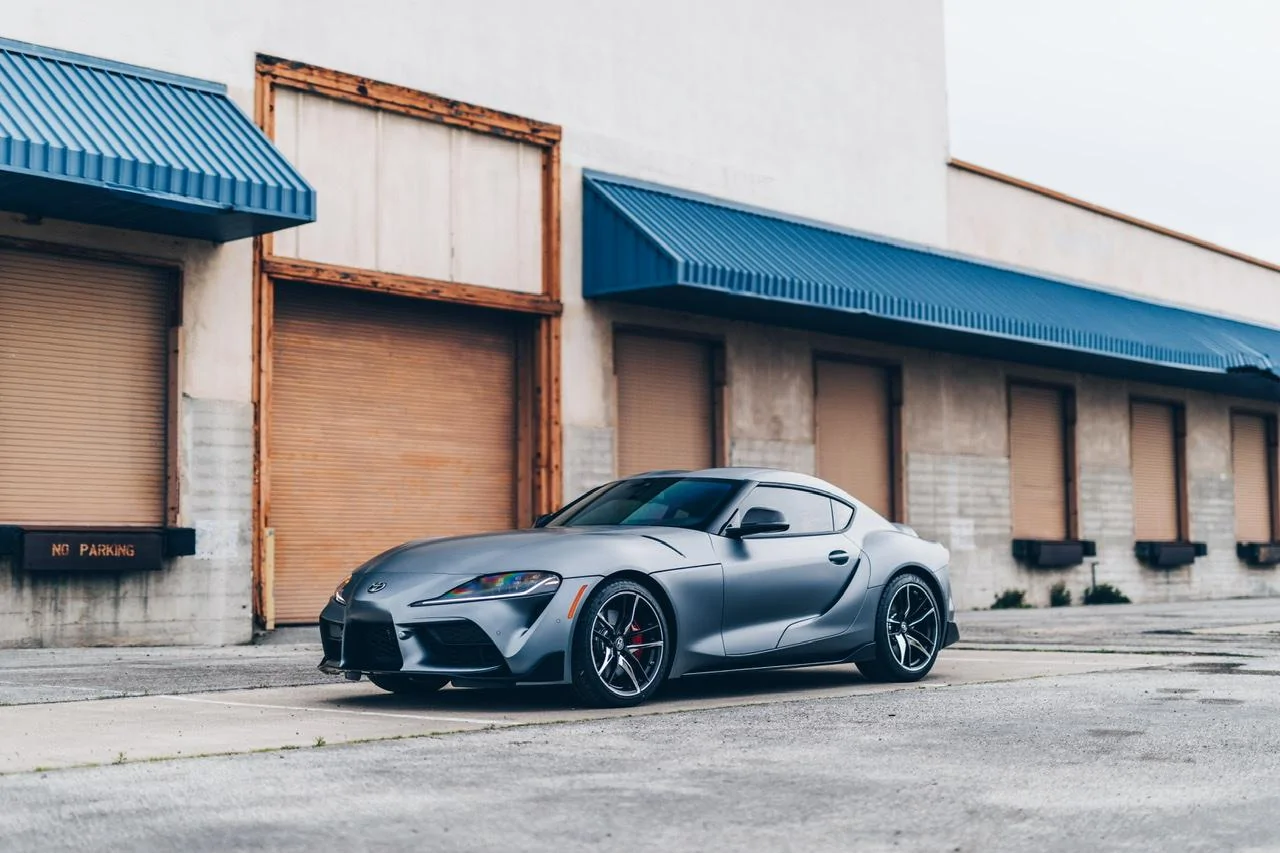
When the fifth-generation Toyota GR Supra (internal designation A90) made its long-awaited debut, automotive enthusiasts and critics closely scrutinized its hardware, lineage, and most importantly, its acceleration metrics. The 2020 Toyota GR Supra achieves a 0 to 60 mph time of approximately 3.9 to 4.1 seconds in independent testing, outperforming Toyota’s conservative factory estimates and cementing its status as a serious performance contender in the sports car market.
Introduction to the 2020 Toyota GR Supra (A90)
The launch of the 2020 Toyota GR Supra marked one of the most anticipated automotive revivals of the modern era. After a hiatus spanning more than two decades since the fourth-generation A80 Supra departed North American markets, the iconic nameplate returned through a joint development partnership with BMW. Sharing its platform, electrical architecture, and powertrain with the BMW Z4 (G29), the A90 Supra immediately drew intense industry discussion. Purists debated the heavy reliance on German engineering, while driving enthusiasts and performance analysts focused on how that architecture translated to the asphalt.
At the center of this evaluation is straight-line acceleration and track capability. The vehicle arrived with a factory-quoted 0–60 mph acceleration time of 4.1 seconds for models equipped with the 3.0-liter turbocharged inline-six engine. However, almost immediately after customer deliveries began, automotive journalists, independent reviewers, and owners utilizing performance-logging equipment discovered that Toyota had significantly underreported the car's capabilities. Real-world testing consistently revealed quicker sprints, transforming the conversation from whether the car was "fast enough" to how it managed to punch well above its paper weight class.
Powertrain Specifications and Engineering Architecture
To understand the performance capabilities of the 2020 Supra 0-60 sprint, one must examine the beating heart of the vehicle: the BMW-sourced B58 3.0-liter twin-power turbocharged inline-six engine. Paired exclusively with an eight-speed ZF automatic transmission (manual variants arrived for subsequent model years), this powerplant is engineered to deliver a broad, flat torque curve that maximizes tractive effort from low engine speeds.
The official factory specifications for the 2020 Supra 3.0 stated an output of 335 horsepower and 365 lb-ft of torque. However, automotive dyno testing across multiple independent outlets quickly demonstrated that these figures reflected wheel horsepower rather than crankshaft output, or were simply conservative figures chosen to protect the marketing hierarchy relative to its German sibling, the BMW Z4 M40i. The engine features a single twin-scroll turbocharger, direct fuel injection, variable valve timing (Double-VANOS), and BMW’s Valvetronic fully variable valve control.
| Specification Element | 2020 Toyota GR Supra 3.0 Value |
|---|---|
| Engine Type | 3.0L Turbocharged Inline-6 (B58) |
| Horsepower (Rated) | 335 hp @ 5,000–6,500 rpm |
| Torque (Rated) | 365 lb-ft @ 1,600–4,500 rpm |
| Transmission | 8-Speed ZF Automatic with Paddle Shifters |
| Drivetrain | Front-Engine, Rear-Wheel Drive (FR) |
| Curb Weight | ~3,397 lbs |
This heavy torque band—peaking at just 1,600 rpm and holding flat across thousands of revolutions—is the primary driver behind the vehicle's explosive 0 to 60 mph performance. Combined with a curb weight hovering around 3,397 pounds and a lightning-fast torque-converter automatic transmission, the powertrain minimizes turbo lag and optimizes gear changes to maintain continuous forward momentum.
Factory Claims vs. Independent Real-World Testing
Automotive manufacturers historically estimate acceleration times conservatively to account for varying weather conditions, driver skill, fuel quality, and test track surfaces. Toyota claimed a 4.1-second 0–60 mph time for the 2020 Supra 3.0. Yet, automotive publications such as Car and Driver, MotorTrend, and Road & Track regularly recorded significantly faster figures during instrumented testing.
Independent tests conducted on prepared drag strips and standard asphalt surfaces yielded 0–60 mph times ranging from 3.8 to 3.9 seconds when utilizing the vehicle's integrated launch control system. This variance generated substantial enthusiasm within the automotive community. Several factors contributed to these discrepancies:
- Tire Compound and Temperature: The Michelin Pilot Super Sport tires (specifically engineered with a custom Toyota "T0" spec) provided exceptional initial bite when warmed up.
- Launch Control Optimization: The ZF eight-speed transmission manages clutch engagement and engine torque delivery with software that prevents excessive wheel spin while maximizing initial acceleration force.
- Drivetrain Efficiency: Modern automatic transmissions transmit power to the rear wheels with minimal parasitic loss compared to older torque-converter units.
When accounting for standard one-foot rollout (a convention used across American automotive journalism to simulate drag strip timing), the 2020 Supra frequently broke into the high 3.8-second bracket out of the box, matching or exceeding cars with significantly higher paper horsepower ratings.
Launch Control and Straight-Line Execution
Achieving optimal 0–60 mph performance in the 2020 Toyota GR Supra relies heavily on utilizing the factory launch control system correctly. Unlike manual-launch vehicles that require precise clutch slipping and throttle feathering, the A90 Supra automates much of the process to ensure repeatable, high-traction acceleration runs.
To engage launch control on a 2020 Supra, drivers must complete a specific sequence of inputs:
- Bring the engine and transmission up to normal operating temperatures.
- Select Sport Mode via the center console toggle or drive mode selector.
- Disengage or set the Traction Control system to Sport/Traction mode (holding the button down completely disables stability aids, which can induce excessive wheel slip during launch).
- Firmly depress the brake pedal with the left foot.
- Mash the accelerator pedal past the kick-down switch until a checkered flag or launch control indicator appears on the digital instrument cluster.
- Release the brake pedal quickly while keeping the throttle pinned.
The vehicle's electronic control unit manages boost pressure, ignition timing, and clutch engagement to launch the car at approximately 2,500 to 3,000 rpm, depending on ambient conditions and surface grip. Mastering this sequence ensures that owners can replicate the independent test figures without inducing damaging wheel hop or premature clutch wear.
Track Dynamics, Cornering, and Braking Performance
While straight-line acceleration figures dominate marketing conversations, a comprehensive performance overview must examine how the 2020 Supra handles dynamic forces beyond a drag strip. The car features a short 97.2-inch wheelbase, a wide track width, and a low center of gravity—dimensions that Toyota engineers prioritized to achieve a "golden ratio" of 1.55 to 1.7 between wheelbase and track.
Suspension and Handling Architecture
The front suspension utilizes a double-joint spring strut setup, while the rear features a multi-link independent design. Adaptive variable suspension (AVS) dampers are standard on the 3.0 Premium trim, dynamically adjusting damping force in milliseconds based on road conditions, steering angle, and selected drive modes. This hardware setup allows the car to transition through tight sweepers with minimal body roll while retaining enough compliance to absorb mid-corner bumps without unsettling the chassis.
Braking Capabilities
To haul down a vehicle capable of rapid acceleration, the 2020 Supra 3.0 is equipped with Brembo four-piston fixed aluminum calipers clamping down on 348mm ventilated discs up front, paired with floating calipers in the rear. Instrumented tests demonstrated strong braking performance, with stops from 70 to 0 mph occurring in approximately 149 to 152 feet. Brake pedal feel offers progressive resistance, though track enthusiasts frequently note that aggressive pad compounds and high-temperature brake fluid are recommended for sustained track-day use to prevent thermal fade.
Modifications, Tuning Potential, and Aftermarket Impact
The inclusion of the BMW B58 engine unlocked a massive secondary market for the 2020 Supra. Because early 2020 models featured an Engine Control Unit (ECU) that was relatively straightforward to unlock compared to mid-2020 and later production runs (which featured locked Bosch DME units requiring bench unlocking or aftermarket replacements), tuning culture exploded around this platform.
Stock performance yielded impressive baseline numbers, but basic modifications dramatically altered the 0–60 mph landscape:
- Stage 1 ECU Flash Tunes: Operating on stock hardware, software recalibration alone often pushed output past 400 wheel horsepower, dropping the 0–60 mph time into the low 3.5-second range.
- Downpipes and Exhaust Upgrades: Replacing the restrictive factory catalytic converter with a high-flow or catless downpipe reduced turbo spool times and lowered exhaust backpressure.
- Upgraded Rubber: Swapping the factory grand touring-oriented Michelin tires for dedicated stickier compounds (such as Michelin Pilot Sport Cup 2s or drag radials) significantly improved launch traction, allowing modified cars to crack the sub-3.5-second barrier.
These performance gains made the 2020 Supra a favorite among grassroots tuners and drag racers, establishing its reputation as a modern tuner icon true to the lineage of its predecessor.
Frequently Asked Questions
What is the official factory 0-60 mph time for the 2020 Toyota GR Supra?
Toyota officially rated the 2020 GR Supra 3.0 with a 0 to 60 mph acceleration time of 4.1 seconds. However, independent testing by major automotive publications regularly achieved times between 3.8 and 3.9 seconds under optimal real-world conditions.
Does the 2020 Supra have launch control?
Yes, the 2020 Toyota GR Supra comes equipped with a factory launch control system. It can be accessed by engaging Sport mode, shifting the transmission into manual mode or leaving it in drive while holding the brake, and depressing the accelerator fully past the kick-down switch until the launch control icon appears on the dash.
Is the engine in the 2020 Supra made by BMW?
Yes. The 2020 Toyota GR Supra utilizes the BMW B58 3.0-liter turbocharged inline-six engine and an eight-bit ZF automatic transmission. This partnership allowed Toyota to bring a high-performance inline-six sports car to market cost-effectively while leveraging proven German powertrain engineering.
Can the 2020 Supra be modified for faster acceleration?
Yes, the platform is exceptionally receptive to aftermarket modifications. Simple ECU tuning, exhaust upgrades, and stickier tires can easily reduce the 0–60 mph time into the mid-to-low 3.5-second range by increasing horsepower and improving launch traction.
How does the 2020 Supra compare to the 2021 model year performance-wise?
For the 2021 model year, Toyota updated the Supra 3.0 engine by revising pistons and exhaust manifolds to increase output from 335 horsepower to 382 horsepower, dropping the official factory 0–60 mph time to 3.9 seconds. The 2020 model, however, gained an early aftermarket tuning advantage due to its initial ECU software version.
Conclusion and Next Actions
The 2020 Toyota GR Supra established a commanding performance baseline upon its market arrival. By combining a potent turbocharged inline-six engine, a rapid-shifting transmission, and a lightweight, rigid chassis, it delivered real-world 0–60 mph times that routinely eclipsed its conservative factory ratings. For prospective buyers, collectors, or automotive enthusiasts evaluating an A90 Supra, reviewing maintenance history, verifying ECU unlock status (if modification is desired), and inspecting tire wear remain essential steps before purchase or track preparation.