The 2017 Dodge Charger Daytona produces 370 horsepower in its standard 5.7-liter V8 configuration and 485 horsepower in the high-performance Daytona 392 edition. Both models utilize a naturally aspirated HEMI V8 engine mated to an eight-speed automatic transmission, sending power exclusively to the rear wheels.
2017 Dodge Charger Daytona Horsepower Breakdown
When Dodge reintroduced the historic Daytona nameplate for the 2017 model year, it offered the trim level across two distinct engine architectures. Understanding the distinction between these two powertrains is essential for buyers assessing output, fuel efficiency, and track capabilities.
The Daytona package was designed to bridge the gap between everyday muscle car usability and track-oriented performance, incorporating performance intakes, upgraded exhausts, and sharper suspension tuning over standard trim levels.
| Standard Daytona (5.7L V8) | Daytona 392 (6.4L V8) |
|---|---|
| 370 HP | 485 HP |
| 395 lb-ft Torque | 475 lb-ft Torque |
Standard 2017 Charger Daytona (5.7-Liter HEMI V8)
The entry-level 2017 Charger Daytona features Dodge's legendary 5.7-liter naturally aspirated HEMI V8.
- Horsepower: 370 hp @ 5,250 rpm
- Torque: 395 lb-ft @ 4,200 rpm
While the core engine block shares its architecture with the standard Charger R/T, the Daytona trim incorporates functional hardware enhancements that improve engine breathing and throttle response. A factory-installed Mopar cold-air intake draws cooler, denser air from outside the engine bay into the intake manifold, while an electronically controlled 2.75-inch active exhaust system reduces backpressure under heavy acceleration.
2017 Charger Daytona 392 (6.4-Liter HEMI V8)
For drivers seeking track-ready acceleration and significantly higher power reserves, Dodge offered the Daytona 392. Powered by a 392-cubic-inch (6.4-liter) naturally aspirated Apache HEMI V8, this model steps into super-sedan territory.
- Horsepower: 485 hp @ 6,000 rpm
- Torque: 475 lb-ft @ 4,200 rpm
The 6.4-liter engine benefits from a larger bore and stroke, lightweight aluminum cylinder heads, aggressive camshaft timing, and an engine oil cooler designed to handle sustained high-rpm driving. Like the 5.7L version, the 392 utilizes a high-flow airbox and active exhaust, but its sheer displacement provides an extra 115 horsepower and 80 lb-ft of torque over the base Daytona.
Technical Specifications Comparison Table
The following matrix compares the core mechanical specifications, drivetrain dimensions, and performance benchmarks of both 2017 Dodge Charger Daytona configurations.
| Specification / Feature | 2017 Charger Daytona (5.7L V8) | 2017 Charger Daytona 392 (6.4L V8) |
|---|---|---|
| Engine Displacement | 5.7 Liters (345 cu in) | 6.4 Liters (392 cu in) |
| Engine Type | Naturally Aspirated 16-Valve OHV V8 | Naturally Aspirated 16-Valve OHV V8 |
| Horsepower | 370 hp @ 5,250 rpm | 485 hp @ 6,000 rpm |
| Torque | 395 lb-ft @ 4,200 rpm | 475 lb-ft @ 4,200 rpm |
| Compression Ratio | 10.5:1 | 10.9:1 |
| Transmission | TorqueFlite 8-Speed Automatic (8HP70) | TorqueFlite 8-Speed Automatic (8HP70) |
| Driven Wheels | Rear-Wheel Drive (RWD) | Rear-Wheel Drive (RWD) |
| Rear Axle Ratio | 3.09:1 (Anti-Spin Differential) | 3.09:1 (Limited-Slip Differential) |
| 0-60 MPH Acceleration | 5.0 – 5.1 seconds | 4.2 – 4.4 seconds |
| Quarter-Mile Time | 13.6 seconds @ 103 mph | 12.3 seconds @ 114 mph |
| Top Speed | ~150 mph (Electronically Limited) | ~175 mph |
| Braking System | 2-Piston Front / 1-Piston Rear Vent. | Brembo 6-Piston Front / 4-Piston Rear |
| Tire Size | 245/45ZR20 Performance All-Season | 275/40ZR20 All-Season or Summer |
| Curb Weight | ~4,260 lbs | ~4,410 lbs |
| EPA Fuel Economy (MPG) | 16 City / 25 Hwy / 19 Combined | 15 City / 25 Hwy / 18 Combined |
Powertrain Dynamics and Engineering Detail
The 5.7L HEMI Engine Architecture
The 5.7-liter HEMI powering the standard 2017 Daytona relies on a classic pushrod (overhead valve) design featuring a cast-iron block topped with aluminum cylinder heads. To optimize efficiency during highway cruising, Dodge equipped the 5.7L engine with a Multi-Displacement System (MDS).
MDS deactivates four of the eight cylinders under light throttle loads, transforming the engine into a temporary V4 to save fuel. When the driver presses the accelerator, oil pressure reactivates the lifters instantly, engaging all eight cylinders to deliver the full 370 horsepower.
Airflow optimization plays a critical role in how the 5.7L Daytona delivers its power. The standard factory Mopar cold-air intake routes ambient air directly into the throttle body, lowering air intake temperatures compared to the fully enclosed airboxes found on standard Charger R/T models. Lower intake temperatures yield a denser oxygen mixture in the combustion chamber, maintaining consistent output even in warm atmospheric conditions.
- COLD-AIR INTAKE SYSTEM (MOPAR)
- Draws ambient air outside engine compartment
- 5.7L / 6.4L HEMI V8 ENGINE
- Variable Cam Timing & High-Compression Combustion
- 2.75-INCH DUAL ACTIVE EXHAUST SYSTEM
- Electronically controlled valves open under load
The 6.4L "392" Apache HEMI Engine Architecture
The 6.4-liter engine in the Daytona 392 is designed for high-rpm breathability and immediate throttle response. It utilizes lightweight forged-steel crankshaft components, high-strength connecting rods, and piston-cooling oil jets beneath each bore to manage thermal stress during high-speed driving.
Variable Camshaft Timing (VCT) continuously adjusts the position of the camshaft relative to the crankshaft, altering valve timing based on engine load and speed. At low engine speeds, VCT advances valve timing to maximize low-end torque; at high rpm, it retards valve timing to let the engine gulp maximum air, pushing power all the way to its 6,000 rpm peak.
TorqueFlite 8-Speed Transmission Calibration
Both 2017 Daytona configurations transfer engine power via the ZF-derived TorqueFlite 8HP70 eight-speed automatic transmission. In the Daytona, Dodge applied customized transmission control module (TCM) software.
When switched into Sport Mode or Track Mode via the Uconnect infotainment system, shift times drop dramatically to under 250 milliseconds. The transmission holds gears through corners, prevents unwanted upshifts mid-turn, and performs rev-matched downshifts under heavy braking.
Chassis, Handling, and Braking Systems
Horsepower requires a capable chassis to translate engine output into controlled speed. Dodge equipped the 2017 Charger Daytona models with comprehensive hardware upgrades beyond standard Charger trims.
| Daytona (5.7L Super Track Pak) | Daytona 392 |
|---|---|
| • Performance-tuned shock absorbers• Stiffer front/rear anti-roll bars• Lowered ride height (approx. 0.5")• 2-Piston front performance brakes• Three-Mode Electronic Stability Control | • High-performance Bilstein dampers• 6-Piston Front Brembo Brakes (15.4")• 4-Piston Rear Brembo Brakes (13.8")• 20 x 9.5-inch Forged Aluminum Wheels• 275/40ZR20 Ultra-High Performance Tires |
Super Track Pak (Standard on 5.7L Daytona)
The 5.7-liter Daytona includes Dodge’s Super Track Pak as standard equipment. This package installs:
- Performance-tuned shock absorbers and stiffer spring rates that lower the vehicle's center of gravity by roughly half an inch.
- Larger front and rear anti-roll bars to curb body roll during aggressive cornering.
- Performance steering calibration for tighter on-center feel and feedback.
- Three-mode Electronic Stability Control (ESC), allowing drivers to toggle between Full On, Sport, and Full Off modes.
Daytona 392 Chassis Enhancements
The Daytona 392 elevates performance hardware even further. It borrows its stopping power and rolling stock directly from the Charger SRT Hellcat:
- Brembo Braking System: Massively upgraded 15.4-inch two-piece vented rotors clamped by 6-piston aluminum monoblock calipers up front, and 13.8-inch vented rotors with 4-piston calipers in the rear. This setup virtually eliminates brake fade during repeated high-speed stops.
- Wheel and Tire Package: Upgrades to lightweight 20 x 9.5-inch forged aluminum wheels finished in Low Gloss Black, wrapped in 275/40ZR20 performance tires. The wider contact patch significantly improves launch traction compared to the 245mm-wide tires fitted to the 5.7L model.
Real-World Performance Metrics: Acceleration and Handling
While peak horsepower figures illustrate engine strength on paper, real-world drag strip and track testing demonstrate how effectively the 2017 Charger Daytona puts its power down.
0-60 MPH and Quarter-Mile Times
- 5.7L Daytona: Accelerates from 0 to 60 mph in roughly 5.0 to 5.1 seconds. It clears the quarter-mile in 13.6 seconds at approximately 103 mph. Launch control, accessible via the Uconnect interface, helps drivers manage rear wheelspin off the line by letting them set target launch rpm.
- Daytona 392: Covers the 0-60 mph sprint in 4.2 to 4.4 seconds under optimal road conditions. Its quarter-mile time drops to 12.3 seconds at a trap speed of 114 mph. The wider 275mm rear tires and standard anti-spin limited-slip differential provide crucial traction for managing the engine's 475 lb-ft of torque.
Top Speed and Braking Performance
- Top Speed: The 5.7L Daytona is electronically limited to around 150 mph, primarily dictated by tire speed ratings and factory aerodynamic limits. The Daytona 392, benefiting from higher-rated tires and track cooling upgrades, can reach a top speed of roughly 175 mph.
- Braking Distance (60-0 MPH): The standard 5.7L Daytona brings its 4,260-pound mass to a stop from 60 mph in approximately 114 feet. The Daytona 392, utilizing its 6-piston Brembo setup, stops from 60 mph in an impressive 106 feet.
Exterior and Interior Design Features
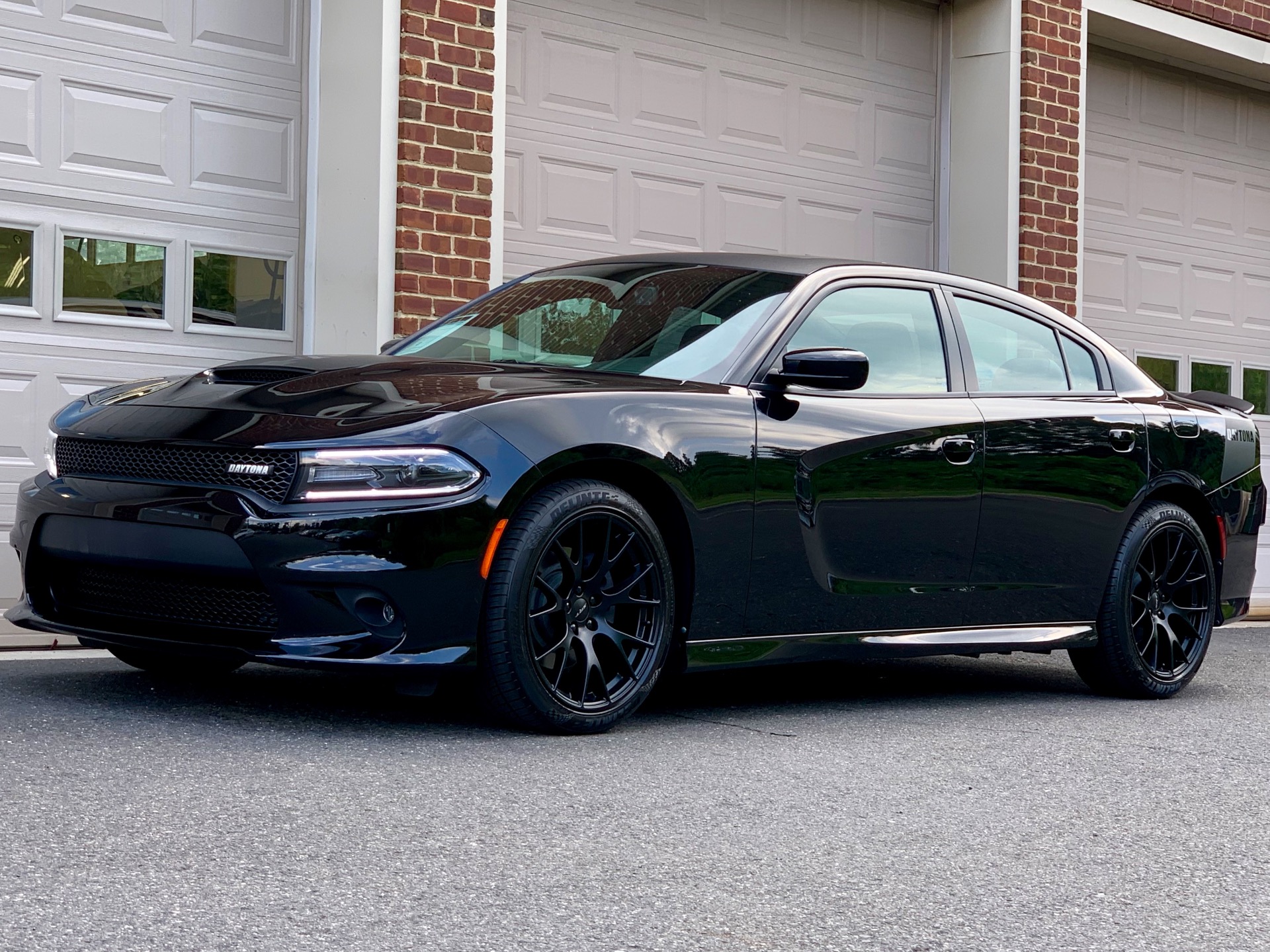
The 2017 Daytona is instantly recognizable due to a suite of throwback aerodynamic and styling treatments inspired by the iconic 1969 Dodge Charger Daytona wing car.
| Exterior Features | Interior Upgrades |
|---|---|
| • Matte Black Rear Decklid Stripe• Satin Black Roof & Hood Graphics• Daytona Front Grille Badge• Performance Front/Rear Fascias• Mopar Cold-Air Intake Snorkels | • Nappa Leather & Alcantara• Braided Carbon-Look Trim• Embroidered Daytona Logos• Dodge Performance Pages• Gold Accent Stitching |
Exterior Aerodynamics and Graphics
Both 5.7L and 392 Daytona models feature:
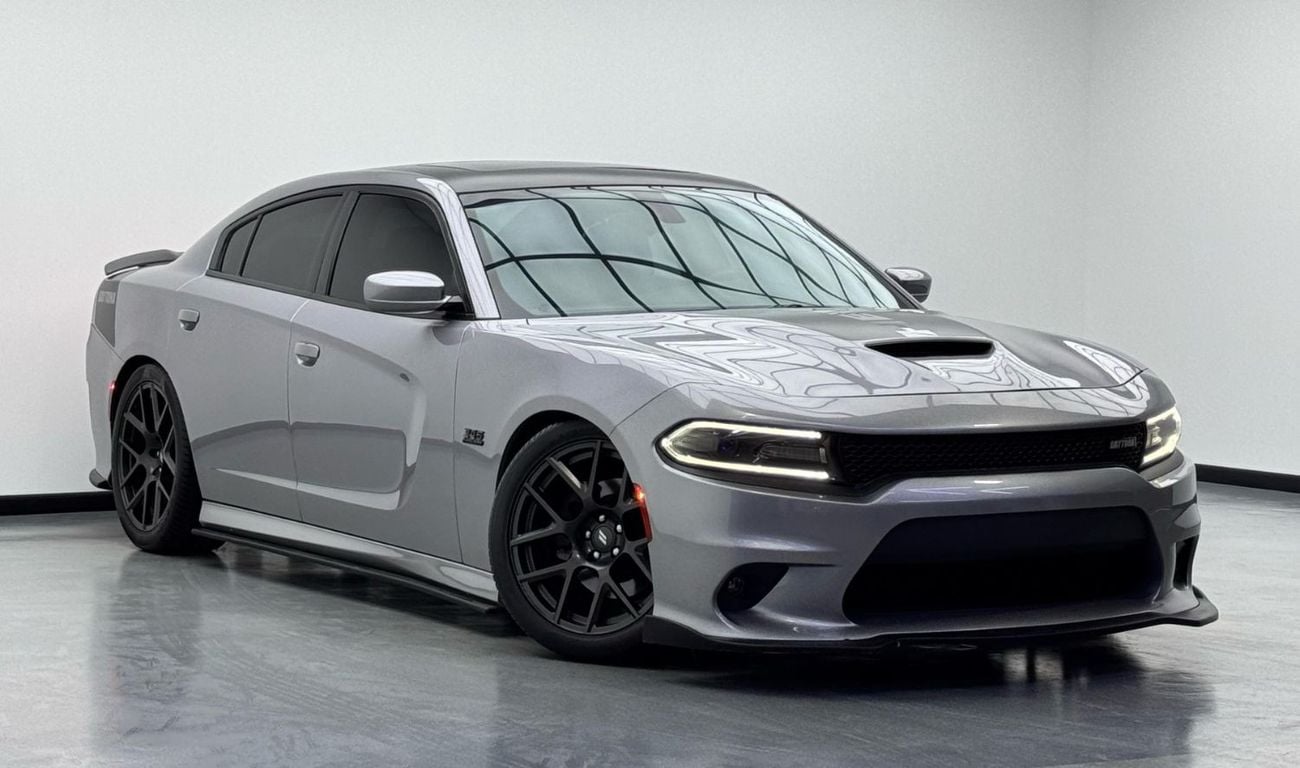
- A Satin Black hood graphic with a cutout displaying the engine displacement ("HEMI" on the 5.7L, "392" on the 6.4L).
- Satin Black roof wrap and a Satin Black decklid graphic spanning the rear quarter panels with "DAYTONA" badging.
- A SRT-inspired front fascia with a blacked-out grille bezel and a aggressive front splitter that aids high-speed downforce.
- Standard 20-inch wheels paired with a functional rear spoiler that stabilizes airflow over the decklid.
Cabin Ergonomics and Dodge Performance Pages
Inside, the 2017 Charger Daytona replaces standard seats with heated and ventilated performance seats upholstered in Nappa leather with Alcantara suede inserts. "DAYTONA" lettering is embroidered directly into the front seatbacks. Gold accent stitching runs across the dashboard, door panels, center console, and armrests.
A core technology feature of the Daytona interior is the 8.4-inch Uconnect touchscreen equipped with Dodge Performance Pages. This software suite allows drivers to display real-time vehicle diagnostics, including:
- Reaction timers, 0-60 mph times, and 1/4-mile elapsed times.
- Lateral and longitudinal g-force meters.
- Real-time engine output readouts (horsepower, torque, oil pressure, and coolant temperature).
- Customizable transmission shift points and steering effort levels.
Used Market Buyer's Inspection Checklist
When shopping for a pre-owned 2017 Dodge Charger Daytona, prospective buyers should conduct thorough pre-purchase inspections to verify mechanical health.
| Used 2017 Daytona Inspection Checklist |
|---|
| [ ] Valvetrain Inspection: Listen for "HEMI tick" at cold start |
| [ ] Active Exhaust Valves: Ensure motor actuators open/close smoothly |
| [ ] Brembo Brake Wear (392): Check rotor thickness & pad life |
| [ ] Transmission Fluid: Check 8-speed shift smoothness under load |
| [ ] Suspension Components: Inspect sway bar links and bushings |
| [ ] Tire Wear: Look for inner edge wear from performance camber |
- Valvetrain Noise ("HEMI Tick"): Listen closely to the engine during a cold start. A pronounced metallic ticking noise can indicate worn roller lifters or camshaft lobe wear, a known vulnerability on high-mileage 5.7L and 6.4L HEMI engines.
- Active Exhaust Functionality: The electronically controlled valves in the 2.75-inch exhaust system can occasionally bind or seize due to heat and road debris. Ensure the exhaust shifts sound profiles when toggling between Normal and Sport modes.
- Brembo Brake Wear (392 Models): Replacement rotors and pads for the 6-piston Brembo system on the Daytona 392 can be expensive. Inspect rotors for deep scoring, lip wear, or heat cracking before purchasing.
- Differential and Driveshaft: Check the rear differential housing for fluid leaks. Ensure smooth engagement during low-speed turns to verify the anti-spin or limited-slip clutch packs operate correctly.
- Suspension Bushings: The firm suspension calibration puts higher stress on front control arm bushings and sway bar links. Clunking noises over bumps indicate worn suspension joints.
Frequently Asked Questions
What is the exact horsepower of a 2017 Dodge Charger Daytona?
The horsepower depends on the engine equipped. The standard 2017 Dodge Charger Daytona with the 5.7-liter HEMI V8 produces 370 horsepower. The Daytona 392 model features a 6.4-liter HEMI V8 that produces 485 horsepower.
Is the 2017 Charger Daytona faster than a Charger R/T?
Yes, the 2017 Charger Daytona is slightly faster than a base Charger R/T of the same year. While both use the 5.7-liter V8, the Daytona includes a Mopar cold-air intake, active exhaust, a shorter 3.09 rear axle ratio, and the Super Track Pak suspension, which improves launch traction and acceleration times.
What is the difference between a 2017 Daytona and Daytona 392?
The main differences are engine size, power output, braking, and tire width. The standard Daytona has a 370-hp 5.7L V8, standard performance brakes, and 245mm tires. The Daytona 392 features a 485-hp 6.4L V8, 6-piston front Brembo brakes, wider 275mm tires, and stiffer Bilstein suspension damping.
What kind of gas does a 2017 Dodge Charger Daytona require?
For the 5.7-liter Daytona, Dodge recommends 89-octane mid-grade unleaded fuel for optimal performance, though 87-octane regular unleaded is acceptable. For the Daytona 392 (6.4-liter engine), 91-octane or higher premium unleaded fuel is strictly required to prevent engine knock and maintain full horsepower.
Did the 2017 Charger Daytona come in a manual transmission?
No, all 2017 Dodge Charger Daytona models were equipped exclusively with a TorqueFlite eight-speed automatic transmission. Drivers can manually select gears using steering-wheel-mounted paddle shifters or the center-console gear lever.
Summary and Final Recommendation
The 2017 Dodge Charger Daytona remains a standout modern muscle sedan, combining practical four-door roominess with aggressive heritage styling and strong performance.
- Choose the 5.7L Daytona (370 hp) if your priority is a comfortable daily driver with a classic V8 rumble, reasonable maintenance costs, lower insurance premiums, and excellent value on the pre-owned market.
- Choose the Daytona 392 (485 hp) if you prioritize raw acceleration, track-ready 6-piston Brembo stopping power, and a higher top speed, and are comfortable with higher fuel and brake maintenance expenses.
Before purchasing any used 2017 Daytona, ensure a complete service history is available, verify that active exhaust components function properly, and perform a mechanical check for valve-train noise.