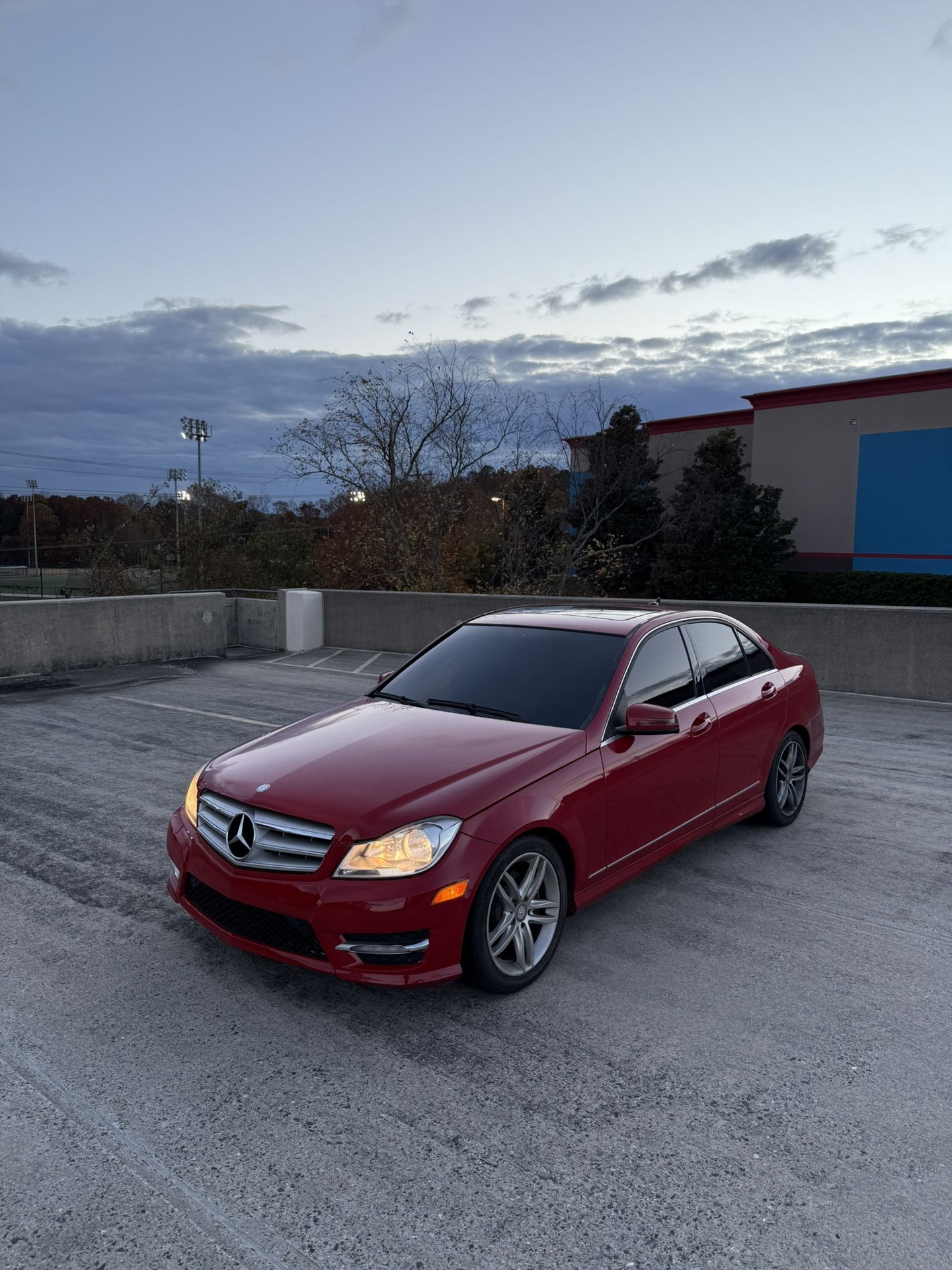
The 2012 Mercedes-Benz C300 Sport is powered by a 3.0-liter V6 engine producing 228 horsepower and 221 lb-ft of torque, paired exclusively with a 7G-TRONIC PLUS 7-speed automatic transmission and 4MATIC all-wheel drive. As a standout of the W204 facelift era, it features a sport-tuned suspension, staggered 17-inch wheels, and a revised interior that remains a benchmark for entry-level luxury durability.
The Evolution of the W204 Platform: 2012 Significance
The 2012 model year represents a pivotal moment for the Mercedes-Benz C-Class (W204 generation). Often referred to by enthusiasts as the "W204.5," this mid-cycle refresh introduced over 2,000 new parts compared to the 2011 model. For the C300 Sport specifically, these updates focused on refining the drivetrain efficiency and drastically overhauling an interior that had previously been criticized for its heavy use of hard plastics.
In the 2026 secondary market, the 2012 C300 Sport is frequently sought after because it sits in the "sweet spot" of the W204 production run. It benefits from the matured styling and updated electronics of the facelift while retaining the naturally aspirated M272 V6 engine—a power plant known for its linear power delivery and predictable maintenance cycles compared to the turbocharged engines that followed.
Engine and Powertrain Specifications
The heart of the 2012 C300 Sport is the 3.0L M272 V6. Unlike the C350 of the same year, which received the newer direct-injection M276 engine, the C300 retained the port-injected M272. This distinction is vital for long-term owners, as the port injection system avoids the carbon buildup on intake valves common in direct-injection counterparts.
Performance Metrics
- Engine Displacement: 2,996 cc (3.0 Liters)
- Configuration: 90-degree V6, Aluminum block and heads
- Valvetrain: DOHC, 4 valves per cylinder with continuous variable valve timing
- Horsepower: 228 hp @ 6,000 rpm
- Torque: 221 lb-ft @ 2,700–5,000 rpm
- Compression Ratio: 11.3:1
The engine’s torque curve is notably flat, providing peak pulling power as early as 2,700 rpm. This makes the C300 Sport feel more responsive in city driving than its 228-horsepower rating might suggest. Acceleration from 0 to 60 mph is achieved in approximately 7.1 seconds, with a top speed electronically limited to 130 mph.
Transmission and 4MATIC System
For 2012, the C300 Sport came standard with the 7G-TRONIC PLUS transmission. This was an evolution of the previous 7-speed automatic, featuring a new torque converter designed for reduced noise, vibration, and harshness (NVH) and improved fuel economy through a revamped ECO start/stop-ready oil pump system.
In the United States market, the 2012 C300 Sport was configured exclusively with the 4MATIC permanent all-wheel-drive system. This system utilizes a center differential with a 45:55 front-to-rear torque split, providing a rear-biased feel that complements the "Sport" nomenclature while ensuring traction in inclement weather. The integration of 4MATIC into the transmission housing keeps the added weight to a minimum, preserving the car's balance.
Sport Trim Distinctions: Chassis and Handling
The "Sport" designation on the 2012 C300 is not merely an aesthetic package; it involves fundamental changes to the vehicle's geometry and hardware compared to the "Luxury" trim.
Suspension and Steering
The C300 Sport utilizes the Agility Control suspension system. This features amplitude-dependent damping, which softens the ride over small bumps for comfort but stiffens immediately during aggressive cornering to reduce body roll.
- Ride Height: The Sport trim sits approximately 0.6 inches (15mm) lower than the Luxury trim.
- Spring Rates: Stiffer coil springs and re-valved shock absorbers.
- Braking System: The Sport model features perforated front brake discs with "Mercedes-Benz" branded calipers, providing better heat dissipation during spirited driving.
- Steering: A speed-sensitive rack-and-pinion setup with a more direct ratio than the Luxury model, offering increased feedback through the three-spoke Nappa leather steering wheel.
Exterior and Aerodynamics
Visually, the 2012 C300 Sport is distinguished by its AMG-inspired body styling. This includes a deeper front air dam with larger intakes, side skirts, and a rear diffuser-style bumper insert. The grille features the prominent Mercedes-Benz star integrated into the center, whereas the Luxury trim uses the traditional hood ornament and a multi-slat chrome grille.
Standard wheels for the Sport trim are 17-inch twin 5-spoke alloys. These are staggered, meaning the rear wheels (8.5 inches wide) are wider than the front wheels (7.5 inches wide), allowing for a larger tire contact patch at the rear to improve traction and cornering stability.
Interior Design and Technology Refresh
The 2012 facelift brought a completely redesigned dashboard. The previous "pop-up" navigation screen was replaced with a fixed, high-resolution color display integrated into the instrument cluster hood.
Cabin Materials and Ergonomics
The C300 Sport cabin features:
- Trim Options: Standard brushed aluminum trim, though Black Ash wood was a popular upgrade.
- Instrumentation: A five-tube gauge cluster with a central 4.5-inch color Thin Film Transistor (TFT) display that provides navigation prompts, trip data, and vehicle settings.
- Seating: Sport-bolstered front seats with MB-Tex (durable synthetic leather) or optional genuine leather. The Sport trim seats offer significantly more lateral support than the flatter Luxury trim seats.
Connectivity and Infotainment
The COMAND system in the 2012 model was updated to version 4.5. This included Bluetooth audio streaming as a standard feature, a significant upgrade over previous years where Bluetooth was often limited to phone calls only. The system also supports a hard-drive-based navigation system and a 10GB "Music Register" for digital file storage.
Comprehensive Technical Specifications Table
The following table outlines the critical dimensions and capacities for the 2012 Mercedes-Benz C300 Sport 4MATIC.
| Feature | Specification |
|---|---|
| Body Style | Five-passenger compact luxury sedan |
| Wheelbase | 108.7 inches (2,760 mm) |
| Overall Length | 180.8 inches (4,591 mm) |
| Overall Width | 69.7 inches (1,770 mm) |
| Curb Weight | 3,737 lbs (1,695 kg) |
| Fuel Tank Capacity | 17.4 US Gallons (66 Liters) |
| Fuel Requirement | Premium Unleaded (91 Octane or higher) |
| EPA Fuel Economy | 18 City / 25 Highway / 20 Combined mpg |
| Turning Circle | 35.5 feet |
| Cargo Capacity | 12.4 cubic feet |
| Front Tires | 225/45 R17 |
| Rear Tires | 245/40 R17 |
Safety and Driver Assistance Systems
In 2012, Mercedes-Benz prioritized the "democratization" of safety, bringing S-Class level technology to the C-Class. This makes the 2012 C300 Sport one of the safer vehicles in its age bracket as of 2026.
- Attention Assist: This system monitors over 70 parameters of driving behavior to detect signs of drowsiness. If the system senses the driver is becoming fatigued, it provides an audible alert and a visual "coffee cup" icon on the dashboard.
- Pre-Safe: This predictive system can detect an impending collision. It automatically tightens the front seat belts, closes the sunroof and windows, and adjusts the passenger seat to an optimal position for airbag deployment.
- Electronic Stability Program (ESP): A sophisticated traction and stability control system that can apply individual brakes and reduce engine power to prevent oversteer or understeer.
- Brake Assist (BAS): This technology recognizes emergency braking situations by the speed at which the driver hits the pedal and applies maximum braking pressure instantly to shorten stopping distances.
Ownership and Maintenance Considerations in 2026
Approaching the 15-year mark, the 2012 Mercedes-Benz C300 Sport requires specific attention to maintain its performance specifications. While the M272 engine is robust, there are documented areas of concern for high-mileage examples.
Mechanical Reliability
- Intake Manifold Flaps: The tumble flaps inside the intake manifold are made of plastic and can fail over time. In 2026, many owners opt for aftermarket aluminum replacement kits rather than replacing the entire manifold.
- Transmission Service: The 7G-TRONIC PLUS is reliable but sensitive to fluid quality. Mercedes-Benz recommends a service (fluid and filter change) every 70,000 miles. Neglecting this can lead to rough shifts or torque converter shudder.
- ESL/EIS Issues: The Electronic Steering Lock (ESL) and Electronic Ignition Switch (EIS) are known failure points. If the car fails to recognize the key or the steering wheel remains locked, it often indicates an ESL motor failure.
- Subframe Corrosion: Owners in "salt belt" regions should inspect the rear subframe. Mercedes-Benz has previously issued extended warranties or recalls for subframe corrosion on certain W204 models, and verifying the status of this component is critical for safety.
Maintenance Costs
Maintaining a C300 Sport to factory specifications is more expensive than a standard economy car but remains manageable for many enthusiasts. Synthetic oil changes (using MB 229.5 specification oil) are typically required every 10,000 miles or once a year. The use of staggered tires means that tires cannot be rotated front-to-back, which often leads to shorter tire life compared to square setups.
Comparing the C300 Sport to the C250 and C350
In 2012, the C-Class lineup was diverse. Understanding where the C300 Sport sits helps clarify its value proposition.
- C250 Sport: Powered by a 1.8L turbocharged 4-cylinder. It offers better fuel economy (31 mpg highway) but lacks the smooth power delivery and AWD capability of the C300. It is significantly lighter in the front end, making it feel slightly more "tossable" in corners.
- C350 Sport: Features the 3.5L V6 (302 hp). It is noticeably faster than the C300 and used the more advanced M276 direct-injection engine. However, in 2012, the C350 was primarily RWD in the US, making the C300 the preferred choice for those needing all-weather traction.
Frequently Asked Questions
Does the 2012 Mercedes C300 Sport require premium fuel?
Yes, the M272 V6 engine is designed with a high compression ratio (11.3:1) and requires 91 octane or higher. Using lower-grade fuel can cause engine knocking and will prompt the ECU to retard ignition timing, resulting in reduced power and lower fuel efficiency.
Is the 2012 C300 Sport a reliable daily driver in 2026?
The 2012 model is considered one of the most reliable iterations of the C-Class. By this year, Mercedes had resolved the balance shaft gear issues that plagued earlier versions (2006–2007) of the M272 engine. With a well-documented service history, these cars can easily exceed 200,000 miles.
What are the main differences between the "Sport" and "Luxury" trims?
The Sport trim features a firmer, lowered suspension, staggered wheels, aggressive AMG body styling, and a flat-bottomed steering wheel. The Luxury trim offers a softer ride, 17-inch non-staggered wheels, a traditional hood ornament, and Burl Walnut wood interior trim.
Can the infotainment system in the 2012 C300 be upgraded to Apple CarPlay?
The factory COMAND 4.5 system does not support Apple CarPlay or Android Auto natively. However, by 2026, many aftermarket solutions exist, including "unichip" modules or replacement screen units that integrate with the factory controls to provide modern smartphone connectivity.
Does the 2012 C300 Sport have a backup camera?
A rearview camera was an optional feature as part of the Multimedia Package. It was not standard across all C300 Sport models. If the car has the larger COMAND screen with navigation, it likely has the camera, but it should be verified individually.
How does the 4MATIC system affect maintenance?
The 4MATIC system requires periodic checks of the front and rear differential fluids, as well as the transfer case fluid. Additionally, the front CV axles are components that may require replacement as boots tear with age, a task not necessary on RWD models.
Final Recommendations for Buyers
The 2012 Mercedes-Benz C300 Sport remains a compelling option for those seeking a "pure" Mercedes-Benz driving experience before the brand's shift toward smaller, turbocharged engines and tablet-heavy interiors. To ensure a high-quality purchase in 2026, prospective buyers should prioritize vehicles with a documented history of 7G-TRONIC fluid changes and inspect the intake manifold for lever failure. If you value a balance of mechanical simplicity, all-weather capability, and the classic "bank vault" build quality of the W204 generation, the C300 Sport stands as the premier choice in its class.