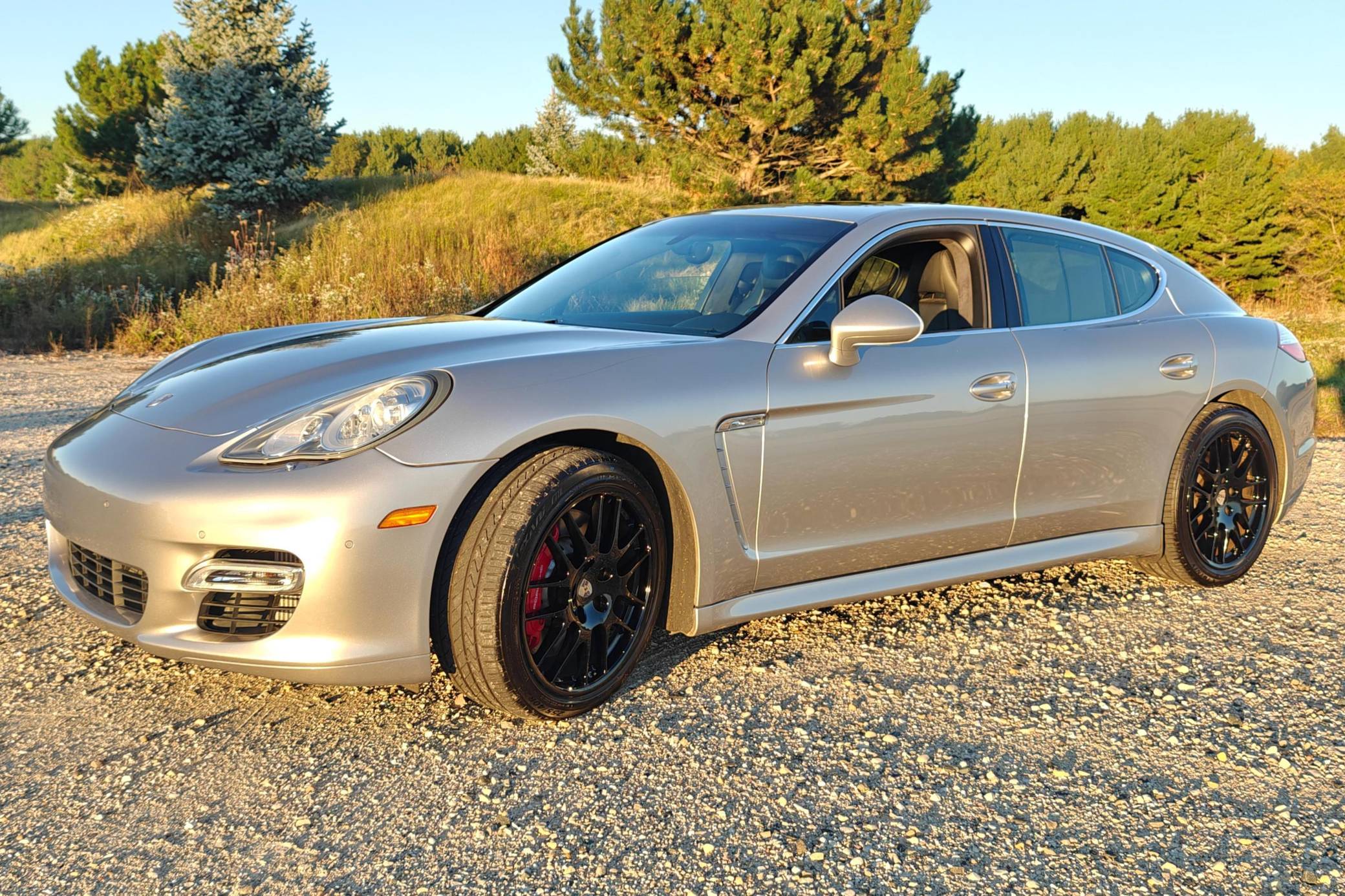
The 2010 Porsche Panamera Turbo delivers a factory-rated 500 horsepower (368 kW) from its 4.8-liter twin-turbocharged V8 engine. This flagship model of the original Panamera lineup produces 516 lb-ft of torque, which increases to 568 lb-ft during brief overboost conditions when equipped with the optional Sport Chrono Package, allowing for rapid acceleration in a luxury executive sedan.
Engineering the Powerplant: The 4.8L Twin-Turbo V8
The heart of the 2010 Porsche Panamera Turbo is a sophisticated 4.8-liter V8 engine utilizing direct fuel injection and two parallel turbochargers. At the time of its introduction, this engine represented a significant leap for Porsche in the executive sedan segment, moving away from the traditional rear-engine layout of the 911 while maintaining the brand's commitment to high-performance output.
The technical architecture of this engine is designed to balance the demands of a grand touring vehicle with the raw power expected from a Porsche bearing the "Turbo" badge. By employing two turbochargers, the engine reduces turbo lag significantly compared to single-turbo configurations, providing a linear power delivery curve. This setup allows the 2010 model to achieve peak torque at relatively low revolutions per minute, which is essential for moving a heavy, all-wheel-drive luxury sedan with agility.
Torque Dynamics and the Sport Chrono Package
While horsepower figures often dominate the conversation, the torque output of the 2010 Panamera Turbo is arguably the more critical metric for daily driving performance. The standard 516 lb-ft of torque ensures that the vehicle maintains strong pulling power across the entire rev range.
For owners who utilize the Sport Chrono Package, the engine management system is altered to permit "overboost." During full-throttle acceleration, the boost pressure is temporarily increased, pushing the torque output to 568 lb-ft. This feature is not meant for sustained operation but rather for short bursts during passing or track-based driving, illustrating the dual-purpose nature of the car as both a comfortable cruiser and a performance machine.
Performance Metrics and Real-World Application
The 500 horsepower output enables the 2010 Panamera Turbo to achieve a top speed of 188 mph (303 km/h). When paired with the seven-speed Porsche Doppelkupplung (PDK) dual-clutch transmission and the standard all-wheel-drive system, the car is capable of reaching 60 mph in approximately 4.0 seconds.
It is important to note that these figures were verified by Porsche under controlled conditions. In real-world environments, factors such as tire choice, fuel quality (the use of premium 93 octane or higher is required for the engine to hit its rated targets), and ambient temperature can influence these times. Prospective owners or those maintaining these vehicles should ensure the cooling systems and air intake tracts are clean, as heat soak in the turbochargers can lead to a reduction in effective power output over sustained periods of aggressive driving.
Technical Comparison of Panamera Variants (2010 Model Year)
To understand the position of the Turbo model, it is helpful to compare it to the naturally aspirated Panamera S and 4S variants available in the same production year.
| Trim Level | Engine Type | Horsepower | Torque (lb-ft) | Drivetrain |
|---|---|---|---|---|
| Panamera S | 4.8L V8 | 400 hp | 369 lb-ft | RWD |
| Panamera 4S | 4.8L V8 | 400 hp | 369 lb-ft | AWD |
| Panamera Turbo | 4.8L Twin-Turbo V8 | 500 hp | 516 (568) lb-ft | AWD |
As shown in the table, the jump from the 4S to the Turbo is significant, not just in horsepower, but in the delivery of torque. The Turbo model utilizes a different engine internal architecture designed to withstand the higher thermal and pressure loads associated with forced induction.
Factors Influencing Power Delivery
Several mechanical and electronic systems must function in harmony to sustain the factory-rated horsepower. Owners of 2010 models in 2026 should be aware of the following factors that influence power:
- Direct Fuel Injection (DFI): The 2010 Panamera uses a high-pressure DFI system. Over many years, carbon buildup on the intake valves can potentially restrict airflow, leading to a minor loss in efficiency and power. Periodic inspection and, if necessary, walnut-shell blasting of the intake ports is a common maintenance task for high-mileage examples.
- Turbocharger Health: The parallel turbochargers are cooled by both oil and engine coolant. Ensuring that the coolant pump for the turbocharger system is functioning correctly is vital. If the auxiliary coolant pump fails, the ECU may pull timing or limit boost to protect the engines from heat damage.
- Transmission Software: The PDK transmission is integral to how the power is put to the ground. In 2010, the software was tuned for rapid gear changes. Owners who feel the car is not performing at its peak should verify if the transmission control unit has the latest available firmware updates, as these often optimized shift logic and torque management.
Maintenance Considerations for Maximum Performance
Maintaining the 500-horsepower rating over the long term requires adherence to a rigorous maintenance schedule. Porsche’s original documentation for the 2010 Panamera emphasizes the importance of using high-quality synthetic oil to protect the turbocharger bearings. Because the oil serves both as a lubricant and a heat-transfer medium for the turbos, using the wrong viscosity or low-quality oil can lead to premature wear and power degradation.
Furthermore, air filters must be replaced at the recommended intervals. A restricted air filter will force the turbochargers to work harder to pull air through the intake, increasing the intake air temperature and triggering the engine management system to retard timing, thereby reducing power.
Common Questions Regarding 2010 Panamera Turbo Power
Is it possible to increase the horsepower of a 2010 Panamera Turbo beyond the factory 500 hp? Yes, there are aftermarket software tunes and hardware modifications available. However, modifying the engine management system or replacing the exhaust components can increase stress on the transmission and the AWD transfer case. It is recommended to perform a thorough pre-modification inspection to ensure the engine is healthy before adding additional boost.
Does the 2010 Panamera Turbo require high-octane fuel? Yes. To achieve the factory-rated 500 horsepower, the engine requires high-octane (premium) fuel, typically 91 or 93 octane depending on the region. The engine's knock sensors are sensitive; if lower-grade fuel is used, the ECU will automatically adjust the ignition timing, resulting in a noticeable decrease in performance and power.
How does the all-wheel-drive system affect the feeling of power? The 2010 Panamera Turbo uses a sophisticated electronically controlled multi-plate clutch system. This provides excellent traction, which allows the car to put all 500 horsepower to the ground more effectively than a rear-wheel-drive vehicle, especially in less-than-ideal weather conditions or during a standing start.
Will the Panamera Turbo lose horsepower as it ages? Like any internal combustion engine, natural wear—such as slight losses in compression or sensor degradation—can lead to small decreases in power over many years. However, with regular maintenance of the fuel, ignition, and forced induction systems, the 2010 model is engineered to retain the vast majority of its original performance capacity well into its life cycle.
Conclusion and Practical Guidance
The 2010 Porsche Panamera Turbo remains a benchmark for executive sedans due to its specific 500-horsepower output and advanced AWD performance. For owners and enthusiasts in 2026, the priority should be the preservation of this performance through consistent, preventative maintenance of the cooling, ignition, and fuel systems. When evaluating a used vehicle or diagnosing performance issues, always begin by checking the integrity of the intake system and ensuring the transmission is operating within factory parameters. If the vehicle is failing to meet expectations, prioritize a diagnostic session with a technician familiar with the 2010-era 4.8-liter Porsche V8 to identify potential sensor or cooling inefficiencies.