The 2008 Philadelphia Phillies season timeline traces a remarkable, pressure-packed journey from spring training optimism through a gritty National League East division battle, culminating in a triumphant, rain-suspended World Series victory that brought the franchise its second-ever championship. Led by manager Charlie Manuel and a core of homegrown stars like Ryan Howard, Chase Utley, Jimmy Rollins, and Cole Hamels, the 2008 campaign captured the spirit of a resilient city and cemented a legendary era in Philadelphia sports history.
Preseason and Spring Training: Building a Contender
Entering the 2008 Major League Baseball season, the Philadelphia Phillies carried the momentum of a surprising 2007 finish. After capturing the National League East title on the final day of the previous regular season—their first playoff appearance since 1993—the organization shifted from up-and-coming challengers to legitimate World Series contenders. General manager Ruben Amaro Jr. and team executives focused on retaining core talent while adding pitching depth to support an already lethal, left-handed-heavy lineup.
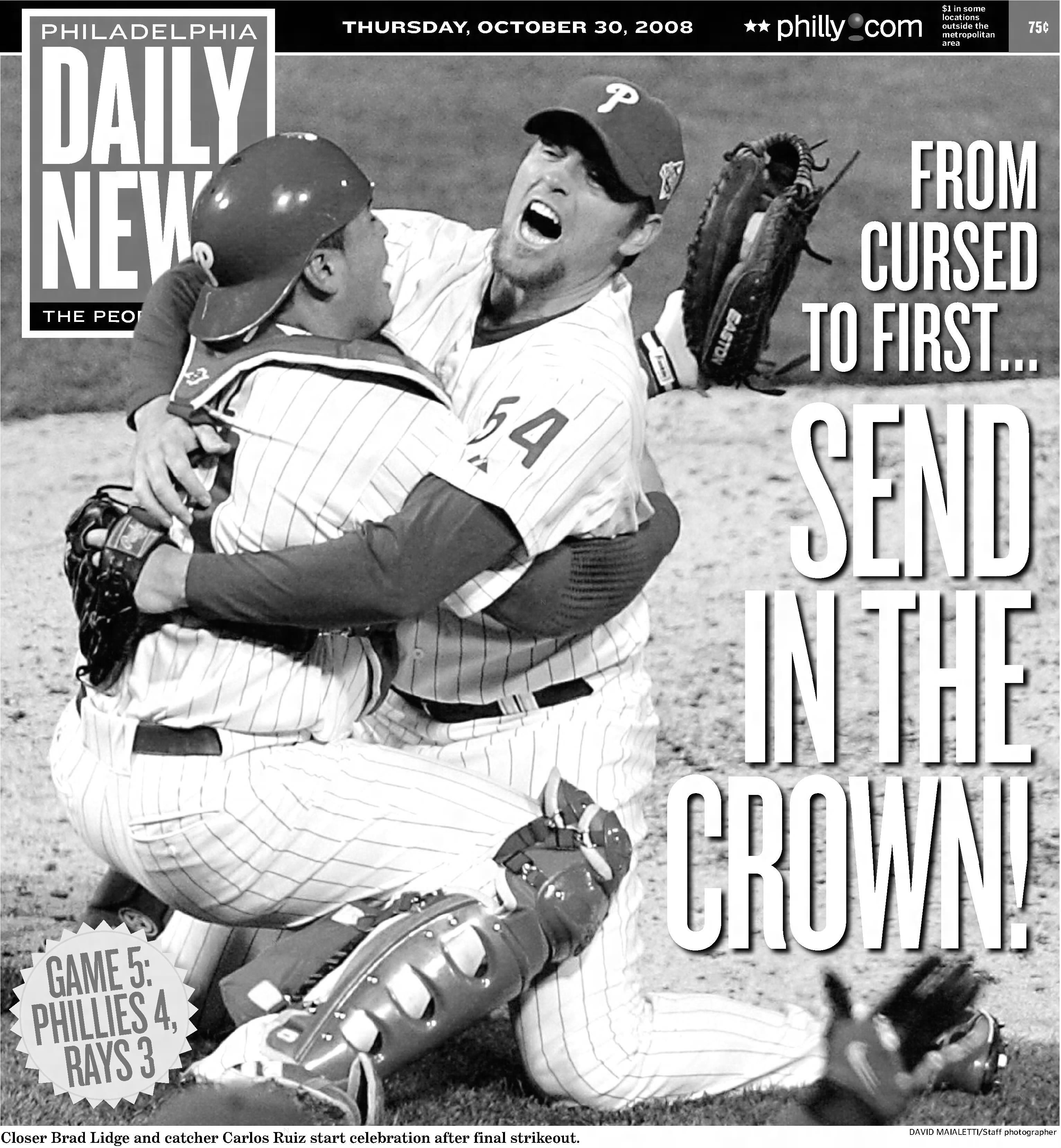
Spring training in Clearwater, Florida, in February and March of 2008 was characterized by high expectations and focused preparation. Manager Charlie Manuel emphasized continuity and defensive improvement. Key offseason acquisitions, such as veteran reliever Brad Lidge brought in via trade from the Houston Astros to stabilize a notoriously shaky bullpen, proved to be the missing puzzle piece. Lidge’s arrival settled the closer role, transforming a primary weakness into an anchor. The roster was set with a potent blend of homegrown power hitters, elite double-play combinations, and a starting rotation anchored by twenty-four-year-old left-hander Cole Hamels and veteran right-hander Brett Myers.
April and May: Navigating Early-Season Inconsistency
The regular season opened on March 31, 2008, at Citizens Bank Park against the Washington Nationals. However, the early weeks of the schedule did not immediately reflect a championship trajectory. April brought fluctuating performances, particularly from a starting rotation trying to find a rhythm behind Hamels. The offense, while potent, experienced typical early-season timing issues in the cold Philadelphia spring air.
By the end of April, the Phillies hovered near the middle of the National League East standings, trailing the heavily favored New York Mets. May required gritty divisional play. Jimmy Rollins, the reigning National League Most Valuable Player, spent time on the disabled list with a sprained ankle, testing the team's depth. Utility players like Jayson Werth and Geoff Jenkins stepped up during these absences, keeping the club afloat. By late May, the pitching staff began to stabilize, and Brad Lidge maintained a spotless save conversion rate, instilling confidence in late-inning situations as the team prepared for the summer grind.
June and July: Finding Form and the Trade Deadline Push
As summer arrived, the 2008 Phillies season timeline accelerated. June featured several notable offensive explosions and a tightening division race. Ryan Howard began hitting with his customary power, driving in crucial runs, while Chase Utley played Gold Glove-caliber defense at second base and maintained an elite on-base percentage.
The turning point of the mid-summer months involved strategic roster adjustments. Recognizing that the bullpen needed reinforcement to survive a pennant race, management acquired veteran reliever J.C. Romero and outfielder/pinch-hitter Matt Stairs in separate moves to bolster bench depth. On July 15, Citizens Bank Park hosted the Major League Baseball All-Star Game, showcasing Phillies stars Utley, Howard, Hamels, and Lidge to a national audience. Emerging from the mid-summer classic, the Phillies went on a crucial winning streak in late July, overtaking the collapsing New York Mets and asserting themselves at the top of the division.
August and September: The Division Race and Clinching the East
August and September tested the mental and physical endurance of the team. The New York Mets mounted a fierce challenge, while the Atlanta Nationals and Florida Marlins remained dangerous division opponents. Every series carried postseason implications.
On September 12, the Phillies began a pivotal three-game series against the Mets at Shea Stadium. Sweeping the Mets in New York served as a psychological statement. The team returned to Philadelphia with the division lead firmly in their grasp.
The regular-season conclusion arrived on September 28, 2008. Needing a victory against the Florida Marlins at Citizens Bank Park to officially secure the National League East crown, Jamie Moyer—the 45-year-old veteran left-hander—delivered a stellar pitching performance. The Phillies won 6-2, capturing back-to-back division titles for the first time in franchise history and setting the stage for October baseball.
| Month | Key Milestone / Event | Significance |
|---|---|---|
| March/April 2008 | Opening Day & Early Season Games | Established the roster; tested bullpen stability under new closer Brad Lidge. |
| May 2008 | Jimmy Rollins Injury & Recovery | Tested bench depth; role players like Jayson Werth stepped up during the absence. |
| July 2008 | MLB All-Star Game & Trade Additions | Citizens Bank Park hosted the All-Star game; bullpen and bench reinforcements added. |
| September 2008 | Shea Stadium Sweep & Division Clinch | Phillies swept the Mets in New York and clinched the NL East on Sept 28. |
| October 2008 | NLDS, NLCS, & World Series Victory | Defeated Milwaukee, Los Angeles, and Tampa Bay to win the World Series. |
October: The Postseason Run
The postseason began in early October with the National League Division Series (NLDS) against the wildcard-winning Milwaukee Brewers. The Phillies leaned heavily on their pitching ace, Cole Hamels, who pitched a masterclass in Game 1. Backed by timely home runs from Shane Victorino and Ryan Howard, the Phillies dispatched the Brewers three games to one, advancing to the National League Championship Series (NLCS) for the first time since 1993.
In the NLCS, the Phillies faced the heavily favored Los Angeles Dodgers, managed by former Philadelphia skipper Joe Torre. The series showcased the dominance of the Phillies' pitching staff. Cole Hamels earned NLCS MVP honors, winning two games with stellar earned run averages. Matt Stairs provided one of the most iconic moments in franchise history in Game 4 with a legendary pinch-hit, two-run home run high into the right-field seats at Dodger Stadium off Jonathan Broxton. The Phillies closed out the Dodgers in Game 5 at home on October 21, capturing the National League pennant and earning a trip to the Fall Classic.
The World Series: Rain, Drama, and the Championship
The 2008 World Series pitted the Philadelphia Phillies against the American League champion Tampa Bay Rays. The series began on October 22 at Tropicana Field in St. Petersburg, Florida. Cole Hamels continued his stellar postseason form, winning Game 1 behind offensive support from Chase Utley, who hit a home run in his first World Series at-bat.
After splitting the first two games in Florida, the series shifted to Citizens Bank Park for Game 3, where Ryan Howard hit two home runs in a victory. Game 4 featured another pitching gem from Joe Blanton, who also helped his own cause by hitting the first World Series home run by a National League pitcher since 1974.
Game 5, played on October 27, stands as the most famous weather-delayed game in baseball history. With the game tied 2-2 in the bottom of the sixth inning, torrential rain forced umpires to halt play. The game remained suspended for nearly two days as a historic storm battered the Philadelphia region. When play resumed on the evening of October 29, the Phillies quickly scored the go-ahead run in the bottom of the seventh. In the top of the ninth inning, Brad Lidge took the mound, striking out Eric Hinske for the final out. Lidge completed a perfect 48-for-48 season in save opportunities, sealing the 4-3 victory and securing the franchise's second World Series championship.
Frequently Asked Questions
Who was the manager of the 2008 Philadelphia Phillies?
Charlie Manuel managed the 2008 Philadelphia Phillies. Known for his folksy demeanor and steadfast support of his players, Manuel successfully guided the team through a high-pressure division race and navigated the grueling October postseason to capture the World Series title.
Who won the World Series MVP for the 2008 Phillies?
Cole Hamels won the 2008 World Series Most Valuable Player award. Hamels dominated the entire 2008 postseason, compiling a 4-0 record with a 1.80 ERA across five starts, including crucial victories in the NLDS, NLCS, and Game 1 of the World Series.
What was Brad Lidge's record in saves during the 2008 season?
Brad Lidge achieved a flawless 48-for-48 record in save opportunities during the 2008 campaign, combining regular-season and postseason appearances. This perfect conversion rate included the final out of Game 5 of the World Series.
Why was Game 5 of the 2008 World Series suspended?
Game 5 of the 2008 World Series was suspended due to heavy, continuous rainfall that made the playing field unplayable. The game was halted in the bottom of the sixth inning with a 2-2 tie and resumed nearly 48 hours later on October 29, when the Phillies secured the championship.
Which players hit the most notable home runs during the 2008 postseason?
Matt Stairs hit one of the most famous home runs of the run—a dramatic, two-run pinch-hit shot in Game 4 of the NLCS against the Dodgers. Additionally, Chase Utley, Ryan Howard, and Shane Victorino delivered clutch home runs throughout the divisional and championship series.
Conclusion and Legacy
The 2008 Philadelphia Phillies season timeline remains a cherished chapter in baseball history, defined by resilience, clutch performances, and a flawless closer anchoring a championship roster. From the early-season adjustments in Clearwater to the rain-soaked celebration at Citizens Bank Park, the team united a passionate fan base. Reviewing this historic run highlights the exact milestones, player contributions, and dramatic twists that brought the World Series trophy back to Philadelphia.