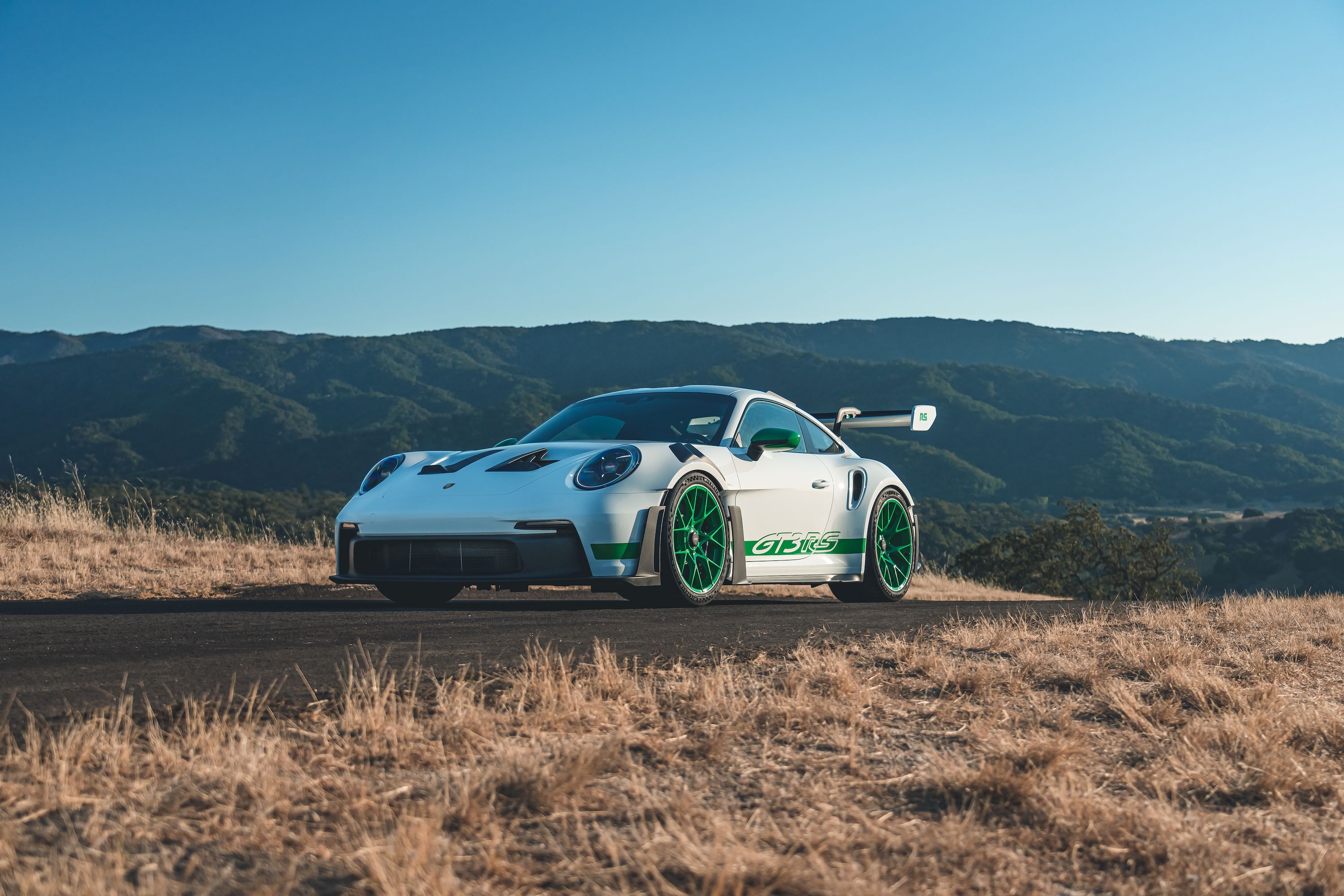
While official factory specifications position the Porsche 911 GT3 RS (992 generation) with a slightly more conservative manufacturer-claimed 0–60 mph time of 3.0 seconds, independent automotive testing and real-world telemetry frequently reveal times dipping down to 2.7 seconds. This discrepancy stems from variations in drag strip prep, ambient temperatures, rollout subtraction, and the brutal efficiency of Porsche's modern dual-clutch transmission.
Evaluating high-performance automotive metrics requires looking past marketing numbers and examining the mechanical reality. The Porsche 911 GT3 RS is designed primarily for aerodynamic downforce, cornering G-forces, and road-course dominance rather than raw straight-line quarter-mile drag racing. Yet, its launch control capability and engine output allow it to shatter traditional performance thresholds, creating intense interest among enthusiasts tracking its exact acceleration capabilities.
Understanding the Porsche 911 GT3 RS Drivetrain and Platform
The current generation Porsche 911 GT3 RS (992) utilizes a naturally aspirated 4.0-liter flat-six engine. Unlike its turbocharged siblings in the 911 lineup—such as the Turbo S, which prioritizes forced induction torque to blast off the line—the GT3 RS relies on high-revving horsepower and instant throttle response. Generating 518 horsepower at a screaming 8,500 RPM and 342 lb-ft of torque at 6,300 RPM, the engine is paired exclusively with a heavily modified 7-speed Porsche Doppelkupplung (PDK) dual-clutch transmission.
To achieve lightning-fast acceleration numbers like a 2.7-second 0–60 mph run, every component of the drivetrain must work in absolute harmony. The PDK transmission executes gear changes in milliseconds with zero interruption in power delivery to the rear wheels. Furthermore, the GT3 RS features shorter gear ratios than a standard GT3, maximizing in-gear acceleration and keeping the flat-six engine screaming in its optimal power band throughout the acceleration run.
Factory Specifications vs. Independent Real-World Testing
Automotive manufacturers like Porsche are notoriously conservative with their official performance estimates. Porsche officially states that the 992 GT3 RS accelerates from 0 to 60 mph in 3.0 seconds. However, automotive publications and professional drivers using high-precision VBOX satellite telemetry frequently record faster times under optimal conditions.
| Metric | Porsche Factory Claim | Independent Real-World VBOX Testing |
|---|---|---|
| 0–60 mph Acceleration | 3.0 seconds | 2.7 – 2.8 seconds |
| 0–100 km/h (62 mph) | 3.2 seconds | 2.9 seconds |
| Quarter-Mile Time | ~10.9 seconds | 10.7 – 10.8 seconds |
| Top Track Speed | 184 mph (aerodynamically limited) | 184 mph |
The divergence between factory claims and track-tested numbers generally comes down to testing methodologies. Factory figures often account for a standard rollout (a 1-foot rollout used in North American drag racing where the vehicle moves 12 inches before timing officially begins) or standard ambient conditions with a full tank of fuel and heavy factory fluids. Independent testers sometimes utilize aggressive rollout metrics or run on prepped drag strips that offer exceptional rubber traction.
The Role of Launch Control and Rear-Engine Physics
Achieving a 2.7-second 0–60 mph time in a rear-wheel-drive, naturally aspirated car is a feat of modern automotive engineering. Traditional rear-wheel-drive cars struggle with wheelspin off the line because weight transfers backward during acceleration, unloading the front tires and momentarily destabilizing the rear contact patch.
The 911 GT3 RS bypasses much of this traditional limitation due to its layout:
- Rear-Engine Weight Distribution: Having the engine mounted over the rear driving wheels naturally forces the tires down into the pavement, maximizing mechanical grip during standing starts.
- Launch Control (PDK Sport): By holding the brake, flooring the throttle, and utilizing the launch control system, the computer manages clutch slip precisely to maximize acceleration without excessive wheelspin or bogging down the engine.
- Massive Contact Patch: The GT3 RS comes equipped with ultra-wide, track-focused street tires (Michelin Pilot Sport Cup 2 R tires measuring 335/30 R21 at the rear), providing enormous surface adhesion.
Environmental Factors and Track Preparation
Real-world acceleration times are heavily dependent on environmental variables. A 2.7-second run does not happen in every scenario; it requires a specific window of atmospheric and surface conditions.
Cold, dense air increases engine volumetric efficiency, providing a slight power boost. However, ultra-cold asphalt reduces tire grip, leading to wheelspin. Conversely, hot weather robs the naturally aspirated engine of oxygen, slightly decreasing horsepower output. Ideal conditions usually involve ambient temperatures between 50°F and 65°F (10°C to 18°C) on a clean, dry surface with minimal crosswinds.
Furthermore, track preparation plays a massive role. Public roads are dusty and lack the rubber buildup found on a drag strip or a recently used road course. On an unprepared public highway, a 911 GT3 RS is more likely to achieve the factory-stated 3.0-second or 3.1-second mark due to minor initial slip.
Aerodynamics: The Trade-off Between Drag and Downforce
One of the most fascinating aspects of the 911 GT3 RS is its active aerodynamic package, highlighted by its massive rear wing featuring a Drag Reduction System (DRS). While this aero package creates up to 860 pounds of downforce at 177 mph—allowing the car to corner at mind-bending speeds—it also generates aerodynamic drag.
Unlike straight-line hypercars built specifically for top speed or low-drag quarter-mile runs, the GT3 RS is optimized for lateral G-forces. The large wing and aggressive front splitter create resistance at higher speeds, meaning the vehicle's incredible acceleration is heavily front-loaded in the 0 to 100 mph bracket, where mechanical grip and low-end gearing matter more than high-speed aero slicing.
Frequently Asked Questions
Can a stock Porsche 911 GT3 RS really hit 0–60 in 2.7 seconds?
Yes, under ideal testing conditions with prepped asphalt and a skilled driver utilizing launch control, independent telemetry has recorded 0–60 mph times as fast as 2.7 seconds, outpacing Porsche's conservative 3.0-second factory claim.
Why does Porsche claim a slower 3.0-second time than what testers achieve?
Automotive manufacturers typically publish conservative performance figures to ensure customers can replicate the numbers across various real-world conditions, accounting for average fuel, standard road surfaces, and less-than-perfect atmospheric variables.
Does the GT3 RS have all-wheel drive?
No. The Porsche 911 GT3 RS is strictly rear-wheel drive. Achieving a sub-three-second 0–60 mph time with rear-wheel drive alone is a testament to its rear-engine weight bias and advanced launch control software.
How does the GT3 RS differ from the 911 Turbo S in acceleration?
While the Turbo S uses all-wheel drive and twin-turbochargers to launch from 0–60 mph in roughly 2.6 seconds with effortless traction, the GT3 RS is a naturally aspirated, track-focused machine designed for road courses rather than drag strips.
What tires are required to achieve maximum acceleration?
The factory-option Michelin Pilot Sport Cup 2 R tires—or equivalent ultra-high-performance track-day rubber—are necessary to provide the extreme lateral and longitudinal grip required to launch the car without severe wheelspin.
Next Actions for Enthusiasts and Track Drivers
For drivers looking to replicate or study high-performance acceleration metrics in vehicles like the 911 GT3 RS, investing in certified telemetry equipment such as a VBOX GPS data logger is essential. Relying on dashboard timers or smartphone apps often yields inaccurate data due to GPS update latency. Furthermore, drivers attempting high-performance launches should always verify that their braking systems, tire pressures, and suspension settings are dialed in for track use, ensuring both safety and mechanical longevity during aggressive driving sessions.