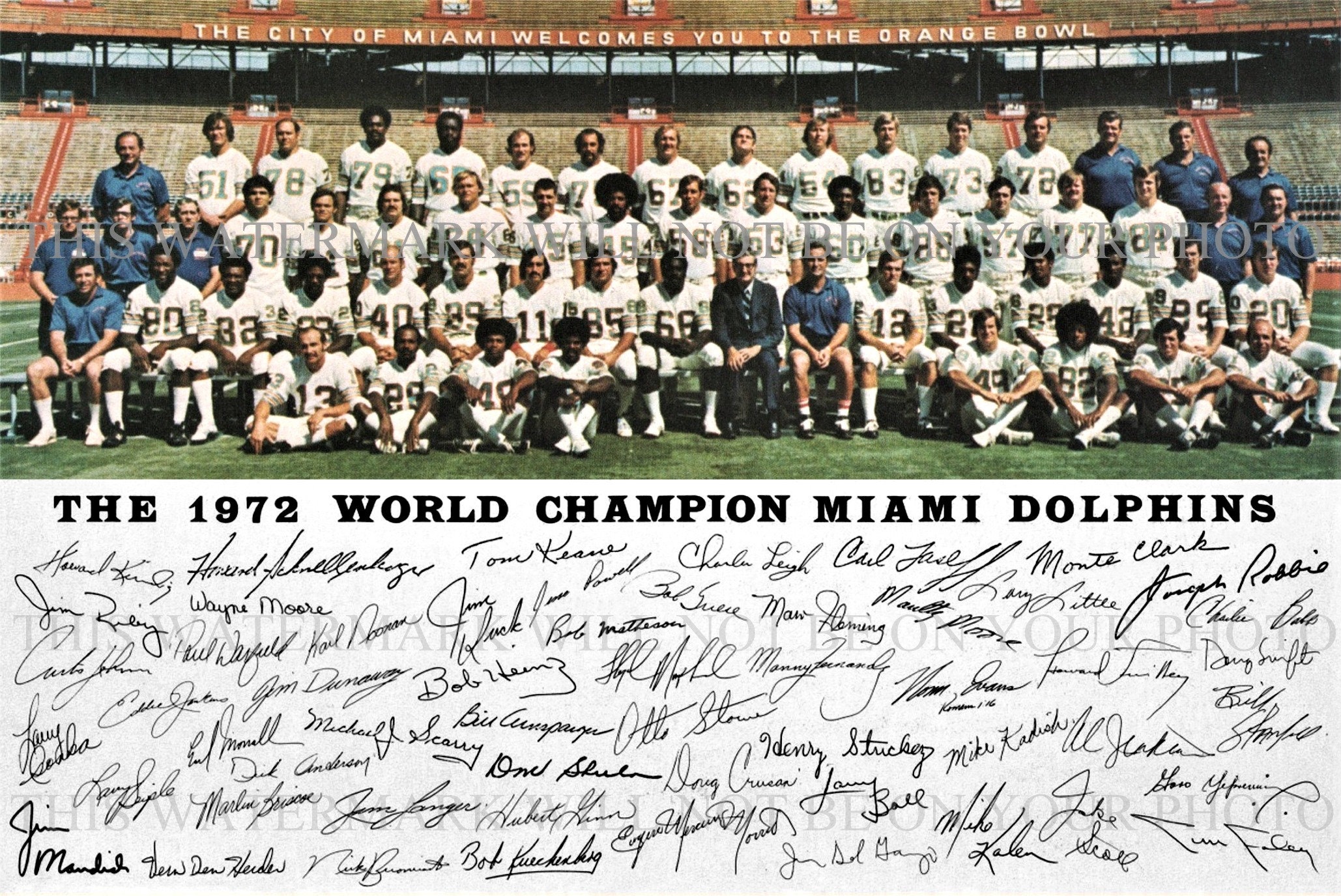
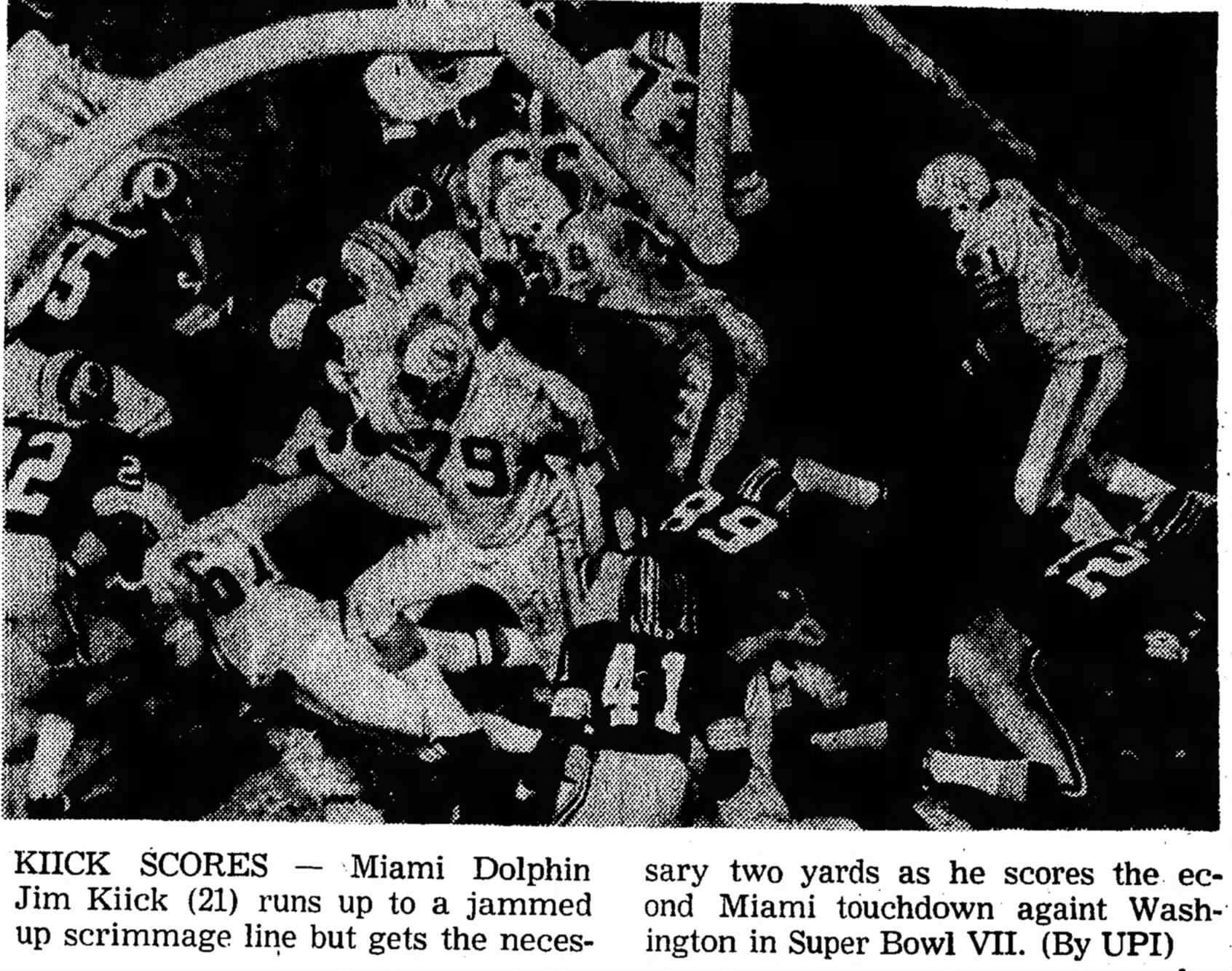
The 1972 Miami Dolphins remain the only team in National Football League history to finish a full season undefeated and untied, capping their campaign with a victory in Super Bowl VII. Examining their statistics reveals a balanced, suffocating defense and an efficient, ground-heavy offense that completely dictated the tempo of every game they played.
Achieving a flawless record in professional football requires a rare convergence of elite coaching, roster depth, situational execution, and good fortune. Decades after Don Shula’s squad achieved this historic milestone, sports analysts, fans, and historians continue to examine the underlying metrics that made the 1972 Miami Dolphins unmatched. Understanding these statistics requires looking beyond raw totals to analyze efficiency metrics, situational performance, and the unique tactical ecosystem engineered by the coaching staff.
Historical Context and Roster Construction
To understand the statistics of the 1972 Miami Dolphins, one must first understand how the roster was constructed. Following a loss to the Dallas Cowboys in Super Bowl VI, head coach Don Shula and general manager Joe Robbie fine-tuned a roster that blended veteran leadership with disciplined youth. The team operated primarily out of a pro-set and single-back formations on offense, while defensive coordinator Bill Arnsparger deployed a flexible 4-3 defense that frequently morphed to counter modern passing attacks.
The team faced significant adversity early in the season when starting quarterback Bob Griese suffered a fractured ankle in Week 5 against the San Diego Chargers. Veteran backup Earl Morrall stepped in and guided the team through the remainder of the regular season, allowing the offense to maintain its rhythm without altering its core philosophy. This seamless transition preserved the team's statistical output during a critical stretch, proving that the Dolphins' success was system-wide rather than dependent on a single individual.
Offensive Efficiency and the Run Game
The hallmark of the 1972 Miami Dolphins' offense was its relentless ground attack. In an era before modern spread concepts and heavy passing volume, the Dolphins ran the ball at a historic clip. Offensive coordinator Howard Schnellenberger utilized a balanced blocking scheme that capitalized on pulling guards and tight end execution to open running lanes for a formidable backfield committee.
The team featured two distinct, elite running backs: Larry Csonka and Mercury Morris. Csonka provided the physical punishment, churning out tough yards between the tackles, while Morris offered explosive speed and outside containment capability. Both players achieved historic milestones during the 1972 campaign.
- Larry Csonka: Rushed for 1,117 yards on 213 carries, averaging an impressive 5.2 yards per carry and scoring six touchdowns.
- Mercury Morris: Rushed for 1,000 yards on 190 carries, averaging 5.3 yards per carry and scoring a team-high 12 rushing touchdowns.
Together, Csonka and Morris became the first pair of running backs on the same team to rush for 1,000 yards in a single season, a feat made even more remarkable by the fact that the NFL schedule was only 14 games long at the time.
| Metric / Category | 1972 Miami Dolphins Total | NFL Rank (1972 Season) |
|---|---|---|
| Total Points Scored | 385 points (27.5 PPG) | 1st |
| Total Offensive Yards | 4,895 yards (349.6 YPG) | 2nd |
| Rushing Yards | 2,960 yards (211.4 YPG) | 1st |
| Passing Yards | 1,935 yards (138.2 YPG) | 25th |
| Turnovers Lost | 26 turnovers | Tied for 11th (fewest) |
As the table illustrates, the Dolphins did not rely on an aerial circus. Bob Griese and Earl Morrall combined for just 1,935 passing yards, ranking 25th in the league for passing volume. However, efficiency trumped volume. Griese and Morrall threw 19 touchdowns against just 15 interceptions, maintaining a high completion percentage and executing play-action passes that punished defenses for overcommitting to stop Csonka and Morris. Wide receiver Paul Warfield served as the primary deep threat, catching 29 passes for 606 yards and averaging a staggering 20.9 yards per reception, keeping opposing secondaries honest.
The No-Name Defense and Defensive Metrics
While the offense controlled the clock, the Miami defense—affectionately dubbed the "No-Name Defense" after Dallas Cowboys coach Tom Landry remarked that he did not know the names of Miami's defenders—dominated opponents. Led by linebackers Nick Buoniconti and Doug Swift, and defensive tackle Manny Fernandez, the unit finished the season ranked first in fewest points allowed.
The defensive statistics reflect a unit that stifled opposing scoring opportunities and forced critical errors.
- Points Allowed: 171 total points, averaging just 12.2 points allowed per game.
- Total Yards Allowed: 3,803 yards, ranking second overall in the NFL.
- Turnovers Forced: 36 total takeaways (23 interceptions, 13 fumble recoveries).
- Rushing Yards Allowed: 1,604 yards, ranking fifth against the run.
Bill Arnsparger’s defense excelled in red-zone containment. By keeping opponents out of the end zone and forcing long-yardage situations on third down, the defense regularly gave the offense favorable field position. Manny Fernandez was a disruptive force in the interior line, frequently collapsing pockets from the defensive tackle position, while middle linebacker Nick Buoniconti acted as the analytical field general, diagnosing plays and anchoring the run defense.
Special Teams and Field Position Control
A complete analysis of the 1972 Miami Dolphins stats must account for special teams contributions, which consistently won the battle of field position. Punter Larry Seiple and kicker Garo Yepremian played pivotal roles in maintaining the team's competitive edge.
Yepremian converted 18 of 29 field goal attempts and 42 of 43 extra point attempts, scoring a team-leading 96 points. While his field goal conversion percentage (62.1%) might look modest by modern metrics, kicking conditions and field surfaces in the early 1970s were significantly more challenging than today's climate-controlled environments and artificial turf advancements.
Furthermore, Larry Seiple’s punting efficiency pinned opponents deep inside their own territory, limiting short fields for opposing offenses. His most famous play of the season came during the AFC Championship Game against the Pittsburgh Steelers, when he executed a surprise 37-yard run off a fake punt from deep in Miami territory, sparking a lethargic offense and leading to the game's turning point.
Comparing 1972 Efficiency to Modern NFL Eras
Analyzing historical statistics requires adjusting for rule changes and stylistic evolutions in professional football. The 1972 NFL season took place during an era heavily favoring the running game, with defensive backs permitted significantly more contact with receivers downfield before the implementation of the strict illegal contact rules in 1978.
Comparing the 1972 Dolphins to subsequent dominant teams, such as the 1985 Chicago Bears or the 2007 New England Patriots, highlights differences in tactical philosophy. While the 2007 Patriots relied on an explosive, pass-first aerial assault engineered by Tom Brady, and the 1985 Bears relied on an aggressive 46-defense that pitched multiple shutouts in the postseason, the 1972 Dolphins mastered situational control. They averaged 34.9 rushing attempts per game, chewing up clock, neutralizing pass rushes, and wearing down opposing front sevens by the fourth quarter.
Common Misconceptions About the 1972 Schedule
A recurring critique found in sports debates surrounds the strength of schedule faced by the 1972 Miami Dolphins. Skeptics often point out that the combined regular-season record of Miami's 19 opponents (including playoffs) was 97-111-3 (.467).
However, statistical analysis of point differentials reveals a more dominant picture. The Dolphins outscored their opponents by a total of 214 points over the regular season and playoffs combined. They won nine games by double digits and regularly defeated quality playoff teams, including the Kansas City Chiefs, Cleveland Browns, and Pittsburgh Steelers. Their postseason run culminated in a 14-7 victory over the Washington Redskins in Super Bowl VII, a game that was closer on the scoreboard than it was statistically dictated on the field.
Frequently Asked Questions
Why did Bob Griese lose his starting job if the Dolphins went undefeated?
Bob Griese did not lose his job due to poor performance; he suffered a broken fibula and dislocated ankle in Week 5 against the San Diego Chargers. Veteran backup Earl Morrall stepped in and won all nine of his regular-season starts, displaying exceptional poise. Head coach Don Shula ultimately turned back to a healthy Griese for the second half of the AFC Championship Game and started him in Super Bowl VII because of Griese's deep chemistry with wide receiver Paul Warfield and his mastery of the playbook.
How many 1,000-yard rushers did the 1972 Miami Dolphins have?
The 1972 Miami Dolphins featured two 1,000-yard rushers in a 14-game season: Larry Csonka, who rushed for 1,117 yards, and Mercury Morris, who rushed for 1,000 yards. This milestone was exceptionally rare for the era and underscored the dominance of Miami's offensive line and running scheme.
What was the scoring differential of the 1972 Miami Dolphins?
During the 14-game regular season, the Dolphins scored 385 points and allowed 171 points, giving them a regular-season point differential of +214. Including their three postseason victories, their total point differential for the entire 17-game campaign reached +240.
How does the 1972 Dolphins defense rank historically?
Commonly referred to as the "No-Name Defense," the unit ranked first in the NFL in fewest points allowed per game (12.2) and second in total yards allowed. Under coordinator Bill Arnsparger, the defense forced 36 turnovers and excelled in red-zone stops, holding opponents to single-digit scoring in five regular-season games.
Did the 1972 Miami Dolphins play a soft schedule?
While critics note that Miami's opponents had a sub-.500 combined record, the team defeated every opponent placed in front of them, including three playoff teams during the regular season and three more in the postseason. Statistical metrics like point differential and opponent margin of victory demonstrate that Miami routinely controlled games from start to finish.
Next Actions and Further Exploration
For readers looking to deepen their understanding of football history, reviewing game film archives from NFL Films or examining play-by-play logs from the 1972 postseason provides invaluable context. Studying Don Shula’s coaching methodologies and Bill Arnsparger’s defensive playbooks highlights how strategic discipline and fundamental execution can transcend statistical anomalies in any era of sports.