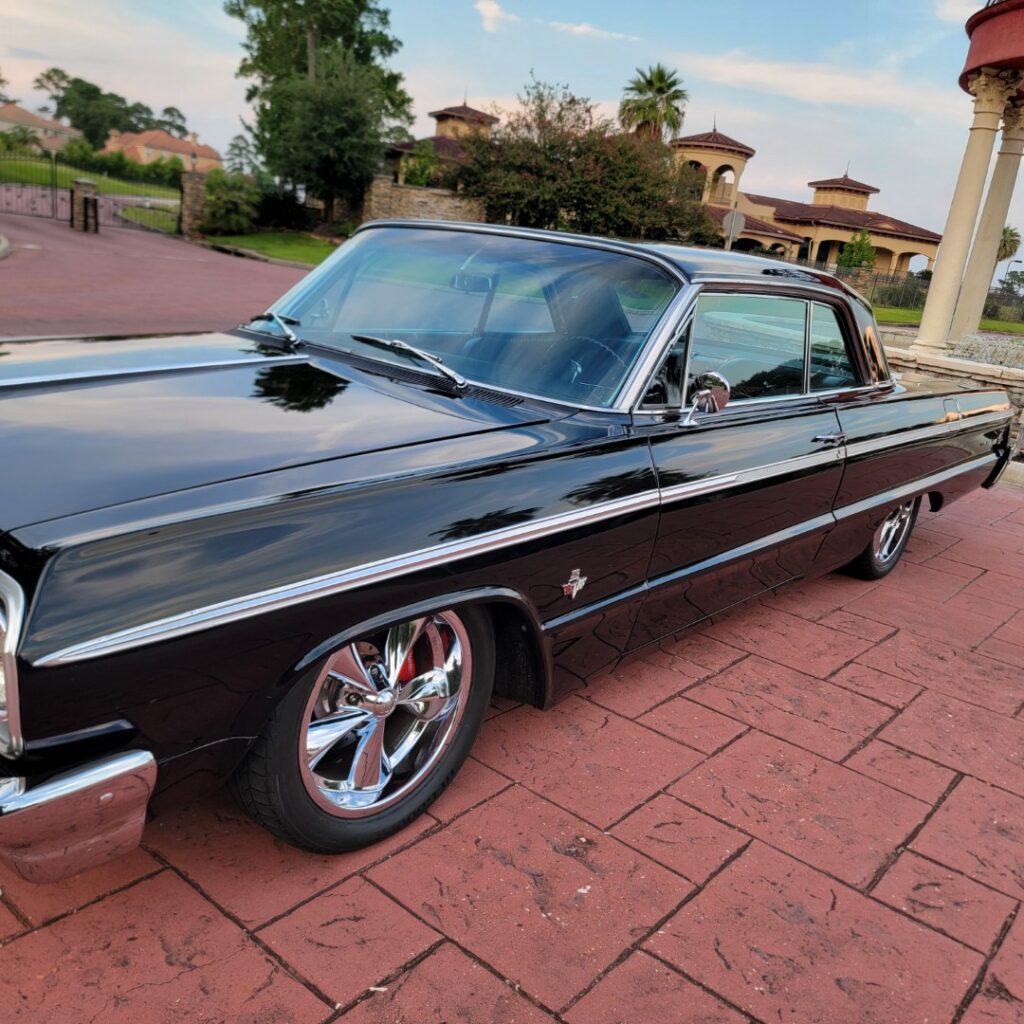
The $13,000 to $55,000 valuation range for a 1964 Chevrolet Impala Super Sport (SS) defines a market split between rolling project cars needing complete restoration and well-sorted, numbers-matching driver or show-quality examples. Condition, originality, and powertrain options dictate where a specific vehicle falls within this spectrum.
Understanding the 1964 Chevrolet Impala SS Market Positioning
The 1964 Chevrolet Impala Super Sport holds an iconic status within classic American car culture. As the final year of the fourth-generation full-size Chevrolet styling, characterized by its crisp, flat rooflines, sculpted body sides, and iconic six-tailight rear fascia, the '64 model year remains a benchmark for collectors and custom builders alike. The Super Sport package added distinctive exterior trim, bucket seats, a center console with an optional vacuum gauge, and engine turning on the aluminum dash inserts, elevating its appeal over standard Impala models.
When evaluating market values spanning from $13,000 to $55,000, buyers and sellers must navigate a complex ecosystem of automotive grading. This price band does not represent a single uniform value, but rather a spectrum divided into distinct tiers of condition, mechanical integrity, and historical authenticity. Understanding these pricing tiers prevents overpaying for a compromised vehicle or undervaluing a well-preserved survivor.
The Evolution of Valuation Factors
Classic car valuations are driven by supply and demand dynamics, parts availability, and the rising costs of professional restoration labor. While millions of full-size Chevrolets were produced in the 1960s, authentic Super Sport models—distinguished by the "839" trim tag code for hardtops or convertibles—command a distinct premium.
Over the past decade, the market for 1964 Impalas has matured. High-end pro-touring builds and pristine factory restorations frequently breach the upper limits of traditional valuation guides, while rust-belt projects with missing parts anchor the lower end. Pinpointing a vehicle's worth within the $13,000 to $55,000 range requires examining specific structural, mechanical, and cosmetic criteria.
Decoding the $13,000 to $20,000 Tier: Project Cars and Rollers
At the entry-level tier of $13,000 to $20,000, buyers encounter vehicles that typically require comprehensive mechanical overhauls, extensive sheet metal replacement, and total interior restoration. These cars are commonly categorized as projects, non-running rollers, or heavy-restoration candidates.
Structural Integrity and Rust Concerns
The single most critical factor determining value in the sub-$20,000 bracket is rust. X-frame full-size Chevrolets from this era are notorious for accumulating moisture in boxed frame sections, rear torque boxes, trunk floors, quarter panels, and rocker panels.
- Frame Rot: Inspecting the frame rails, particularly around the rear axle kick-ups and body mounts, is mandatory. A heavily rusted frame can cost thousands of dollars to repair or replace, immediately eroding the value proposition of a $15,000 purchase.
- Body Panels: While replacement sheet metal is widely reproduced, professional installation, alignment, and bodywork labor easily outpace the initial purchase price of a budget project car.
Mechanical Status
Vehicles in this price range often feature non-original, seized, or entirely missing engines and transmissions. Finding a true Super Sport with its original "code-matching" high-performance V8 engine—such as the 327 cubic-inch small-block or the legendary 409 cubic-inch big-block—at this price point is rare. Most cars here will require a complete powertrain rebuild or swap, along with suspension bushing replacement, brake system overhauls, and complete electrical rewiring.
The $20,000 to $35,000 Tier: Driver-Quality and Usable Classics
Moving into the mid-tier range of $20,000 to $35,000 reveals driver-quality 1964 Impala SS models. These cars are road-worthy, cosmetically presentable, and generally reliable for weekend cruising and local car shows without requiring immediate mechanical intervention.
Characteristics of a Mid-Tier Impala SS
Cars in this category usually feature older repaints that still shine well from a distance, though close inspection may reveal minor blemishes, orange peel, or small chips. Interiors are typically intact, featuring replacement seat covers, functional factory gauges or aftermarket additions, and clean carpet kits.
- Powertrain: These vehicles often run healthy small-block V8 engines (such as a 283 or 350 cubic-inch upgrade) mated to automatic transmissions like the Powerglide or a Turbo-Hydramatic 350/400. While not necessarily numbers-matching, these setups provide dependable, enjoyable cruising performance.
- Upgrades: It is common in this price bracket to find sensible upgrades such as front power disc brake conversions, modern electronic ignition systems, upgraded aluminum radiators, or vintage-style air conditioning. These modifications enhance drivability without detracting from the classic aesthetic.
Ownership Expectations
Purchasing a car in the $20,000 to $35,000 range allows the owner to enjoy immediate driving experiences while budgeting for future cosmetic refinements. Maintenance is typically straightforward, and parts availability for 1964 Chevrolets remains among the best in the classic car hobby.
| Price Range | Condition Tier | Primary Characteristics | Mechanical & Structural State |
|---|---|---|---|
| $13,000 – $20,000 | Project / Roller | Complete or partial car; extensive rust, missing trim or interior, non-running. | Requires full frame-off restoration, engine rebuild, and extensive sheet metal replacement. |
| $20,000 – $35,000 | Driver Quality | Usable paint and interior; older restoration or well-maintained survivor. | Mechanically sound small-block V8, upgraded brakes or suspension, minor cosmetic flaws. |
| $35,000 – $55,000 | Investment / Show | High-end restoration, numbers-matching drivetrain, or professional custom build. | Rebuilt high-output engine (327/409), flawless chrome, immaculate underside, upgraded stance. |
The $35,000 to $55,000 Tier: High-End Survivors, Restorations, and Custom Builds
At the upper end of the $13,000 to $55,000 spectrum—ranging from $35,000 to $55,000—expect to find exceptional examples of the breed. This bracket includes concours-quality factory restorations, rare big-block cars, and meticulously executed custom builds (such as traditional lowriders or high-performance pro-touring machines).
Investment and Authenticity
For purists, vehicles approaching the $50,000 mark must exhibit a high degree of factory correctness. This includes verifying the cowl tag to ensure the car is an authentic Super Sport, checking engine block casting numbers and date codes, and confirming correct interior trim codes. Original color combinations, factory tinted glass, and rare factory options (such as four-speed manual transmissions, tachometers, or power windows) drive values toward the ceiling of this range.
Custom and Performance Builds
Alternatively, this tier frequently accommodates high-end custom builds. The 1964 Impala SS is a cornerstone of lowrider culture, where show-quality hydraulic or air-ride suspension setups, custom wire wheels, intricate paintwork, and detailed engine bays routinely command robust prices. Similarly, pro-touring builds featuring modern fuel-injected LS V8 engines, overdrive transmissions, tubular control arms, and modern braking systems fall comfortably into this valuation bracket when executed with professional craftsmanship.
Key Inspection Criteria for Buyers and Sellers
Accurately placing a 1964 Chevy Impala SS within the $13,000 to $55,000 market range requires a systematic physical inspection. Overlooking hidden damage or misinterpreting documentation can result in thousands of dollars in unexpected expenses.
Verifying Super Sport Authenticity
Because standard Impalas can be easily cloned into "Super Sport" replicas using aftermarket emblems and bucket seat kits, verification is paramount.
- The Cowl Tag: Examine the trim tag located on the firewall. Authentic 1964 Impala SS hardtops manufactured in U.S. plants typically feature style numbers ending in specific series codes (such as model 1847 for V8 hardtops) and trim codes unique to bucket-seat interiors.
- The VIN: The Vehicle Identification Number on a 1964 Impala begins with the series identifier. For V8 models, the prefix generally starts with 418 (for standard V8) or 414/416 depending on the assembly plant and series, though checking against authoritative Chevrolet chassis manuals is essential for exact plant decoding.
Evaluating Rust Prone Areas
Beyond the frame rails, buyers must inspect the inner and outer rocker panels, the floor pans beneath the front and rear seats, the rear wheel wells, and the bottom edges of the doors and trunk lid. Even a car with a glossy paint job can harbor rust beneath the surface if bodywork was improperly performed over failing metal.
Frequently Asked Questions
Are 1964 Chevy Impala SS models a good investment?
While classic cars should primarily be viewed as recreational assets rather than guaranteed financial investments, well-maintained and authentic 1964 Impala SS models have historically retained strong market demand. Original big-block cars and professionally built custom cruisers tend to appreciate steadily, whereas heavily modified or rusted projects carry higher financial risk.
What is the difference between a standard Impala and an Impala SS in 1964?
The Super Sport package was an appearance and trim upgrade available exclusively on hardtop coupe and convertible models. It added distinct side molding, bucket seats, a center console with an engine-turned aluminum top plate, SS badging, and special wheel covers. Mechanically, it did not mandate a specific engine, meaning an SS could be ordered with anything from a standard six-cylinder (though rare) up to high-output V8 engines.
How much does a professional restoration cost compared to buying a finished car?
Undertaking a complete frame-off restoration on a $15,000 project car frequently exceeds $40,000 to $60,000 in parts, specialized labor, paint, and upholstery alone. Purchasing a finished, turn-key vehicle in the $35,000 to $55,000 range is almost always more economically efficient than building one from scratch.
What engine options were available in the 1964 Impala SS?
Powerplant options ranged from standard small-block V8s (such as the 283 and 327 cubic-inch engines) to the high-performance 409 cubic-inch big-block V8, which was available in multiple horsepower configurations up to 425 horsepower with dual four-barrel carburetors.
Where is the VIN located on a 1964 Impala?
The VIN plate on a 1964 Chevrolet Impala is attached to the driver-side front door pillar post. It should match the numbers stamped on the vehicle's title and registration documents precisely.
Conclusion and Next Actions
Navigating the $13,000 to $55,000 market range for a 1964 Chevy Impala SS requires balancing your personal project capabilities against your budget. If you seek a weekend project with a clear canvas, target the lower end under $20,000 while budgeting heavily for sheet metal and mechanical repairs. For immediate driving enjoyment and stable long-term value, focus your search on inspected driver-quality or investment-tier vehicles between $30,000 and $55,000. Always verify cowl tags, inspect frame rails thoroughly, and consult an experienced classic car appraiser before finalizing any high-value transaction.