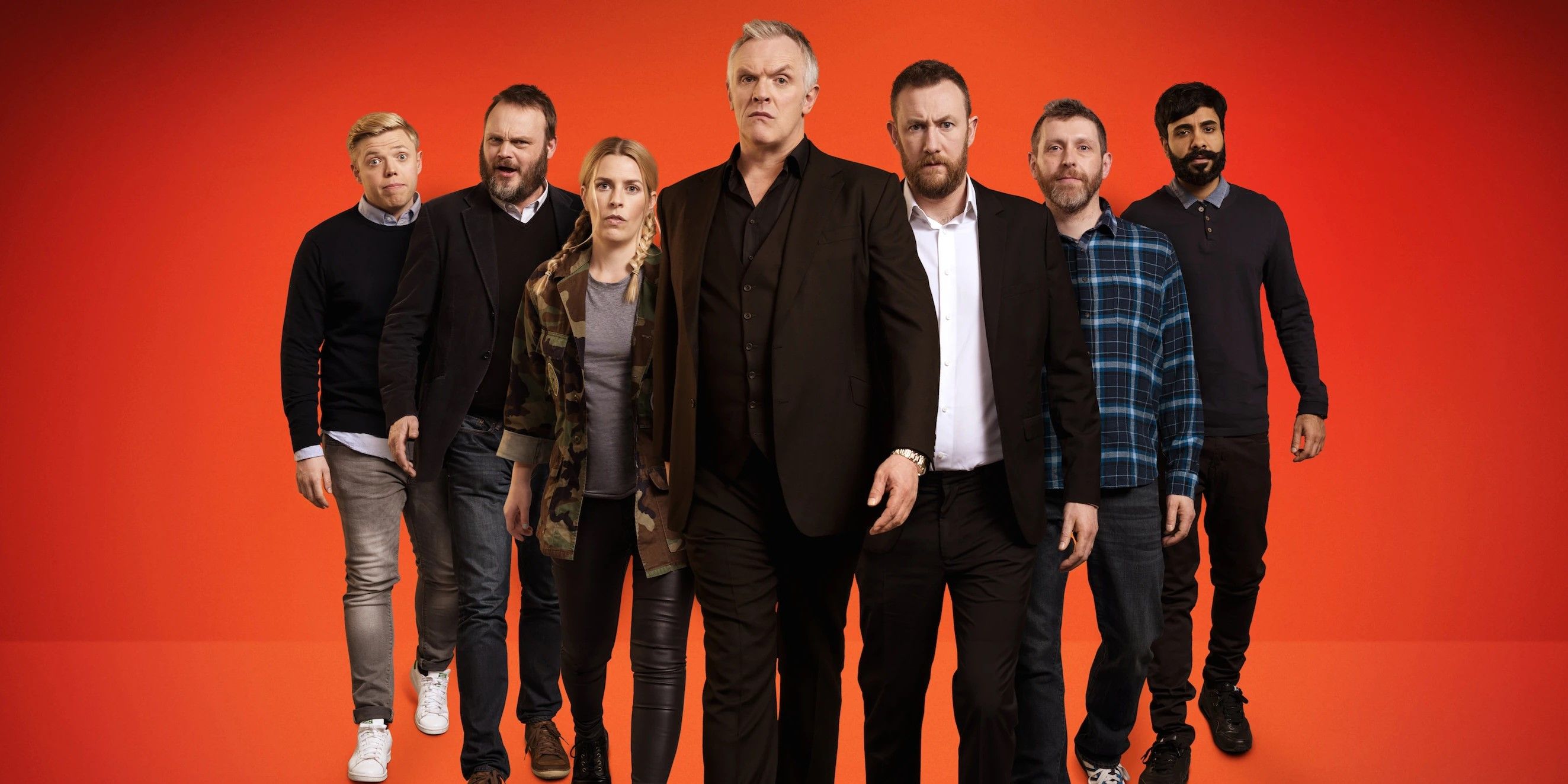
Task Season 2 consists of exactly 10 episodes, each designed to follow the established format of high-stakes problem-solving and creative challenge execution that characterized the show’s debut. This season retains the core competitive structure while expanding the complexity of the tasks presented to the participants across all ten installments.
The structure of reality competition programming often hinges on a balance between narrative development and the physical or intellectual challenges presented to participants. For viewers tracking the progression of Task Season 2, the ten-episode arc serves as a complete narrative container. Each episode contributes to the overarching scoring system, moving from introductory challenges to the season finale. Understanding this structure is essential for viewers who want to track participant trajectories, scoring, and the evolution of difficulty levels throughout the season.
The Structural Design of the 10-Episode Arc
The decision to feature 10 episodes in a season is a strategic choice in television production, particularly for competition-based formats. This duration allows for a sufficient "ramp-up" period where the audience becomes familiar with the participants, followed by a mid-season turning point where the competitive stakes are raised. In Task Season 2, this pacing is intentional. The first three episodes typically focus on establishing the "baseline" capabilities of the contestants. By episode four, the complexity of the tasks increases significantly, testing the participants' ability to adapt their strategies under pressure.
From a production standpoint, 10 episodes provide enough screen time to showcase the unique personalities of the cast without the narrative drag that can occur in longer, 20-plus episode seasons. Each episode acts as a self-contained unit, usually featuring a recurring set of sub-tasks that build toward a final, high-value challenge. For viewers, this means every episode carries significant weight, as poor performance in any of the ten installments can jeopardize a contestant's standing in the final tally.
Analyzing the Task Progression
When reviewing the 10 episodes, it is useful to categorize the types of challenges presented. While the specific nature of the tasks remains proprietary to the show’s production team, they generally fall into three distinct categories:
- Analytical Challenges: Tasks that require logical deduction, spatial reasoning, or rapid mathematical processing.
- Creative/Practical Challenges: Tasks that demand physical construction, resource management, or artistic expression under strict constraints.
- Collaborative/Social Challenges: Tasks that force contestants to work in pairs or teams, testing their leadership and communication skills.
In Task Season 2, the 10 episodes are balanced to ensure that no single skill set dominates the entire season. A contestant who excels at logical deduction may struggle in the creative rounds, ensuring that the leaderboards remain fluid until the final episode. This fluidity is what makes the 10-episode format compelling; it prevents the competition from becoming predictable too early.
Comparative Overview of Episode Functions
To better understand the progression, the following table illustrates the typical function of each block of episodes within the 10-episode cycle.
| Episode Range | Functional Focus | Competitive Objective |
|---|---|---|
| Episodes 1–2 | Introduction & Baseline | Establish participant profiles and initial standing. |
| Episodes 3–5 | Skill Testing | Identifying core strengths and weaknesses of contestants. |
| Episodes 6–8 | High-Pressure Challenges | Introduction of "twist" mechanics or resource scarcity. |
| Episodes 9–10 | The Conclusion | Final scoring, elimination of lower-ranked competitors, and naming the winner. |
This table represents the standard flow of the season. Note that while the objectives remain consistent, the intensity level increases as the participants move from the start of the season toward the finale.
Navigating the Challenges of Task Season 2
For viewers attempting to analyze the performance of contestants across the 10 episodes, the most common pitfall is focusing solely on the final outcome of an episode rather than the cumulative decision-making process. The production team behind Task Season 2 includes specific "trap" mechanics—tasks that appear simple on the surface but contain hidden variables designed to penalize contestants who rush to judgment.
When viewing these episodes, observe how the most successful contestants treat the "preparation" phase of the task. Frequently, the difference between a high-scoring and low-scoring performance is not the execution speed, but the initial strategy development. In the latter half of the season (episodes 7 through 10), this becomes even more apparent as the margin for error narrows. The participants who succeed are those who synthesize the feedback from the previous nine episodes to refine their approach to the final task.
Historical Context and Production Consistency
As of 2026, Task Season 2 is evaluated based on its established record of 10 episodes. Unlike shows that may change their episode count mid-production due to network requirements, this season maintained its 10-episode commitment, ensuring a consistent viewing experience. This consistency is highly valued by the core audience, as it allows for predictable engagement and a reliable timeline for discussing the season’s outcomes in public forums and review spaces.
Critics of the genre often point to "bloated" seasons that stretch for too many episodes, losing the focus of the original concept. By sticking to 10 episodes, Task Season 2 avoids this, maintaining high engagement metrics through the finale. The narrative arc remains tight, and the resolution provided in the final episode feels earned rather than rushed.
Addressing Common Viewer Questions
Why does Task Season 2 stop at 10 episodes? The 10-episode format is a creative and logistical decision intended to maintain narrative momentum. It ensures that every challenge contributes meaningfully to the overall competition, preventing audience fatigue.
Are all 10 episodes necessary to understand the winner’s progression? Yes. While individual episodes can be enjoyed in isolation, the scoring system is cumulative. The winner's journey is defined by how they improved, or maintained consistency, across all ten episodes.
Is there a mid-season finale within the 10 episodes? While not formally branded as such, episode 5 serves as a natural midpoint. It usually features a significant shift in task difficulty, effectively separating the "entry-level" portion of the season from the more demanding second half.
How do the tasks change between episode 1 and episode 10? Early tasks focus on individual capabilities. As the season progresses toward episode 10, the tasks incorporate more complex, multi-layered requirements, often necessitating that participants apply lessons learned earlier in the season to solve new, more difficult variables.
Can I watch the episodes out of order? While you can follow the instructions for individual tasks in any order, it is not recommended for the viewing experience. The contestant narratives, personal growth arcs, and changing leaderboard dynamics rely on the established sequence of the ten episodes.
Expert Guidance for Deep Engagement
To get the most out of viewing the 10 episodes of Task Season 2, adopt the role of an analyst rather than a passive observer. Take note of how the show’s "judges" evaluate the outcomes. Often, the verbal feedback provided during the segments is the key to understanding why a specific strategy succeeded or failed.
Furthermore, pay attention to the constraints placed on the participants. A common mistake is to ignore the "fine print" of the challenge—the time limits, the restricted tools, or the environmental factors. These constraints are rarely arbitrary. They are designed to test the participants' ability to prioritize. If you find yourself disagreeing with a judge's score, go back to the constraints listed in the task description; you will often find that the contestant who received a low score missed a minor but critical instruction that the judges were explicitly looking for.
Final Recommendation for Viewers
To fully appreciate the design of Task Season 2, watch the episodes in their intended sequence, paying close attention to how the difficulty ramps up between the first and tenth installments. If you are analyzing the show for competitive strategy, treat the first three episodes as a research phase, episodes four through eight as a testing phase, and the final two episodes as the application phase. This approach provides the most comprehensive understanding of the season’s intent and the participants' actual competitive growth.