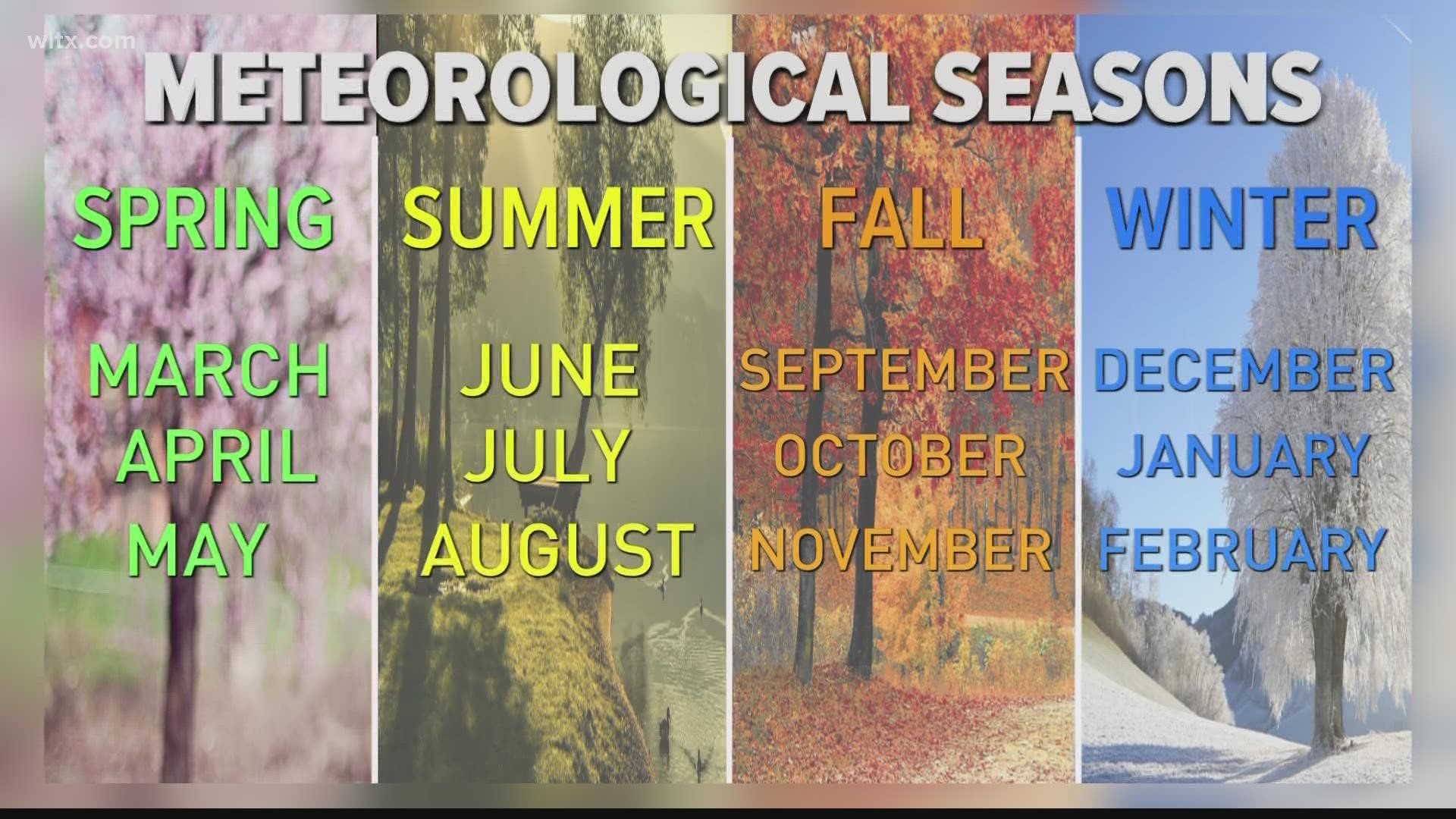
The summer season of 2023 officially began on June 21, 2023, according to astronomical definitions, while meteorological summer started earlier on June 1, 2023. These divergent start dates stem from two different systems used by scientists and meteorologists to track seasonal changes, one based on Earth's position relative to the sun and the other on annual temperature cycles and calendar months.
To fully understand when summer begins and ends, researchers, climatologists, and the general public rely on two distinct frameworks: the astronomical calendar and the meteorological calendar. Each serves a unique purpose, utilizes different criteria, and shifts the timeline of seasonal data tracking. Analyzing both systems clarifies why multiple dates exist for the same season and helps interpret historical weather data, environmental reporting, and astronomical phenomena.
The Two Frameworks of Seasonality
Seasons are periods of the year characterized by distinct weather conditions, daylight hours, and solar radiation levels. However, dividing the continuous cycle of Earth's orbit into neat three-month blocks requires a standardized approach. Two primary methods have been adopted globally: the astronomical approach and the meteorological approach.
The coexistence of these two definitions often causes confusion among people tracking weather patterns, planning events, or analyzing historical climate records. While astronomical seasons are tied to the geometry of the Earth-Sun system, meteorological seasons are engineered for consistency in statistical analysis. Understanding the fundamental differences between these two systems is essential for accurate record-keeping and environmental monitoring.
Why Different Definitions Exist
The astronomical system is rooted in celestial mechanics. It tracks the exact moments when the Earth's axial tilt reaches its maximum inclination toward or away from the sun. Because Earth's orbit is elliptical and does not align perfectly with our standard 365-day Gregorian calendar, the exact day and hour of these celestial events shift slightly each year.
Conversely, the meteorological system is designed for administrative and statistical convenience. Weather forecasting agencies, agricultural planners, and government bodies require consistent, whole-month blocks to aggregate climate data, compare monthly temperatures, and identify long-term climate trends. Shifting calendar dates for solstices and equinoxes would complicate historical climate comparisons, making the fixed-month meteorological system an operational necessity.
Astronomical Summer 2023: The Celestial Perspective
Astronomical seasons are defined by the position of Earth's orbit in relation to the sun, specifically noting the solstices and equinoxes. These turning points are governed by the planet's 23.5-degree axial tilt as it revolves around the star.
The Summer Solstice in 2023
In the Northern Hemisphere, astronomical summer 2023 officially began on June 21, 2023, at 14:57 Coordinated Universal Time (UTC). This moment marks the summer solstice, the exact point in Earth's orbit when the Northern Hemisphere is tilted closest to the sun.
During the summer solstice, observers experience several distinct phenomena:
- Maximum Daylight: The day of the solstice features the longest period of daylight and the shortest night of the calendar year for any location north of the equator.
- Solar Altitude: The sun reaches its highest possible point in the sky at local solar noon.
- Geographical Boundary: The vertical rays of the sun pass directly overhead at the Tropic of Cancer (23.5° N latitude).
For the Southern Hemisphere, this exact same date marks the winter solstice, initiating astronomical winter, as that half of the planet tilts away from the sun.
Duration and Conclusion of Astronomical Summer
Astronomical summer continues until the autumnal equinox, which occurred on September 23, 2023. Consequently, astronomical summer 2023 lasted approximately 93 days, reflecting the varying speed of Earth as it travels along its elliptical orbit around the sun (Kepler's Second Law). Because Earth moves more slowly when it is farther from the sun (near the aphelion in early July), summer in the Northern Hemisphere is slightly longer than winter.
Meteorological Summer 2023: The Climatological Perspective
Meteorological seasons divide the year into four three-month periods based on the Gregorian calendar and annual temperature cycles. This system was established by meteorologists and climatologists to simplify the calculation of seasonal statistics.
The Fixed Start Date
Meteorological summer always begins on June 1, 2023, and runs through August 31, 2023. It encompasses the three warmest months of the year in the Northern Hemisphere: June, July, and August.
The rationale behind this scheduling is twofold:
- Temperature Alignment: In terms of annual temperature cycles, the warmest period of the year in the Northern Hemisphere typically occurs during June, July, and August, aligning better with these calendar months than with a solstice-to-equinox schedule.
- Data Consistency: Comparing climate data from year to year requires fixed monthly parameters. Having seasons consist of exact three-month blocks (Spring: March–May; Summer: June–August; Autumn: September–November; Winter: December–February) allows for uniform monthly and seasonal reporting without calculating shifting fractional dates.
Comparative Analysis of Summer 2023 Definitions
To clearly distinguish between the two systems used during the 2023 calendar year, the following comparison highlights their core characteristics, timing, and operational use cases.
| Feature | Astronomical Summer 2023 | Meteorological Summer 2023 |
|---|---|---|
| Start Date | June 21, 2023 (Solstice) | June 1, 2023 (Fixed calendar) |
| End Date | September 23, 2023 (Equinox) | August 31, 2023 (Fixed calendar) |
| Governing Principle | Earth's axial tilt and orbital position | Annual temperature cycles and calendar months |
| Duration | Approximately 93 days | Exactly 92 days (in non-leap years) |
| Primary Users | Astronomers, educators, cultural observers | Meteorologists, climatologists, government agencies |
| Statistical Utility | Varies slightly in length each year | Maintains consistent monthly data sets |
Practical Implications of Divergent Definitions
The existence of two separate definitions for summer creates notable differences in how data is collected, interpreted, and reported across various industries.
Weather Records and Climate Science
National meteorological services, such as the National Oceanic and Atmospheric Administration (NOAA) in the United States or the Met Office in the United Kingdom, rely exclusively on meteorological seasons. When climate scientists publish reports on summer temperatures, precipitation levels, or extreme weather events for 2023, their datasets cover June 1 through August 31. Using astronomical boundaries would skew monthly climate averages and complicate historical comparisons spanning decades or centuries.
Public Perception and Cultural Observances
Culturally, many people view the start of summer through the lens of school schedules, vacations, and local traditions. In North America, the end of the school year often aligns closely with the early days of June, leading the public to treat June 1 as the informal start of summer. Conversely, public holiday celebrations like Midsummer in various European countries are explicitly tied to the astronomical solstice around June 21.
Frequently Asked Questions
Why does the astronomical summer date change every year?
The astronomical start of summer is determined by the Earth's position in its orbit relative to the sun. Because a standard calendar year is 365 days long, while a full orbit (tropical year) takes approximately 365.24 days, the exact time of the solstice shifts forward by roughly six hours each year. Leap years correct this drift, causing the solstice date to jump backward. As a result, the summer solstice in the Northern Hemisphere typically falls on June 20, 21, or 22.
Which definition of summer is more accurate?
Neither definition is more accurate; they simply serve different purposes. The astronomical definition is scientifically accurate regarding the Earth's celestial mechanics and solar exposure. The meteorological definition is operationally accurate and practical for tracking weather statistics, climate monitoring, and seasonal forecasting.
How do meteorological seasons affect the Southern Hemisphere?
Meteorological seasons are inverted in the Southern Hemisphere to match their annual temperature cycle. While meteorological summer in the Northern Hemisphere runs from June 1 to August 31, meteorological summer in the Southern Hemisphere runs from December 1 to February 28 (or 29), encompassing the warmest months south of the equator.
Can seasonal definitions change in the future?
The definitions of astronomical solstices are fixed by orbital mechanics and will not change. However, as global climate patterns shift due to climate change, some climatologists and researchers occasionally debate whether meteorological baselines should be adjusted to reflect shifting regional temperature norms. Currently, standard calendar-based meteorological seasons remain internationally recognized by the World Meteorological Organization (WMO).
Conclusion and Next Actions
Recognizing the distinction between astronomical and meteorological definitions clarifies why different sources cite different starting points for the season. When reviewing historical weather reports, energy consumption data, or agricultural yields from 2023, verify whether the reporting agency utilized the June 1 meteorological boundary or the June 21 astronomical boundary. For general planning and weather analysis, relying on meteorological parameters provides consistency, while astronomical markers remain the precise standard for tracking Earth's solar cycles.