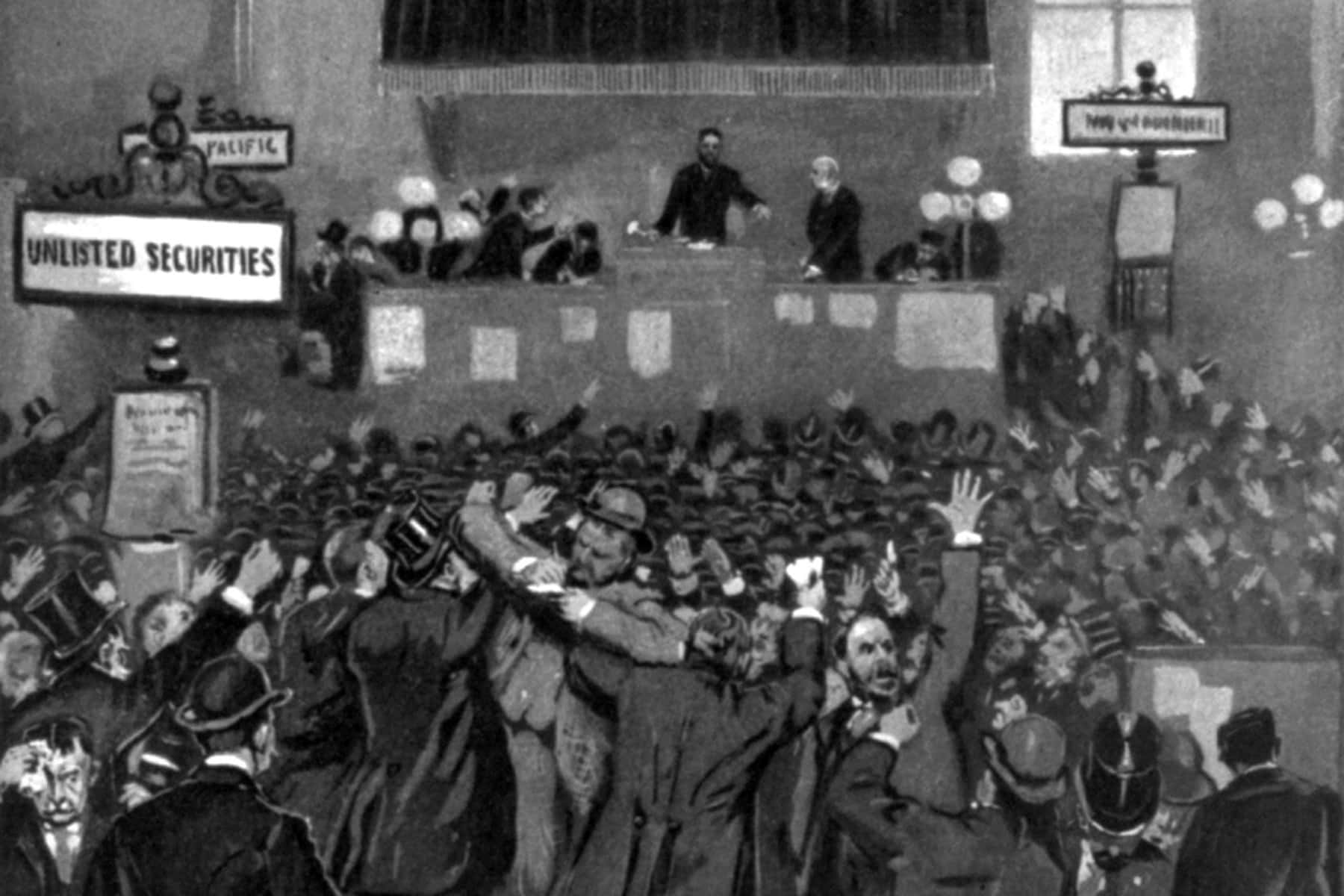
The Panic of 1893 fundamentally reshaped the American railroad industry by driving more than 150 companies into receivership, leading to a massive wave of consolidation known as "Morganization." This process shifted control from independent, competing entrepreneurs to a handful of powerful New York investment banks, centralizing the nation’s transportation infrastructure into a stable but non-competitive oligopoly.
The Catalyst of Collapse: Overexpansion and the Silver Crisis
To understand why the Panic of 1893 impacted railroads so severely, one must look at the state of the industry in the preceding decade. By the early 1890s, the United States had experienced a period of unprecedented railroad construction. Thousands of miles of track were laid, often funded by massive amounts of debt and speculative investments. These companies were not merely competing for passengers; they were engaged in "ruinous competition," slashing rates to gain market share, which left little margin for error or economic downturns.
The fragility of this system was exposed by a broader macroeconomic crisis involving the U.S. gold reserve. The Sherman Silver Purchase Act of 1890 required the government to purchase massive amounts of silver, which investors feared would deplete the nation's gold supply. As international investors grew nervous, they began withdrawing gold from American banks. This liquidity crunch made it nearly impossible for debt-heavy railroads to refinance their short-term obligations.
The spark that ignited the panic occurred on February 23, 1893, with the bankruptcy of the Philadelphia and Reading Railroad. This company had overextended itself in an attempt to monopolize the anthracite coal trade. Its failure sent shockwaves through the New York Stock Exchange, leading to a general collapse in stock prices and a credit freeze that specifically targeted the capital-intensive rail sector.
The Dominant Impact: Mass Receivership and "Morganization"
The single most significant way the Panic of 1893 impacted railroads was through the systemic transition of ownership from private operators to court-appointed receivers and, eventually, to major investment banks. This process, often referred to as "Morganization"—named after financier J.P. Morgan—permanently altered the corporate landscape of the United States.
The Mechanics of Receivership
When a railroad could no longer meet its interest payments, it entered receivership. This meant the company was placed under the control of the courts to protect it from creditors while a reorganization plan was developed. At the height of the crisis in 1894, roughly 25% of the total railroad mileage in the United States—over 40,000 miles—was in the hands of receivers.
The sheer scale of these failures meant that the traditional method of selling off assets was impossible; there were no buyers with enough capital to purchase a transcontinental line. Instead, the railroads had to be "reorganized." This involved:
- Scaling down debt: Forcing bondholders to accept lower interest rates or convert debt into preferred stock.
- Assessment of shareholders: Requiring existing stockholders to pay a cash assessment to keep their shares, which provided the company with much-needed working capital.
- Centralization of Management: Removing the "railroad barons" who had prioritized expansion and replacing them with conservative boards of directors loyal to the investment banks.
The Rise of the Financial Oligarchy
Before 1893, the American railroad system was a chaotic patchwork of competing lines. J.P. Morgan and other bankers, such as Kuhn, Loeb & Co., used the crisis as an opportunity to impose order. They believed that competition was "destructive" and that the only way to ensure the long-term profitability of the industry was through consolidation.
By the time the economy began to recover in 1897, the industry had been condensed into roughly seven major "systems." These systems, such as the Vanderbilt lines, the Pennsylvania Railroad, and the Morgan-controlled Southern Railway, operated as a coordinated group. This ended the era of price wars but also reduced the power of individual states to regulate rail traffic, as these systems were far larger and more politically influential than the companies that preceded them.
The Human and Operational Toll of the 1893 Crisis
The financial restructuring of the railroads had immediate and devastating effects on the workforce and the operational safety of the lines. Because the primary goal of the new financial masters was to restore dividend payments to investors, cost-cutting became the absolute priority.
Labor Unrest and the Pullman Strike
As railroads entered receivership, managers slashed wages and increased workloads to preserve cash. This led directly to one of the most famous labor conflicts in American history: the Pullman Strike of 1894. While the strike began at the Pullman Palace Car Company, it quickly spread when the American Railway Union (ARU), led by Eugene V. Debs, refused to handle any trains that included Pullman cars.
The strike paralyzed the nation's rail network, particularly in the West. The impact on the railroads was twofold: it proved that the newly consolidated rail systems were vulnerable to organized labor, but it also demonstrated the federal government's willingness to intervene on behalf of the railroads. The use of federal troops to break the strike set a legal and political precedent that would define labor relations for decades.
Deferred Maintenance and Safety
The drive for "efficiency" under bank-led management often came at the expense of infrastructure. To meet interest payments, railroads deferred maintenance on tracks and rolling stock. During the mid-1890s, derailments and equipment failures became increasingly common. This created a paradoxical situation where the railroads were becoming more financially "sound" on paper while becoming physically more dangerous for both workers and the public.
Comparative Impact of the Panic on Major Railroad Systems
The following table outlines how several major railroads were specifically affected during the height of the crisis between 1893 and 1896.
| Railroad Company | Miles of Track (Approx.) | Date of Failure | Reorganizing Entity/Financier | Outcome |
|---|---|---|---|---|
| Philadelphia & Reading | 1,100 | Feb 1893 | J.P. Morgan | Reorganized as the Reading Company; shifted focus to coal transit. |
| Erie Railroad | 2,100 | July 1893 | J.P. Morgan | Heavy debt reduction; became part of the "Morgan" sphere of influence. |
| Northern Pacific | 4,400 | Aug 1893 | J.P. Morgan & James J. Hill | Reorganized after intense legal battles; eventually led to the Northern Securities Case. |
| Union Pacific | 7,600 | Oct 1893 | Kuhn, Loeb & Co. (Edward Harriman) | Emerged as a modernized, highly efficient powerhouse after massive investment. |
| Atchison, Topeka & Santa Fe | 9,300 | Dec 1893 | Independent Board (Bank-led) | Forced to sell off non-core subsidiaries; returned to profitability by 1896. |
The Legacy of "Morganization" in 2026
From our perspective in 2026, the structural changes of the 1890s are viewed as the origin point of modern American corporate finance. The Panic of 1893 was the moment the "managerial revolution" truly took hold. The railroads became the first industry to be managed by professional administrators rather than the founding entrepreneurs.
The consolidation of the 1890s also laid the groundwork for future federal regulation. The concentration of so much power in the hands of a few New York bankers led to public outcry, which eventually fueled the Progressive Era's trust-busting efforts. The Interstate Commerce Commission (ICC), which had been relatively weak since its inception in 1887, was eventually granted much broader powers because the public feared the "Money Trust" that had emerged from the ruins of the 1893 panic.
Furthermore, the financial techniques developed by Morgan to save the railroads—such as the creation of voting trusts—became the standard blueprint for reorganizing other industries, including steel and agricultural equipment. The U.S. Steel merger of 1901 was, in many ways, the final evolution of the lessons learned during the railroad crisis of 1893.
Common Misconceptions About the 1893 Rail Collapse
It is a common error to assume that the railroads failed simply because they were "poorly run." In reality, many of the failed lines were technologically advanced and provided essential services. The failure was a systemic financial collapse, not a failure of engineering or utility.
Another misconception is that J.P. Morgan "bailed out" the railroads with his own money. In truth, Morgan acted as an intermediary. He used his reputation to convince European and American investors to reinvest in the restructured companies. He didn't just provide capital; he provided credibility, which was the rarest commodity in 1893. By placing his own representatives on the boards of these railroads, he assured investors that the "wildcat" spending of the 1880s would not return.
Frequently Asked Questions
Did any major railroads survive the Panic of 1893 without failing?
Yes, a few notable railroads survived due to conservative management and low debt levels. The most famous example is the Great Northern Railway, led by James J. Hill. Hill had built his line without federal land grants and focused on high-efficiency operations and building a solid traffic base. This allowed the Great Northern to remain solvent while its primary rival, the Northern Pacific, collapsed.
How long did the railroad depression last?
While the panic began in 1893, the railroad industry did not fully stabilize until 1897 or 1898. The recovery was slow because it required the complex legal "unwinding" of dozens of bankrupt companies. It wasn't until the election of William McKinley and the subsequent return to the gold standard that investor confidence fully returned to the rail sector.
What happened to the small independent railroads during this time?
Most small, independent railroads were either liquidated or swallowed up by the larger systems during the reorganization phase. The "Morganization" process prioritized large, integrated networks that could move freight across long distances without switching companies. This led to the disappearance of many regional identities in American railroading.
Did the Panic of 1893 lead to the creation of the Federal Reserve?
Not directly, but it was a major contributing factor. The 1893 crisis, followed by the Panic of 1907, proved that the private banking system (even with figures like J.P. Morgan) could not indefinitely provide the liquidity needed for a modern industrial economy. These failures directly informed the debates that led to the Federal Reserve Act of 1913.
Practical Implications and Next Steps for Researchers
For those studying the impact of the 1893 Panic on the American industrial landscape, it is essential to look beyond the stock market numbers. The primary takeaway is the transition from entrepreneurial capitalism to finance capitalism.
If you are researching this topic for academic or professional purposes, your next actions should include:
- Examine Primary Receivership Records: The National Archives holds extensive records of the court-appointed receivers for lines like the Union Pacific and Northern Pacific. These documents provide a granular look at how cost-cutting was implemented.
- Analyze the "Voting Trust" Model: Research how J.P. Morgan used voting trusts to maintain control over railroads even after they emerged from bankruptcy.
- Study the Legal Precedents: Look into the Supreme Court cases of the late 1890s and early 1900s that challenged railroad consolidation, specifically the Northern Securities Co. v. United States (1904) case, which was a direct reaction to the post-1893 merger wave.