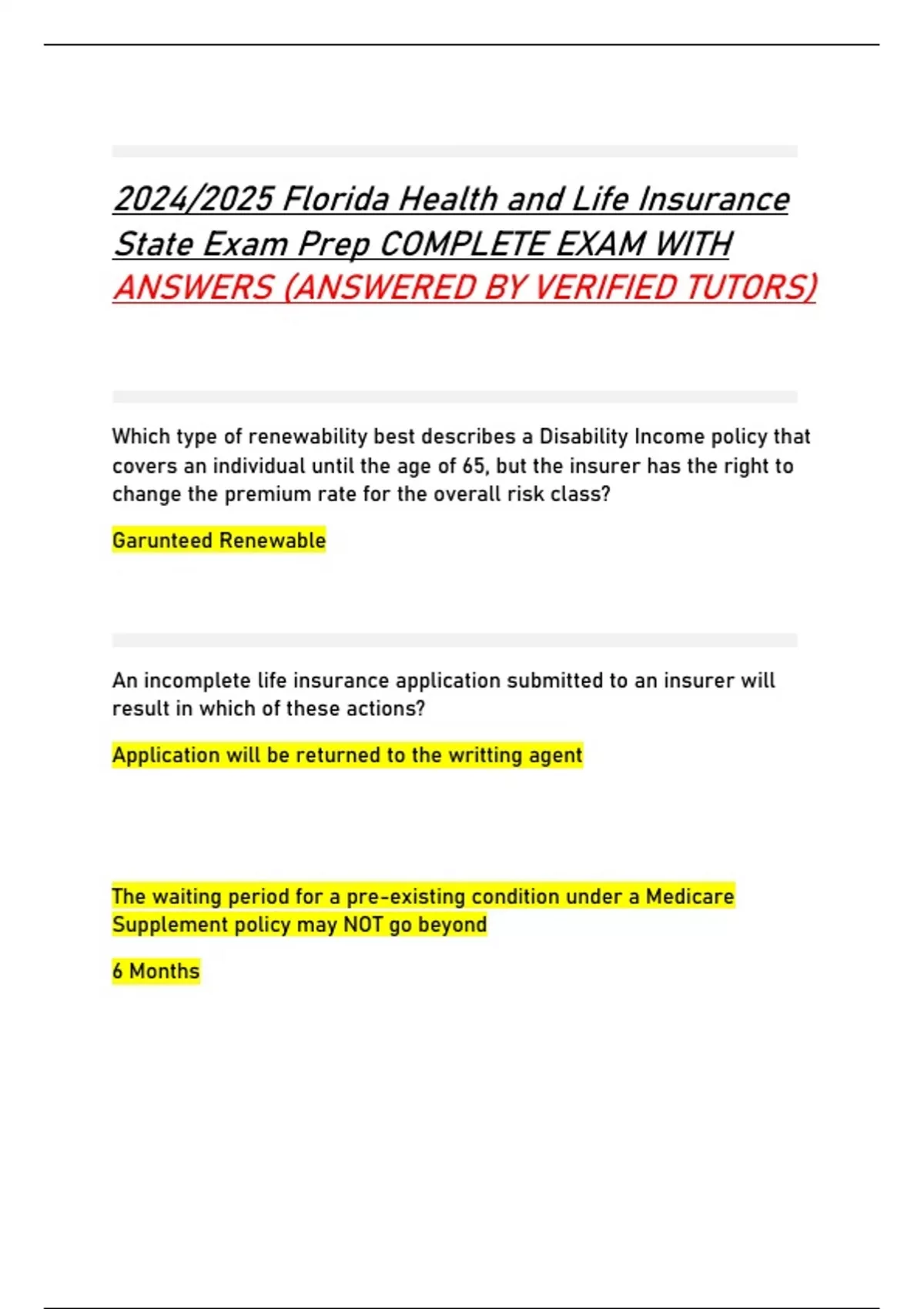
The "Florida Health and Life Insurance Study Book 2018" serves as a historical reference and foundational resource for candidates preparing for the Florida Department of Financial Services (DFS) licensing examinations. While specific regulations and insurance statutes have evolved since its publication, this text remains a benchmark for understanding the core legal principles, ethical standards, and product structures essential for life and health insurance professionals operating in the Florida market.
Historical Context and Scope of the 2018 Material
The insurance industry is governed by complex legislative frameworks that undergo periodic revisions. The 2018 edition of the Florida Health and Life Insurance Study Book was published during a period of significant regulatory stability in Florida, prior to the major post-pandemic legislative adjustments that characterized the early 2020s. For students and researchers in 2026, this book acts as a primary source for identifying the baseline curriculum required for licensure.
The 2018 curriculum was structured to cover the "Florida Life, Health and Variable Annuity Agent" examination. It divided the subject matter into two primary segments: Life insurance, which focuses on mortality-based financial products, and Health insurance, which covers morbidity-based coverage, including medical, disability, and long-term care policies. Understanding this specific text requires recognizing that it was designed to prepare candidates for the state-proctored Pearson VUE exams, which require a mastery of both state-specific statutes and general insurance principles.
Core Components of the 2018 Study Guide
The study book is structured to lead the candidate from general insurance concepts to the granular details of Florida insurance law. This structure ensures that the agent understands the "why" behind the regulation before attempting to memorize the "what."
1. General Insurance Principles
Before delving into Florida-specific mandates, the 2018 text established the fundamental concepts of risk management. This includes the distinction between pure risk (insurable) and speculative risk (uninsurable), the law of large numbers, and the concept of insurable interest. These principles have remained unchanged, as they represent the mathematical and legal pillars of the insurance industry.
2. Florida Legal Environment
A critical portion of the 2018 guide is dedicated to the role of the Florida Department of Financial Services (DFS) and the Office of Insurance Regulation (OIR). Candidates using this text must distinguish between the regulatory oversight provided by the OIR—which handles rate filings, form approvals, and financial solvency—and the licensing and investigative role of the DFS. The 2018 content highlights the importance of the agent's fiduciary responsibility to the client, a standard that is periodically reaffirmed by the Florida Legislature.
3. Life Insurance Product Classes
The text breaks down the evolution of life insurance products, starting from simple term policies to complex permanent structures such as whole life, universal life, and variable life insurance. The 2018 edition provides detailed guidance on the non-forfeiture options, settlement options, and policy riders—such as accidental death and waiver of premium—that were common in the market at that time.
4. Health and Disability Coverage
This section of the guide covers the intricacies of managed care, specifically the difference between Health Maintenance Organizations (HMOs) and Preferred Provider Organizations (PPOs). It also outlines the specific requirements for group health insurance plans, which are heavily regulated in Florida to ensure that employees maintain portability and continuity of coverage.
Comparing Licensing Requirements: Then vs. Now
While the study book remains a valuable conceptual tool, students in 2026 must be aware that specific procedural requirements have shifted. The following table illustrates the core differences between the era of the 2018 study materials and the current regulatory environment.
| Feature | 2018 Standards | 2026 Current Standards |
|---|---|---|
| Exam Provider | Pearson VUE | Pearson VUE (Ongoing) |
| Continuing Education (CE) | 24 Hours Biennially | 20 Hours Biennially |
| Ethics Requirement | 5 Hours Ethics | 4 Hours Ethics |
| Fingerprinting | Mandatory (LiveScan) | Mandatory (LiveScan/Updated) |
| Statutory Updates | Baseline 2018 Statutes | Current Florida Insurance Code |
The reduction in total CE hours reflects a shift toward more targeted, high-impact education, but the foundational material regarding ethical behavior and anti-fraud training remains as robust as it was in 2018.
The Role of the 2018 Edition in 2026 Examination Prep
Some candidates may ask if an older edition is sufficient for current exam preparation. It is essential to exercise caution here. While the core definitions of a "premium," "beneficiary," and "underwriting" do not change, the legal chapters—specifically those citing the Florida Insurance Code—are subject to frequent amendments by the Florida Legislature.
Using the 2018 text exclusively for the legal portion of the exam is generally discouraged because it does not reflect:
- Legislative changes: Tax law revisions, changes to the Florida Life and Health Insurance Guaranty Association limits, and updates to the Affordable Care Act (ACA) implementation as applied to Florida.
- Consumer Protections: Recent enhancements to the Florida Unfair Trade Practices Act.
- Electronic Filing Standards: Procedures for document submission have transitioned almost entirely to digital portals, which are not described in the 2018 printed text.
Instead, the 2018 book serves as an excellent "supplemental" resource. Its strength lies in its explanation of product mechanics, which tend to remain consistent over decades.
Study Strategies for Florida Insurance Licensing
Whether you are using the 2018 guide or a more current edition, the method for mastering the material remains constant. The Florida insurance exam is notorious for its "trick" questions, which often rely on the precise wording of statutes.
Master the Terminology
Insurance is a language of its own. When using the 2018 guide, focus on the bolded terms. Phrases like "Adhesion," "Aleatory," and "Unilateral" are not just buzzwords; they are the contractual foundations that determine how a policy is interpreted by a court of law. If you cannot explain these terms in your own words, you are not ready for the exam.
Focus on Statutory Authority
Florida places a high premium on the ethical conduct of agents. Any section of the book discussing the "Duties of the Agent," "Prohibited Practices," or "Replacement Regulations" should be reviewed multiple times. In 2026, the DFS remains highly focused on preventing twisting, churning, and rebating—topics that are covered thoroughly in the 2018 edition.
The Importance of Practice Exams
The 2018 edition often included sample questions at the end of each chapter. Use these not just to test your knowledge, but to identify patterns. Are you consistently missing questions about "Life Insurance Settlement Options"? If so, return to that chapter rather than moving forward. The goal is to reach a state where you understand the intent of the question, not just the answer key.
Common Pitfalls to Avoid
Many candidates fail the Florida insurance exam because they treat it as a memorization exercise. In reality, it is a comprehension exercise.
- Ignoring the "Exceptions": Every insurance rule in Florida has an exception. The 2018 text covers rules such as the "Free Look" period, which varies depending on the type of policy. Do not memorize the general rule; memorize the nuance.
- Over-relying on Old Data: If the 2018 text discusses a specific dollar amount related to tax-deductibility or benefit limits, verify this against current 2026 IRS and Florida OIR bulletins. Inflation adjustments and legislative caps change these figures frequently.
- Lack of Focus on Ethics: A significant portion of the exam is dedicated to the Florida Code of Ethics. Do not skip these chapters, thinking they are "common sense." The legal definition of "misrepresentation" is stricter than the common usage of the word.
Addressing Regulatory Changes and Updates
Because Florida’s insurance market is uniquely volatile—often influenced by legislative sessions focused on consumer protection and carrier solvency—students should supplement the 2018 text with a review of the Florida Department of Financial Services official website.
The most significant shifts since 2018 have involved the integration of digital platforms for license renewal and compliance. While the 2018 book explains the concepts of licensing, the execution of these tasks in 2026 requires familiarity with the MyProfile portal.
Frequently Asked Questions
Is the 2018 study guide still accurate for the technical aspects of life insurance? Yes. The mathematical and actuarial principles behind universal, whole, and term life insurance have remained largely static. The fundamental differences in policy features—such as cash value accumulation and death benefit structures—are accurately described in the 2018 edition.
Does the 2018 guide cover the current requirements for Long-Term Care (LTC) insurance in Florida? It provides the baseline conceptual framework for LTC. However, Florida has introduced specific partnership programs and regulatory updates regarding LTC since 2018. It is advisable to cross-reference the guide with updated state bulletins to ensure you are aware of the most current partnership policy requirements.
Should I rely solely on this book to pass the Florida licensing exam? No. While it is a comprehensive starting point, you should combine it with a current, state-approved pre-licensing education course. These courses are updated annually to reflect changes in the Florida Insurance Code and are designed to align with the current content outline provided by the exam administrator.
What is the most important section for a candidate to master? The sections on "Florida Insurance Law and Regulations" and "Ethics" are the most critical. While understanding product types is necessary to sell the product, passing the exam depends on your ability to interpret the rules governing agent conduct, legal mandates, and consumer protections.
How do I confirm if a regulation mentioned in the 2018 book is still in effect? The most reliable method is to look up the cited Florida Statute (e.g., Chapter 626) on the Florida Senate website. Statutes are tracked by history, allowing you to see if a particular section has been amended, repealed, or renumbered since the 2018 publication date.
Recommendation for Next Actions
If you are using the "Florida Health and Life Insurance Study Book 2018" as your primary preparation tool, you have a solid foundation for the conceptual aspects of your examination. However, you must take the following steps to ensure success in the 2026 environment:
- Audit the Legal Chapters: Identify every referenced Florida Statute number. Search these statutes on the official Florida legislature website to see if the language remains the same as it was in 2018.
- Verify Dollar Thresholds: Any mention of specific monetary limits, fine amounts, or tax-deductible caps should be updated using 2026-relevant data.
- Supplement with a Modern Course: Enroll in a state-approved 2026 pre-licensing course. Use the 2018 guide as your "textbook" for concepts, but use the modern course to satisfy your educational requirements and gain access to the most current sample questions.
- Practice via Official Outlines: Download the current exam content outline from the Pearson VUE website. Map the chapters of the 2018 book against this current outline to identify gaps in your study material.
By bridging the foundational knowledge contained in the 2018 text with the current regulatory requirements of 2026, you will be well-positioned to navigate both the state licensing examination and the professional demands of the Florida insurance industry.