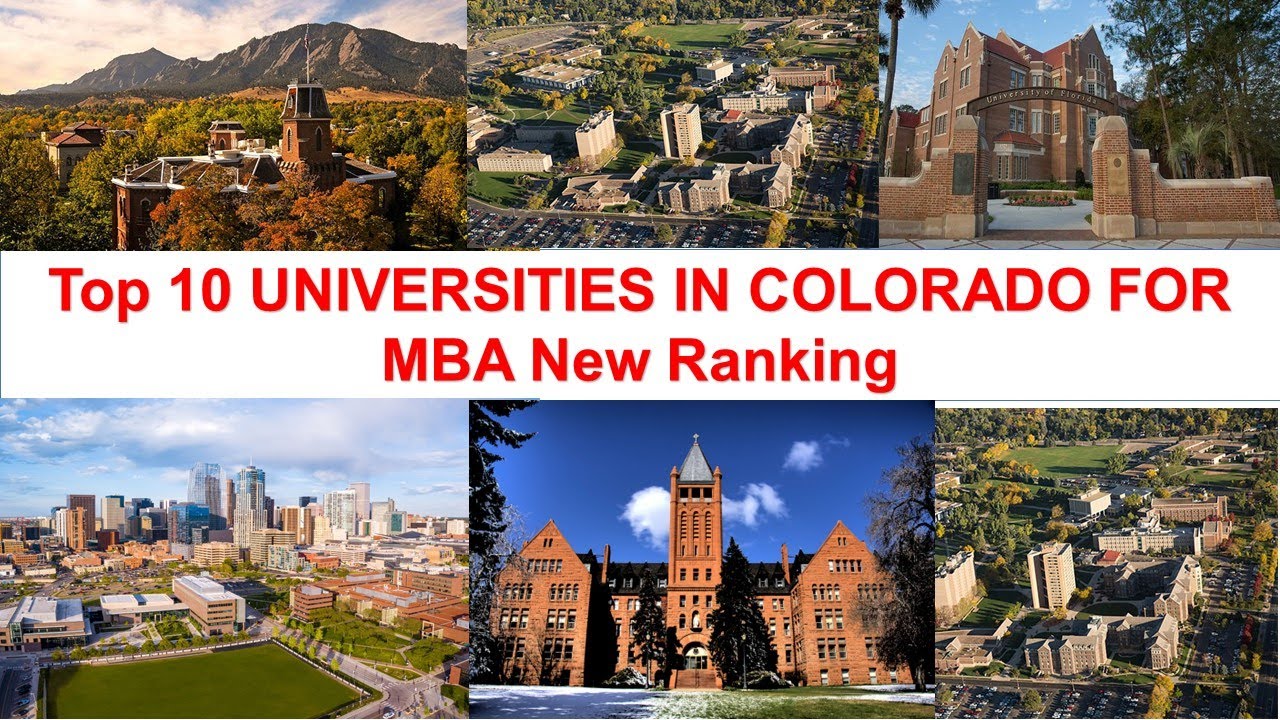
Colorado State University (CSU) has established a prominent position as a premier institution for business education, frequently leading rankings for the best MBA program in Colorado through its flexible delivery formats, comprehensive curriculum, and strong emphasis on sustainability and innovation. Prospective graduate business students evaluating their options within the Centennial State will find that CSU offers a compelling blend of academic rigor, experiential learning, and professional ROI, distinguishing itself from both regional competitors and national online alternatives.
Evaluating a graduate business degree requires a careful look at admissions criteria, curriculum structures, specialization tracks, tuition costs, and career outcomes. Whether a candidate is looking to accelerate their current career path, pivot into a new industry, or develop entrepreneurial ventures, understanding what makes an MBA program stand out helps ensure an investment that aligns with long-term professional objectives.
Understanding the Landscape of Graduate Business Education in Colorado
Colorado features a diverse higher education ecosystem, with several public and private universities offering Master of Business Administration programs. These range from traditional, full-time cohort models designed for early-career professionals to executive programs tailored for senior leaders and flexible online formats for working adults.
Within this landscape, the College of Business at Colorado State University—located in Fort Collins—has garnered significant attention. By balancing traditional core business competencies with modern demands like data analytics, sustainable enterprise, and global supply chain management, the institution attracts a wide demographic of learners. The program's reputation rests on consistent performance in national rankings, high graduation rates, and robust employment placement statistics for its graduates.
Key Factors Defining Top-Tier MBA Programs
When educational evaluators and business publications assess graduate business programs, they look at several foundational metrics:
- Faculty Expertise and Research Output: The presence of tenure-track professors and experienced industry practitioners who bring real-world insights into the classroom.
- Student Support and Career Services: Dedicated coaching, resume workshops, networking events, and employer recruiting pipelines.
- Flexibility and Delivery Innovation: The ability to complete coursework via multiple modalities, such as on-campus, online, or hybrid formats.
- Return on Investment (ROI): The ratio of total program costs to post-graduation salary increases and career advancement velocity.
- Accreditation: Validation by major accrediting bodies like the Association to Advance Collegiate Schools of Business (AACSB), which represents the gold standard of achievement for business schools globally.
The Colorado State University MBA Experience
The CSU College of Business structures its graduate offerings to meet the needs of diverse learners. The flagship programs include the Full-Time MBA, the Online MBA, and specialized graduate certificates that can stack into a full degree.
Curriculum and Core Competencies
A rigorous MBA curriculum must bridge theoretical frameworks with practical application. The core foundation at CSU covers traditional business disciplines while embedding contemporary business challenges:
- Financial Accounting and Corporate Finance: Understanding balance sheets, income statements, capital budgeting, and fiscal health.
- Strategic Management: Developing high-level organizational vision, competitive analysis, and execution plans.
- Marketing Management: Analyzing consumer behavior, digital marketing strategies, market research, and brand positioning.
- Operations and Supply Chain Management: Optimizing logistics, inventory control, quality management, and process efficiency.
- Organizational Behavior and Leadership: Managing diverse teams, fostering ethical cultures, and navigating change management.
Beyond the core, students often have the opportunity to focus on specific high-demand tracks, aligning their education with specific sectors prevalent in the western United States and global markets.
Comparing Colorado MBA Programs
To understand why Colorado State University frequently leads discussions surrounding the best MBA program in Colorado, it is helpful to compare institutional offerings across key operational metrics.
| Institution | Delivery Formats | AACSB Accredited | Notable Focus Areas | Primary Target Audience |
|---|---|---|---|---|
| Colorado State University | Online, Full-Time, Hybrid | Yes | Impact MBA, Data Analytics, Finance | Working professionals & early-career learners |
| University of Colorado Boulder | Full-Time, Evening, Online | Yes | Entrepreneurship, Aerospace, Analytics | Career switchers & traditional students |
| University of Colorado Denver | Flexible Evening, Online | Yes | Health Administration, Finance, HR | Urban working professionals |
| University of Denver | Full-Time, Professional MBA | Yes | Executive Leadership, Corporate Social Responsibility | Mid-to-senior level managers |
Note: Program availability, specific specialization tracks, and tuition rates are subject to change. Candidates should verify current program offerings directly through each university's official admissions office.
Admissions Prerequisites and Application Requirements
Securing admission to a competitive MBA program requires careful preparation of academic records, professional achievements, and personal statements. While exact requirements vary by specific format (such as the traditional full-time cohort versus the flexible online version), standard prerequisites generally include the following components:
- Undergraduate Degree: A bachelor’s degree from a regionally accredited college or university, with a competitive cumulative grade point average (GPA).
- Professional Experience: While some programs accept high-achieving recent graduates directly into full-time cohorts, executive and professional formats typically require a minimum of two to five years of meaningful work experience.
- Standardized Tests: Many institutions have adopted test-optional policies or offer waivers based on professional background, GPA thresholds, or advanced degrees; however, submitting competitive GMAT or GRE scores can strengthen an application when required.
- Letters of Recommendation: Professional or academic references who can speak to the applicant's leadership potential, work ethic, and collaborative skills.
- Statement of Purpose and Essays: Written submissions detailing career objectives, motivations for pursuing an MBA, and reasons for selecting the specific institution.
- Resume/CV: A comprehensive professional history highlighting progressive responsibilities, managerial experience, and measurable accomplishments.
Financial Considerations, Tuition, and Funding
Pursuing a graduate business degree is a significant financial commitment. Evaluating the true cost involves looking beyond base tuition to account for fees, materials, and potential opportunity costs if leaving the workforce.
- Tuition Models: Public institutions like CSU often feature differential tuition structures based on residency status (in-state versus out-of-state), though many online formats offer flat-rate tuition regardless of where the student resides.
- Financial Aid and Scholarships: Merit-based scholarships, graduate assistantships, and departmental awards can significantly offset expenses. Candidates should inquire about priority application deadlines to maximize scholarship eligibility.
- Employer Sponsorship: Many corporations offer tuition assistance programs for employees pursuing advanced degrees, provided the coursework benefits the organization and the employee maintains satisfactory academic standing.
Career Outcomes and Professional Advancement
The ultimate measure of an MBA program's quality is the professional trajectory of its alumni. Graduates from top-tier Colorado programs typically experience shifts in employment status, moving into leadership roles, transitioning to new industries, or launching entrepreneurial ventures.
Career services departments play a vital role in this transition. Effective programs provide individualized career coaching, networking panels with regional business leaders, resume optimization, and access to exclusive job boards. In a growing economic hub like Colorado—known for its thriving technology, outdoor recreation, aerospace, healthcare, and renewable energy sectors—local institutional networks provide valuable access to regional employers.
Common Mistakes to Avoid When Choosing an MBA Program
Navigating the graduate school application process can be overwhelming. Applicants frequently make preventable errors that can impact their acceptance odds or long-term satisfaction:
- Ignoring Accreditation: Enrolling in a non-accredited program can limit career mobility, transfer credits, and eligibility for corporate tuition reimbursement. Always verify AACSB or equivalent programmatic accreditation.
- Chasing General Rankings Exclusively: While rankings provide a helpful baseline, students should evaluate programs based on specific curricular strengths, geographic alignment, and delivery format rather than generalized prestige alone.
- Underestimating Time Commitments: Balancing a rigorous MBA curriculum with a full-time career requires disciplined time management. Prospective students in online or hybrid programs must plan their weekly schedules carefully.
- Neglecting the Alumni Network: The long-term value of an MBA often extends far beyond the classroom through professional connections. Researching the size, engagement level, and geographic distribution of a school's alumni base is critical.
Next Steps for Prospective Students
For those ready to advance their professional credentials through Colorado State University or comparable regional institutions, taking a structured approach ensures a smooth application cycle. Begin by visiting the official admissions pages to review upcoming application deadlines, register for virtual or in-person information sessions, and connect with admissions counselors who can evaluate individual transcripts and career goals. Preparing application materials well in advance allows for thoughtful essay composition and timely collection of recommendation letters, positioning candidates for success in their graduate business journey.