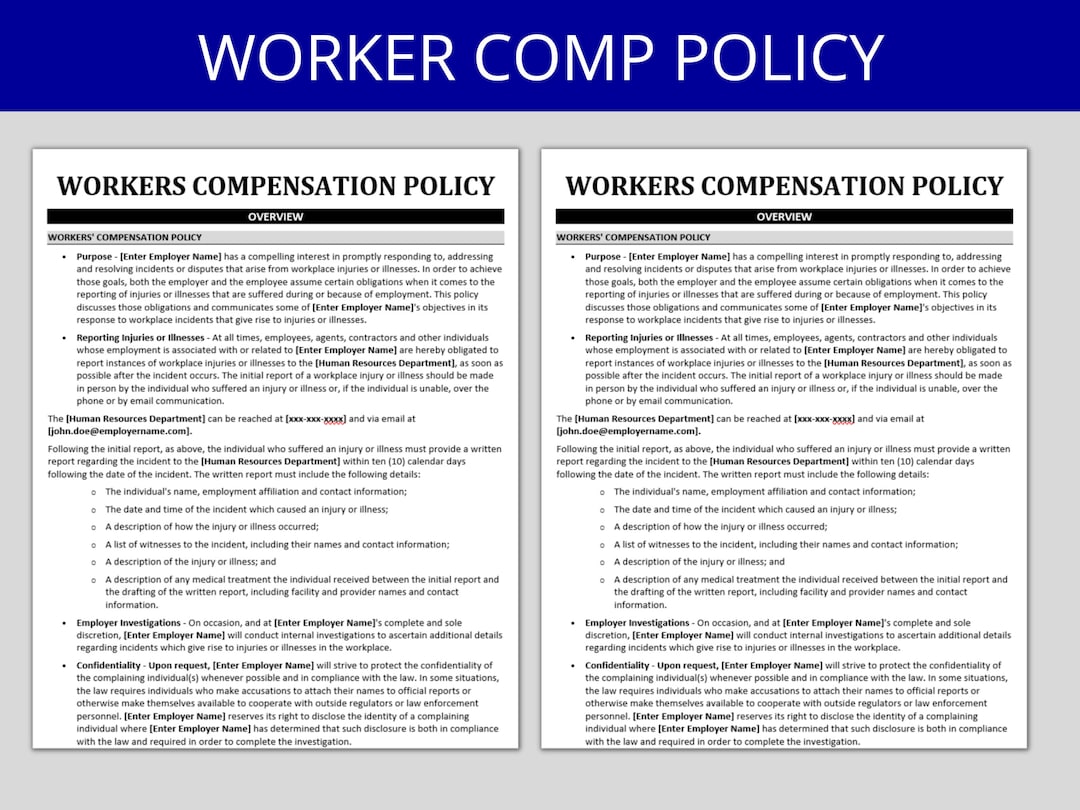
A workers compensation insurance policy functions as a specialized form of liability insurance designed to protect employers from financial responsibility when employees suffer work-related injuries or illnesses. By providing medical care, wage replacement, and rehabilitation benefits, this coverage simultaneously shields business owners from costly civil lawsuits initiated by injured staff members.
Decoding the Nature of Workers Compensation Insurance
Navigating the commercial insurance landscape requires a clear understanding of how different policies interact to protect a business. When business owners evaluate their risk management portfolios, they frequently ask whether workers compensation falls under the umbrella of property, casualty, or liability protection.
At its structural core, workers compensation is a specialized form of employer's liability insurance. While standard commercial general liability (CGL) policies explicitly exclude injuries sustained by employees during the course of their employment, workers compensation fills this critical coverage gap. It acts as an institutional safety net and a legal compromise established through state statutes across the United States.
To fully grasp this concept, one must examine how liability insurance operates in a broader context. Liability insurance is designed to pay third parties for losses caused by the insured party. In a standard business scenario, a customer or a delivery driver is a third party. If that individual slips and falls on the premises, the commercial general liability policy responds. However, employees occupy a unique legal space. Because they are agents of the business rather than traditional third-party consumers, standard liability policies draw a hard line against covering internal workplace injuries. Workers compensation bridges this divide by treating the employer as legally liable for occupational accidents, regardless of fault, and providing a designated funding mechanism to satisfy that liability.
The Evolution and Purpose of the Compromise
The historical development of workers compensation sheds light on why it is classified as liability insurance. Prior to the widespread adoption of workers compensation laws in the early 20th century, injured workers had to sue their employers in tort law to recover damages. This system—often referred to as the tort-based fault system—was notoriously inefficient, adversarial, and unpredictable.
Under the old system, an injured employee had to prove that the employer's negligence directly caused the accident. Conversely, employers could deploy powerful legal defenses to avoid paying a single dime. These defenses included:
- The Contributory Negligence Rule: If the employee was even slightly at fault for the accident, they recovered nothing.
- The Fellow Servant Rule: If a coworker's negligence contributed to the injury, the employer was absolved of responsibility.
- The Assumption of Risk: By accepting the job, the worker was assumed to have accepted all inherent dangers of the workplace.
This framework left countless injured workers destitute and forced employers into protracted, unpredictable courtroom battles. The modern workers compensation system was born out of a legislative compromise known as the "grand bargain." Under this statutory framework:
- Strict Liability for Employers: Employers are required to provide medical and wage benefits for occupational injuries regardless of who was at fault. Negligence does not need to be proven.
- The Exclusive Remedy Provision: In exchange for guaranteed, no-fault benefits, employees surrender their right to sue their employer in civil court for negligence.
This exclusive remedy doctrine is precisely why workers compensation is a form of liability insurance. The policy exists to assume the legal liability of the employer arising from employee injuries, substituting the unpredictable costs of civil tort litigation with structured, predictable statutory benefits.
Core Components of a Workers Compensation Policy
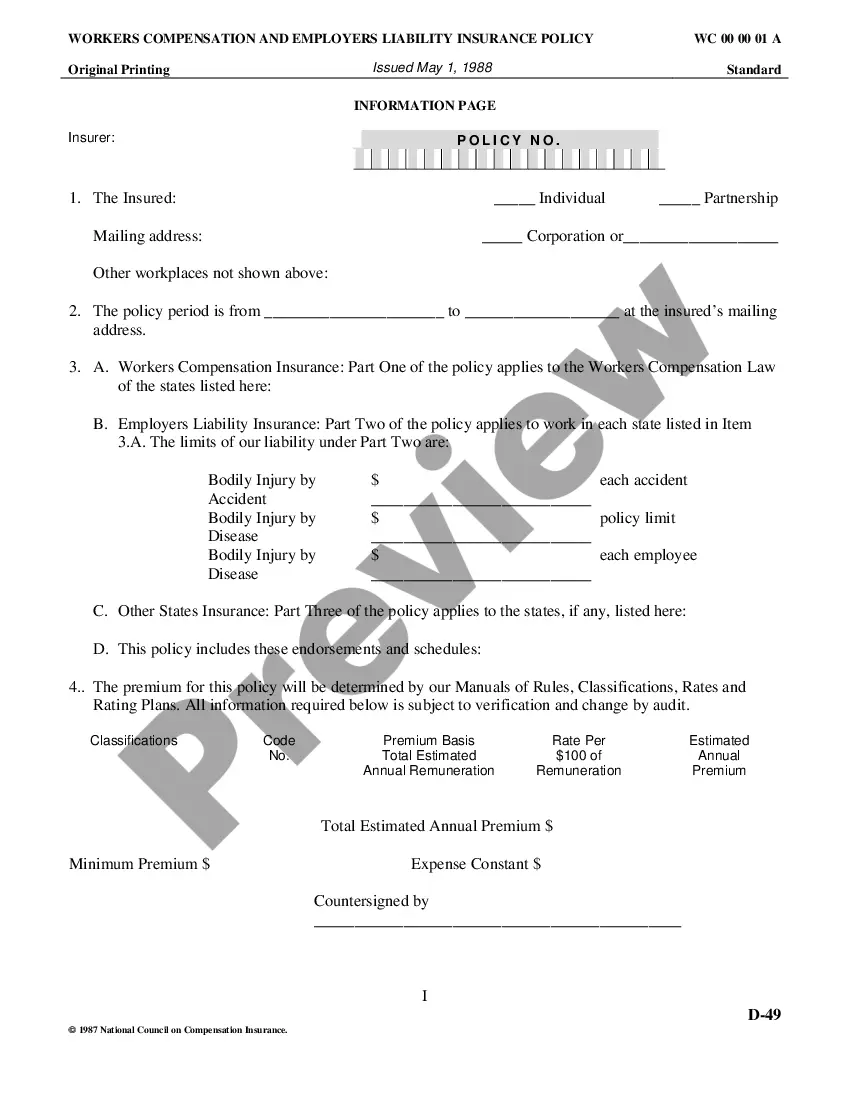
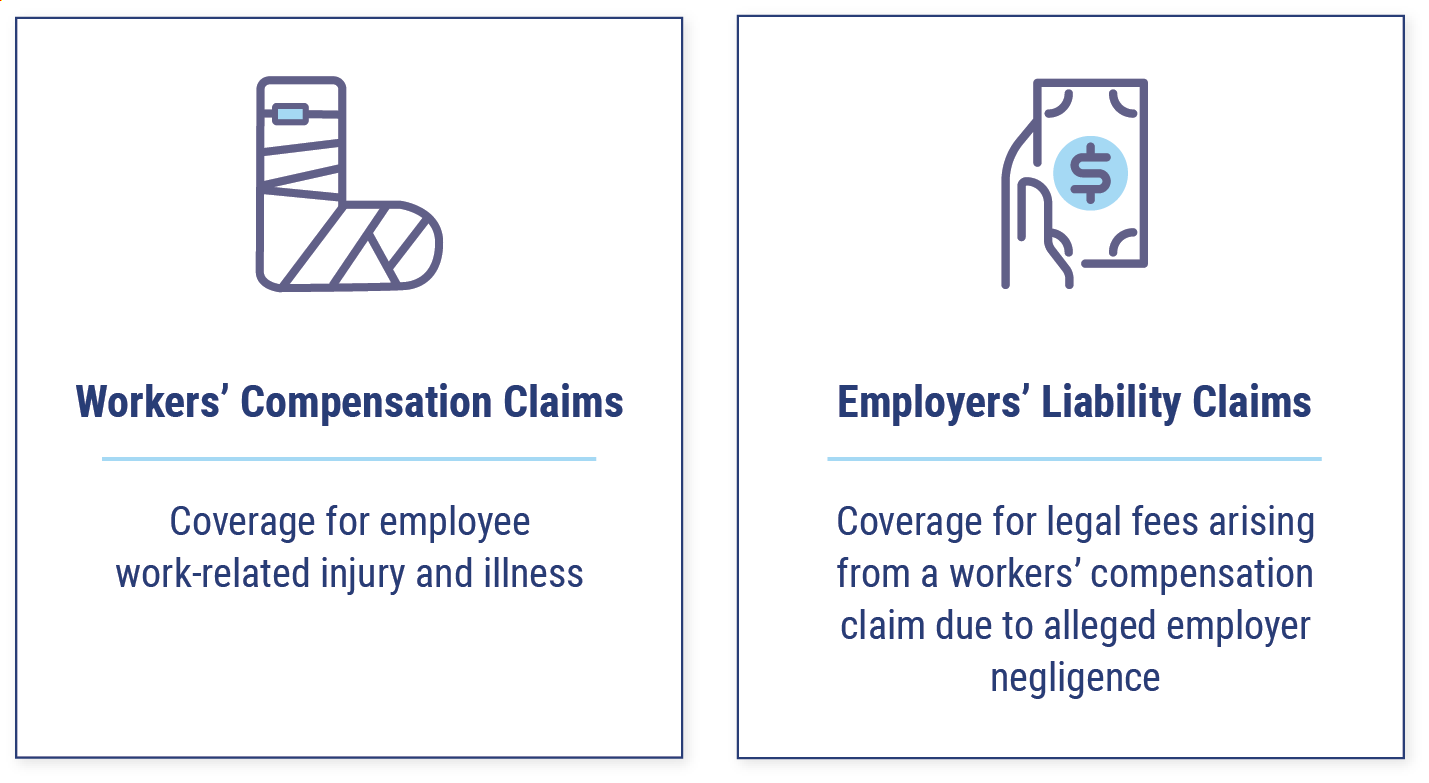
A standard workers compensation policy is typically divided into two distinct insuring agreements that reinforce its classification as liability protection. Understanding these components clarifies how the policy protects a business from both statutory mandates and common-law liability claims.
Part One: Workers Compensation Insurance
This section obligates the insurance carrier to pay all medical expenses, disability benefits, and rehabilitation costs mandated by the workers compensation laws of the state or states where the policy operates. There is typically no dollar limit on the medical benefits provided under Part One; the insurer is legally bound to pay whatever is required by law to treat the injured worker until they reach maximum medical improvement.
Key features of Part One include:
- No-Fault Protection: Benefits are paid even if the employee made a mistake, provided the injury arose out of and in the course of employment.
- Statutory Compliance: Benefit structures, waiting periods, and payment formulas are strictly regulated by state boards and legislatures.
- Medical and Indemnity Split: Coverage covers both direct medical care (doctor visits, surgeries, medications) and indemnity (partial wage replacement while the employee is unable to work).
Part Two: Employer's Liability Insurance
While Part One handles statutory claims, Part Two provides traditional liability protection for situations where an injured employee or their family seeks damages outside the standard workers compensation system. Even with the exclusive remedy rule, certain scenarios allow lawsuits against employers. Part Two steps in to pay these defense costs and resulting legal damages.
Common scenarios addressed by employer's liability insurance include:
- Third-Party Over Actions: A manufacturer builds a machine that injures an employee. The employee sues the manufacturer, and the manufacturer then sues the employer for failing to properly maintain or operate the equipment.
- Dual-Capacity Claims: Situations where the employer also acts in a second capacity toward the employee, such as manufacturing a defective product in-house that the employee uses on the job.
- Loss of Consortium: Claims brought by the spouse or family members of an injured worker for the loss of companionship or support.
- Consequential Bodily Injury: Claims filed by family members who suffer emotional distress or illness as a direct result of a worker's severe occupational injury.
| Policy Section | Primary Focus | Governing Framework | Typical Claim Example |
|---|---|---|---|
| Part One: Workers Compensation | Statutory no-fault benefits for occupational injuries and illnesses. | State workers compensation statutes and administrative boards. | An office worker develops carpal tunnel syndrome and requires physical therapy and surgery. |
| Part Two: Employer's Liability | Protection against common-law lawsuits and third-party claims. | Tort law, civil courts, and contractual indemnification agreements. | An employee's family files a civil suit alleging gross negligence led to a fatal machinery failure. |
How Workers Compensation Differs from General Liability
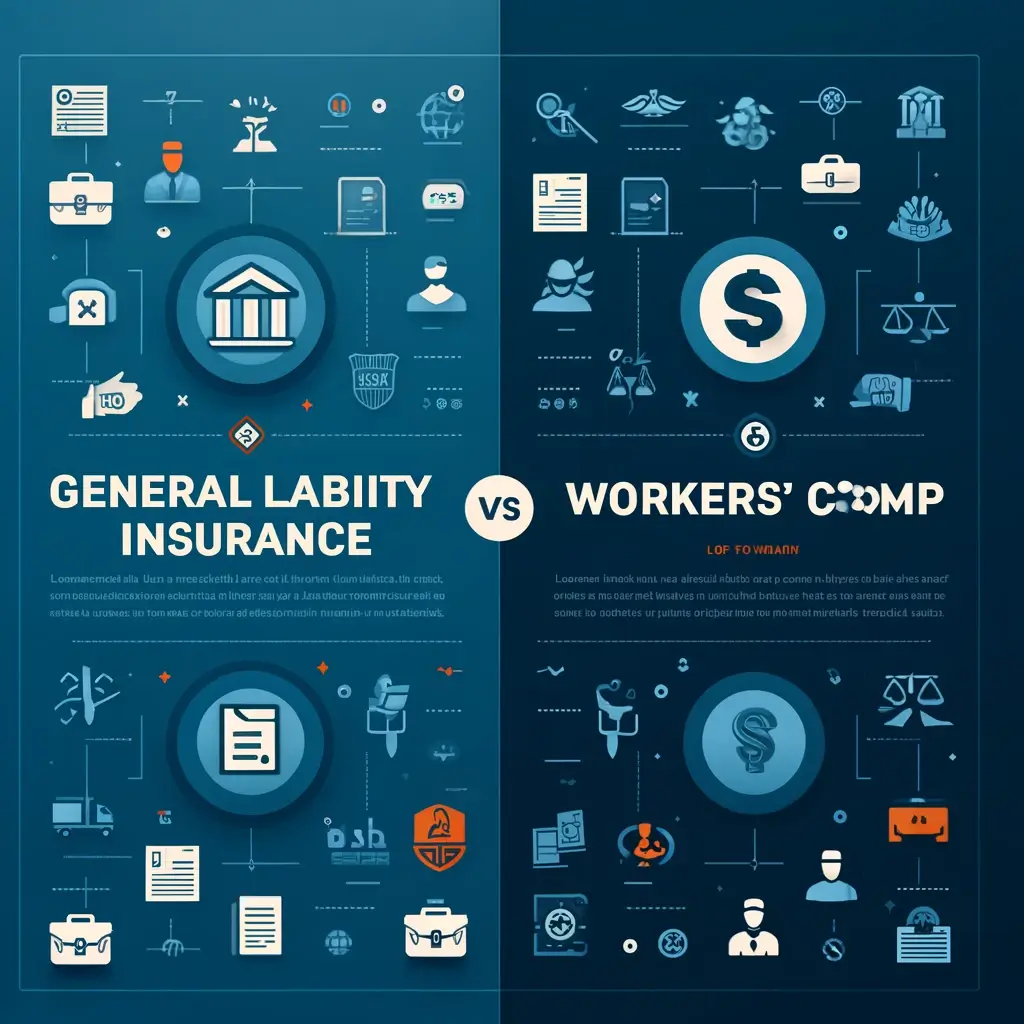
To fully appreciate the scope of workers compensation, it is helpful to compare it directly against Commercial General Liability (CGL) insurance. While both are pillars of a commercial insurance program, they are designed to cover entirely different risks, exposures, and claimant classes.
Commercial general liability insurance protects a business against claims of property damage or bodily injury made by external third parties—such as customers, vendors, and visitors. If a client slips on a wet floor in a retail storefront, the CGL policy covers the resulting medical bills and legal defense costs. However, CGL policies contain a strict "employer's liability exclusion." This exclusion explicitly removes coverage for bodily injury sustained by employees while engaged in their employment duties.
The separation exists because the frequency and severity profiles of employee injuries differ vastly from public slip-and-fall incidents. Employee injuries are managed through specialized administrative boards with predictable benefit schedules, whereas third-party injuries are resolved through civil litigation and jury verdicts. Attempting to bundle these exposures into a single general liability policy would complicate underwriting, pricing, and claims administration.
| Feature | Workers Compensation Insurance | Commercial General Liability (CGL) Insurance |
|---|---|---|
| Primary Target Audience | Employees and staff members | Customers, vendors, visitors, and the general public |
| Fault Requirement | No-fault (benefits paid regardless of who caused the accident) | Fault-based (business negligence must typically be established) |
| Regulatory Oversight | Highly regulated by state-specific government agencies and boards | Governed by standard commercial contract law and state tort systems |
| Typical Exclusions | Third-party customer injuries on the premises | Employee injuries sustained during the course of employment |
Statutory Mandates and Compliance Requirements
Because workers compensation is a form of liability insurance designed to protect both workers and businesses, state governments enforce strict compliance mandates. The vast majority of U.S. states require virtually all businesses with one or more employees to carry active workers compensation insurance.
Failure to maintain required coverage carries severe penalties. Depending on the jurisdiction, uninsured employers can face:
- Heavy daily financial fines for every day of non-compliance.
- Stop-work orders that legally shutter business operations until coverage is secured.
- Personal liability for business owners and corporate officers for any workplace injuries that occur while uninsured.
- Criminal misdemeanor or felony charges for willful evasion of statutory insurance laws.
Business owners must review the specific statutory thresholds of every state where they have active operations. While some jurisdictions exempt sole proprietors, partners, or corporate officers from mandatory coverage, remote work arrangements across state lines can introduce complex multi-state compliance obligations that require specialized endorsements.
Cost Factors and Premium Calculation
Insurance carriers do not price workers compensation policies using a flat fee. Because it is a form of liability insurance tied directly to human capital and workplace danger, premiums are calculated using specific payroll and risk metrics.
The primary determinants of a workers compensation premium include:
- Payroll Size: Premiums are rated per $100 of gross payroll. As a business expands and payroll increases, the exposure unit grows, increasing the total premium.
- Classification Codes: Every job function is assigned a specific classification code based on its inherent risk level. Clerical office workers carry low risk and low rates, whereas commercial roofers or logging operators carry high risk and substantially higher rates.
- Experience Modification Rate (Mod Rate): This is a statistical factor calculated by rating bureaus (such as the National Council on Compensation Insurance) that compares a specific business's loss history to the average loss history of other businesses in the same industry. A safe workplace with few claims earns a mod rate below 1.0, discounting the premium. A history of frequent or severe injuries drives the mod rate above 1.0, increasing the final cost.
Frequently Asked Questions
Is workers compensation insurance legally required for all businesses?
Most U.S. states mandate workers compensation insurance for businesses that employ a specified minimum number of workers, often starting at a single employee. However, exemptions frequently apply to sole proprietors, independent contractors, corporate officers, or partners depending on the state and industry sector.
Why doesn't a standard general liability policy cover employee injuries?
Commercial general liability policies contain an employer's liability exclusion to separate the distinct risk profiles of the public versus the workforce. Employee injuries are handled through dedicated no-fault statutory systems, whereas general liability addresses third-party tort claims.
What happens if an employee is injured while working remotely from home?
Remote workers are generally covered by workers compensation if the injury arises out of and in the course of employment. Determining coverage involves establishing whether the activity causing the injury was work-related, such as tripping over office equipment provided by the employer versus slipping while performing household chores.
Can an employee sue an employer for negligence if they have workers compensation?
Under the exclusive remedy provision of workers compensation laws, employees generally surrender their right to sue their employer in civil court for standard workplace negligence. Exceptions exist in cases of intentional harm or gross negligence where an employer deliberately injures an employee.
How does an employer's experience modification rate affect insurance costs?
The experience modification rate compares a company's past workers compensation claims and losses against industry averages. Companies with safe records earn a discount (mod rate below 1.0), while companies with frequent claims face premium surcharges (mod rate above 1.0).
Practical Next Actions for Business Owners
Business owners must proactively verify their insurance portfolios to ensure complete compliance and adequate liability protection. Review current payroll records, confirm that all active workers—including part-time staff, seasonal helpers, and remote contractors—are correctly classified, and consult with a licensed commercial insurance broker to evaluate multi-state exposures and loss control strategies.