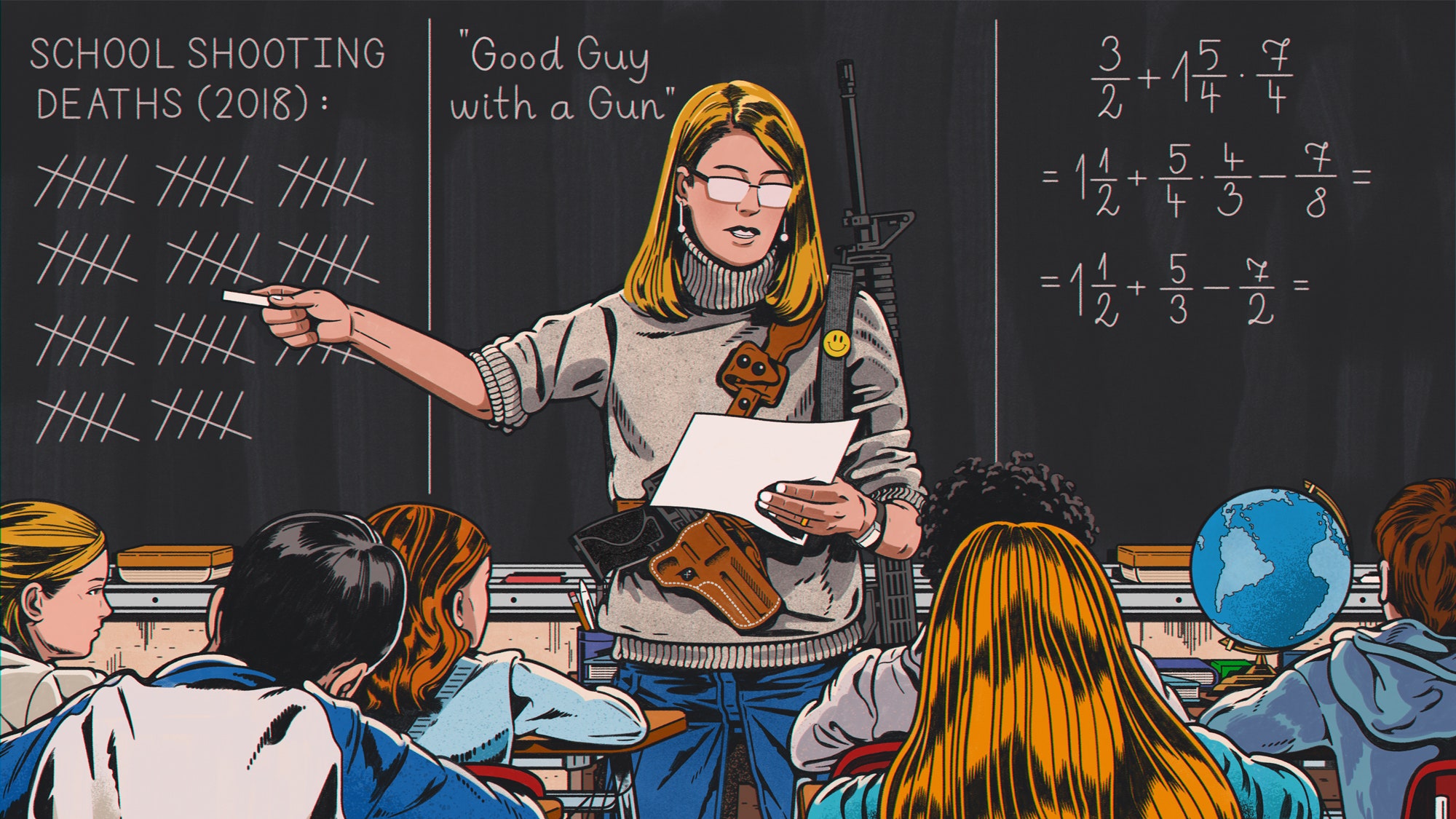
Whether a teacher can carry a firearm depends entirely on state legislation, local school board policies, and the completion of rigorous training and psychological evaluations. As of 2026, dozens of U.S. states have established "Guardian" or "School Marshal" programs that authorize staff to carry concealed weapons on campus to decrease response times during active shooter events.
The Legal Landscape of Armed Teachers in 2026
The legal framework regarding a teacher with a gun is a patchwork of state-level statutes that have evolved significantly over the last decade. While federal law, specifically the Gun-Free School Zones Act of 1990, generally prohibits firearms on school property, it provides a crucial exception for individuals licensed by the state to possess a firearm. This exception has allowed state legislatures to craft their own policies regarding armed staff.
As of 2026, the movement toward arming teachers has split into two primary legal categories: permissive carry and specialized programs. Permissive carry states allow anyone with a valid concealed carry permit to bring a weapon onto school grounds, though this is relatively rare for staff. Most states instead favor specialized programs, such as the School Marshal Program in Texas or the Coach Aaron Feis Guardian Program in Florida. These programs do not simply allow any teacher to bring a gun; they create a specific legal designation for staff members who undergo law enforcement-style training and remain anonymous to the general public.
In many jurisdictions, the decision to arm teachers rests with the local school board. Even in states where the law allows for armed staff, a school district may vote to remain a gun-free zone. This local control ensures that the policy aligns with the community’s specific safety needs and risk tolerance. However, for a teacher to legally carry, they must typically meet a trifecta of requirements: state statutory authorization, school board approval, and individual certification.
Psychological and Tactical Training Standards
For a teacher to be authorized to carry a firearm, the training requirements are far more extensive than those required for a standard concealed carry permit. In 2026, most state-mandated programs require between 24 and 80 hours of initial tactical training, followed by annual or biennial re-qualification. This training is designed to bridge the gap between a civilian gun owner and a first responder.
Psychological Evaluation
Before a teacher even touches a firearm in a professional capacity, they must usually pass a comprehensive psychological screening. This is not a standard "personality test" but a clinical evaluation conducted by a licensed psychologist to determine the individual’s fitness for duty under extreme stress. The goal is to identify traits such as impulse control, emotional stability, and the ability to make split-second decisions in high-pressure environments. In states like Florida and Texas, this evaluation is a non-negotiable prerequisite for entering a Guardian or Marshal program.
Tactical Proficiency
The physical training focuses on "active shooter response," which differs significantly from target practice at a range. Teachers are trained in:
- Precision Shooting in Crowded Areas: Learning how to engage a threat while minimizing the risk to bystanders and students.
- Weapon Retention: Techniques to prevent a student or assailant from taking the firearm away from the teacher during a physical struggle.
- Tactical Movement: Navigating hallways and classrooms safely to isolate a threat.
- Stress Inoculation: Using "simunitions" (non-lethal marking rounds) in force-on-force scenarios to simulate the physiological effects of a real shooting.
Programs like FASTER (Faculty/Administrator Safety Training and Emergency Response) have become the industry standard for this type of instruction, emphasizing that a teacher's role is not to clear the building like a SWAT team but to provide a "last line of defense" for their specific classroom or wing.
Equipment and Firearm Retention Protocols
A teacher with a gun must adhere to strict equipment standards to ensure the weapon is never accessible to students. Unlike law enforcement officers who carry openly in "Level III" retention holsters, teachers carry concealed. This presents a unique challenge: the holster must be secure enough to prevent the gun from falling out during daily activities (like leaning over a desk or breaking up a fight) while remaining accessible for a quick draw.
Mandatory Holster Requirements
In most professional programs, teachers are required to use Kydex or polymer holsters specifically molded to their firearm model. Soft nylon or leather "universal" holsters are generally prohibited because they lack adequate trigger guard protection and retention. Many districts now mandate Level II retention holsters for concealed carry, which require a thumb release or a specific mechanical motion to draw the weapon, adding a layer of security against unauthorized access.
On-Person Carry vs. Safe Storage
There is an ongoing debate within school safety circles regarding whether the firearm should be kept on the teacher’s person or in a biometric safe. As of 2026, the prevailing expert recommendation is on-person carry. A gun locked in a safe is often considered useless during an active shooter event, which typically concludes within minutes—often before a teacher can reach a locked container, authenticate their fingerprint, and retrieve the weapon. However, if a teacher chooses on-person carry, they must maintain 100% "positive control" of the weapon at all times, meaning the firearm never leaves their body while they are on school grounds.
Comparing State-Level Armed Teacher Programs
The requirements for a teacher to carry a gun vary significantly by state. The following table outlines the 2026 standards for four of the most prominent programs in the United States.
| State | Program Name | Min. Training Hours | Psych Eval Required? | Public Disclosure |
|---|---|---|---|---|
| Texas | School Marshal | 80 Hours | Yes | No (Identity is Confidential) |
| Florida | Guardian Program | 144 Hours | Yes | No (Identity is Confidential) |
| Ohio | HB 99 Standard | 24 Hours | No (Optional by District) | Yes (Board must notify) |
| Tennessee | SB 1325 (2024 Law) | 40 Hours | Yes | No (Identity is Confidential) |
Note: Training hours include both classroom instruction and range time. Some districts may require additional hours beyond the state minimum.
Insurance and Liability Hurdles for School Districts
One of the most significant, yet least discussed, obstacles to arming teachers is the impact on school district insurance. Many private insurance carriers view armed staff as a high-risk liability. When a district decides to allow a teacher with a gun, they may face substantial premium increases or even the cancellation of their general liability coverage.
Professional Liability and "Blue on Blue" Risks
Insurance companies are primarily concerned with three scenarios:
- Accidental Discharge: A firearm discharging due to improper handling or equipment failure, injuring a student or staff member.
- Mistaken Identity: A situation known as "blue on blue," where responding law enforcement officers mistake an armed teacher for the assailant and use lethal force against them.
- Liability in Use of Force: If a teacher uses a firearm, the district may be sued regardless of whether the shooting was justified. The legal costs of defending such a case can reach millions of dollars.
To mitigate these risks, many districts now require teachers to carry their own professional liability insurance specifically tailored for armed educators. Furthermore, districts often enter into "Memorandums of Understanding" (MOUs) with local police departments to ensure that officers are aware that there are armed staff on site, though for security reasons, the specific names of those staff members are rarely shared with the entire force.
The Role of the School Resource Officer (SRO) vs. Armed Staff
It is important to distinguish between a teacher with a gun and a School Resource Officer (SRO). An SRO is a sworn law enforcement officer, usually employed by a local police department or sheriff’s office, who is stationed at a school. They have full arrest powers, wear a uniform, and carry their weapon openly.
A teacher with a gun, by contrast, is a civilian volunteer. They do not have law enforcement authority and are not tasked with investigating crimes or patrolling the halls. Their sole "tactical" purpose is to respond to a life-threatening, active shooter situation when no other options are available. In many 2026 school safety models, armed teachers are viewed as a supplement to, rather than a replacement for, SROs. The SRO handles the day-to-day security and student interaction, while the armed teacher provides an additional, covert layer of protection in parts of the building where the SRO might not be immediately present.
Common Obstacles and Implementation Steps
If a school district or a teacher is considering an armed staff policy, there is a standard progression of steps that must be followed to ensure legal and operational compliance.
- Policy Adoption: The school board must hold public meetings to discuss and vote on a policy that allows for armed staff. In 2026, transparency in the policy is required, even if the identities of the participants remain secret.
- Selection of Candidates: Teachers must volunteer; no state currently mandates that a teacher must carry a gun as a condition of employment. Candidates are vetted for their disciplinary history and performance reviews.
- Certification and Training: The volunteer attends the state-approved academy. This usually happens during summer break due to the intensive time commitment required.
- Ongoing Compliance: Teachers must submit to regular drug testing, background check renewals, and firearm qualifications. Many programs also require "scenario-based training" updates every six months to keep skills sharp.
Frequently Asked Questions
Can a student find out which teacher is armed?
In the majority of states with Guardian or School Marshal programs, the identities of armed staff are considered confidential security information and are exempt from public records requests. This anonymity is intended to prevent an attacker from targeting the armed staff member first and to maintain a normal classroom environment where students do not feel intimidated by the presence of a weapon.
What happens if a teacher's gun is stolen by a student?
If a teacher fails to maintain positive control of their firearm and it is accessed by a student, the teacher faces severe legal and professional consequences. This includes the immediate revocation of their authorization to carry, potential termination of employment, and criminal charges for child endangerment or storage violations. This is why high-retention holsters and strict "no-off-body-carry" rules are strictly enforced.
Are armed teachers required to intervene in a fight?
No. Training for armed teachers specifically instructs them not to draw their firearm for routine disciplinary issues, physical altercations between students, or non-lethal threats. The use of the firearm is strictly reserved for situations involving an active threat of "death or serious bodily injury," typically defined as an active shooter or an individual armed with a deadly weapon.
Does the federal government pay for teacher firearm training?
Current federal funding, such as that provided through the Department of Education, generally cannot be used to purchase firearms or for firearm training. However, some states have allocated specific "School Safety Grants" that can be used by districts to cover the costs of training, psychological evaluations, and stipends for staff who volunteer for these programs.
What is the most common firearm used by armed teachers?
Most programs require teachers to carry semi-automatic handguns in standard calibers, typically 9mm. The most common models are striker-fired pistols like the Glock 19 or Sig Sauer P320 due to their reliability, ease of maintenance, and the availability of high-quality concealment holsters. Some districts mandate that all armed staff use the same model and ammunition to ensure compatibility during an emergency.
Practical Recommendations for Educators and Districts
For school districts exploring this option in 2026, the priority should be on integrated security. A teacher with a gun is only one component of a larger safety plan that includes hardened entry points, shatter-resistant window films, and robust mental health support for students. Relying solely on armed staff without these other layers creates a "single point of failure."
For individual teachers who are considering volunteering, the most critical next action is to consult with a legal professional or a specialized insurance provider to understand the personal liability involved. Even in states with "Good Samaritan" or immunity laws, the emotional and financial toll of a lethal force encounter is immense. Participation should be viewed as a serious professional commitment akin to becoming a volunteer firefighter or emergency medical technician, requiring constant practice and a high degree of tactical discipline.