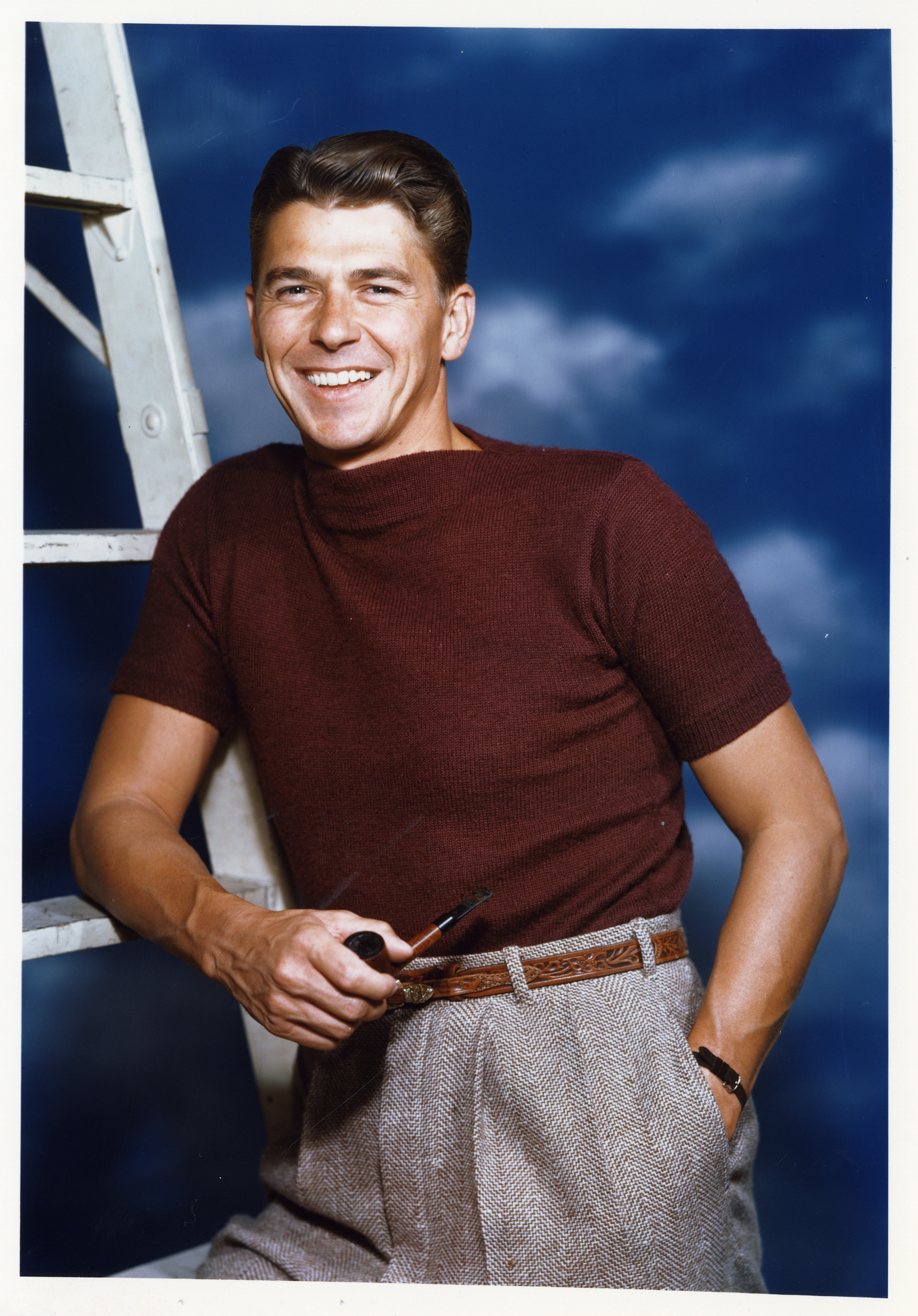
The childhood of Ronald Wilson Reagan, born February 6, 1911, was defined by frequent relocation across small towns in Illinois, economic instability, and a deeply influential upbringing by his parents, John "Jack" and Nelle Reagan. These formative years, characterized by limited financial means and a strong emphasis on storytelling, community engagement, and optimism, laid the foundational temperament for his later roles as an actor, governor, and the 40th President of the United States.
The Early Geography of Ronald Reagan’s Life
Ronald Reagan’s early life was marked by the nomadic nature of his father’s profession as a traveling shoe salesman. Born in Tampico, Illinois, in an apartment above a local bakery, Reagan’s childhood was spent moving frequently between various small towns in northern Illinois. This transient lifestyle required the young Reagan—nicknamed "Dutch" by his father due to his stout appearance—to develop social adaptability.
The family lived in multiple Illinois locales, including Monmouth, Galesburg, and Chicago, before eventually settling in Dixon, Illinois, in 1920. It was in Dixon that Reagan spent the most stable and defining years of his youth. The town, which he often referred to as his "hometown," provided a sense of continuity that had been absent during his earlier childhood. The architecture, the values of the Midwest, and the close-knit social fabric of Dixon during the 1920s offered a microcosm of American life that would color his political rhetoric throughout his career.
Familial Influences: Jack and Nelle Reagan
Understanding the adult Reagan requires a close examination of his parents, whose contrasting personalities and philosophies significantly impacted his development.
John "Jack" Reagan: The Struggles of a Salesman
Jack Reagan was a man of Irish Catholic descent who navigated the economic challenges of the early 20th century with varying degrees of success and struggle. He was prone to bouts of unemployment and battled alcoholism, which created a volatile home environment at times. Despite these hardships, Jack instilled in his son a profound sense of egalitarianism and a hatred for bigotry. The elder Reagan’s own experiences with discrimination—having faced anti-Irish and anti-Catholic sentiment—informed his son’s lifelong stance on civil rights and individual dignity.
Nelle Wilson Reagan: The Source of Optimism
Nelle, a devout member of the Disciples of Christ, was the stabilizing force in the family. She was an avid reader and a participant in local theater, passing on a passion for storytelling and performance to Ronald. It was Nelle who encouraged him to join the local church and engage in dramatic readings. Her profound religious optimism and belief in the inherent goodness of people were arguably the most significant contributions to Reagan’s "sunny" public persona. She taught him that through faith and hard work, one could overcome even the most daunting circumstances.
The Formative Power of Education and Athletics
In Dixon, Reagan attended South Central School and later North Dixon High School. His performance in the classroom was unremarkable, but he found his footing in extracurricular activities. This period was pivotal in transforming him from a reserved child into an outgoing young man.
Athletics as a Path to Confidence
Reagan was not a standout student, but he excelled in athletics, specifically football and track. Football, in particular, offered him a venue to prove his capabilities and gain social acceptance. The physical demands of the sport, coupled with the camaraderie of the team, helped him build self-reliance. He would later reflect that the discipline required on the gridiron translated well into his professional life, teaching him to manage pressure and operate within a structured team environment.
Theater and Public Speaking
Perhaps more important than sports was Reagan’s involvement in drama. Under the encouragement of his mother, he appeared in numerous school plays. This experience was instrumental in developing his command over an audience. The transition from a shy boy to a stage performer provided him with the technical skills—timing, projection, and emotional resonance—that would eventually become the hallmark of his political speeches.
Environmental Context: Life in the 1920s Midwest
The decade of the 1920s in rural Illinois was a period of transition, moving away from the Victorian sensibilities of the late 19th century toward the modernization of the 20th. For a young Reagan, this meant growing up in a world before the widespread adoption of television, where radio, community theater, and local sports served as the primary vehicles for entertainment and news.
This specific environment favored strong oral communication. Because news and stories were often shared through conversation, the ability to weave a narrative was a highly valued social skill. Reagan’s childhood was saturated with these narratives, often delivered by his father, who was an accomplished storyteller. Learning to captivate listeners in a living room provided the practical, if informal, training for his future mastery of televised address.
Comparison of Childhood Influences
| Influence Type | Source | Impact on Adult Reagan |
|---|---|---|
| Social Justice | Jack Reagan | Strong opposition to racism and religious bigotry. |
| Temperament | Nelle Reagan | Unwavering optimism and faith in individual potential. |
| Communication | The "Storytelling" Culture | Ability to use narrative to convey political ideas. |
| Resilience | Economic Instability | Pragmatism and empathy for the "common man." |
Economic Challenges and Personal Growth
The Reagan family’s finances were precarious throughout his childhood. During the Great Depression, the economic reality hit hard, but Reagan’s youth preceded the deepest lows of the 1930s. His early exposure to his father’s struggles taught him the value of a dollar and the importance of self-sufficiency.
Reagan began working from a young age. One of his most significant early jobs was as a lifeguard at the Rock River in Lowell Park. During his seven summers as a lifeguard, he reportedly saved 77 people from drowning. This experience was not only a source of pride but also a practical lesson in responsibility. The job required constant vigilance and the ability to act decisively, traits he frequently cited when discussing the necessity of leadership.
Critical Interpretations of His Youth
Historians often debate how much of Reagan’s "hometown" narrative was a crafted projection versus lived reality. Critics argue that Reagan idealized his upbringing to emphasize a simpler, more virtuous American past, often glossing over the severity of his father’s alcoholism or the family's genuine poverty. However, supporters maintain that his perspective was genuine, reflecting his personal coping mechanism of focusing on positive outcomes—a trait that stayed with him his entire life.
It is accurate to state that the Dixon years provided a stable anchor. By focusing on his participation in the school play or his successful rescue of a swimmer, he framed his biography in terms of agency and moral clarity. Whether or not these memories were polished over time, they formed the bedrock of the "Reagan identity" that resonated with millions of Americans in the 1980s.
FAQ: Understanding the Reagan Origins
Did Ronald Reagan’s parents influence his political views? Yes, profoundly. His father’s experience with discrimination shaped his rejection of prejudice, while his mother’s involvement in the church cemented his lifelong commitment to conservative social values and a belief in the inherent capacity for human redemption.
What role did acting play in his childhood? Acting was the catalyst for his public speaking ability. His mother pushed him into local theater, where he learned to modulate his voice and use body language, which became essential tools for his later effectiveness in television and political debate.
How did his childhood in Illinois affect his perception of the American Dream? Growing up in modest circumstances, Reagan observed the struggles of working-class families firsthand. His experiences, particularly his father’s economic instability, fostered a worldview that prioritized individual effort and the freedom of the marketplace as the best means for upward mobility.
Was his childhood as happy as he portrayed it? It was a blend of joy and hardship. While he looked back on Dixon with immense fondness, his childhood was marred by his father’s struggles with alcoholism and the stress of frequent financial uncertainty. He largely chose to emphasize the positive lessons learned from these obstacles.
What was the significance of his time as a lifeguard? Beyond the factual record of his saves, the position served as a metaphor for his later political philosophy: the belief in a watchful, active leadership that protects the individual while allowing them the autonomy to swim in the currents of life.
Conclusion and Next Steps
The childhood of Ronald Reagan was not merely a preamble to his political career; it was the workshop where his communication style, moral outlook, and political philosophy were assembled. By understanding his upbringing in the small, tight-knit communities of Illinois, one gains clearer insight into how he was able to connect with the American public decades later.
To continue exploring this subject, consider visiting the Ronald Reagan Boyhood Home in Dixon, Illinois, which is preserved to reflect the atmosphere of the 1920s. Examining the archives at the Reagan Presidential Library in Simi Valley, California, can also provide primary documents, such as school report cards and early photographs, that further illustrate the transition from a Midwestern boy to a world leader.