Selecting the right CRM software for the plastics industry involves balancing traditional relationship management with complex manufacturing requirements like resin price volatility, tooling lifecycles, and ERP integration. In 2026, the most effective solutions are those that bridge the gap between shop-floor production data and front-office sales strategies to provide a unified view of the customer.
Why the Plastics Industry Requires Specialized CRM Solutions
The plastics industry operates on a set of logic that general-purpose CRM platforms often struggle to accommodate without heavy customization. Whether a company specializes in injection molding, extrusion, blow molding, or compounding, the sales process is inextricably linked to technical variables and raw material fluctuations.
Resin Price Volatility and Quoting Logic
Unlike industries with stable COGS (Cost of Goods Sold), plastics manufacturers deal with the constant fluctuation of polymer prices. A CRM for this sector must be able to handle formula-based quoting. In 2026, advanced systems automatically pull daily spot prices for polyethylene, polypropylene, and PVC, allowing sales teams to issue quotes that remain valid only for a specific window or that automatically adjust based on an index. Without this integration, sales teams risk quoting at a loss or losing margin during the long lead times common in industrial manufacturing.
Tooling and Mold Management
For many plastics firms, the relationship with the customer begins with the creation of a tool or mold. This is a high-stakes, long-term asset that requires its own lifecycle management. A plastics-centric CRM tracks the status of customer-owned tooling, maintenance schedules, and shot counts. If a CRM is siloed from the production data, the sales team might promise capacity on a mold that is currently down for repair, leading to significant customer friction.
Long Sales Cycles and Complex RFQs
The journey from a Request for Quote (RFQ) to the first production run in plastics can take months or even years, especially in regulated sectors like medical devices or automotive. The CRM must support deep document management for CAD files, material certifications, and compliance logs. It needs to facilitate multi-stage pipelines where the "Close" isn't just a signature, but a successful first-article inspection (FAI).
Leading CRM Software for the Plastics Sector in 2026
As we look at the current landscape, the market is divided between "best-of-breed" CRM platforms that have been heavily customized for manufacturing and "industry-native" ERP systems that include robust CRM modules.
1. DELMIAworks (formerly IQMS)
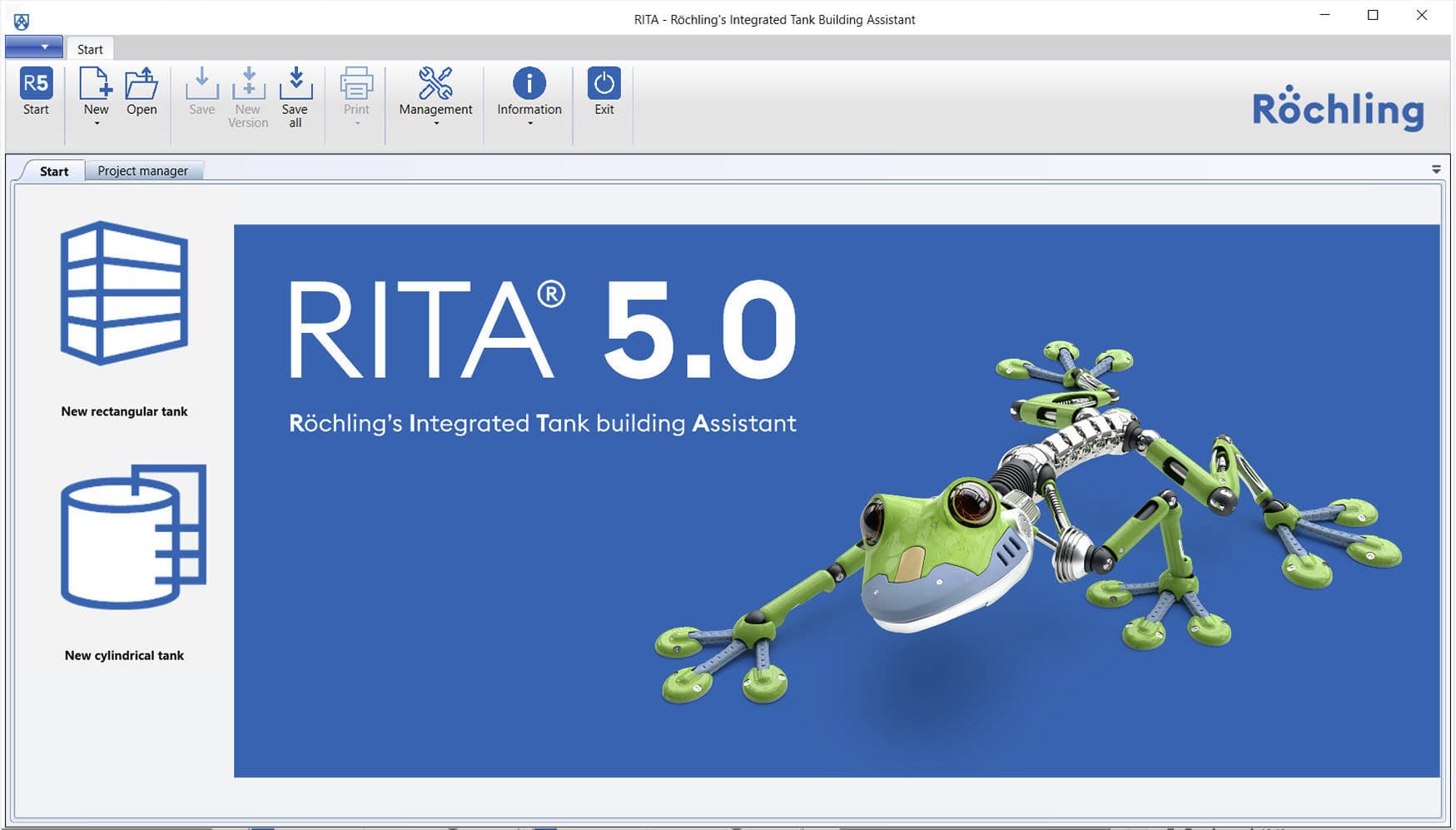
Historically built specifically for the plastics industry, DELMIAworks remains a dominant force in 2026. Its CRM is not an afterthought; it is a direct extension of the manufacturing execution system (MES).
- Strengths: The primary advantage is the "single database" philosophy. When a salesperson looks at an account, they see real-time production status, reject rates, and warehouse levels.
- Key Feature: The "Real-Time Production Monitoring" integration allows sales teams to give customers exact delivery dates based on current machine utilization, rather than estimated lead times.
2. Salesforce Manufacturing Cloud
Salesforce has moved away from being a generic "cloud" and toward industry-specific verticals. The Manufacturing Cloud, updated significantly for 2026, handles sales agreements and account forecasting with a level of granularity that suits large-scale plastics distributors and high-volume molders.
- Strengths: Unrivaled ecosystem and AI capabilities. Salesforce "Einstein" can now predict churn in the plastics sector by analyzing patterns in RFQ frequency and material volume changes.
- Key Feature: Sales Agreement modules allow manufacturers to track actual volumes against planned volumes in long-term contracts, which is critical for managing resin inventory.
3. Microsoft Dynamics 365 for Manufacturing
Dynamics 365 continues to be the preferred choice for mid-to-large plastics firms already embedded in the Microsoft ecosystem. Its strength lies in its ability to handle complex global supply chains.
- Strengths: Deep integration with Power BI for advanced analytics and a familiar user interface that reduces training time.
- Key Feature: The "Supply Chain Management" module within Dynamics 365 allows for automated communication between the CRM and raw material suppliers, ensuring that a spike in sales activity immediately triggers a procurement alert for specific resins.
4. Infor CloudSuite Industrial (SyteLine)
Infor has gained significant ground in 2026 by focusing on the "Circular Economy" aspects of the plastics industry.
- Strengths: Built-in support for tracking recycled content and "regrind" ratios, which are now mandatory reporting requirements for many European and North American customers.
- Key Feature: The CPQ (Configure, Price, Quote) engine is exceptionally strong for custom extrusion or compounding, where the "product" is a unique chemical formulation.
5. HubSpot for Manufacturing
While often viewed as a "light" CRM, HubSpot has expanded its Enterprise offerings to better serve small-to-medium plastics manufacturers who prioritize inbound marketing and lead generation.
- Strengths: Ease of use and superior automation of marketing-to-sales handoffs.
- Key Feature: Custom Objects in HubSpot allow plastics firms to track "Molds" or "Presses" as unique entities, providing a structured way to manage industrial assets without a full-scale ERP.
Comparing Top Plastics CRM Options
| Software Platform | Primary Target Audience | ERP Integration Level | 2026 Innovation Focus |
|---|---|---|---|
| DELMIAworks | Mid-size to Enterprise Molders | Native / All-in-One | Shop-floor-to-Sales real-time sync |
| Salesforce | Large Global Manufacturers | Via API (MuleSoft) | Predictive AI for demand forecasting |
| Microsoft Dynamics | Enterprise / Diversified Corps | Deep / Modular | Power Platform & BI integration |
| Infor CloudSuite | Complex Compounding / Extrusion | Native / Integrated | ESG and Sustainability tracking |
| HubSpot | SME Manufacturers | Via Middleware | Inbound lead automation & UX |
Essential Features to Prioritize in Your Selection
When evaluating a "list of plastics crm software," it is easy to get distracted by shiny UI. However, the success of the implementation depends on four technical pillars.
Unified Data Architecture (ERP/CRM Sync)
A CRM that exists in a vacuum is a liability in the plastics industry. If the sales team is quoting based on a resin price of $1.10/lb while the actual procurement cost has risen to $1.25/lb, the company is losing money on every shot. The CRM must have a bidirectional sync with the ERP to ensure pricing, inventory, and machine capacity are always accurate.
Document and Specification Management
In plastics, the "product" is often a set of technical drawings, material safety data sheets (MSDS), and quality certifications (ISO, FDA, etc.). Your CRM must act as a single source of truth for these documents. In 2026, version control is critical; if a customer changes the wall thickness of a part in a CAD file, that change must propagate through the CRM to the quoting engine immediately.
Sustainability and Regrind Tracking
Regulatory pressure in 2026 has made "Environmental, Social, and Governance" (ESG) reporting a standard requirement. Customers now ask: "What percentage of this part is PCR (Post-Consumer Resin)?" or "What is the carbon footprint of this production run?" Leading CRMs now include fields for these metrics, allowing sales teams to use sustainability as a competitive advantage during the bidding process.
Mobile Access for Field Sales and Technicians
Sales in the plastics industry often happen on the factory floor of the customer. Whether it is a salesperson checking the performance of a new resin trial or a technician diagnosing a mold issue, mobile access to the CRM is non-negotiable. This includes the ability to upload photos of part defects directly into a trouble ticket within the CRM.
Implementation Challenges and Best Practices
Even the best software on the "list of plastics crm software" will fail if the implementation is poorly managed. The plastics industry has a historically high rate of "shelfware"—software that is purchased but never used.
Overcoming "Old School" Resistance
The manufacturing sector often employs veterans who have managed their relationships in spreadsheets or physical notebooks for decades. To ensure adoption, the CRM must provide immediate value to the user. For example, if the CRM can automate the tedious process of generating a "Price Increase Letter" based on resin indices, the sales team will embrace it.
Data Cleaning and Migration
The plastics industry is notorious for "dirty data"—duplicate customer records, obsolete part numbers, and incomplete tooling logs. Before migrating to a new CRM in 2026, a rigorous data auditing process is required. Systems like Salesforce and Dynamics offer AI-assisted data cleansing tools, but they still require human oversight to ensure that a "PP-GF30" material isn't confused with a "PP-GF20" in the database.
Defining the "Lead-to-Cash" Workflow
Before a single line of code is configured, a company must map its entire workflow. In plastics, this includes:
- Lead Generation: Trade shows, inbound web inquiries.
- Technical Review: Engineering assessment of the part design.
- Quoting: Material costs + Tooling costs + Machine time.
- Sampling: Prototyping and FAI (First Article Inspection).
- Production: Ongoing orders and blanket contract management.
The Role of Artificial Intelligence in 2026 Plastics Sales
By 2026, AI is no longer a buzzword; it is a functional component of CRM software. In the plastics niche, this manifests in three specific ways:
- Predictive Maintenance Alerts for Sales: AI analyzes machine data. If a customer's mold is nearing its "shot limit" and likely to fail soon, the CRM alerts the salesperson to proactively discuss a tool refurbishment or replacement, preventing a production crisis.
- Automated RFQ Parsing: New AI tools can read complex PDF RFQs and automatically populate the fields in the CRM, reducing the time engineers spend on data entry by up to 80%.
- Dynamic Pricing Recommendations: By looking at historical win/loss ratios, current resin trends, and competitor activity, the CRM can suggest an "optimal price" for a quote that maximizes both margin and the probability of winning the contract.
Frequently Asked Questions
What is the average cost of a plastics-focused CRM in 2026?
Costs vary significantly based on whether the CRM is a standalone SaaS product or part of an integrated ERP. Standalone CRMs like Salesforce or HubSpot range from $75 to $300 per user per month. Integrated systems like DELMIAworks often involve a higher upfront implementation cost (often $50,000+) but lower long-term per-user fees, as they are part of the broader manufacturing suite.
Can a general CRM like HubSpot work for a plastics manufacturer?
Yes, but it requires significant customization. You will need to create "Custom Objects" to track molds, resins, and machine cycles. For many small-to-mid-sized molders, this is often a more cost-effective and user-friendly path than a rigid, legacy ERP-based CRM.
How does CRM software handle resin price volatility?
Modern CRMs handle this through API integrations with price index services (like Platts or ICIS). When a quote is generated, the system pulls the current market price for the specific grade of plastic and applies it to the quote formula. Many systems also allow for "what-if" scenarios to show how a 10% increase in resin price would affect the final part cost.
Is mobile access standard for plastics CRM systems now?
In 2026, mobile access is a standard feature. Sales teams use tablets and smartphones to access the CRM during site visits to view real-time inventory, update project statuses, and even capture digital signatures on-site for quality approvals.
What is the most important integration for a plastics CRM?
The most critical integration is with the ERP/MES system. Without a connection to the actual manufacturing data, the CRM is just a digital Rolodex. The ability to see "work-in-progress" (WIP) and machine schedule availability directly within the CRM is what separates successful plastics manufacturers from the rest.
Final Recommendation
For companies seeking a high-performance CRM in the plastics space, the decision should be driven by the complexity of your production. If you are a high-volume injection molder with deep technical requirements, an industry-native solution like DELMIAworks or an enterprise-grade Salesforce Manufacturing Cloud implementation is the most sustainable choice. For smaller firms or those focusing on custom niche compounding, the flexibility of HubSpot or Microsoft Dynamics 365 provides a better balance of power and ease of use. Regardless of the platform, prioritize a system that can bridge the gap between the volatile price of raw materials and the long-term needs of your customers.