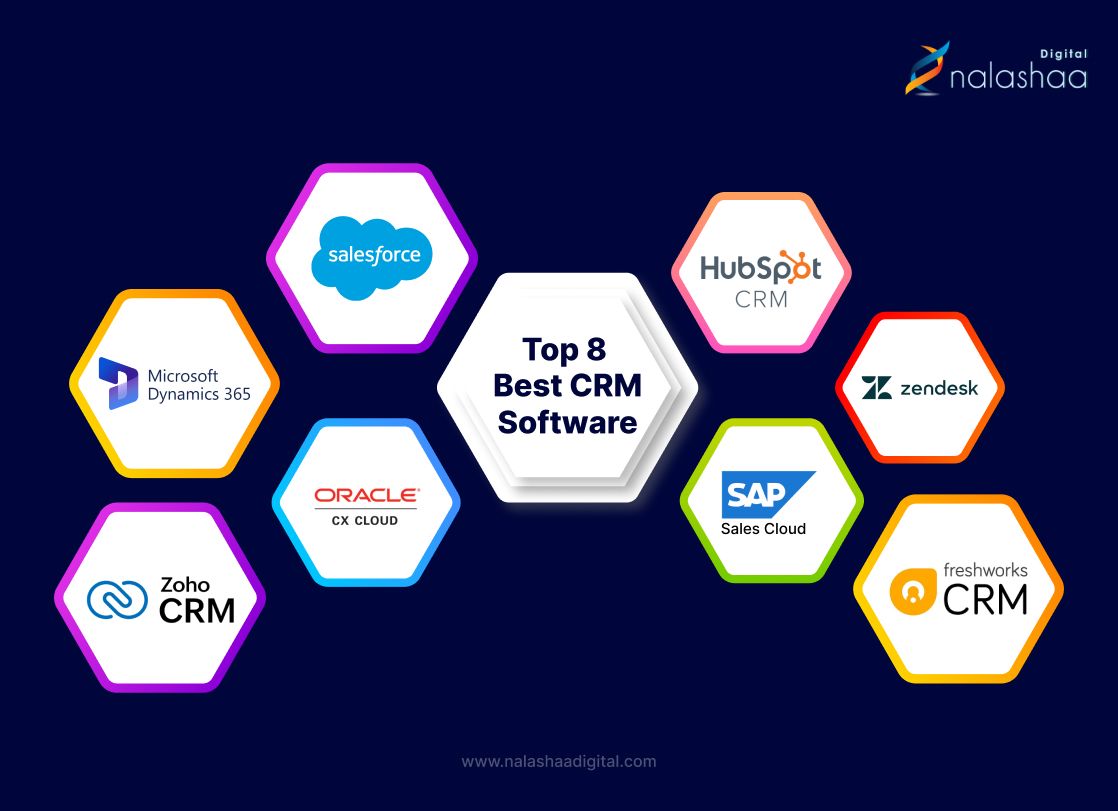
To navigate the expansive market of Customer Relationship Management (CRM) technology, one must categorize platforms by their scale, industry focus, and technical architecture. As of 2026, the CRM landscape includes over 800 active providers ranging from enterprise-grade suites like Salesforce and Microsoft Dynamics 365 to specialized vertical solutions for healthcare, real estate, and non-profits.
The selection of a CRM is no longer merely about storing contact information; it is about building a centralized intelligence hub. In 2026, the "best" CRM is defined by its ability to integrate generative AI, maintain high data hygiene, and provide a seamless user experience across sales, marketing, and customer success teams. Below is a detailed analysis and list of the most significant CRM software available today, categorized to help you identify the right fit for your organizational needs.
The Enterprise Giants: Comprehensive CRM Suites
Enterprise-level CRM software is designed for large organizations with complex hierarchies, global operations, and the need for deep customization. these platforms often require dedicated administrators and significant implementation timelines but offer unparalleled scalability.
Salesforce Customer 360
Salesforce remains the dominant force in the CRM market. Its Customer 360 platform is a modular ecosystem that includes Sales Cloud, Service Cloud, Marketing Cloud, and Commerce Cloud. By 2026, Salesforce has fully matured its Einstein GPT integration, allowing for autonomous lead scoring and automated email drafting based on historical customer interactions. It is best suited for organizations that require extensive third-party integrations via the AppExchange and complex workflow automation.
Microsoft Dynamics 365
For organizations already embedded in the Microsoft ecosystem, Dynamics 365 offers a native experience that syncs perfectly with Azure, Power BI, and Microsoft 365. Its strength lies in its "Relationship Sales" capability, which leverages LinkedIn Sales Navigator data directly within the CRM interface. In 2026, its Copilot AI provides real-time coaching for sales representatives during live calls, making it a powerful tool for high-volume sales environments.
Oracle Advertising and Customer Experience (CX)
Oracle focuses on the convergence of data and experience. Its CX suite is particularly strong for organizations that handle massive datasets and require robust back-office integration with ERP (Enterprise Resource Planning) systems. Oracle’s CRM is often favored by telecommunications, financial services, and manufacturing sectors where the "quote-to-cash" process is highly intricate.
SAP Customer Experience (CX)
SAP provides a suite that emphasizes the "intelligent enterprise." It excels in global compliance and complex supply chain integrations. For companies that already use SAP for their core business operations, the SAP CX cloud ensures that customer data remains consistent from the first marketing touchpoint to the final invoice.
High-Growth and Mid-Market CRM Solutions
These platforms balance power with ease of use. They are the preferred choice for rapidly scaling companies and mid-sized businesses that need sophisticated tools without the administrative overhead of enterprise suites.
HubSpot CRM
HubSpot revolutionized the market with its "inbound" philosophy. While it offers a powerful free version, its paid "Hubs" (Sales, Marketing, Service, Operations, and Content) provide a unified codebase that prevents the "data silos" often found in multi-vendor environments. In 2026, HubSpot is recognized for its superior user interface (UI), which significantly reduces the time required for employee onboarding.
Zoho CRM
Zoho is the centerpiece of the Zoho One suite, which includes over 50 integrated business applications. It is highly regarded for its value proposition, offering enterprise-level features like Zia (an AI assistant), blueprinting for process management, and advanced analytics at a fraction of the cost of its competitors. Zoho is particularly popular among international businesses due to its multi-currency and multi-language support.
Pipedrive
Pipedrive remains the "sales-first" CRM. Its architecture is built around the visual sales pipeline, making it exceptionally easy for sales reps to see which deals require immediate action. It avoids the feature bloat of larger systems, focusing instead on activity-based selling and automated follow-ups.
Monday.com (Monday Sales CRM)
Originally a project management tool, Monday.com has evolved into a robust CRM contender. Its highly visual, "low-code" nature allows teams to build their own CRM workflows without needing a developer. This flexibility makes it ideal for creative agencies and tech startups that need to pivot their processes frequently.
Industry-Specific (Vertical) CRM Software
Generic CRMs often require expensive customization to meet the regulatory or operational needs of specific sectors. Vertical CRMs are "out-of-the-box" solutions tailored to these unique requirements.
Healthcare: Salesforce Health Cloud and Veeva
Healthcare organizations must prioritize HIPAA compliance and patient journeys. Salesforce Health Cloud provides a 360-degree view of patients, while Veeva Systems is the gold standard for life sciences and pharmaceutical companies, focusing on clinical trial management and regulatory compliance.
Real Estate: LionDesk and Propertybase
Real estate professionals require tools that integrate with Multiple Listing Services (MLS) and handle high-volume lead routing from portals like Zillow. LionDesk is known for its robust video communication tools, while Propertybase (built on the Salesforce platform) offers advanced back-office and marketing tools specifically for large brokerages.
Non-Profit: Blackbaud Raiser’s Edge NXT
Non-profits deal with donors, volunteers, and grants rather than traditional "customers." Blackbaud is the industry leader for large non-profits, providing specialized tools for fundraising, donor retention analytics, and event management. For smaller non-profits, Salesforce Non-profit Cloud offers a highly customizable alternative.
Construction: Procore and JobNimbus
The construction industry requires a CRM that can handle project management, site photos, and subcontractor communication. Procore is a comprehensive construction management platform with deep CRM capabilities, while JobNimbus is a popular choice for roofing and solar contractors who need mobile-first lead management.
Comparison of Leading CRM Platforms (2026 Data)
| Platform | Primary Target | Key Strength | Typical Pricing (Per User/Mo) |
|---|---|---|---|
| Salesforce | Enterprise | Customization & AI Ecosystem | $25 - $500+ |
| HubSpot | SMB to Mid-Market | Ease of Use & Inbound Marketing | $0 - $1,200 (Bundle) |
| Microsoft Dynamics | Enterprise | Microsoft 365/LinkedIn Integration | $65 - $165 |
| Zoho CRM | SMB to Mid-Market | Value & Integrated App Suite | $14 - $52 |
| Pipedrive | Small Sales Teams | Visual Pipeline Management | $14 - $99 |
| Zendesk Sell | Support-Centric Orgs | Seamless Support-to-Sales Transition | $19 - $115 |
| Freshsales | Small to Mid-Market | Context-Driven Sales & Built-in Phone | $0 - $69 |
Technical Considerations for CRM Selection in 2026
When evaluating "all" CRM options, it is easy to get lost in feature lists. However, the technical foundation of the software determines its long-term viability. Organizations should evaluate these four pillars:
1. AI and Automation Depth
By 2026, basic automation (like sending a follow-up email) is standard. Advanced CRMs now offer predictive forecasting, which uses machine learning to predict quarterly revenue with high accuracy. Look for platforms that offer "Generative UI"—interfaces that adapt based on the user's role and current task to minimize clicks.
2. Integration and API Maturity
No CRM exists in a vacuum. A platform’s value is multiplied by its ability to "talk" to your accounting software (QuickBooks/Xero), your communication tools (Slack/Teams), and your data warehouse (Snowflake/BigQuery). Check for RESTful API documentation and the availability of native connectors on platforms like Zapier or Make.
3. Data Governance and Security
With the tightening of global data privacy laws (GDPR, CCPA, and beyond), your CRM must offer robust security features. Look for SOC2 Type II compliance, multi-factor authentication (MFA), and granular role-based access controls (RBAC). In 2026, the ability to automate data "right-to-be-forgotten" requests is a critical requirement for any business operating globally.
4. Mobile Performance and Offline Access
Field sales and service teams require a mobile app that is not just a "lite" version of the desktop software. The best CRMs in 2026 offer full offline functionality, allowing reps to update records in areas with poor connectivity, with automatic syncing once a connection is re-established.
Common Mistakes in CRM Implementation
Choosing a software from the list is only the first step. Many organizations fail because they overlook the human and procedural elements of CRM adoption.
- Over-Engineering the Solution: Small teams often buy Salesforce and try to use every feature, resulting in a system so complex that no one uses it. Start with the core features (Leads, Deals, Contacts) and expand as needed.
- Poor Data Migration: Importing "dirty" data from spreadsheets into a new CRM is the fastest way to kill user adoption. Clean, de-duplicate, and format your data before the migration process begins.
- Lack of Training: CRM software is an investment in people. Without a structured training program and a designated "internal champion," employees will likely revert to their old ways of working.
- Ignoring the Mobile Experience: If your sales team is always on the road, but your CRM's mobile app is clunky, data entry will suffer, leading to inaccurate reporting.
Future Trends: What to Expect Beyond 2026
The "list" of CRM software is constantly shifting as smaller players are acquired by giants and new startups emerge. We are seeing a move toward Autonomous CRM, where AI agents handle the majority of administrative tasks—data entry, meeting scheduling, and transcript summarization—leaving humans to focus entirely on building relationships.
Additionally, Blockchain for CRM is gaining traction in industries that require immutable records of customer interactions, such as legal and financial services. This ensures a "single version of truth" that cannot be tampered with, providing a higher level of trust between the brand and the consumer.
Frequently Asked Questions
What is the best CRM for a one-person business?
For solopreneurs, simplicity and cost are key. HubSpot Free Tools, Less Annoying CRM, or Pipedrive are often the best choices. These platforms provide essential contact management without the overwhelming complexity of enterprise systems.
Can I switch from one CRM to another easily?
While most CRMs allow for CSV data exports, switching platforms is a significant undertaking. You must map your current data fields to the new system's architecture. Many vendors offer migration tools (e.g., HubSpot’s sync tools) to facilitate the move, but complex customizations and automated workflows often need to be rebuilt from scratch.
Is a CRM different from an ERP?
Yes. A CRM (Customer Relationship Management) focuses on the "front-end" of the business—sales, marketing, and customer service. An ERP (Enterprise Resource Planning) focuses on the "back-end"—finance, inventory, human resources, and supply chain. Many modern platforms, like Microsoft Dynamics and Oracle, offer both modules that integrate seamlessly.
How much should I expect to pay for a CRM in 2026?
Pricing varies wildly. Small businesses can find capable tools for $15–$30 per user per month. Mid-market companies typically spend $50–$150 per user per month. Enterprise implementations often involve six-figure annual contracts including licensing, support, and professional service fees.
Does my business really need a CRM?
If you are managing more than 50 customers or have a sales team of more than two people, a CRM is essential. Spreadsheets cannot provide the automated reminders, shared visibility, and data analytics required to scale a modern business effectively.
Final Recommendation
To choose the right software from this list, start by defining your primary bottleneck. If your team struggles to keep track of deals, look at Pipedrive or Monday.com. If your marketing and sales teams are disconnected, HubSpot is the strongest contender. For global organizations requiring deep customization and AI-driven insights, Salesforce or Microsoft Dynamics 365 remain the industry standards. Always utilize a free trial or a sandbox environment to test the user interface with your actual team members before committing to a long-term contract.