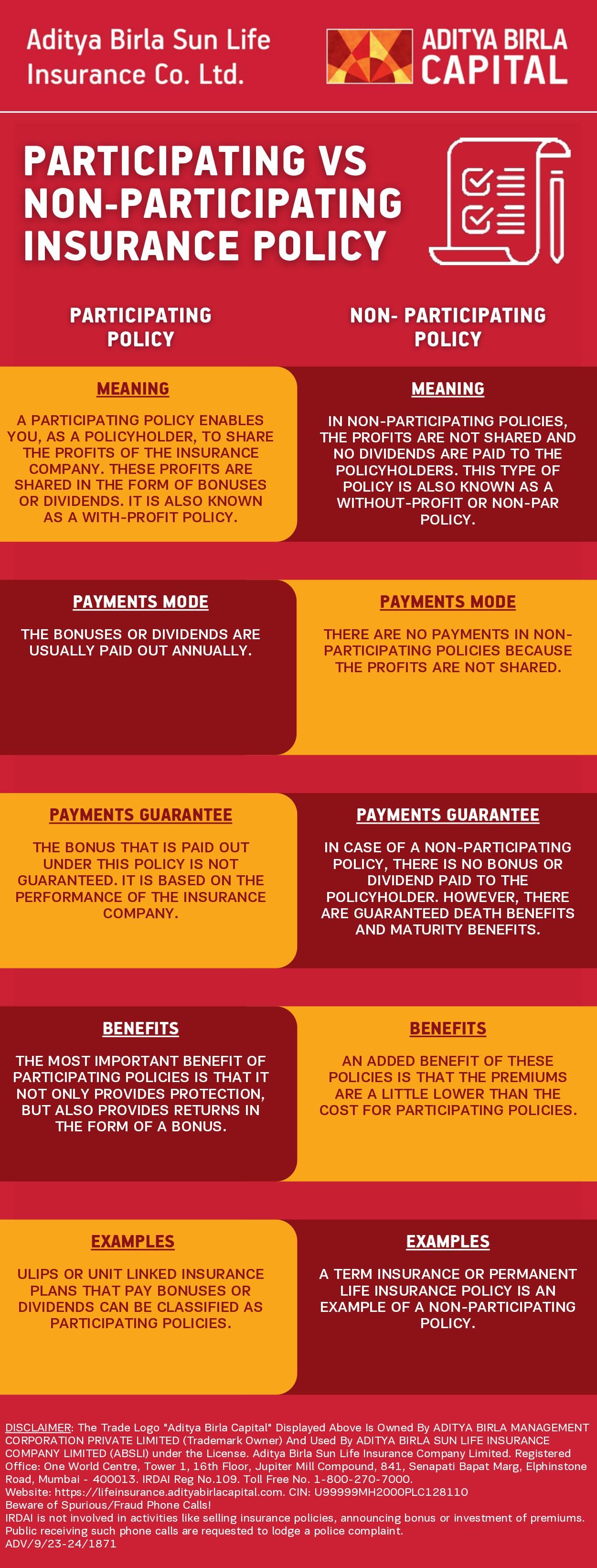
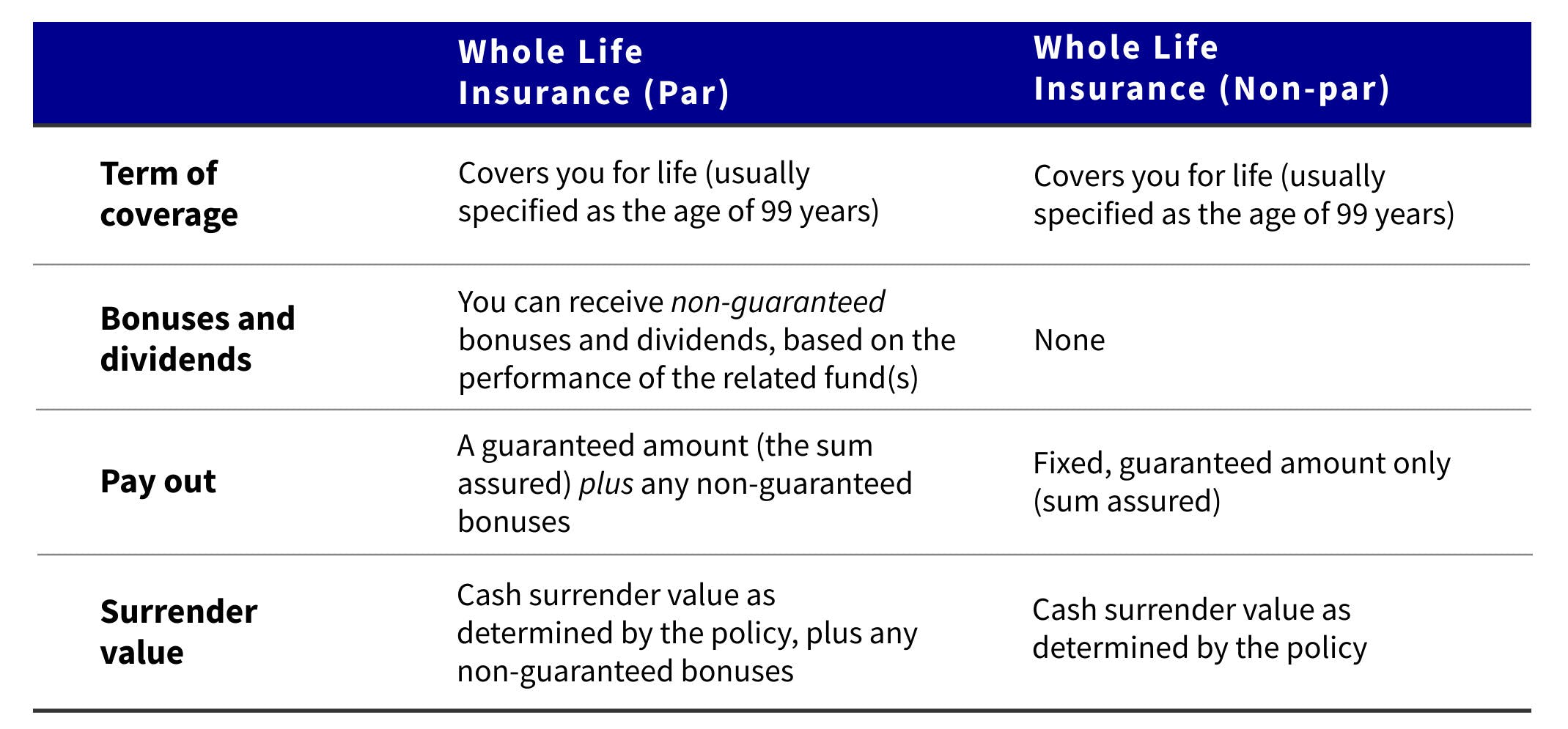
A distinct feature of a participating life insurance policy is the eligibility of the policyholder to receive dividends, which represent a share of the insurance company’s surplus earnings. Unlike non-participating policies, participating (or "par") policies allow owners to participate in the insurer's financial success when actual mortality costs, investment returns, and operating expenses are more favorable than originally projected.
Participating life insurance has long been a cornerstone of conservative financial planning. As of 2026, these policies remain a preferred vehicle for individuals seeking long-term growth, tax-advantaged cash value accumulation, and a death benefit that can increase over time without requiring additional medical underwriting. To understand the mechanics of a participating policy, one must look beyond the surface-level definition and examine how these dividends are generated, how they are distributed, and the unique contractual rights they afford the policyholder.
Understanding the "Participation" in Participating Policies
The term "participating" refers to the policyholder's right to share in the divisible surplus of the life insurance company. In the insurance industry, particularly with mutual insurance companies, the policyholders are essentially the owners of the company. When the company performs better than its actuarial assumptions, it returns a portion of the "excess" premiums to the policyholders in the form of a dividend.
Technically, the Internal Revenue Service (IRS) and many international tax authorities view these dividends as a return of premium rather than a taxable investment gain. This distinction is vital for financial planning in 2026. Because the premiums paid into a participating policy are calculated using conservative assumptions regarding future interest rates and death claims, the dividend acts as a "refund" of the overpayment made by the policyholder once the actual costs of the insurance are known.
The Role of Mutual vs. Stock Companies
While both mutual and stock insurance companies can issue participating policies, they are most synonymous with mutual companies. In a mutual company, there are no outside shareholders; the company exists solely for the benefit of its policyholders. Consequently, the distinct feature of participation is deeply embedded in the company's corporate structure. In a stock company, dividends may still be paid on specific "par" blocks of business, but the company must balance the interests of policyholders with those of equity shareholders.
The Three Pillars of Dividend Generation
The dividends that define a participating policy do not appear out of thin air. They are the result of three specific actuarial factors where the company’s actual experience outperforms its conservative estimates.
1. Mortality Gains
When an insurance company issues a policy, it uses mortality tables to predict how many death claims it will pay out in a given year. If the actual number of deaths among the insured group is lower than the predicted number, the company retains more capital than expected. These "mortality gains" contribute significantly to the divisible surplus. Advances in medical technology and wellness programs through 2026 have continued to improve life expectancy, often leading to consistent mortality gains for well-managed insurers.
2. Investment Performance
Life insurance companies invest the premiums they receive in a "general account," which typically consists of high-quality corporate bonds, government securities, mortgages, and some equities. When the yield on these investments exceeds the "guaranteed" interest rate credited to the policy, the excess interest becomes part of the dividend. In the economic climate of 2026, insurers that have successfully navigated fluctuating interest rates can offer competitive dividend scales based on this investment spread.
3. Expense Savings
Operating an insurance company involves significant costs, including commissions, administrative salaries, underwriting fees, and taxes. If the company operates more efficiently than projected—perhaps through the integration of AI-driven administrative tools or streamlined digital underwriting—the savings are funneled into the surplus and eventually returned to the participating policyholders.
Standard Dividend Options for Policyholders
The most practical advantage of the distinct dividend feature is the flexibility it provides. Policyholders are not forced to take dividends in a single format; instead, they can choose from several "dividend options" to suit their current financial needs.
- Paid-Up Additions (PUA): This is often considered the most powerful option for long-term wealth building. The dividend is used to purchase a small amount of additional, fully paid-up whole life insurance. This increases the total death benefit and, more importantly, generates its own cash value and future dividends. Over decades, this creates a compounding effect that significantly enhances the policy's value.
- Premium Reduction: The dividend is applied directly toward the next scheduled premium payment. For policyholders looking to reduce their out-of-pocket expenses, this option can eventually result in the policy "paying for itself," although this is never guaranteed.
- Cash Payment: The insurer sends a check or electronic transfer to the policyholder. This provides immediate liquidity, and since it is generally considered a return of premium, it is typically tax-free until the total dividends received exceed the total premiums paid (the "basis").
- Accumulation at Interest: The dividend is left with the company in a side account that earns a specified rate of interest. Unlike the dividend itself, the interest earned on these accumulated dividends is usually taxable as ordinary income in the year it is credited.
- One-Year Term Insurance: Sometimes called the "fifth dividend option," this uses the dividend to purchase a one-year term insurance addition, often equal to the policy's current cash value. This maximizes the death benefit for a specific period, which is useful in certain estate planning or business buyout scenarios.
Comparing Participating and Non-Participating Policies
To fully appreciate the distinct nature of participating insurance, one must compare it to its counterpart: non-participating insurance. Non-participating policies (often called "non-par") have fixed premiums, fixed death benefits, and fixed cash value schedules. The policyholder does not share in any of the company's "wins."
| Feature | Participating (Par) Policy | Non-Participating (Non-Par) Policy |
|---|---|---|
| Dividends | Eligible for annual dividends (not guaranteed). | No dividends are ever paid. |
| Premiums | Generally higher initially to account for the "par" feature. | Generally lower and fixed for the life of the policy. |
| Death Benefit | Can increase over time through Paid-Up Additions. | Remains level unless a specific rider is added. |
| Cash Value Growth | Potential for higher long-term growth via dividends. | Guaranteed growth only; no "upside" participation. |
| Ownership Logic | Policyholders "participate" in the company's surplus. | The company keeps all surplus earnings for shareholders. |
| Risk/Reward | Policyholder shares in the performance of the insurer. | The insurer assumes all risk and retains all excess profit. |
Technical Depth: The Actuarial Smoothing Process
A common misconception is that dividends on participating policies are volatile, fluctuating wildly based on the stock market's daily performance. In reality, life insurers use a "smoothing" process. Because the general account is heavily weighted toward long-term fixed-income assets, the dividend scale is typically stable.
In 2026, major insurers continue to use a "Portfolio Yield" or "Investment Year" method to calculate dividends. This allows the company to average out the high and low returns over several years. This stability is why many financial advisors view participating life insurance as an "asset class" that behaves differently than traditional equities or bonds. It provides a non-correlated floor to a diversified portfolio.
Furthermore, the guaranteed cash value within a participating policy continues to grow regardless of the dividend. The dividend is an overlay on top of the contractual guarantees. If the company has a particularly poor year and pays no dividend (which is rare for major mutuals), the policy's guaranteed values still increase according to the original contract schedule.
Tax Implications and Legal Considerations
Participating life insurance offers significant tax advantages under the Internal Revenue Code Section 7702. In 2026, these rules continue to govern the definition of life insurance for tax purposes.
- Tax-Deferred Growth: The cash value within the policy grows without being subject to annual income tax.
- Tax-Free Dividends: As mentioned, dividends are generally viewed as a return of premium. They only become taxable if the total amount of cash withdrawn (including dividends) exceeds the total premiums paid into the policy.
- Tax-Free Death Benefit: The proceeds paid to beneficiaries upon the death of the insured are generally free from federal income tax.
However, policyholders must be cautious of the Modified Endowment Contract (MEC) rules. If a policy is funded too quickly (exceeding the "7-pay test"), it loses some of its tax advantages, and distributions (including dividends taken in cash) may be taxed as income first and may be subject to a 10% penalty if the owner is under age 59½. Professional guidance is essential when structuring high-premium participating policies to avoid MEC status.
Practical Suitability: Who Should Choose a Participating Policy?
The distinct feature of participation makes these policies ideal for specific financial objectives. In the 2026 landscape, we see three primary use cases:
Estate Planning and Wealth Transfer
For high-net-worth individuals, the ability of a participating policy to grow the death benefit through Paid-Up Additions is a powerful tool for offsetting future estate taxes or providing a larger legacy for heirs. Since the growth is internal and the death benefit is usually tax-exempt, it serves as a highly efficient wealth transfer mechanism.
Supplemental Retirement Income
By utilizing the "Cash Value" and "Dividend" features, a policyholder can build a significant "reserve" for retirement. In later years, the policyholder can switch the dividend option to "Cash" or take loans against the policy’s cash value to provide tax-free supplemental income. This is often referred to as "Infinite Banking" or "Bank on Yourself" strategies, though these require disciplined management.
Long-Term Conservative Savings
For individuals who have maximized their 401(k) and IRA contributions, a participating whole life policy offers a "safe money" alternative. The combination of a guaranteed floor and the potential for annual dividends provides a better long-term internal rate of return (IRR) than most savings accounts or certificates of deposit (CDs), with the added benefit of a permanent death benefit.
Common Mistakes to Avoid
While the participating feature is attractive, it is not without risks and complexities.
- Over-reliance on "Projected" Dividends: When purchasing a policy, the "Illustration" shows projected dividends based on the current scale. These are not guarantees. If interest rates drop or mortality costs rise, the actual dividend paid in 2028 or 2030 may be lower than what was illustrated in 2026.
- Misunderstanding the Premium Cost: Because par policies are more expensive than term insurance or non-par policies, some buyers find the "premium burn" too high and allow the policy to lapse in the early years. Participating policies are long-term commitments; their value is often not fully realized until year 10 or 15.
- Inappropriate Dividend Option Selection: Choosing the "Cash" option early in the policy's life can stunt the growth of the cash value. Most experts recommend using "Paid-Up Additions" during the accumulation phase to maximize the compounding effect.
Summary of Findings
The distinct feature of a participating life insurance policy—the dividend—transforms a standard insurance contract into a dynamic financial asset. By allowing policyholders to share in the mortality, investment, and operational successes of the insurer, these policies provide a unique blend of guarantees and upside potential. Whether used for estate protection, tax-advantaged savings, or retirement planning, the "par" feature remains one of the most resilient and time-tested mechanisms in the financial services industry.
Frequently Asked Questions
1. Are dividends on a participating life insurance policy guaranteed? No, dividends are never guaranteed. While many major mutual insurance companies have paid dividends every year for over a century, the contract clearly states that dividends are based on the company's surplus and the board of directors' discretion. The only guaranteed elements of the policy are the base death benefit, the premium, and the schedule of guaranteed cash values.
2. Is the dividend I receive from my insurance policy taxable? In most cases, no. The IRS generally treats dividends from a participating life insurance policy as a "return of premium." This means they are not taxable until the total amount of money you have received from the policy (in dividends and withdrawals) exceeds the total amount of premiums you have paid in. However, if you leave dividends with the company to "Accumulate at Interest," the interest earned on those dividends is taxable annually.
3. What is the "dividend scale" and how often does it change? The dividend scale is the mathematical formula the insurance company uses to determine how much of the divisible surplus each policyholder receives. It is usually reviewed and set annually by the company's board of directors. Changes in the scale are typically driven by the company’s investment performance and mortality experience over the preceding year.
4. Can I change my dividend option after the policy has started? Yes, most insurance companies allow you to change your dividend option at any time, usually on the policy's anniversary date. For example, you might start by using dividends to purchase Paid-Up Additions to grow the policy, and then switch to the "Cash" option during retirement to provide extra income.
5. How does a participating policy differ from a "Universal Life" policy? While both can accumulate cash value, a participating whole life policy has more rigid premiums and guarantees. In a participating policy, the "upside" comes through dividends. In a Universal Life (UL) policy, the "upside" comes through a fluctuating interest rate (Current Assumption UL) or market index performance (Indexed Universal Life). Participating whole life is generally considered more conservative and predictable.
6. Does a participating policy cost more than a non-participating one? Yes, usually. The "participation" feature requires a higher initial premium because the company must charge enough to ensure it can meet its guarantees even under worst-case scenarios. The dividend is the mechanism that returns the "overcharge" to you when those worst-case scenarios do not occur.
Final Recommendation
If you are looking for a financial instrument that combines permanent protection with a conservative, tax-advantaged growth component, a participating life insurance policy is a strong candidate. For 2026 and beyond, ensure you work with a mutual company that has a long history of financial stability and a consistent track record of paying dividends. Prioritize the Paid-Up Additions option if your goal is long-term wealth accumulation, and always request a "reduced-paid-up" illustration to see how the policy performs if you decide to stop paying premiums in the future.