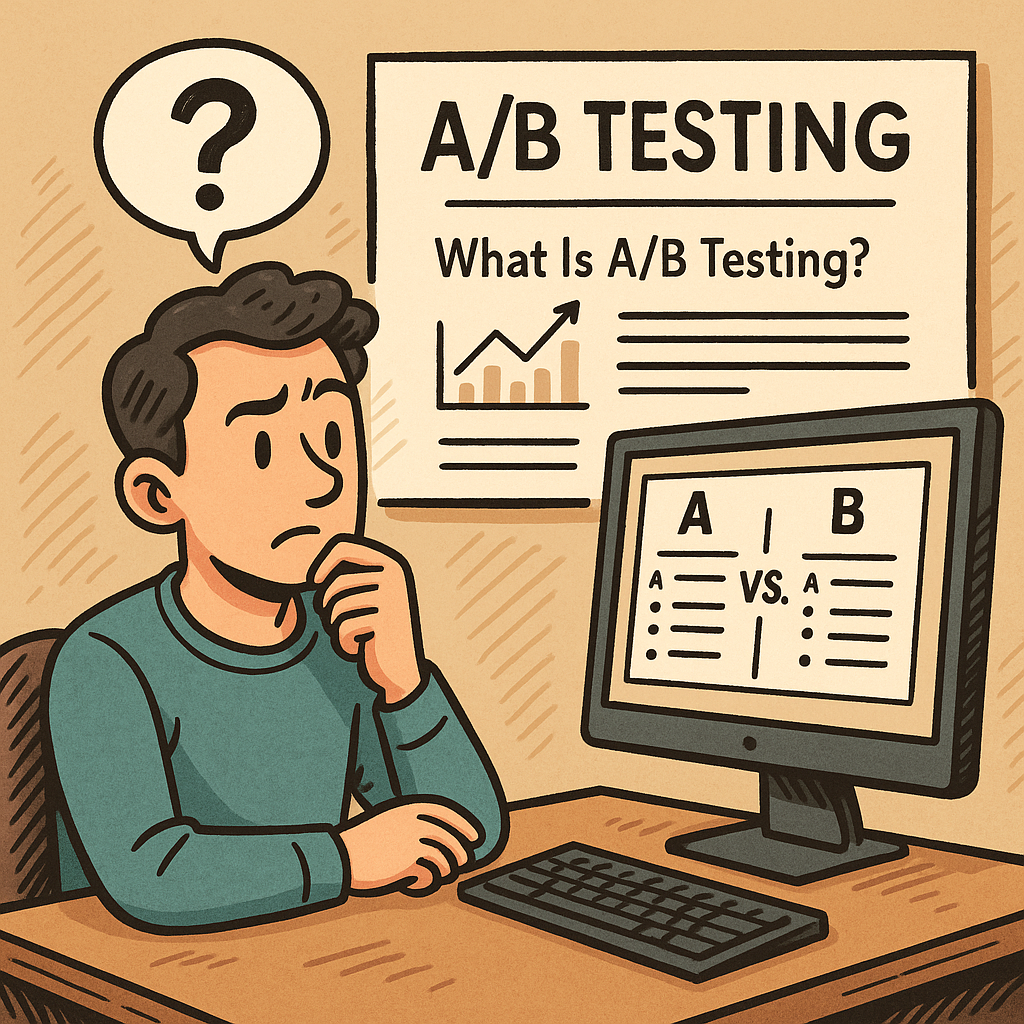
A/B testing software is a specialized category of experimentation tools used to compare two or more versions of a digital asset—such as a webpage, mobile app interface, or email—to determine which version performs better according to specific metrics. By utilizing statistical analysis, these platforms allow businesses to make data-driven decisions that improve user experience, increase conversion rates, and optimize digital marketing ROI.
In 2026, the landscape of A/B testing software has transitioned from simple "point-and-click" website changes to a deeply integrated ecosystem of AI-driven experimentation. As organizations strive for precision in a competitive digital economy, understanding the technical capabilities, implementation strategies, and market-leading solutions is essential for any growth-oriented team. This overview details the current state of the industry, the mechanics of modern testing, and how to select the right platform for your specific technical and business requirements.
The Evolution of Experimentation Technology
The concept of split testing is not new, but the software facilitating it has undergone a radical transformation. Historically, A/B testing was a manual, developer-heavy process. Early platforms in the 2010s introduced the "Visual Editor," allowing non-technical marketers to modify elements via a Graphical User Interface (GUI). However, these early tools often suffered from performance issues, most notably the "flicker effect" (Flash of Unstyled Content), where the original page would briefly appear before the variant loaded.
By 2026, the industry has largely solved these performance hurdles through advanced edge computing and server-side integration. Modern software now prioritizes "Experimentation Programs" rather than isolated tests. This shift means that software is no longer just a tool for changing button colors; it is a centralized platform for managing hypotheses, documenting learnings, and scaling personalization through machine learning.
The current market is bifurcated into two primary approaches: Client-side and Server-side testing. Client-side tools are still popular for front-end marketing teams due to their ease of deployment via a single JavaScript snippet. Conversely, server-side testing—which involves the experiment logic being executed on the company’s own servers or at the "edge"—has become the gold standard for product teams and high-traffic enterprise applications where performance and security are paramount.
Core Features of Modern A/B Testing Software
When evaluating an A/B testing platform in 2026, several core features serve as the benchmark for a professional-grade solution. These features ensure that tests are not only easy to build but also statistically valid and impactful.
Visual and Code-Based Editors
Most enterprise tools provide a "WYSIWYG" (What You See Is What You Get) editor for quick changes to text, images, and CSS layouts. However, for more complex experiments, a robust code editor is necessary. This allows developers to inject custom JavaScript or modify the underlying DOM (Document Object Model) without breaking the site’s core architecture.
Advanced Audience Segmentation
Testing the same version on every visitor is rarely the most effective strategy. Leading software allows for granular segmentation based on:
- Behavioral Data: New vs. returning visitors, cart abandoners, or high-value customers.
- Contextual Data: Device type, geographic location, browser version, and time of day.
- First-Party Data: Integration with Customer Data Platforms (CDPs) to target users based on their historical purchase data or loyalty status.
Statistical Engines: Bayesian vs. Frequentist
The "math" behind the software is its most critical component. Most platforms now offer a choice or a hybrid of statistical models. The Frequentist approach focuses on whether a specific hypothesis is true over a long period, requiring a fixed sample size before a winner is declared. The Bayesian approach, which has gained significant traction by 2026, provides a "probability of being the best," allowing for more intuitive decision-making and often reaching conclusions faster by utilizing prior data.
AI and Multi-Armed Bandit (MAB) Algorithms
Artificial Intelligence has automated the "winning" process. Multi-Armed Bandit testing is a feature that uses machine learning to automatically shift traffic toward the higher-performing variation in real-time. This minimizes the "regret" or lost revenue typically associated with sending 50% of traffic to a losing variation during the duration of a standard test.
Technical Implementation Methods
Choosing how to implement A/B testing software is a foundational decision that impacts site speed, developer workflow, and data privacy.
Client-Side Implementation
This remains the most common method for marketing-led CRO (Conversion Rate Optimization). A JavaScript snippet is placed in the of the website. When a user visits, the snippet calls the testing server, checks if the user is part of an experiment, and applies the changes (via DOM manipulation) before the page finishes rendering.
- Pros: Fast setup; low developer dependency; visual editors work seamlessly.
- Cons: Potential for "flicker" if not optimized; can slightly increase page load time.
Server-Side Implementation
In this model, the experiment logic happens at the application level. The server decides which variation to show before the HTML is even sent to the user's browser.
- Pros: Zero impact on front-end performance; ideal for testing deep-stack features (e.g., search algorithms, pricing models); highly secure.
- Cons: Requires significant developer resources; usually lacks a visual editor for non-coders.
Edge-Side Testing
A middle ground that has matured by 2026, edge-side testing utilizes Content Delivery Networks (CDNs) like Cloudflare or Fastly. The experiment logic is executed at a server location closest to the user, combining the performance of server-side with some of the agility of client-side tools.
Comparison of Leading A/B Testing Platforms in 2026
The following table compares the most prominent players in the market based on their primary use cases and technical requirements.
| Software Platform | Primary Target | Implementation | Key Strength |
|---|---|---|---|
| Optimizely | Large Enterprise | Client, Server, Edge | Best-in-class experimentation at scale with robust feature flagging. |
| VWO (Visual Website Optimizer) | Mid-Market to Enterprise | Client & Server | Integrated suite including heatmaps, session recording, and surveys. |
| Adobe Target | Enterprise (Adobe Eco-system) | Client & Server | Deep integration with Adobe Experience Cloud and powerful AI personalization. |
| AB Tasty | Mid-Market | Client & Server | Strong focus on "Customer Experience Optimization" and ROI tracking. |
| Kameleoon | High-Performance Web/App | Server & Edge | Exceptional performance with a focus on avoiding flicker and security compliance. |
| Convert Experiences | Privacy-Conscious SMBs | Client-side | Affordable, GDPR-compliant, and excellent technical support for smaller teams. |
Selection Criteria: How to Choose the Right Tool
Selecting A/B testing software is an investment that should align with your organizational maturity. A common mistake is purchasing a high-end enterprise tool when the internal team lacks the traffic or the statistical knowledge to utilize it.
1. Traffic Volume and Statistical Power
A/B testing relies on sample size. If your website receives fewer than 10,000 unique visitors per month, you may struggle to reach statistical significance on many tests. In such cases, look for tools that emphasize qualitative feedback (like VWO) rather than just quantitative data.
2. Team Skill Set
Does your team consist primarily of marketers or developers? If you lack dedicated engineering resources for CRO, a tool with a sophisticated visual editor and an easy-to-use interface (like AB Tasty or VWO) is vital. If you are a product-led company testing app features, a server-side tool like Optimizely or Kameleoon is non-negotiable.
3. Integration Ecosystem
Your testing software should not exist in a vacuum. It must integrate with:
- Analytics: (e.g., Google Analytics 4, Mixpanel) to verify results.
- Data Warehouses: (e.g., Snowflake, BigQuery) for long-term data analysis.
- CMS Platforms: (e.g., Contentful, WordPress) for seamless content deployment.
4. Data Privacy and Compliance
By 2026, global privacy regulations (GDPR, CCPA, and their successors) have become even more stringent. Ensure the software offers robust data anonymization, localized data storage, and does not rely on third-party cookies that are increasingly blocked by modern browsers.
Best Practices for Successful Software Deployment
Possessing the software is only half the battle; the "Testing Culture" determines the results. To maximize the value of your A/B testing software, follow these industry standards:
- Document Everything: Every test should begin with a clear hypothesis: "Because we observed [Data/Insight], we expect that [Change] will result in [Outcome]."
- Run Tests for Full Business Cycles: Do not stop a test early just because it looks like a winner. Run tests for at least two weeks to account for weekly traffic fluctuations (e.g., weekend vs. weekday behavior).
- Avoid the "Peaking" Problem: Frequently checking results and stopping as soon as a "95% significance" appears is a statistical fallacy. Use platforms that offer "Sequential Testing" to mitigate this risk.
- Test Big Changes First: Changing a button color rarely yields a massive lift. Use your software to test structural changes, value propositions, and completely different user flows.
Frequently Asked Questions
How long does it usually take to see results from A/B testing software?
Most tests should run for a minimum of 14 to 21 days. This duration ensures you capture at least two full weekly cycles, accounting for different user behaviors on different days. However, the exact time depends on your traffic volume and the "effect size" (how much of a difference the change actually makes). Software with Bayesian engines may provide "winning" probabilities faster than traditional tools.
Can A/B testing software hurt my SEO?
If used correctly, A/B testing does not negatively impact SEO. Google and other search engines encourage testing as it improves user experience. To avoid issues, ensure you are not "cloaking" (showing search engines different content than users) and use rel="canonical" tags if testing across multiple URLs. Most modern A/B testing platforms handle these technicalities automatically.
What is the difference between A/B testing and Multivariate testing (MVT)?
A/B testing compares two versions of a page (Version A and Version B). Multivariate testing compares multiple variables simultaneously (e.g., testing three different headlines and two different images at the same time). MVT requires significantly more traffic to reach statistical significance because it creates a large number of combinations.
Is there a free version of A/B testing software available in 2026?
While the industry-standard Google Optimize was sunset in 2023, several providers offer "Freemium" tiers or low-cost versions for startups. Tools like VWO and Convert occasionally offer entry-level plans for low-traffic sites, though they often restrict advanced features like server-side testing or AI-powered personalization.
Do I need a developer to use A/B testing software?
For basic client-side testing (changing text, colors, or hiding elements), a marketer can often manage without a developer using a visual editor. However, for more advanced tests involving dynamic data, custom tracking, or server-side logic, developer involvement is essential to ensure the experiment doesn't break site functionality.
Recommendation for Next Actions
For organizations just beginning their experimentation journey, the most practical next step is to audit your current traffic and conversion bottlenecks. Before purchasing software, identify at least five high-impact hypotheses you want to test.
If you are a small to mid-sized business focused on marketing agility, request a demo from VWO or AB Tasty, as these platforms provide the most comprehensive "out of the box" features. For enterprise-level product teams, prioritize a pilot program with Optimizely or Kameleoon to evaluate their server-side performance and feature-flagging capabilities. In 2026, the goal is no longer just to "test," but to build a continuous loop of learning that informs every aspect of your digital product.