Attic mold remediation is a technical process involving the identification, containment, removal, and prevention of fungal growth within a building's attic space. Successful remediation requires addressing the underlying moisture source—typically roof leaks, poor ventilation, or condensation—followed by professional cleaning or material replacement, ensuring the home’s structural integrity and indoor air quality are restored.
Identifying the Presence of Mold in Your Attic
The first step in addressing attic mold is accurate identification. Mold in an attic often goes unnoticed for months because homeowners rarely frequent these spaces. To determine if your home requires professional remediation, look for physical indicators rather than relying solely on scent.
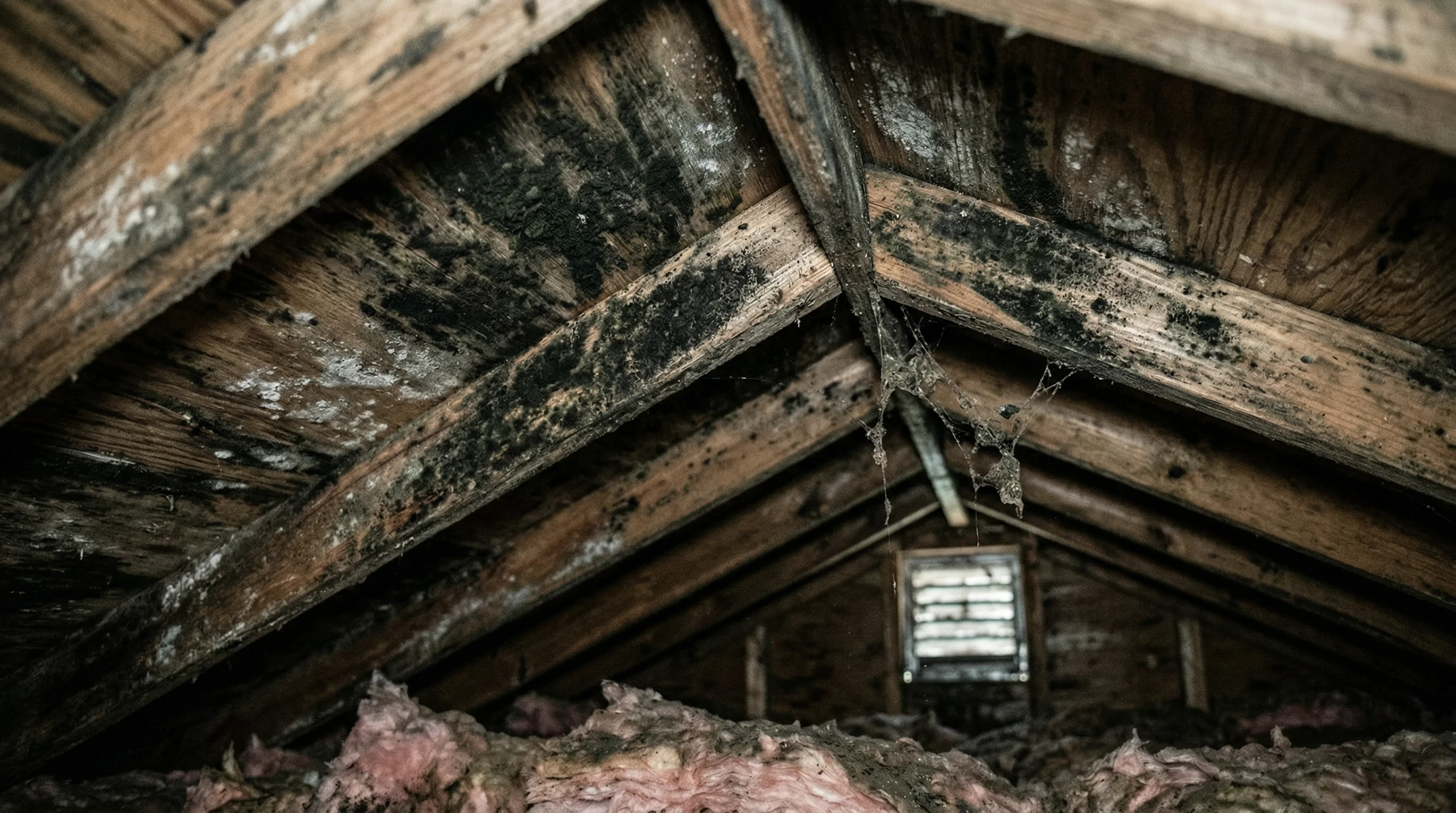
Visual evidence usually appears as dark staining, gray-black patches, or white powdery efflorescence on wooden roof decking, rafters, and insulation. It is important to distinguish between mold and common wood discolorations, such as “water stain” or iron tanning, which occur during the wood drying process at the lumber mill. Professionals use moisture meters to detect high wood-moisture content—levels consistently above 16% to 20% indicate a high risk of fungal colonization.
If you suspect mold, avoid disturbing it. Physical agitation can release spores into the home’s living spaces through HVAC systems, attic hatches, or plumbing penetrations. Instead, secure the area and schedule a professional inspection to confirm the species and the extent of the growth.
The Role of Moisture and Ventilation
Mold growth is an outcome, not a root cause. An attic environment is naturally prone to moisture accumulation, but a healthy attic should remain dry. Remediation is ineffective if the environmental conditions that supported the mold are not corrected.
Common drivers of moisture include:
- Inadequate Ventilation: If your soffit vents are blocked by attic insulation or if your ridge vents are undersized, stagnant, humid air becomes trapped.
- Bathroom/Kitchen Venting: A frequent and major mistake is venting exhaust fans directly into the attic rather than through the roof or exterior wall. This pumps warm, moisture-laden air into the attic, which immediately condenses on the cold roof deck during cooler months.
- Roof Leaks: Chronic, minor roof leaks or damaged flashing often provide enough moisture to sustain slow-growing mold colonies.
- Air Sealing Gaps: Air leakage from the heated living space below (via light fixtures, pipe penetrations, or attic hatches) introduces warm air into the cold attic, causing condensation on rafters.
Before starting any cleaning process, an inspection must diagnose which of these variables is failing. Addressing the ventilation deficiency is often more important than the cleaning itself.
Professional Remediation Process
Professional remediation follows strict protocols to ensure safety and prevent cross-contamination. While DIY approaches for small, isolated patches are sometimes attempted, attic mold usually involves complex, hard-to-reach areas and the risk of airborne spore migration.
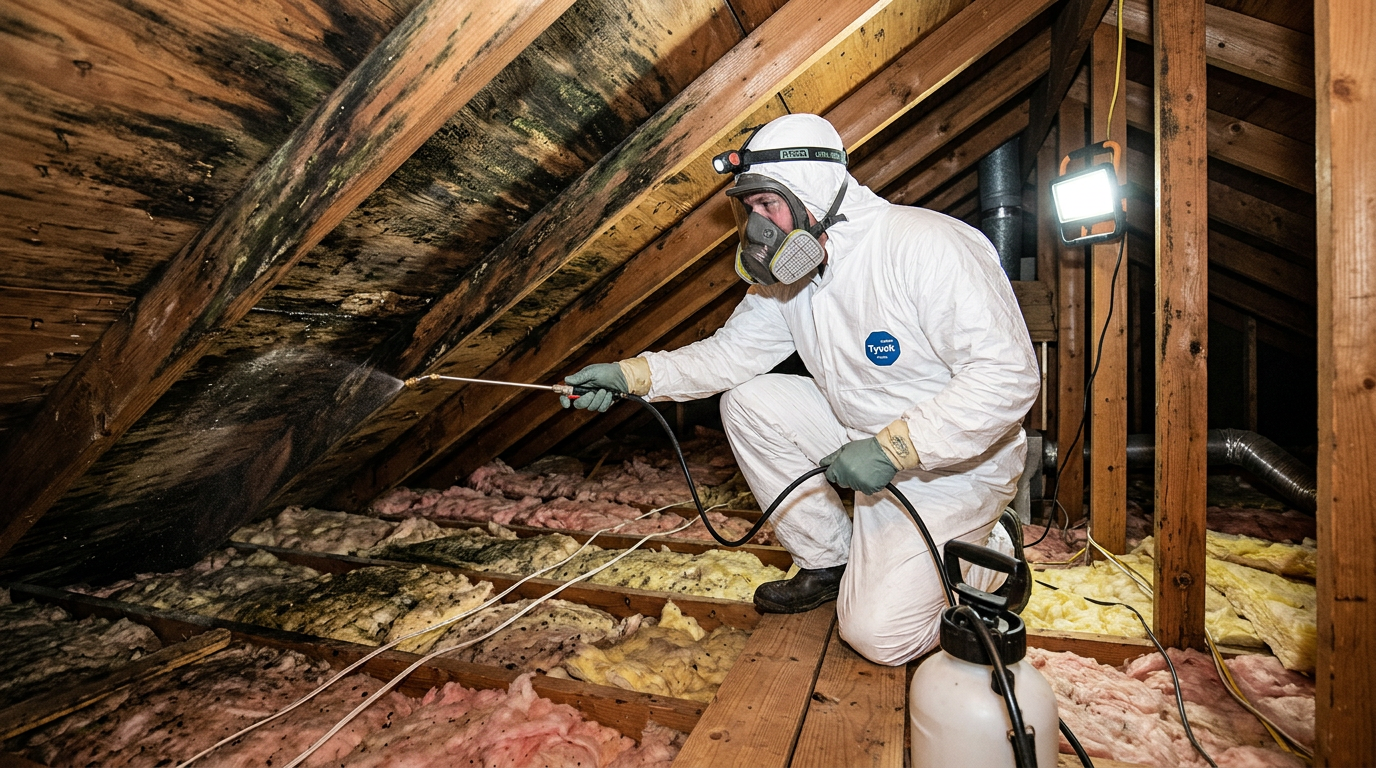
- Containment: Technicians isolate the attic from the rest of the home. This involves sealing off the attic hatch with plastic sheeting and potentially setting up negative air pressure units to ensure that any dust or spores generated during the process are filtered through HEPA (High-Efficiency Particulate Air) equipment.
- Personal Protective Equipment (PPE): Professionals must wear full-body disposable suits and respirators rated at least N95 (often P100) to prevent inhalation of mycotoxins during the removal phase.
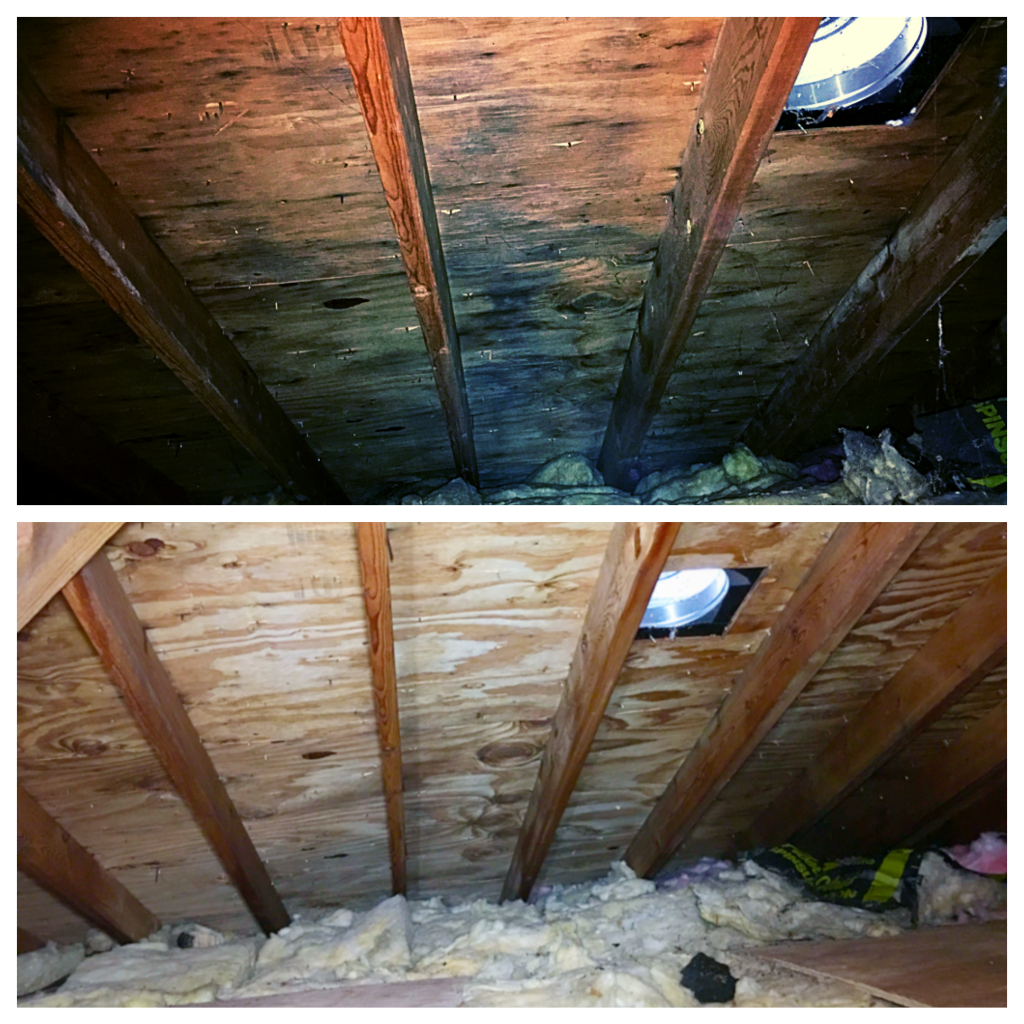
- Physical Removal: Depending on the severity, mold is removed through specialized dry-ice blasting, media blasting, or high-suction sanding. These methods are preferred over simple scrubbing, as they remove the top layer of the wood grain where roots (hyphae) have embedded themselves.
- Cleaning and Treatment: After mechanical removal, the entire attic is HEPA-vacuumed. Surfaces are then treated with EPA-registered antifungal agents to kill residual spores.
- Encapsulation: In some cases, a mold-resistant sealant (encapsulant) is applied to the wood surfaces. This is not a replacement for cleaning but serves as an extra layer of protection to prevent future growth if humidity levels briefly spike.
Comparing Remediation Methods
| Method | Best Use Case | Primary Advantage |
|---|---|---|
| Dry-Ice Blasting | Heavy, structural mold | Non-abrasive, zero secondary waste |
| Media Blasting | Dense colonization | Highly effective for deep root removal |
| Sanding/Abrasion | Spot treatment | Targeted removal in tight spaces |
| Encapsulation | Prevention/Final step | Seals surfaces against future moisture |
Costs and Insurance Considerations
Attic mold remediation costs vary significantly based on square footage, the height of the roof, the amount of insulation that must be removed and replaced, and the severity of the infestation. As of 2026, most residential projects range from $2,000 to $6,000, though extreme cases involving structural damage or extensive insulation replacement can exceed $10,000.
Regarding insurance, homeowners should review their specific policies. Most standard homeowner insurance policies exclude coverage for mold unless it is the direct result of a "covered peril" (e.g., a sudden pipe burst or a storm-damaged roof). Gradual damage—such as a slow leak that has been present for months or condensation buildup due to poor ventilation—is almost universally considered a maintenance issue and is typically excluded from coverage.
Verifying a Remediation Company
When searching for "attic mold remediation near me," prioritize contractors with specific training in mold abatement, such as those certified by the Institute of Inspection, Cleaning and Restoration Certification (IICRC). Ask for proof of pollution liability insurance, which is distinct from general liability insurance. Standard general liability may not cover damages related to environmental hazards or chemical application.
Request a clear, written scope of work that includes:
- The exact source of the moisture identified.
- The specific equipment and chemicals to be used.
- A clear plan for disposing of contaminated insulation.
- Post-remediation testing (air quality or surface swabs) performed by an independent third-party hygienist. Using an independent party for testing ensures there is no conflict of interest between the remediation company and the inspector.
Frequently Asked Questions
Does bleach kill attic mold? No, bleach is not recommended for wood surfaces. Because wood is porous, bleach only kills the surface mold while the water content in the bleach solution soaks into the wood, actually feeding the mold roots below the surface. This often causes the mold to return more aggressively.
Is it safe to live in the house during remediation? Usually, yes. Provided that the remediation team has properly established containment and negative pressure, the living spaces remain isolated from the attic. However, those with severe mold allergies or compromised immune systems may prefer to stay elsewhere as a precaution.
How do I know if the remediation was successful? Success is verified through third-party post-remediation testing. This typically involves air quality samples taken inside the attic (after cleaning) and compared against a control sample taken from the outdoor environment. An successful result shows spore counts inside the attic are lower than or consistent with outdoor levels.
Will the mold grow back if I fix the ventilation? If the moisture source is permanently addressed, the conditions for mold growth are eliminated. However, attics are dynamic environments. Annual inspections of your attic—specifically checking for roof leaks or blocked vents—are essential to ensure that a new moisture source does not develop.
Can I just paint over the mold with mold-resistant primer? Never paint over mold. Encapsulating mold without removing it first traps the growth underneath, potentially leading to faster wood decay. Always prioritize physical removal of the contaminated material before applying any protective coatings.
Next Steps for Homeowners
If you have identified mold in your attic, begin by documenting the extent of the growth with clear photographs. Next, conduct a preliminary check for obvious moisture sources—look for wet spots on the underside of the roof deck or check if your bathroom fans are venting into the attic. Once you have identified these factors, contact a certified mold remediation specialist for a professional site assessment. Avoid DIY cleaning, as the lack of proper containment and respiratory protection poses a significant health risk.