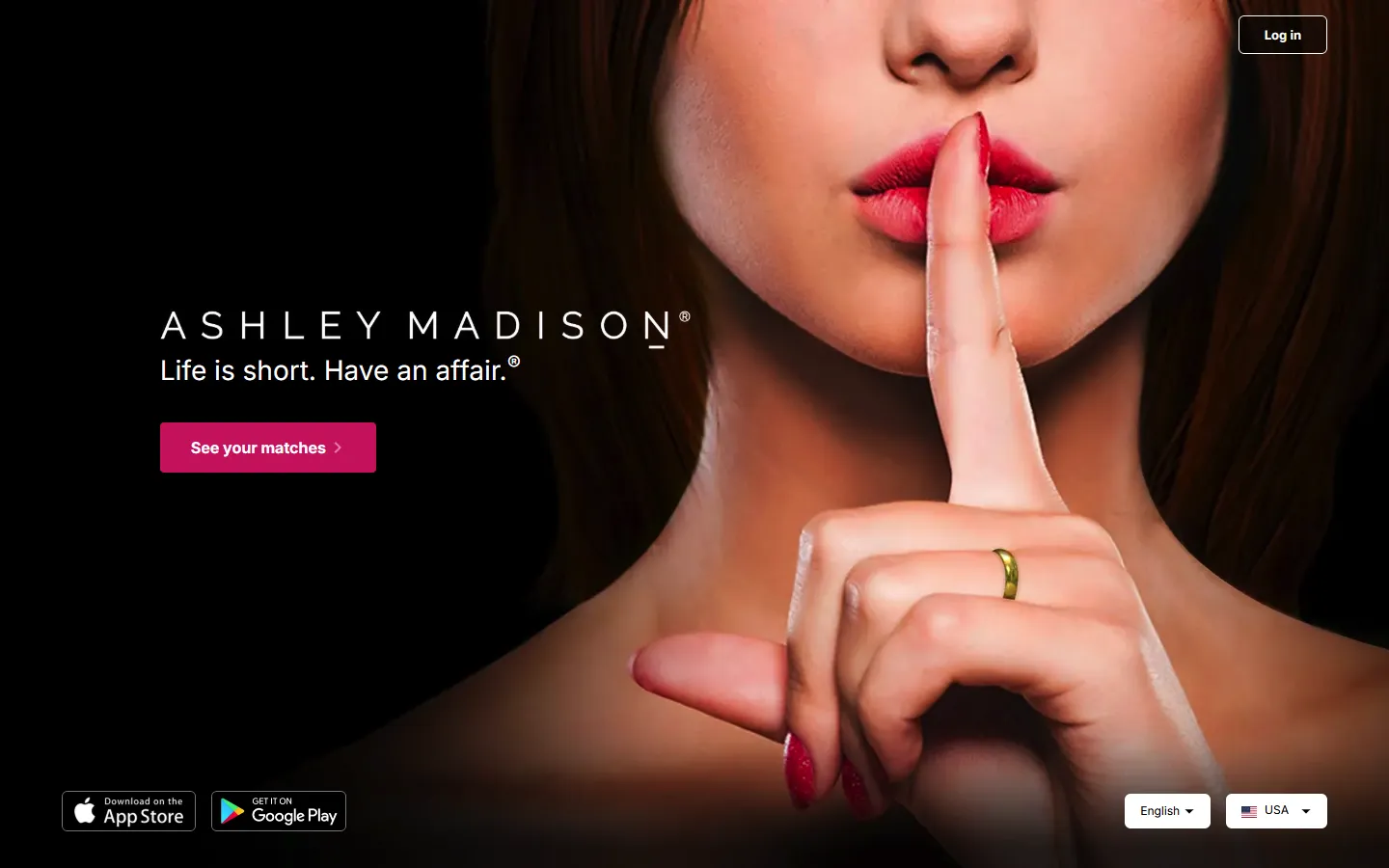
Ashley Madison is a niche online dating platform designed for individuals seeking extramarital affairs or "discreet" relationships. It gained global notoriety in 2015 after a massive data breach by a group called "The Impact Team" exposed the personal information of over 30 million users, revealing systemic issues with the site's data retention and user authenticity.
Origins and the Business of Infidelity
Founded in 2001 by Noel Biderman, Ashley Madison carved out a controversial but highly profitable niche in the crowded online dating market. Operating under the provocative slogan, "Life is short. Have an affair," the platform targeted married individuals or those in committed relationships who were seeking side encounters. Unlike mainstream dating apps that focus on long-term compatibility or casual dating for singles, Ashley Madison built its entire brand around the concept of discretion and the facilitation of infidelity.
The business model was fundamentally different from competitors like Match.com or eHarmony. Instead of a monthly subscription fee, Ashley Madison utilized a credit-based system. Users (primarily men) would purchase credits to initiate conversations with other members. This model incentivized the platform to maximize user engagement, regardless of whether those interactions led to actual meetings. By 2015, the platform's parent company, Avid Life Media (ALM), was generating tens of millions of dollars in annual revenue, positioning itself for a massive initial public offering (IPO) on the London Stock Exchange.
However, the ethics of the platform were frequently questioned. While the site maintained that it was merely a tool for adults to exercise their free will, critics argued that it actively profited from the destruction of families. This moral tension set the stage for one of the most significant cyberattacks in the history of the internet.
The 2015 Data Breach: A Timeline of the Crisis
In July 2015, a group of hackers calling themselves "The Impact Team" gained unauthorized access to the internal servers of Avid Life Media. They did not immediately dump the data; instead, they issued an ultimatum. The hackers demanded that Ashley Madison and its sister site, Established Men, be taken offline permanently. They cited the site's "fraudulent" practices, specifically the "Full Delete" feature, which charged users a $19 fee to wipe their data but allegedly failed to actually remove the information from the servers.
When Avid Life Media refused to comply with the demands, The Impact Team followed through on their threat. In August 2015, approximately 25 gigabytes of data were leaked onto the dark web. The dump included:
- User Profiles: Real names, home addresses, and GPS coordinates.
- Financial Records: Credit card transaction details (though not full card numbers).
- Private Communications: Millions of emails and chat logs.
- Server Details: Technical blueprints of the site’s infrastructure.
The fallout was immediate and catastrophic. High-profile individuals, including government officials, religious leaders, and television personalities, were outed. The breach was linked to several reported suicides and sparked a wave of extortion attempts, where third-party criminals threatened to reveal a user’s involvement to their family or employer unless a ransom was paid.
The Deception Exposed: Bots and Fake Deletion
While the privacy violation was the primary headline, the subsequent analysis of the leaked data by researchers and journalists revealed a deeper rot within the platform’s operations. Two major scandals emerged from the data forensics: the "Fembot" controversy and the "Full Delete" deception.
The Fembot Controversy
Data analysis suggested that the gender ratio on the platform was incredibly skewed. While millions of men were paying for credits to talk to women, the leaked database indicated that an overwhelming majority of the female profiles were inactive or non-existent. Internal code revealed that Ashley Madison used "engager bots"—automated programs designed to mimic real women. These bots would send messages to new male users to entice them to spend credits to reply.
Former employees and leaked internal documents suggested that at one point, over 70,000 bots were active on the site, sending millions of automated messages. This discovery shifted the narrative from a simple privacy breach to a case of systematic consumer fraud.
The "Full Delete" Scam
The Impact Team’s initial grievance regarding the "Full Delete" feature was validated by the data dump. Users had paid $19 to have their accounts and personal history permanently scrubbed. However, the hackers found that the information was still stored on ALM’s servers, just flagged differently. This meant that the users who were the most concerned about their privacy—and had paid extra to protect it—were actually the most vulnerable when the breach occurred.
Legal Repercussions and Corporate Restructuring
The 2015 breach led to a series of legal battles and regulatory interventions that fundamentally changed how the company operated. In the immediate aftermath, Noel Biderman resigned as CEO. Avid Life Media eventually rebranded as Ruby Life Inc. in an attempt to distance itself from the scandal.
In 2017, the company reached a settlement with the U.S. Federal Trade Commission (FTC) and several state attorneys general. The investigation concluded that the company had failed to protect user data and had deceived consumers regarding the "Full Delete" service and the use of fake profiles. The settlement included a $1.6 million penalty (a significantly reduced amount based on the company's ability to pay) and a requirement to implement a comprehensive data security program.
Additionally, Ruby Life Inc. settled a U.S. class-action lawsuit for approximately $11.2 million. This fund was intended to compensate users whose data was exposed and those who had paid for the fraudulent "Full Delete" service. For a more detailed look at the legal outcome, you can review the FTC’s official statement on the Ashley Madison settlement.
Ashley Madison in 2026: Evolution and Security
As of 2026, Ashley Madison remains operational and has surprisingly seen a growth in its user base. The platform has pivoted its marketing away from the purely scandalous "infidelity" angle toward a broader definition of "open relationships" and "non-monogamy," reflecting changing societal norms.
The technical infrastructure has also undergone a massive overhaul. Following the 2015 disaster, the platform became a case study for what not to do in cybersecurity. Today, the site employs industry-standard security measures that were notably absent during the Biderman era.
Comparative Security and Operational Standards
| Feature | 2015 Standard (Pre-Breach) | 2026 Standard (Current) |
|---|---|---|
| Data Encryption | Weak or absent for stored personal info | End-to-end encryption for messaging |
| Authentication | Simple password only | Mandatory 2-Factor Authentication (2FA) |
| User Verification | Virtually none (high bot count) | AI-driven profile verification and "Guest" mode |
| Account Deletion | Paid "Full Delete" (failed to work) | Verified "Right to be Forgotten" protocol (GDPR compliant) |
| Payment Privacy | Direct billing (often traceable) | Support for anonymous payment methods and blurred billing |
Despite these improvements, the fundamental risk of using such a platform remains. Because Ashley Madison is a "high-value target" for hackers seeking to blackmail individuals, it will always carry a higher risk profile than a standard dating site.
Navigating the Platform: A Guide for Modern Users
For those considering using the platform in 2026, the landscape is different but requires significant caution. The site still operates on a credit system for men, while women can generally use the basic features for free.
Privacy Prerequisites
If you choose to register, you should adhere to strict privacy protocols to mitigate the risk of a future breach:
- Use a Burner Email: Never use a primary personal or professional email address. Use an encrypted email service like ProtonMail.
- Avoid Real Photos: If you must upload a photo, use the platform's "Mask" or "Blur" tools. Never use photos that appear on your public social media profiles, as reverse-image searches can easily identify you.
- Use Pseudonyms: Do not use your real name, birthdate, or any specific location details that could be cross-referenced with public records.
- Payment Method: Use a prepaid credit card or a digital wallet that does not link directly to your main bank account.
Identifying Bots
While Ruby Life Inc. claims to have purged the "fembots" of the past, automated scripts are a perennial problem for all dating apps. Users should be wary of:
- Profiles with only one photo that looks professional or stock-like.
- Users who respond almost instantly to your profile view.
- Vague, generic messages that do not reference specific details in your bio.
- Immediate requests to move the conversation to an external messaging app like WhatsApp or Telegram.
Impact on Privacy Law and the "Right to be Forgotten"
The Ashley Madison scandal was a watershed moment for digital privacy. It served as a catalyst for the implementation of the General Data Protection Regulation (GDPR) in Europe and the California Consumer Privacy Act (CCPA) in the United States. These laws now strictly regulate how companies store data and, more importantly, how they must delete it when requested.
The "Full Delete" scam specifically highlighted the need for "Data Minimization"—the principle that companies should only keep the data they absolutely need for as long as they need it. In 2026, the platform must comply with these international standards, providing users with verifiable evidence that their data has been purged upon request. This is a significant shift from the "pay-to-delete" model that partially triggered the 2015 attack.
Frequently Asked Questions
Is Ashley Madison still a scam?
In terms of its current operations, Ashley Madison is a legitimate business that provides the services it advertises. However, the historical use of bots and the 2015 breach continue to cloud its reputation. While the company has taken steps to eliminate fraudulent profiles, the "success" of the platform depends entirely on the ratio of real users in a specific geographic area.
Who hacked Ashley Madison in 2015?
The group responsible called themselves "The Impact Team." Despite an extensive international investigation involving the FBI and the Royal Canadian Mounted Police, no individuals have been publicly charged or arrested for the breach. The hackers’ motivations appeared to be a mix of moral objection to the site's purpose and a "vigilante" response to the company’s deceptive business practices.
Can I see if my email was in the 2015 breach?
Yes. Several reputable cybersecurity tools, such as Have I Been Pwned, allow users to check if their email address was part of the Ashley Madison dump or other historical breaches. If your data was involved, you should have changed all associated passwords years ago and remained vigilant against phishing attempts.
Does the site still use "fembots"?
Ruby Life Inc. officially claims to have ceased the use of engager bots as part of its settlement with the FTC. However, third-party "scammer" bots—unaffiliated with the company—remain a challenge on almost every dating platform. Users should remain skeptical of interactions that seem too good to be true or follow repetitive patterns.
Is my payment information safe on Ashley Madison now?
The platform now uses PCI-compliant payment processors and offers "discreet billing" options where the charge on your bank statement appears as a generic company name. However, for maximum security, experts recommend using non-traditional or anonymous payment methods to ensure there is no digital paper trail linking your identity to the service.
Practical Recommendation
If your primary concern is privacy, the safest way to use Ashley Madison in 2026 is to assume that any data you provide could eventually become public. The platform has significantly improved its security posture, but no system is impenetrable. Treat your presence on the site as a "threat model" exercise: provide the absolute minimum amount of information required, use a dedicated device or secure browser partition, and never share details that could lead to your physical or professional identity. For those seeking discreet relationships, the technological risks are now as significant as the personal ones.