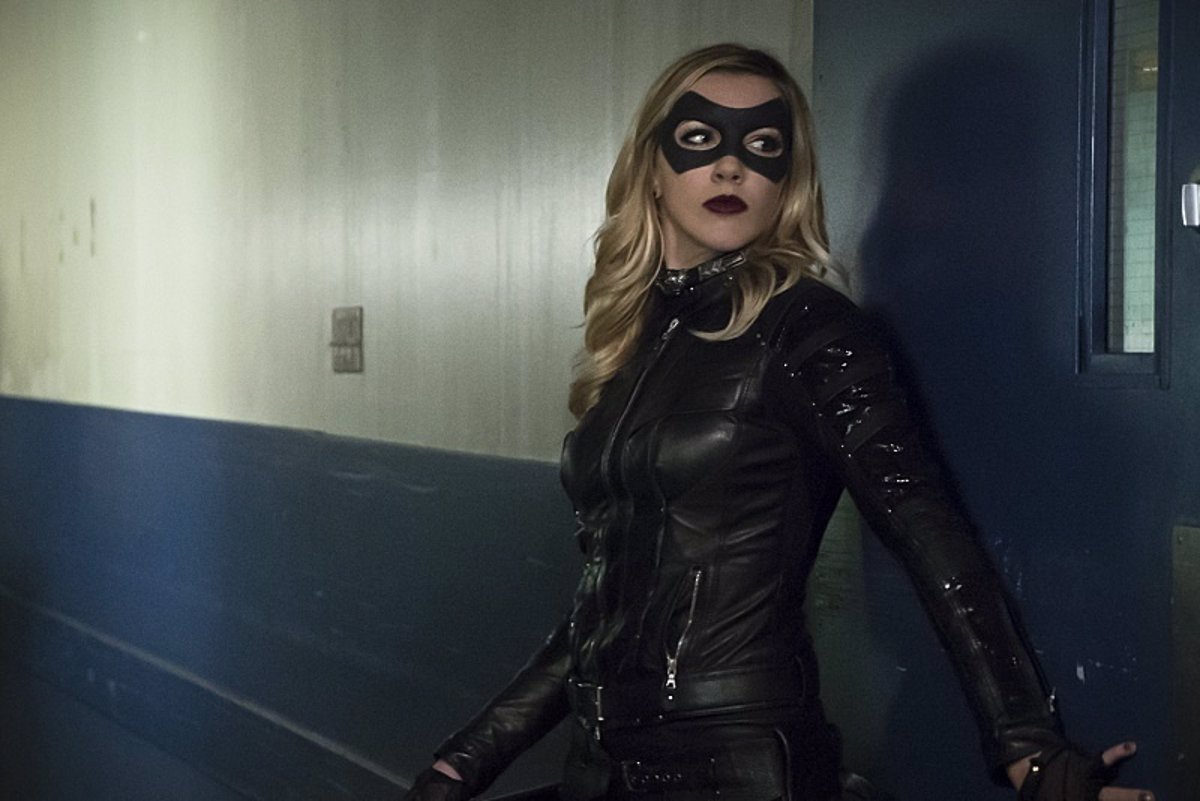
Laurel Lance, the Black Canary, died in the eighteenth episode of Arrow Season 4, titled "Eleven-Fifty-Nine." She was fatally stabbed by Damien Darhk using one of Oliver Queen’s own arrows as an act of revenge against her father, Quentin Lance. Her death remains one of the most polarizing creative decisions in the history of the Arrowverse.
The Context of the Death: Season 4 and the Mystery of the Grave
To understand the weight of Laurel Lance’s death, one must look back at the structural gamble taken by the Arrow writers at the beginning of Season 4. The season premiered with a "flash-forward" scene—a narrative device the show had not previously used in this manner. It depicted Oliver Queen standing over a fresh grave, six months in the future, joined by Barry Allen. Oliver was mourning a significant loss, and he vowed to kill the person responsible.
This "Who is in the grave?" mystery became the central hook of the season. For months, fans engaged in intense speculation. Candidates included everyone from Felicity Smoak and Thea Queen to Captain Quentin Lance and John Diggle. However, as the season progressed, it became increasingly clear that the writers were heading toward a choice that would fundamentally alter the show’s DNA.
By the time "Eleven-Fifty-Nine" aired in April 2016, the tension had reached a breaking point. Laurel Lance, who had finally fully embraced her identity as the Black Canary and was finding her footing as a hero, was the one chosen to occupy that grave. The decision was not merely a plot point; it was a statement about the show’s direction, distancing itself from the traditional Green Arrow/Black Canary romance found in DC Comics and leaning further into the "Olicity" (Oliver and Felicity) dynamic that had dominated the fan discourse.
Breaking Down the Death Scene: "Eleven-Fifty-Nine"
The death of Laurel Lance was calculated to be as impactful—and as painful—as possible. The setting was Iron Heights Prison, where a riot orchestrated by Damien Darhk was in full swing. Team Arrow arrived to stop Darhk from regaining his magical powers via a restored idol.
In the climax of the confrontation, Darhk regained his abilities. He paralyzed the team with telekinesis and reminded Quentin Lance of his warning: if Quentin betrayed him, he would target his daughter. Darhk then took one of Oliver’s arrows from his quiver and plunged it into Laurel’s chest.
While the wound was serious, Laurel did not die instantly. She was rushed to the hospital, where she underwent surgery. For a few brief moments in the episode, the audience was led to believe she might survive. She had a heart-to-heart conversation with Oliver, expressing her love for him and acknowledging that while she was no longer the love of his life, he would always be the love of hers. She also made him a mysterious promise, the contents of which were kept secret from the audience until the Season 5 premiere.
Minutes later, Laurel went into an unexpected medical crisis. The doctors were unable to revive her, and she was pronounced dead at 11:59 PM—a time that gave the episode its title. The suddenness of her passing, following an apparently successful surgery, added an extra layer of trauma for both the characters and the viewers.
Why Did the Writers Kill the Black Canary?
The creative reasoning behind killing off Laurel Lance was met with significant scrutiny. Executive producer Marc Guggenheim and showrunner Wendy Mericle stated in various interviews that the decision was based on "creative necessity." They argued that they had reached a point where they felt they had told all the stories they could with Laurel Lance as the Black Canary.
From a narrative standpoint, the writers wanted to raise the stakes. They felt that for Damien Darhk to be a truly formidable villain, he needed to take something irreplaceable from Oliver Queen. By killing the Black Canary, they permanently removed a pillar of the show’s original cast.
However, many critics and fans pointed out the irony of this reasoning. At the time of her death, Laurel was just beginning to explore her potential as a district attorney who was also a masked vigilante. Her character arc—transitioning from a grieving sister to a recovering alcoholic to a trainee under Nyssa al Ghul, and finally to a hero—was considered by many to be one of the show's most compelling journeys. To end it just as she reached her peak felt, to many, like a waste of potential.
The Fan Backlash and "Fridging" Criticism
The reaction to Laurel’s death was swift and overwhelmingly negative in many corners of the internet. The hashtag #NoLaurelNoArrow trended for weeks. The backlash was centered on several key issues:
- Comic Book Accuracy: In DC Comics lore, Dinah Laurel Lance is arguably the most important person in Oliver Queen’s life. They are the quintessential power couple. Killing her off was seen as a betrayal of the source material.
- The "Women in Refrigerators" Trope: Many fans accused the writers of "fridging" Laurel—a term used when a female character is killed off solely to provide emotional motivation or "man-pain" for the male protagonist. Since her death served to drive Oliver’s and Quentin’s vengeful arcs in the final episodes of Season 4, this criticism carried significant weight.
- The Final Words: Laurel’s final conversation, in which she essentially gave her "blessing" to Oliver’s relationship with Felicity, was seen as a character assassination by some. They argued it was out of character for Laurel to spend her dying breaths talking about someone else’s romance.
Comparative Table: Black Canary Iterations in the Arrowverse
The vacancy left by Laurel Lance’s death led to the introduction of several other characters who took up the mantle or served as a version of the character. Even by 2026, the complexity of the Black Canary legacy in the Arrowverse is often cited in television studies regarding character replacement.
| Character Version | Portrayed By | Origin/Context | Status (as of 2026 Lore) |
|---|---|---|---|
| Laurel Lance (Earth-1) | Katie Cassidy | The original attorney-turned-hero. | Deceased (Season 4). |
| Sara Lance (The Canary) | Caity Lotz | Laurel's sister; trained by the League of Assassins. | Captain of the Waverider (Legends). |
| Black Siren (Earth-2) | Katie Cassidy | Doppelgänger; meta-human villain turned hero. | Active in the future (2040). |
| Dinah Drake | Juliana Harkavy | Meta-human police officer with a natural sonic scream. | Former SCPD Captain; active vigilante. |
| Evelyn Sharp (Artemis) | Madison McLaughlin | Impersonated Canary briefly after Laurel's death. | Unknown/Villainous turn. |
| Zoe Ramirez | Andrea Sixtos | Future version of Wild Dog’s daughter. | Active in the 2040 timeline. |
The Long-Term Impact on Team Arrow
The death of Laurel Lance acted as a catalyst for the total restructuring of Team Arrow. In the immediate aftermath, the team fractured. Diggle, consumed by guilt because he had trusted his brother Andy (who assisted Darhk), left the city. Thea, horrified by her own bloodlust and the loss of her friend, stepped away from vigilantism.
Season 5 became a "reboot" of sorts, where Oliver Queen had to train a new generation of recruits. The ghost of Laurel hung over this process. Oliver’s refusal to let anyone else use the Black Canary name initially showed his reverence for her memory. However, the eventual realization that the city needed a Black Canary led to the recruitment of Dinah Drake, a move that was controversial among fans who felt Laurel was being "replaced."
Quentin Lance’s arc was perhaps the most devastated by Laurel’s death. Having already lost Sara multiple times, the permanent loss of Laurel sent him back into a spiral of alcoholism and despair. His journey toward healing—and his eventual "adoption" of the Earth-2 Laurel (Black Siren)—became a central emotional pillar for the remaining seasons of the show.
How Black Siren Filled the Void
In an effort to mitigate the backlash and bring actress Katie Cassidy back into the fold, the producers introduced Black Siren, the Earth-2 doppelgänger of Laurel Lance. Black Siren was a meta-human villain with a lethal sonic scream, serving as a dark reflection of the hero the fans had lost.
Black Siren’s path to redemption was long and messy. She began as a lieutenant for Zoom on The Flash, then became a recurring antagonist in Arrow Season 5 and 6. It wasn't until Season 7 and 8 that she fully embraced a heroic path, eventually taking on the Black Canary mantle herself.
While this satisfied fans who wanted to see Cassidy on screen, it remained a point of debate. Critics argued that while Black Siren was a fun and dynamic character, she wasn't "our" Laurel. The show essentially acknowledged this in the series finale, where the original Laurel remained dead in the "new" post-Crisis timeline to preserve the impact of her sacrifice, while Black Siren continued her legacy in the future.
Resolving the Legacy: Crisis on Infinite Earths and the Series Finale
By 2026, the perspective on Laurel’s death has softened slightly, largely due to how the show concluded. In the 2020 crossover event Crisis on Infinite Earths, the multiverse was rebooted. In the new "Earth-Prime," Oliver Queen (as the Spectre) had the power to change history. He brought back several people who had died, including his mother, Moira, and his best friend, Tommy Merlyn.
However, he did not bring back the Earth-1 Laurel Lance. The in-universe explanation provided in the series finale was that Laurel’s death was a "fixed point" or a necessary sacrifice that shaped the heroes they became. Instead, the Earth-2 Laurel was brought into the new world, effectively becoming the "primary" Laurel Lance of the timeline.
This narrative choice allowed the show to have its cake and eat it too: it respected the "finality" of the Season 4 death while keeping the character's face and the Black Canary legacy alive. The spin-off pilot Green Arrow and the Canaries further explored this by showing Earth-2 Laurel in the year 2040, mentoring Oliver’s daughter, Mia Queen.
Frequently Asked Questions
Why did Damien Darhk kill Laurel specifically?
Damien Darhk killed Laurel to fulfill a threat he made to her father, Quentin Lance. Quentin had been working for Darhk under duress but eventually turned informant for Team Arrow. Darhk used one of Oliver’s arrows to commit the murder to psychologically torture Oliver as well, framing the hero's own weapon as the instrument of his friend's death.
Did Laurel Lance ever come back to life?
The original Earth-1 Laurel Lance never officially returned to life in the main timeline. However, Katie Cassidy returned as a series regular playing her Earth-2 doppelgänger, Black Siren, who eventually reformed and took over the Black Canary mantle. The original Laurel appeared in hallucinations, dream sequences, and flashbacks.
What were Laurel's last words to Oliver?
In the hospital, Laurel told Oliver: "I know that I am not the love of your life, but you will always be the love of mine." She also made him promise to find a way to make sure she wasn't the last Black Canary, ensuring that the legacy of the mask would continue even after her death.
Was the death of Black Canary planned from the start of Season 4?
The writers knew someone was going to die from the moment they wrote the flash-forward in the season premiere, but they later admitted they hadn't actually decided who would be in the grave at that time. The decision to make it Laurel was finalized about halfway through the production of the season.
How did Laurel's death affect the "Olicity" relationship?
Laurel’s death effectively ended any "love triangle" possibilities between Oliver, Laurel, and Felicity. By having Laurel give her blessing to Oliver and Felicity in her final moments, the writers attempted to clear the path for the Olicity romance to proceed without the "threat" of the comic-book-accurate pairing.
Final Recommendation for Viewers and Fans
For those revisiting Arrow or discovering it for the first time in 2026, the death of Laurel Lance serves as a masterclass in the risks of "shock value" writing in long-form television. If you are watching for the first time, pay close attention to Laurel’s arc in Season 3 and the first half of Season 4. Understanding her growth from a civilian to a warrior makes the events of "Eleven-Fifty-Nine" much more impactful.
While the death remains a sore spot for many, the subsequent redemption of Black Siren offers a unique, albeit complicated, continuation of the character's spirit. To get the full picture, viewers should ensure they watch the Crisis on Infinite Earths crossover and the Arrow series finale, which provide the final word on the legacy of the Black Canary.