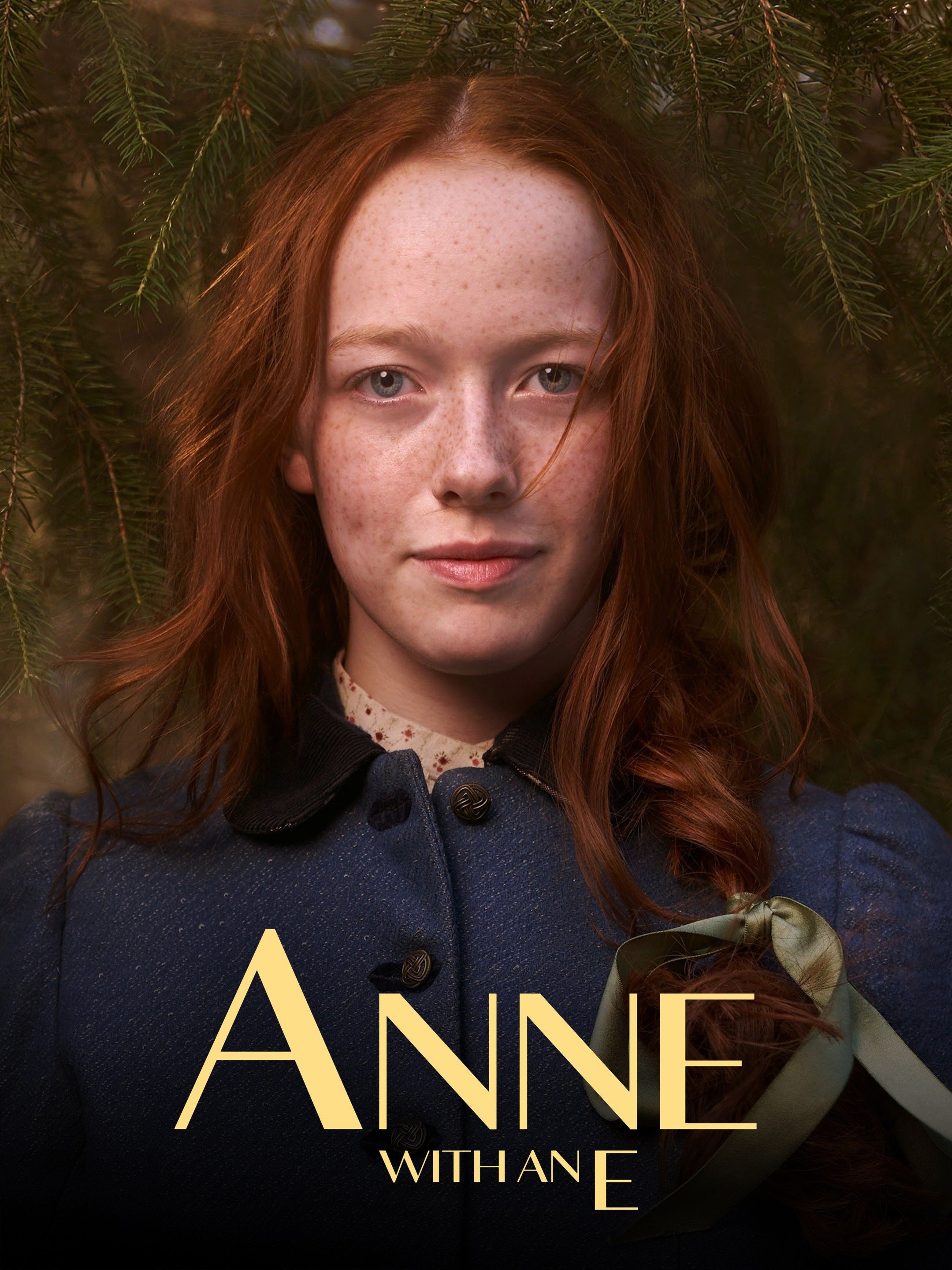
In Netflix and CBC’s Anne with an E, Anne Shirley begins the series at age 13 and reaches age 16 by the conclusion of Season 3 as she leaves for Queen's College. Actress Amybeth McNulty was 14 when cast in 2016 and turned 18 by the time the final season aired, allowing her personal growth to mirror Anne's maturation.
Unlike traditional adaptations of L.M. Montgomery’s 1908 novel Anne of Green Gables, Anne with an E approaches Anne Shirley’s teenage years through a modern, realistic lens. Showrunner Moira Walley-Beckett reinterpreted the classic narrative by confronting historical realities—such as trauma, gender inequality, systemic discrimination, and physical maturation—that earlier, idealized film and television versions glossed over. Understanding how the series handles Anne's aging process requires examining the timeline within the show, the real-world growth of its lead actress, and how this version compares to both Montgomery’s original literary canon and previous screen adaptations.
How Old Is Anne Shirley in Anne with an E? (Season-by-Season Breakdown)
The timeline of Anne with an E spans approximately three and a half years of character development. When the series opens, Anne is slightly older than her literary counterpart was at the start of the original book. In Montgomery's novel, Anne arrives at Green Gables at age 11. In the television series, she is introduced as a 13-year-old orphan whose childhood has been shaped by heavy physical labor and emotional neglect in foster care and at the Hopeton Orphanage.
- Season 1 (1896): Anne arrives at 13
- Season 2 (1897-1898): Explores identity at 14-15
- Season 3 (1899): Turns 16, heads to Queen's
Season 1: Age 13
When Matthew Cuthbert arrives at the Bright River train station, he expects a young boy to help on the farm. Instead, he meets 13-year-old Anne Shirley. Season 1 portrays the volatile emotions of early adolescence combined with severe post-traumatic stress disorder (PTSD). Anne struggles to fit into Avonlea society, where her fierce independence, unrefined manners, and traumatic flashbacks make her an outsider among her peers.
Season 2: Ages 14 to 15
Season 2 covers Anne’s mid-teen years. As she turns 14 and progresses toward 15, her narrative shifts from basic survival and acceptance to social awareness and personal identity. She navigates school rivalries, her initial artistic endeavors, and the broadening of her social circle to include characters like Cole Mackenzie and Sebastian "Bash" Lacroix. Her maturity is reflected in her growing capacity for empathy and her budding romantic feelings for Gilbert Blythe, though both characters remain emotionally guarded.
Season 3: Ages 16 to 17
Season 3 marks a major developmental milestone for Anne. The season explicitly celebrates her 16th birthday, an event that triggers her desire to learn about her biological parents and origin story. By the end of the season, Anne passes her entrance examinations for Queen's College and prepares to move to Charlottetown. As she stands on the precipice of young adulthood at age 16 (approaching 17), she establishes a clear self-identity, reconciles her grief over her birth parents, and finally solidifies her romantic partnership with Gilbert before they part for their respective higher-education pursuits.
| Season | Anne's Character Age | Amybeth McNulty's Filming Age | Primary Life Stage & Narrative Themes |
|---|---|---|---|
| Season 1 | 13 years old | 14–15 years old | Arrival at Green Gables, trauma processing, social isolation, seeking acceptance |
| Season 2 | 14–15 years old | 15–16 years old | Intellectual awakening, community integration, bodily changes, social justice awareness |
| Season 3 | 16 years old | 16–17 years old | 16th birthday, lineage discovery, Queen's College preparation, romantic maturity |
Amybeth McNulty’s Real Age vs. Character Age
Casting adolescent characters in long-form television often presents challenges when actors age faster than the show's internal timeline. Anne with an E avoided this disparity by casting Irish-Canadian actress Amybeth McNulty, who was close in age to Anne throughout the production.
McNulty was born on November 7, 2001. When she was selected out of more than 1,800 prospective actresses in 2016, she was 14 years old, playing a 13-year-old Anne. Principal photography for Season 1 took place in late 2016, making the age gap between actor and character negligible.
- 2016: McNulty (14) cast as Anne (13)
- 2017: Filming Season 2 — McNulty (15–16), Anne (14–15)
- 2019: Filming Season 3 — McNulty (17), Anne (16)
Because filming took place sequentially between 2016 and 2019, McNulty’s physical maturation occurred in tandem with Anne's growth on screen. Viewers watched McNulty grow from a young teen into a young adult across the 27 episodes. By the time Season 3 finished shooting in mid-2019, McNulty was nearly 18 years old, fittingly matching Anne’s transition out of childhood and into higher education.
This natural aging process added authenticity to the show's visual presentation. Rather than relying on young adults in their twenties to play high schoolers—a common practice in teen dramas—Anne with an E preserved the awkwardness, changing features, and physical evolution of real teenage development.
A Darker, More Mature "Anne": How the Series Matures the Character
The phrase "Anne with an E older" often refers to the mature, ground-level realism the series brought to L.M. Montgomery's work. Traditional screen adaptations, most notably Sullivan Entertainment's acclaimed 1985 Anne of Green Gables miniseries starring Megan Follows, focused on nostalgia, pastoral beauty, and lighthearted humor. While those adaptations remain beloved classics, Anne with an E showrunner Moira Walley-Beckett deliberately introduced grit, psychological depth, and modern social commentary.
- Traditional Adaptations (e.g., 1985 Miniseries)
- Pastoral nostalgia, episodic comedy, idealized Victorian aesthetic
- Anne with an E (2017–2019)
- Psychological realism, PTSD, physical adolescence, social equity, historical accuracy
Psychological Realism and Trauma
In original literature, Anne’s period in foster homes and orphanages is described primarily as a series of unpleasant chores and light neglect. Anne with an E re-examines this background through a modern understanding of childhood trauma. The older Anne of this series experiences vivid flashbacks, hypervigilance, panic attacks, and fear of physical punishment. The show does not treat her imagination merely as a whimsical quirk; it frames her fantasy world as a psychological defense mechanism developed to survive early abuse.
Physical Maturation and Female Health
The series directly addresses physical maturation in ways older adaptations avoided. Season 2 and Season 3 explicitly discuss menstruation, bodily changes, and the social stigmas surrounding female anatomy in late 19th-century Canada. When Anne gets her first period, the event is treated not as a comedic trope, but as a genuine, terrifying milestone for a girl who lacks a biological mother to guide her through adolescence. The show highlights how young women of the period were kept in ignorance regarding their own health and reproductive systems.
Expanded Social Scope and Modern Themes
As Anne grows older in the series, her world expands beyond the borders of Avonlea to tackle major social issues:
- Indigenous Experience and Systemic Oppression: Season 3 introduces Ka'kwet, a Mi'kmaq girl who becomes Anne's friend. The storyline depicts the dark history of Canada's residential school system, contrasting Anne's freedom to pursue education with the forced assimilation and imprisonment of Indigenous children.
- Queer Identity: The series expands the character of Aunt Josephine Barry and introduces Cole Mackenzie to explore LGBTQ+ identity in the 1890s, offering a safe harbor for youth who did not conform to rigid Victorian gender roles.
- Journalistic Freedom and Feminism: As Anne turns 16, she uses the town newspaper to publish an essay on gender equality and bodily autonomy following an assaultive incident at a school dance. This sparks a debate over free speech, censorship, and women's rights on Prince Edward Island.
The Book Timeline: How Old Does Anne Shirley Get in the Novels?
Because Anne with an E was canceled after three seasons, viewers only saw Anne reach age 16. However, in L.M. Montgomery’s original literary timeline, Anne Shirley’s life is documented from age 11 through age 53 across nine novels. Readers looking to follow an older Anne Shirley can see her full life progression across the published canon.
- Anne of Green Gables (Ages 11-16)
- Anne of Avonlea (Ages 16-18)
- Anne of the Island (Ages 18-22)
- Anne of Windy Poplars (Ages 22-25)
- Anne's House of Dreams (Ages 25-27)
- Anne of Ingleside (Ages 34-40)
- Rainbow Valley (Age 41)
- Rilla of Ingleside (Ages 49-53)
The Young Adult Years (Ages 16 to 22)
- Anne of Avonlea (1909): Covers ages 16 to 18. Anne becomes the schoolteacher at Avonlea Grammar School, managing a classroom of local children while joining the Avonlea Village Improvement Society.
- Anne of the Island (1915): Covers ages 18 to 22. Anne attends Redmond College in Nova Scotia, earning her Bachelor of Arts degree. This novel details her independence, living in a cottage with friends, rejecting early marriage proposals, and eventually recognizing her romantic love for Gilbert Blythe.
Adult Life, Marriage, and Career (Ages 22 to 40)
- Anne of Windy Poplars (1936): Covers ages 22 to 25. Anne serves as the principal of Summerside High School while Gilbert attends medical school. The book is structured around the love letters she sends to Gilbert during their three-year engagement.
- Anne's House of Dreams (1917): Covers ages 25 to 27. Anne and Gilbert marry and move to Four Winds Harbor, where Gilbert establishes his medical practice. The novel addresses adult themes of heartbreak, including the loss of their firstborn child, Joyce, and the deep friendships Anne forms with neighbors like Captain Jim and Leslie Moore.
- Anne of Ingleside (1939): Covers ages 34 to 40. Now settled in the large home of Ingleside in Glen St. Mary, Anne is the mother of six surviving children: Jem, Walter, twins Nan and Di, Shirley, and Rilla. The narrative shifts toward balancing maternal duties, domestic management, and preserving her romantic bond with Gilbert.
The Later Years and World War I (Ages 41 to 53)
- Rainbow Valley (1919): Focuses primarily on Anne’s children growing up alongside the local minister's motherless family, with Anne in a supportive, matriarchal role around age 41.
- Rilla of Ingleside (1921): Covers ages 49 to 53 during the events of World War I. Anne is portrayed as a mature mother enduring the agony of sending her sons (Jem, Walter, and Shirley) to the front lines in Europe. The novel is one of the few contemporary Canadian accounts of the home front during the Great War written from a female perspective.
Adaptation Comparison: How Old Anne Appears Across Screen Versions
Over the decades, multiple screen versions have adapted Montgomery's work, each choosing a different age scope and thematic tone for the character.
| Media Adaptation | Key Actor(s) | Character Age Range |
|---|---|---|
| Anne of Green Gables (1934) | Dawn O'Day (Anne Shirley) | 11 to 16 years old |
| Sullivan Miniseries (1985-87) | Megan Follows | 11 to 22+ years old |
| Anne with an E (2017-2019) | Amybeth McNulty | 13 to 16 years old |
| Anne of Green Gables (2016) | Ella Ballentine | 11 to 13 years old |
The 1985 Sullivan Entertainment Miniseries
Starring Megan Follows, this production remains the benchmark for classic adaptations. The initial 1985 miniseries covered Anne of Green Gables (ages 11–16). Its 1987 sequel, Anne of Avonlea (also known as Anne of Green Gables: The Sequel), combined elements of three books to show Anne from ages 16 to 22. In 2000, Sullivan produced a controversial third installment, Anne of Green Gables: The Continuing Story, which created an original storyline setting an adult Anne (played by Follows in her late twenties) against the backdrop of World War I.
The 2017 Netflix/CBC Series (Anne with an E)
Anne with an E concentrated exclusively on the early teenage years (ages 13–16). By prioritizing a serialized, character-driven format, the show spent 27 episodes exploring a three-year window that traditional movies typically cover in two to three hours. This allowed the narrative to examine the physical, social, and psychological nuance of every step toward young adulthood.
What Would an Older Anne Have Looked Like in Season 4?
The unexpected cancellation of Anne with an E in November 2019—following negotiations between Canadian broadcaster CBC and streaming service Netflix—left fans without a televised view of Anne’s adult years. Showrunner Moira Walley-Beckett had originally envisioned a five-season arc for the series.
- Season 1-3 (Produced)
- Ages 13–16
- Arrival at Green Gables
- Queen's Entrance Exams
- Initial Romance with Gilbert
- Season 4-5 (Unproduced Vision)
- Ages 17–22+
- Queen's College & Redmond University
- Adult Career & Literary Endeavors
- Maturation of Social Activism
Had the series continued into Season 4 and beyond, the narrative would have followed Anne and her peers as older young adults:
- Queen's College and Life in Charlottetown: Season 4 was positioned to follow Anne, Diana Barry, and Ruby Gillis as independent young women living away from home for the first time. The show would have contrasted their traditional Victorian upbringings with the urban, progressive environment of Charlottetown at the turn of the century.
- Long-Distance Relationship with Gilbert: With Gilbert attending university to pursue medicine and Anne focusing on teaching and writing, Season 4 would have explored the adult challenges of long-distance communication, ambition, and personal sacrifice.
- The Ka'kwet Storyline: One of the main unresolved cliffhangers from Season 3 was the ongoing trauma of Ka'kwet and her family at the residential school. An older, more educated Anne likely would have used her developing journalistic voice to fight for Ka'kwet's release and expose the state-sanctioned abuses occurring on Prince Edward Island.
- Professional Aspirations: Rather than transitioning directly into marriage, an older Anne in Walley-Beckett's universe would have likely pushed against the domestic expectations of the era, establishing herself as an editor, author, or activist before settling down.
Frequently Asked Questions
How old is Anne Shirley at the end of Anne with an E?
Anne Shirley is 16 years old at the end of Season 3. The final episodes celebrate her 16th birthday, document her passing the Queen's College entrance examinations, and portray her departure for higher education in Charlottetown.
How old was Amybeth McNulty when she filmed Anne with an E?
Amybeth McNulty was 14 years old when cast in 2016. She turned 18 years old in November 2019, shortly after the third and final season completed its initial broadcast run on CBC.
Why did Anne with an E make Anne older and darker than the books?
Showrunner Moira Walley-Beckett intended to create a grounded, historically accurate depiction of late 19th-century Canada. By starting Anne at age 13 and incorporating the psychological effects of childhood trauma, the show aimed to explore real issues faced by orphans, women, and minority groups during that era.
Did Anne and Gilbert get together in Anne with an E?
Yes. In the Season 3 finale ("The Feeling of Rightness"), Anne and Gilbert confess their romantic feelings for one another and kiss before departing for their respective colleges—Anne to Queen's College in Charlottetown and Gilbert to university in Toronto.
Is there an adult Anne Shirley movie or spin-off planned?
As of 2026, there are no official plans or greenlit productions for a Season 4 or a continuation movie of Anne with an E. Although cast members and creator Moira Walley-Beckett expressed interest in a feature film following the show's 2019 cancellation, the rights and co-production agreements between CBC and Netflix remain inactive.
Next Steps for Fans Seeking the "Older Anne" Storyline
If you finished Anne with an E and want to experience Anne Shirley’s transition into full adulthood, consider the following avenues:
- Read the Literary Sequels: Pick up L.M. Montgomery’s novels starting with Anne of Avonlea (her years as a young teacher) and Anne of the Island (her college years in Kingsport). These books provide the direct literary continuation of her young adult life.
- Watch the 1985–1987 Sullivan Adaptations: To see a visual depiction of Anne as a college student, teacher, and young woman, watch Megan Follows in Anne of Green Gables and Anne of Green Gables: The Sequel.
- Explore Amybeth McNulty’s Adult Filmography: Viewers interested in following actress Amybeth McNulty in older, mature roles can watch her performances in Stranger Things (Season 4, as Vickie) and the film drama All My Puny Sorrows.