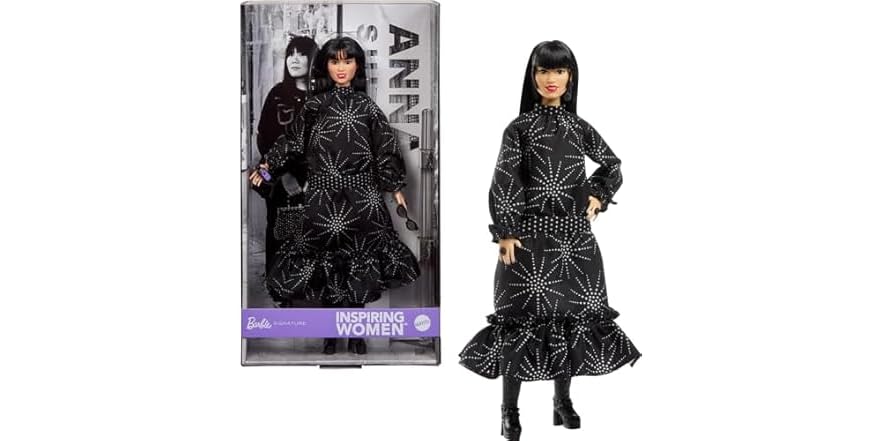
The Anna Sui Barbie doll represents a significant intersection of high-fashion couture and cultural representation, serving as a celebrated milestone in Mattel’s efforts to honor Asian American influence within the global fashion industry. By fusing Anna Sui’s iconic aesthetic with the Barbie brand, the collaboration highlights the importance of diversity in design and provides collectors with a tangible artifact of contemporary American multicultural identity.
The Genesis of a Collaborative Vision
The partnership between Anna Sui and Mattel was never merely about creating a mass-market toy; it was an exercise in bridging the gap between high-fashion runways and the world of collectible dolls. Anna Sui, an American fashion designer of Chinese descent, has built a brand defined by its eclectic, bohemian, and culturally layered aesthetic. When Mattel sought to honor the impact of Asian American voices in fashion, Sui was a natural choice due to her ability to synthesize historical references, ethnic motifs, and modern street style.
The resulting Barbie doll is characterized by its meticulous attention to detail, reflecting Sui’s personal signature style. The doll features a bold, layered ensemble that captures the "Sui look"—often encompassing rich colors, intricate patterns, and a sense of whimsy that defies traditional, monochromatic design standards. For the collector and the cultural observer alike, the doll serves as a marker of the 21st-century shift toward recognizing the specific contributions of Asian American designers who have successfully challenged and reshaped the Western fashion canon.
Design Elements and Aesthetic Significance
The Anna Sui Barbie is not just an aesthetic object; it is a technical display of material sourcing and design fidelity. The construction of the doll’s outfit relies on the same principles found in Sui’s runway collections: the layering of textures and the juxtaposition of contrasting patterns.
Key elements often featured in the Anna Sui Barbie release include:
- Textile Integration: The use of high-quality fabrics that mimic the silks, velvets, and complex weaves Sui uses in her seasonal collections.
- Cultural Fusion: The doll frequently incorporates motifs derived from Chinese cultural aesthetics, reinterpreted through a contemporary American lens.
- Signature Styling: A commitment to the specific "rock-and-roll" and bohemian aesthetic that Sui popularized in the 1990s and has maintained throughout her career.
By translating these design choices into a miniature format, the doll acts as a educational tool for enthusiasts, demonstrating how identity can be woven into the fabric of a garment. It highlights that the "Asian American heritage" component is not just about a label, but about the specific, learned experiences of an artist operating within a global marketplace.
The Role of Collectible Dolls in Cultural Documentation
In the landscape of modern collecting, dolls have evolved from simple playthings to artifacts of cultural history. The Anna Sui Barbie is part of a broader "Designer Series" that captures moments in the evolution of fashion. By documenting these collaborations, Mattel participates in the preservation of design history.
The value of this doll for the Asian American community lies in the normalization of such representation. When a major, globally recognized brand like Barbie partners with a prominent Asian American designer to celebrate their heritage, it validates that individual’s place at the top of the cultural hierarchy. This is particularly relevant for younger generations, who see these dolls as reflections of their own potential and the richness of their cultural background.
Technical and Collectibility Considerations
For collectors looking to acquire or verify the Anna Sui Barbie, several technical aspects must be considered. As of 2026, the secondary market for these dolls is established, with pricing often contingent on the doll’s condition, original packaging (NRFB—Never Removed From Box status), and the specific year of release.
When evaluating a piece for a collection, the following factors are primary:
- Packaging Integrity: Collectors prioritize boxes that have not been exposed to direct sunlight or humidity, which can degrade the synthetic fibers used in the clothing.
- Accessory Completeness: The Anna Sui Barbie often comes with specific, miniaturized fashion accessories—such as miniature handbags, footwear, or jewelry—that must be present to maintain the set's market value.
- Documentation: Original certificates of authenticity (COA) issued by Mattel are essential for verification. These documents serve as the definitive proof of the collaboration’s legitimacy.
Comparison Table: Design Features of Signature Collectible Dolls
| Feature | Anna Sui Barbie | General Designer Series Barbie |
|---|---|---|
| Design Focus | Cultural Fusion/Bohemian | Brand-Specific Silhouette |
| Material Quality | High-Grade Synthetic/Silk Blends | Standard Vinyl/Polyester |
| Cultural Significance | High (Heritage Centered) | Variable (Brand Centered) |
| Market Target | Adult Collectors/Cultural Enthusiasts | General Collectors |
Addressing Challenges in Representation
While the Anna Sui Barbie serves as a bridge between high fashion and cultural identity, it is important to acknowledge the complexity of such representations. Critics and design historians often debate the balance between corporate commodification and genuine celebration of heritage.
The success of the Anna Sui collaboration is largely attributed to the agency Sui maintained throughout the process. Unlike some past partnerships where the designer was merely a consultant, Sui’s involvement in the aesthetic direction ensured that the final product remained faithful to her artistic vision. This transparency in the design process is what separates a meaningful cultural collaboration from a generic marketing exercise.
Practical Advice for Collectors and Enthusiasts
If you are currently looking to add an Anna Sui Barbie to your collection in 2026, or if you are researching the doll for academic purposes, consider the following steps:
- Verification: Always inspect the doll’s markings and the included certificate of authenticity against official records provided by Mattel or reputable archival fashion sites.
- Preservation: If displaying the doll, avoid high-intensity lighting or UV rays, which can cause fading of the delicate fabrics used in the designer-series garments.
- Networking: Join established collector communities that focus on designer-collaboration dolls. These groups often share information on verified auction listings and provenance.
Frequently Asked Questions
1. Is the Anna Sui Barbie considered a limited edition? Yes, most designer-collaboration dolls are produced in specific, finite runs. This limitation is a standard practice in the collectible market to maintain scarcity and value, making them distinct from the standard mass-produced Barbie lines.
2. Where can I find accurate pricing for this doll in 2026? Pricing is best verified by cross-referencing recent completed sales on major auction platforms rather than current asking prices. Prices fluctuate based on the specific edition year and condition of the doll.
3. Does the doll reflect Anna Sui’s specific cultural heritage? The doll incorporates themes and motifs from Sui’s career, which is deeply rooted in her background as a first-generation American designer of Chinese descent. The design choices are intentional reflections of her personal style evolution.
4. Can I use this doll as a toy for play? While technically a product of the Barbie brand, the Anna Sui doll is categorized as a "Collectible" or "Adult Collector" item. These are constructed with delicate materials and specialized accessories that are not designed for active play and are likely to sustain damage if used as such.
5. How do I clean or maintain the doll’s outfit? It is strongly advised against attempting to wash or clean the doll’s clothing. Most, if not all, of the fabrics are treated during the manufacturing process. Attempting to clean them can cause permanent staining, fraying, or the loss of structural integrity.
Next Steps for Collectors
To further your understanding of the Anna Sui Barbie, we recommend consulting the official archives of the Fashion Institute of Technology (FIT) or the public records provided by the Anna Sui brand archives. These institutions often house documentation regarding the designer's collaborations. If your primary goal is to purchase an authentic piece, focus your efforts on reputable auction houses that provide detailed provenance and condition reports, ensuring that you are acquiring a piece that honors the heritage and artistry it was designed to celebrate.