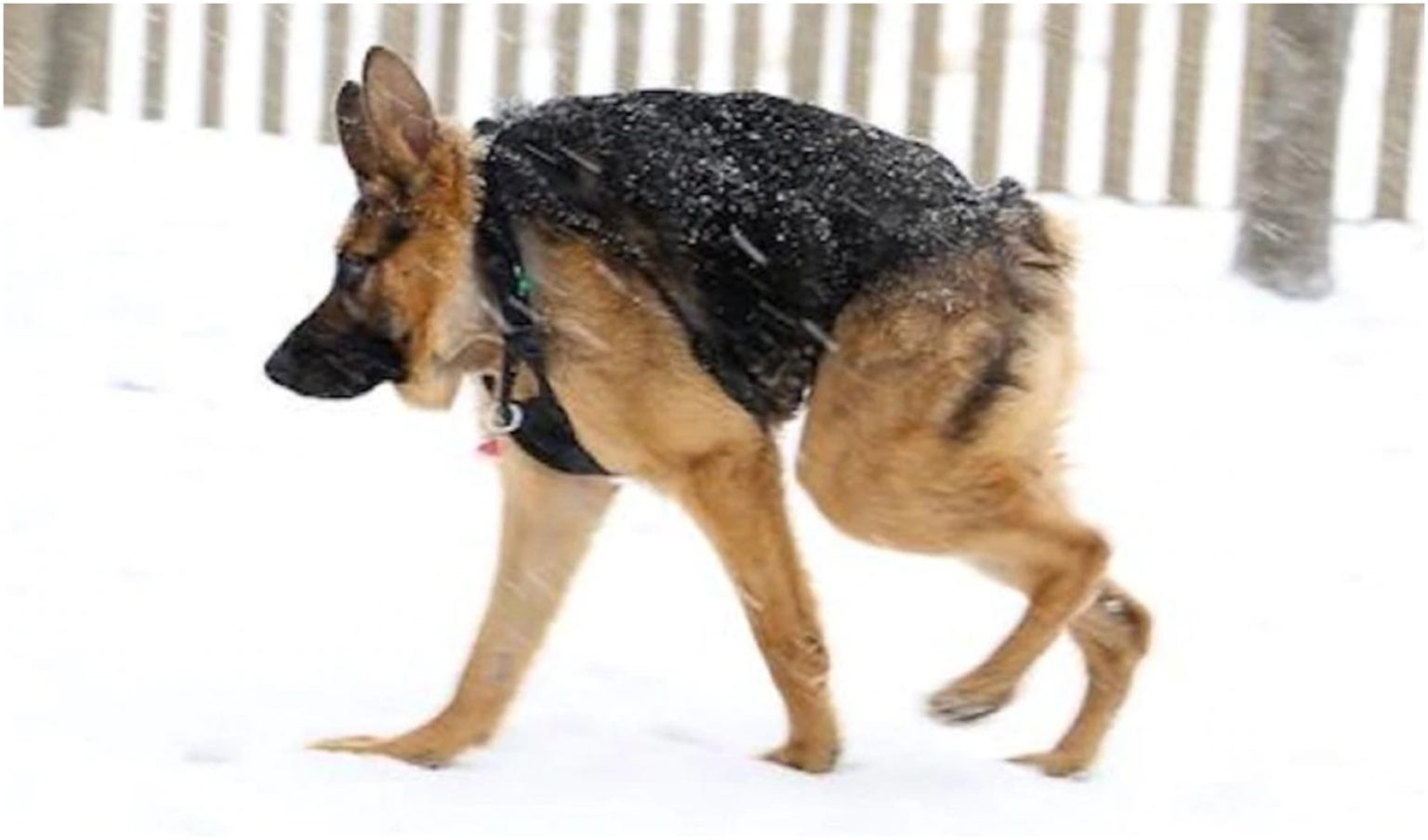
Short spine syndrome (SSS) is an extremely rare congenital condition characterized by a severe shortening of the vertebral column due to the compression and fusion of vertebrae. Primarily identified in dogs, this genetic mutation results in a "hunchbacked" appearance, a lack of a discernible neck, and a significantly shortened torso. Despite their unusual physical structure, many animals with short spine syndrome live high-quality, relatively long lives when provided with specialized care and environmental adaptations.
Defining Short Spine Syndrome
Short spine syndrome is not a disease but a rare genetic mutation or congenital malformation. In animals affected by SSS, the vertebrae—the individual bones that make up the spine—fail to harden and elongate properly during embryonic development. Instead, they remain in a compressed, often fused state. This creates a skeletal structure where the body is significantly shorter than it should be in proportion to the animal's limbs.
The condition is most famously documented in domestic dogs, with only a few dozen confirmed cases reported globally over the last century. While the visual impact is striking, the syndrome is primarily structural. The spinal cord itself is often intact but must adapt to the shortened housing provided by the compressed vertebrae. This leads to a unique silhouette: the animal typically has a sloped back, a barrel-like chest, and legs that appear disproportionately long.
The Biological Mechanism of Spinal Compression
To understand SSS, one must look at the process of osteogenesis and vertebral segmentation. In a typical embryo, the vertebral column develops from somites, which are blocks of tissue that eventually differentiate into bone, muscle, and skin. For an animal with short spine syndrome, the signal to segment these vertebrae becomes garbled.
Rather than forming distinct, articulated joints that allow for a wide range of motion, the vertebrae fuse into a solid or semi-solid mass. This fusion most often occurs in the thoracic (mid-back) and lumbar (lower back) regions. Because the cervical vertebrae (neck) are also frequently compressed, the animal’s head appears to be attached directly to its shoulders.
Genetic Origins and the Role of Hox Genes
As of 2026, veterinary geneticists continue to investigate the precise triggers for short spine syndrome. The prevailing theory points to mutations in the Hox genes (Homeobox genes). These genes act as the "master architects" of the body, determining where limbs, organs, and skeletal structures are placed during development.
A mutation in specific Hox gene clusters can lead to "segmentation defects of the vertebrae" (SDV). While most SDV cases result in minor misalignments or individual fused vertebrae, SSS represents an extreme systemic expression of this defect. It is believed to be an autosomal recessive trait, meaning both parents must carry the specific mutated gene for the offspring to manifest the syndrome. This explains why the condition is so rare; even in litters where both parents are carriers, the probability of a puppy inheriting both recessive alleles is only 25%.
Research published by organizations like the UC Davis Veterinary Genetics Laboratory has helped map canine genomes, though SSS remains elusive due to the small sample size of living subjects. There is no evidence to suggest that SSS is "contagious" or caused by environmental toxins during pregnancy; it is purely a matter of genetic inheritance.
Physical Characteristics and Identification
Identifying an animal with short spine syndrome is straightforward due to its distinct phenotype. While every case varies in severity, several hallmark physical traits are consistent across nearly all documented instances.
1. Absence of a Functional Neck
One of the most prominent features is the "neckless" appearance. The cervical vertebrae are so tightly packed that the animal cannot turn its head independently of its body. To see something to their left or right, the animal must rotate its entire torso.
2. Sloped or Hunched Back
The spine does not follow a straight or gently curved horizontal line. Instead, it slopes sharply downward from the shoulders toward the hindquarters. In many cases, the fusion of the vertebrae creates a permanent "hunch," similar in appearance to kyphosis in humans.
3. Disproportionate Limbs
The legs of an animal with SSS are usually of normal length for their breed or mix. Because the body is so short, the legs appear exaggeratedly long. This often leads to a unique gait; many SSS dogs move with a "crab-like" motion or a "bunny hop" because their rear legs are positioned so close to their front legs.
4. Modified Tail and Hindquarters
The tail is frequently affected, appearing bobbed, twisted, or entirely absent. The pelvic area is often tilted at an unusual angle, which can influence how the animal sits or eliminates waste.
5. Internal Organ Compression
Because the thoracic cavity is significantly smaller than average, the internal organs—specifically the heart, lungs, and digestive tract—are crowded. This does not necessarily mean the organs are malformed, but they have less space to function. This can lead to a slightly "bloated" appearance even when the animal is at a healthy weight.
Historical and Famous Cases
The rarity of short spine syndrome has turned several affected dogs into "ambassadors" for special-needs pet adoption. These cases have provided valuable data for veterinary science regarding the long-term prognosis of the condition.
- Quasi Modo: A mixed-breed dog who won the World’s Ugliest Dog contest in 2015. Despite the unfortunate name of the contest, Quasi Modo became a symbol of the health and happiness possible for SSS dogs, living a full life in Florida.
- Pig the Unusual: An Akita mix from Alabama who gained internet fame in the mid-2010s. Pig’s case was notable because she was missing several ribs and had a spine that ended much earlier than normal, yet she maintained high mobility.
- Cuda the Pit Bull: One of the most well-documented cases of SSS. Her owner maintained a detailed blog and social media presence that educated the public on the daily care requirements and the lack of chronic pain associated with the condition.
These cases have proven that while the animals look different, they are not inherently "suffering." With proper management, their lifespans can approach those of typical dogs.
Veterinary Care and Health Challenges
Animals with short spine syndrome require a specific medical management plan. While the condition itself is not a death sentence, the physical structure of the animal creates secondary health risks that owners must monitor.
Respiratory and Cardiac Efficiency
With a compressed chest, the lungs may not be able to expand as fully as in a typical dog. This makes animals with SSS more susceptible to overheating and respiratory distress during intense exercise. Owners are generally advised to avoid strenuous activity in high humidity or heat. Regular cardiac checkups are essential to ensure the heart is not under undue stress from the compressed thoracic space.
Digestive Management
Because the stomach and intestines are crowded, SSS dogs often cannot handle large meals. Feeding several small meals throughout the day, rather than one or two large ones, helps prevent gastric distress and "bloat" (GDV), which could be fatal in an animal with limited internal space. Using raised bowls is a necessity, as these animals cannot easily lower their heads to the floor to eat or drink.
Mobility and Joint Health
The unusual gait of an SSS animal puts non-standard stress on the joints, particularly the hips and elbows. Early-onset arthritis is a common concern. Supplements such as glucosamine and chondroitin are often recommended starting in young adulthood. Maintaining a lean body weight is the most critical factor in SSS care; even a small amount of excess weight can put catastrophic pressure on the compressed spine and joints.
Dermatological Concerns
Because these animals cannot turn their heads to groom themselves, they often develop skin issues in hard-to-reach areas. The skin around the neck and base of the tail can become folded or "bunched," leading to moisture traps and bacterial infections (pyoderma). Regular manual grooming and cleaning by the owner are required.
Comparative Anatomy: SSS vs. Standard Morphology
The following table illustrates the primary anatomical differences between a typical canine and one diagnosed with short spine syndrome.
| Anatomical Feature | Standard Canine Morphology | Short Spine Syndrome (SSS) |
|---|---|---|
| Vertebral Count | Approx. 30 (excluding tail) | Variable; often fewer or fused units |
| Cervical Range | High; 180-degree head rotation | Minimal; "fixed" head position |
| Thoracic Cavity | Elongated; ample organ spacing | Compressed; organs crowded |
| Gait | Four-beat walk / Two-beat trot | Bunny hop or "crab" walk |
| Grooming Ability | Self-sufficient | Dependent on owner assistance |
| Tail Structure | Extending from sacrum | Often absent, kinked, or vestigial |
| Dietary Needs | Standard portions | Multiple small, frequent meals |
Living with a Special Needs Pet: Practical Guidance
Adopting or caring for an animal with short spine syndrome is a long-term commitment that involves modifying the environment to suit the animal's physical limitations.
Environmental Modifications
Because SSS animals have limited neck mobility, the "world" should be brought to their eye level.
- Raised Feeders: This prevents spinal strain during mealtime.
- Ramps and Steps: Jumping on or off furniture can be dangerous for a compressed spine. Ramps are essential for accessing beds or vehicles.
- Harnesses vs. Collars: A standard collar should never be used for walking an SSS dog. Because their neck is nearly non-existent and often fused, a collar can cause severe tracheal damage or spinal injury. A specialized, supportive Y-shaped harness is the only safe option.
Socialization and Behavior
Animals with SSS are often visually misperceived by other dogs. In the "canine language," a hunched back and raised hackles (which SSS dogs often appear to have permanently) are signs of aggression or fear. This can lead to misunderstandings during social interactions at dog parks. Owners should be prepared to advocate for their pet and monitor body language closely, as the SSS dog may be sending "aggressive" signals entirely by accident due to their skeletal structure.
Quality of Life Indicators
Veterinary professionals use specific markers to assess the quality of life for SSS pets. If the animal can eat, eliminate without pain, move independently, and interact socially, their quality of life is considered high. Pain management is rarely a daily requirement unless secondary arthritis has set in.
Ethical Breeding and the Future of SSS Research
From a 2026 perspective, the veterinary community remains firm: short spine syndrome should never be intentionally bred. While SSS dogs like Cuda and Quasi Modo have lived happy lives, the condition carries a high risk of stillbirth and neonatal mortality. Breeding for "extreme" looks that compromise the fundamental biological functions of an animal is considered a violation of animal welfare standards by the World Small Animal Veterinary Association (WSAVA).
Genetic testing is the primary tool for prevention. By identifying carriers of the recessive traits associated with vertebral segmentation defects, breeders can ensure that two carriers are never paired. This scientific approach aims to eliminate the accidental occurrence of the syndrome while continuing to provide the best possible care for those already living with it.
Frequently Asked Questions
Is short spine syndrome painful for the animal?
In most documented cases, short spine syndrome itself is not inherently painful. The vertebrae are fused, meaning they do not "slip" or pinch nerves in the way a herniated disc might in a typical dog. However, the secondary effects—such as strained muscles from an unusual gait or joint pressure—can cause discomfort if not managed with proper weight control and supplements.
Can short spine syndrome affect cats or other animals?
While SSS is most frequently reported in dogs, similar congenital spinal deformities have been observed in other species, including cats and even wild animals like goats or cattle. However, in many non-canine species, these mutations are often linked to other lethal defects, meaning the animals rarely survive past birth. The "Manx" cat breed has a naturally occurring spinal mutation, but it is distinct from the systemic compression seen in SSS.
What is the average life expectancy for a dog with SSS?
There is no "standard" life expectancy because the sample size is so small. However, famous cases have shown that these dogs can live well into their senior years. Quasi Modo lived to be 14, and Cuda lived to be 10. Life expectancy depends heavily on the level of organ compression and the quality of preventative veterinary care.
Does an SSS dog need surgery?
Surgery is rarely performed to "fix" the spine, as the fusion is too complex and extensive. Medical intervention is usually limited to treating secondary issues, such as corrective surgery for stenotic nares (pinched nostrils) to improve breathing or dental extractions if the jaw is also affected by the skeletal shortening.
How rare is short spine syndrome?
It is exceptionally rare. Since the first formal veterinary descriptions in the 1700s (and more modern records in the 20th century), fewer than 50-60 confirmed cases have been documented worldwide. Many "hunchbacked" dogs seen in shelters are actually suffering from untreated injuries or different conditions like IVDD (Intervertebral Disc Disease), rather than true short spine syndrome.
Final Recommendations for Caretakers
If you are caring for an animal with short spine syndrome, the most effective strategy is a proactive, low-impact lifestyle. Focus on weight management as your primary health goal; a lean dog is a mobile dog. Work closely with a veterinarian familiar with orthopedic anomalies to establish a baseline of X-rays and respiratory function.
By providing raised feeding stations, using a supportive harness, and maintaining a consistent grooming routine, you can ensure that an animal with this rare condition enjoys a life defined by their personality rather than their physical limitations. For those interested in supporting these animals, consider donating to special-needs rescues that provide the intensive initial medical screening these unique pets require.