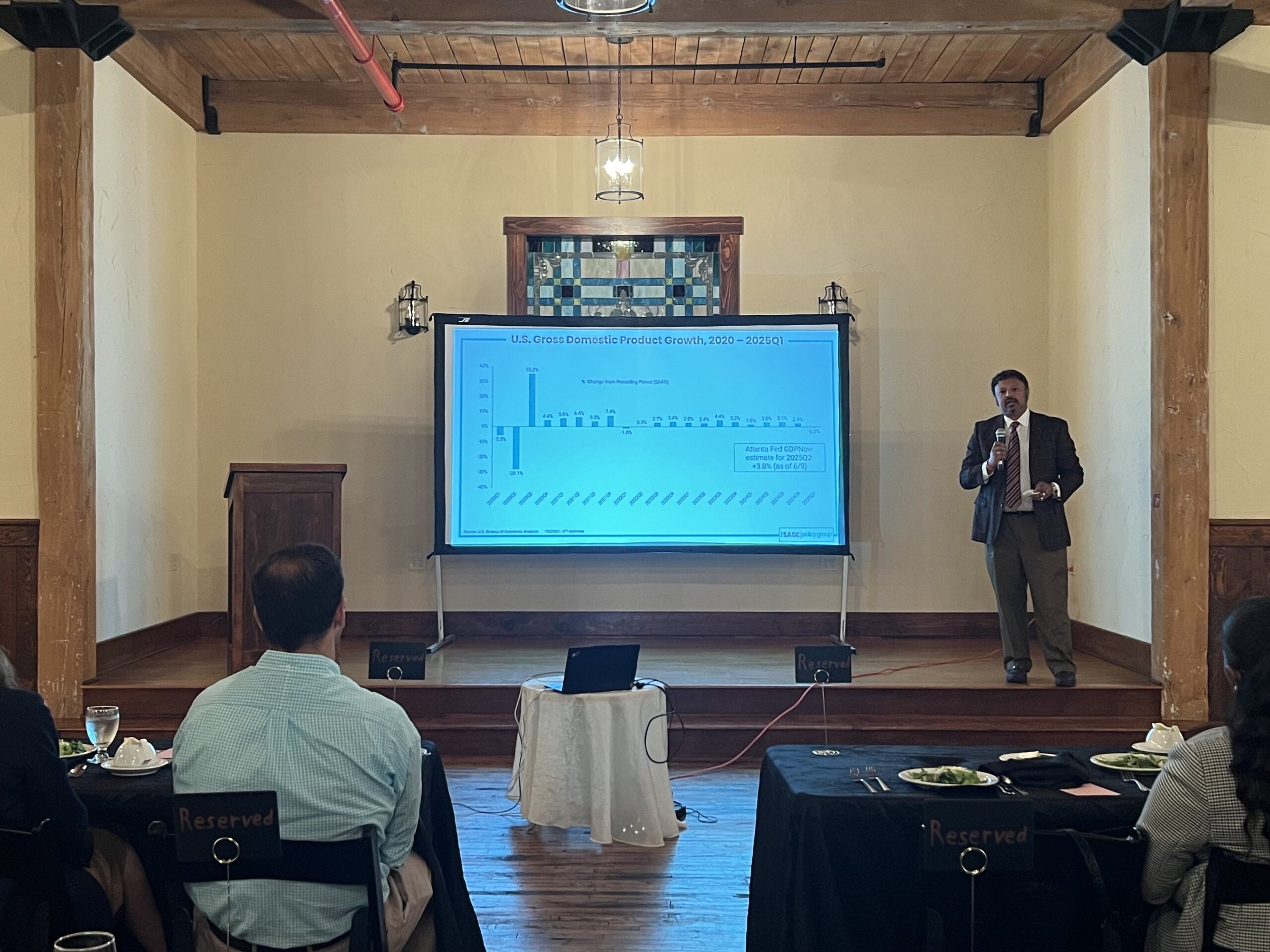
As of 2026, the estimated net worth of Anirban Basu is between $5 million and $15 million. This valuation is primarily attributed to his long-standing role as the Chairman and CEO of Sage Policy Group, Inc., his high-frequency engagement as a premier keynote speaker, and his strategic positions as Chief Economist for several major national trade associations.
Anirban Basu is not a traditional "celebrity" whose wealth is tracked by mainstream entertainment tabloids; rather, his financial standing reflects the successful monetization of high-level economic expertise. For over two decades, Basu has positioned himself at the intersection of data science, public policy, and corporate strategy. By specializing in the construction and real estate sectors—industries that rely heavily on economic forecasting for capital allocation—he has created a specialized niche that commands premium fees. To understand the composition of his net worth, one must examine the diverse revenue streams he has cultivated through consulting, speaking, and institutional leadership.
The Pillars of Anirban Basu’s Wealth Generation
The financial profile of a top-tier economist like Basu is rarely built on a single salary. Instead, it is a mosaic of business equity, professional service fees, and long-term advisory contracts. In 2026, Basu’s influence remains a cornerstone of the construction industry’s strategic planning.
Sage Policy Group: The Core Business Asset
The most significant contributor to Basu’s net worth is his ownership of Sage Policy Group, Inc., an economic and policy consulting firm based in Baltimore, Maryland. Founded in 2004, the firm has spent more than twenty years building a reputation for delivering actionable data to both public and private sector clients.
Sage Policy Group specializes in several high-margin areas:
- Economic Impact Studies: These are essential for developers and municipalities looking to justify large-scale infrastructure projects or tax incentives.
- Fiscal Analysis: Helping government entities understand the long-term tax implications of policy changes.
- Market Research: Providing private equity firms and developers with granular data on regional economic health.
As the principal owner and face of the firm, Basu captures a significant portion of the firm's profits. In the consulting world, a boutique firm with a national reputation can generate several million dollars in annual revenue with relatively low overhead, significantly boosting the principal's personal wealth over time.
Chief Economist Roles and Institutional Ties
Basu’s financial stability is further reinforced by his ongoing roles as the Chief Economist for prominent organizations. These are not merely honorary titles; they involve deep analytical work and consistent communication with thousands of member companies.
Key organizations include:
- Associated Builders and Contractors (ABC): One of the largest trade associations in the United States. Basu’s work here involves tracking the Construction Confidence Index and providing monthly updates on material prices and labor trends.
- Construction Financial Management Association (CFMA): His role here focuses on the financial health of construction firms, linking economic trends to balance sheet management.
- International Sign Association (ISA): A niche but lucrative sector where Basu provides tailored economic outlooks.
These institutional roles provide steady, recurring retainer income, which serves as a financial bedrock independent of the fluctuating demand for one-off consulting projects.
The Economics of Keynote Speaking
One of the most visible and lucrative aspects of Anirban Basu’s career is his work as a public speaker. Basu is renowned for his ability to transform dry economic data into engaging, humorous, and digestible presentations—a skill often referred to in the industry as "the Basu effect."
High-Volume Engagement Model
In a typical year, Basu delivers well over 100 speeches. By 2026, his status as a "must-have" speaker for construction and real estate conferences has only solidified.
- Booking Fees: Top-tier economic speakers typically command fees ranging from $15,000 to $35,000 per engagement, depending on the venue and the depth of the customized research required.
- Scalability: Unlike consulting projects that require weeks of labor, a keynote speech is a high-margin product. While it requires preparation, the actual delivery is time-efficient, allowing Basu to generate significant revenue across a busy conference season.
- Ancillary Benefits: Every speech serves as a marketing event for Sage Policy Group, leading to new consulting contracts and deepening his market penetration.
Specialized Industry Authority
Basu’s value as a speaker is enhanced by his deep specialization. While many economists speak broadly about the macroeconomy, Basu speaks specifically to the Construction Backlog Indicator and labor shortages. This specificity makes him indispensable to industry groups that need more than general financial advice; they need "boots on the ground" economic intelligence.
Educational Foundation and Professional Credentials
A key factor in Basu’s ability to command high fees is his extensive academic and legal background. His credentials provide the "intellectual gravity" required to advise multi-billion dollar industries.
Basu’s education includes:
- Georgetown University: A Bachelor of Science in Foreign Service.
- University of Maryland, College Park: A Master’s in Public Policy.
- University of Maryland School of Law: A Juris Doctor (JD).
- University of Maryland, Baltimore County (UMBC): A PhD in Health Policy.
The combination of a PhD and a Law degree (JD) is rare and highly valuable in the consulting world. It allows Basu to provide insights that are not only economically sound but also legally and politically informed. This multi-disciplinary approach is a significant "moat" that protects his market position from competitors who may only have an economics background.
Comparative Financial Standing in Economic Consulting
To contextualize Anirban Basu's net worth, it is helpful to compare the typical earnings structure of different types of economists.
| Economist Category | Primary Income Source | Estimated Annual Earnings | Wealth Potential |
|---|---|---|---|
| Academic Economist | University Salary / Grants | $120k - $250k | Moderate |
| Corporate/Bank Economist | Corporate Salary / Bonuses | $300k - $800k | High |
| Boutique Firm CEO (Basu) | Business Profits / Speaking / Retainers | $1M - $3M+ | Very High |
| Government Economist | GS-Scale Salary | $100k - $180k | Low/Stable |
As shown in the table above, the "Boutique Firm CEO" path taken by Basu offers the highest ceiling for wealth accumulation because it combines professional fees with business equity and high-margin intellectual property (speaking/writing).
Assets and Real Estate Holdings
While specific details regarding Basu's personal investment portfolio are private, several inferences can be made based on his professional history and residency. Basu is a long-time resident of the Baltimore-Washington metropolitan area, a region known for high property values and significant real estate appreciation.
Investment strategies for high-net-worth professionals like Basu typically include:
- Real Estate: Ownership of commercial office space for his firm and residential properties in the Maryland area.
- Equity Investments: A diversified portfolio of stocks and bonds, likely managed with a focus on long-term capital preservation.
- Business Equity: The most significant asset remains the valuation of Sage Policy Group. If the firm were ever acquired by a larger global consulting entity, the payout would likely be in the multi-million dollar range.
Public Service and Advisory Board Contributions
Beyond his primary business interests, Basu has served on numerous boards and commissions, which, while often lower-paying than his private consulting, add to his prestige and professional network.
- Maryland Economic Development Commission: Serving as a chair or member on state boards positions him as a key influencer in regional economic policy.
- University Advisory Boards: His involvement with institutions like UMBC reinforces his ties to the academic community and the talent pipeline.
- Non-Profit Boards: These roles contribute to his social capital, which, while not a direct financial asset, facilitates the high-level networking required to sustain a multi-million dollar consulting practice.
Factors Influencing Net Worth in 2026
The economic landscape of 2026 has presented both challenges and opportunities for Basu. The volatility of the post-2020 economy has actually increased the demand for his services. In times of uncertainty, corporations and trade groups are more willing to pay a premium for "clarity."
Basu’s net worth has likely seen an upward trajectory due to:
- Inflation-Adjusted Fees: Professional service fees for top-tier consultants have risen significantly over the past five years.
- Digital Scalability: The ability to offer "Virtual Keynotes" alongside in-person events has allowed him to increase his volume of engagements without a corresponding increase in travel time.
- The Infrastructure Boom: Persistent federal and state spending on infrastructure has kept the construction industry—Basu's primary client base—highly active and in need of his specific brand of forecasting.
Frequently Asked Questions
How did Anirban Basu become famous in the construction industry?
Anirban Basu built his reputation by providing highly specific data points that contractors actually use, such as the Construction Backlog Indicator and the ABC’s Construction Input Price reports. His ability to deliver this information with a sense of humor made him a favorite at national conventions, leading to a "viral" reputation within the industry.
Is Anirban Basu a billionaire?
No. While extremely successful, Basu’s wealth is consistent with that of a top-tier professional consultant and business owner. Billionaire status is typically reserved for founders of large-scale technology companies, major hedge fund managers, or industrial titans. A net worth in the $5 million to $15 million range places him in the top 1% of earners in the United States.
What is Sage Policy Group?
Sage Policy Group is an economic consulting firm founded by Anirban Basu. It provides services including fiscal impact studies, legislative analysis, and economic forecasting. The firm is headquartered in Baltimore and serves clients ranging from small municipalities to Fortune 500 companies. Information about their services can be found on the Sage Policy Group official website.
Does Anirban Basu work for the government?
Basu often consults for government entities and has served on various state-appointed commissions, such as the Maryland Economic Development Commission. However, he is primarily a private-sector entrepreneur and the CEO of his own firm.
Where can I find Anirban Basu's latest economic reports?
His reports are frequently published through the Associated Builders and Contractors (ABC) and the Construction Financial Management Association (CFMA). These organizations regularly host his economic updates and "Construction Outlook" whitepapers.
Summary of Financial Trajectory
Anirban Basu’s net worth is a testament to the value of specialized knowledge. By mastering a specific sector (construction economics) and a specific medium (dynamic public speaking), he has avoided the "commodity trap" that many general economists face. His wealth is not just a collection of assets but a reflection of a brand that has become synonymous with economic intelligence in the built environment.
For those tracking his career in 2026, Basu remains a prime example of how a professional can leverage multiple degrees and a unique personality to build a robust financial legacy. His "net worth" is essentially the market's valuation of his ability to predict the future of the American economy.
Professional Advice Limitation: Financial estimates provided in this article are based on public career data, industry standards for consulting fees, and comparative analysis of similar professional profiles. Actual net worth figures for private individuals are not matters of public record and may vary based on private investments, debts, and undisclosed assets.