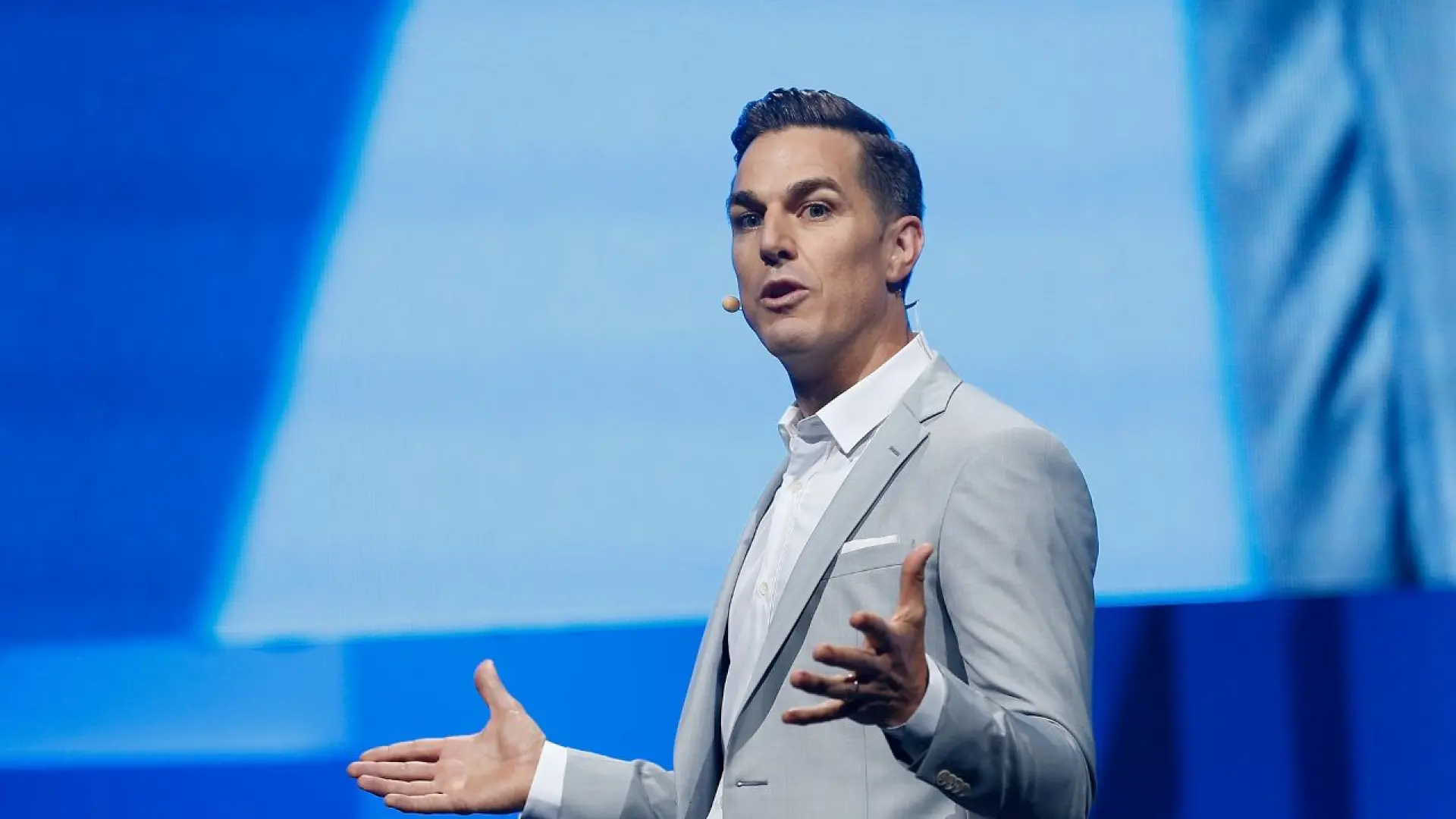
As of 2026, Andrew Wilson serves as the Chief Executive Officer (CEO) and Chairman of the Board at Electronic Arts (EA). Since his appointment in September 2013, Wilson has been responsible for the company’s global strategic direction, focusing on the growth of massive online communities, the transition to live-service business models, and the integration of emerging technologies like generative AI into game development pipelines.
Andrew Wilson is a central figure in the global interactive entertainment industry. His journey from a producer within the EA Sports division to the pinnacle of one of the world’s largest third-party publishers is a case study in corporate evolution and strategic adaptation. Under his leadership, EA has shifted from a traditional "packaged goods" software company into a digital powerhouse that prioritizes long-term player engagement over one-time sales. As we look at the landscape in 2026, Wilson’s role encompasses not just the creative output of the company, but also the management of complex international intellectual properties (IP), large-scale technological infrastructure, and a workforce of thousands across dozens of global studios.
The Path to Leadership: From FIFA to the Executive Suite
To understand Andrew Wilson’s current role at Electronic Arts, one must examine his trajectory within the organization. Wilson joined EA in 2000, initially working in various production roles across the EA Sports division in Australia and Canada. His most notable early achievement was his leadership of the FIFA franchise (now rebranded as EA SPORTS FC). During his tenure as Executive Vice President of EA Sports, he oversaw the franchise's transformation into a dominant global brand, largely through the introduction of "Ultimate Team," a game mode that revolutionized how publishers monetize long-term engagement.
When Wilson was named CEO in September 2013, the company was at a crossroads. The transition to the eighth generation of consoles (PlayStation 4 and Xbox One) was underway, and the industry was grappling with the rise of mobile gaming and digital distribution. Wilson was tasked with modernizing EA’s business model. He succeeded by implementing a "Player-First" initiative, which, while sometimes scrutinized by the core gaming community, focused heavily on stabilizing the company’s financial health through recurring revenue streams.
By 2026, his leadership has seen the company navigate the successful rebranding of its most profitable sports asset and the restructuring of its internal development teams to foster greater creative autonomy while maintaining fiscal discipline.
Strategic Vision: The Pivot to Live Services and Digital Ecosystems
A defining characteristic of Andrew Wilson’s role at Electronic Arts is his commitment to the "Live Service" model. In the era preceding his tenure, EA relied heavily on the annual "hit or miss" cycle of game launches. Wilson shifted the focus toward creating "evergreen" platforms—games that receive constant updates, seasonal content, and community events to keep players engaged for years.
The Live Service Impact
Under Wilson’s direction, live services have become the bedrock of EA’s financial profile. This includes:
- Recurring Revenue: Utilizing microtransactions, battle passes, and subscription services (EA Play) to ensure a steady cash flow outside of major launch windows.
- Player Retention: Developing sophisticated telemetry and data analytics to understand player behavior and tailor content updates accordingly.
- Network Effects: Leveraging the EA App (formerly Origin) and cross-platform play to unify the player base across PC, console, and mobile.
In 2026, Wilson continues to emphasize that EA is not just a game developer but a provider of digital social platforms. He views games like Apex Legends, The Sims, and EA SPORTS FC as digital "third places" where people socialize as much as they play. This vision has required him to oversee massive investments in server infrastructure and cybersecurity to protect the millions of users interacting within EA’s ecosystem.
The 2023 Organizational Restructuring: EA Entertainment and EA SPORTS
One of the most significant moves in Wilson’s recent career occurred in mid-2023, when he announced a major restructuring of the company into two distinct organizations: EA Entertainment and EA SPORTS. As CEO of the overarching Electronic Arts entity, Wilson’s role involves managing the synergy between these two pillars while allowing them individual leadership to drive growth.
EA Entertainment
This branch encompasses the company’s owned IP and licensed blockbuster titles. Wilson’s oversight here focuses on expanding franchises like Star Wars, Battlefield, The Sims, and Dead Space. The goal is to build a portfolio that balances massive licensed hits with high-margin original intellectual property. Wilson’s role involves high-level negotiations with partners like Disney/Lucasfilm and Marvel to ensure EA remains a preferred developer for world-class entertainment brands.
EA SPORTS
As the historical heart of Wilson’s career, EA SPORTS remains the company’s most consistent revenue driver. Wilson provides strategic guidance for the FC, Madden NFL, F1, and NHL franchises. Following the high-profile split from the FIFA organization, Wilson played a crucial role in the successful launch and branding of EA SPORTS FC. By 2026, this division has proved its resilience, showing that the brand equity of the game itself—and its licensing deals with individual leagues and players—is more valuable than the FIFA name.
Technological Innovation: AI and the Future of Game Development
As we navigate 2026, Andrew Wilson has positioned Electronic Arts at the forefront of the AI revolution in gaming. His role involves balancing the ethical implementation of artificial intelligence with the need for increased development efficiency. Wilson has frequently discussed the use of generative AI to assist in coding, asset creation, and localized testing, which significantly reduces the "crunch" culture and development costs associated with AAA titles.
Wilson’s strategy for technology involves:
- Frostbite Engine Evolution: Maintaining and upgrading EA’s proprietary engine to ensure it remains competitive with third-party tools like Unreal Engine.
- Cloud Gaming and Infrastructure: Ensuring EA’s titles are accessible via cloud services, allowing the company to reach players in regions where high-end console hardware is less prevalent.
- Advanced Matchmaking and Social Tools: Using machine learning to improve player experiences, reduce toxicity, and create more balanced competitive environments.
Financial Performance and Shareholder Management
Andrew Wilson’s role is equally focused on the financial health of the company. He reports to the Board of Directors and is the primary face of the company for Wall Street analysts and institutional investors. Since 2013, EA’s stock price has seen significant growth, driven by the shift to high-margin digital sales.
| Metric | Context (Wilson Era Trends) | Strategic Significance |
|---|---|---|
| Digital Net Bookings | Consistently over 70% of total revenue | Shows the successful transition away from physical retail. |
| Live Service Revenue | The largest segment of EA’s income | Provides financial stability and predictability for investors. |
| Operating Margin | Focused on expansion through efficiency | Reflects the benefits of the EA Entertainment/SPORTS split. |
| Share Buybacks/Dividends | Consistent return of capital | Maintains shareholder confidence during market volatility. |
In 2026, Wilson continues to manage the balance between aggressive growth through acquisitions (such as the previous purchases of Codemasters and Glu Mobile) and organic growth through existing franchises. His role involves assessing the M&A (Mergers and Acquisitions) landscape to determine if EA should remain an independent entity or consider further consolidation in a rapidly changing industry.
Challenges, Controversies, and Crisis Management
No CEO tenure of this length is without significant challenges. Wilson’s role has required him to navigate several high-profile crises. He was at the helm during the "Loot Box" controversy surrounding Star Wars Battlefront II in 2017, which led to global regulatory scrutiny regarding gambling mechanics in games. Wilson’s response—shifting toward transparent monetization and cosmetic-only items in many titles—redefined EA’s approach to consumer relations.
Furthermore, Wilson has had to manage the fallout from studio closures and project cancellations, which are common but painful parts of the gaming industry. As CEO, he is responsible for the "Portfolio Management" strategy, which involves making the difficult decision to shut down underperforming live services to reallocate resources to more promising ventures. His role in 2026 continues to involve a delicate balancing act between satisfying hardcore fans of niche franchises and meeting the financial expectations of the mass market.
Comparison with Industry Peers
To understand the scope of Andrew Wilson’s role, it is helpful to compare his position and EA’s status with other major players in the interactive entertainment space as of 2026.
- Microsoft (Xbox): While Microsoft focuses on its Game Pass subscription and massive acquisitions (Activision Blizzard), Wilson has focused EA on a "platform-agnostic" approach, ensuring EA’s content is available everywhere while maintaining its own subscription service (EA Play) as a value-add.
- Sony (PlayStation): Sony leans heavily on cinematic, single-player exclusives. Wilson has steered EA toward a blend of these experiences (like Jedi: Survivor) and massive, multi-year multiplayer ecosystems.
- Take-Two Interactive: Similar to EA, Take-Two relies on massive franchises (GTA, NBA 2K). Wilson’s EA is generally seen as having a broader, more diversified sports portfolio compared to Take-Two’s concentrated hits.
FAQ: Understanding Andrew Wilson’s Impact at EA
What was Andrew Wilson's first major project at EA?
While he worked on many titles, his primary claim to fame was his leadership of the EA SPORTS FIFA franchise. He was instrumental in the launch of FIFA Ultimate Team (FUT), which changed the financial trajectory of the company by introducing a successful, high-revenue live-service model to sports gaming.
Does Andrew Wilson still oversee game development directly?
As CEO, Wilson is no longer a hands-on producer. His role is strategic and administrative. He sets the high-level goals and budgets, while the General Managers of individual studios (like Respawn Entertainment or DICE) and the heads of EA Entertainment and EA SPORTS manage the day-to-day creative processes.
How has Wilson handled the transition to the "EA SPORTS FC" brand?
Wilson’s role was critical in managing the transition after the 30-year partnership with FIFA ended. He oversaw the massive marketing campaign and ensured that all major league and player licenses remained intact, effectively proving that the "EA SPORTS" brand was more significant to the consumer than the "FIFA" name.
What is Andrew Wilson’s stance on AI in gaming?
Wilson is a vocal proponent of using AI to augment human creativity. He views AI as a tool to accelerate the development of larger, more immersive worlds and to provide more personalized experiences for players, rather than as a total replacement for human developers.
Is Andrew Wilson the longest-serving CEO in EA history?
Yes, Andrew Wilson is one of the longest-serving CEOs in the company’s history. Having surpassed the ten-year mark in 2023, his tenure is notable for its stability and the consistent growth of the company’s market capitalization during a period of intense industry consolidation.
What are the "Three Pillars" of Wilson’s strategy?
Historically, Wilson has focused on three core pillars:
- Building games and experiences that entertain massive online communities.
- Creating content that is social by design.
- Delivering experiences that are accessible across any device or platform.
Future Outlook and Recommendations
Looking toward the remainder of 2026 and beyond, Andrew Wilson’s role is likely to focus on the further "transmedia" expansion of EA’s IP. We can expect to see more of EA’s franchises adapted for film and television, following the success of other gaming properties in Hollywood. For stakeholders and observers, the primary indicator of Wilson's continued success will be his ability to maintain the growth of the EA SPORTS brand while successfully launching new, high-quality original IP from the EA Entertainment division.
For those interested in the business of gaming, Wilson’s tenure serves as a blueprint for how a legacy software company can successfully pivot to a modern, digital-first service provider. Investors should watch for his comments during quarterly earnings calls regarding player acquisition costs and AI-driven development efficiencies, as these will be the primary levers for margin expansion in the late 2020s.