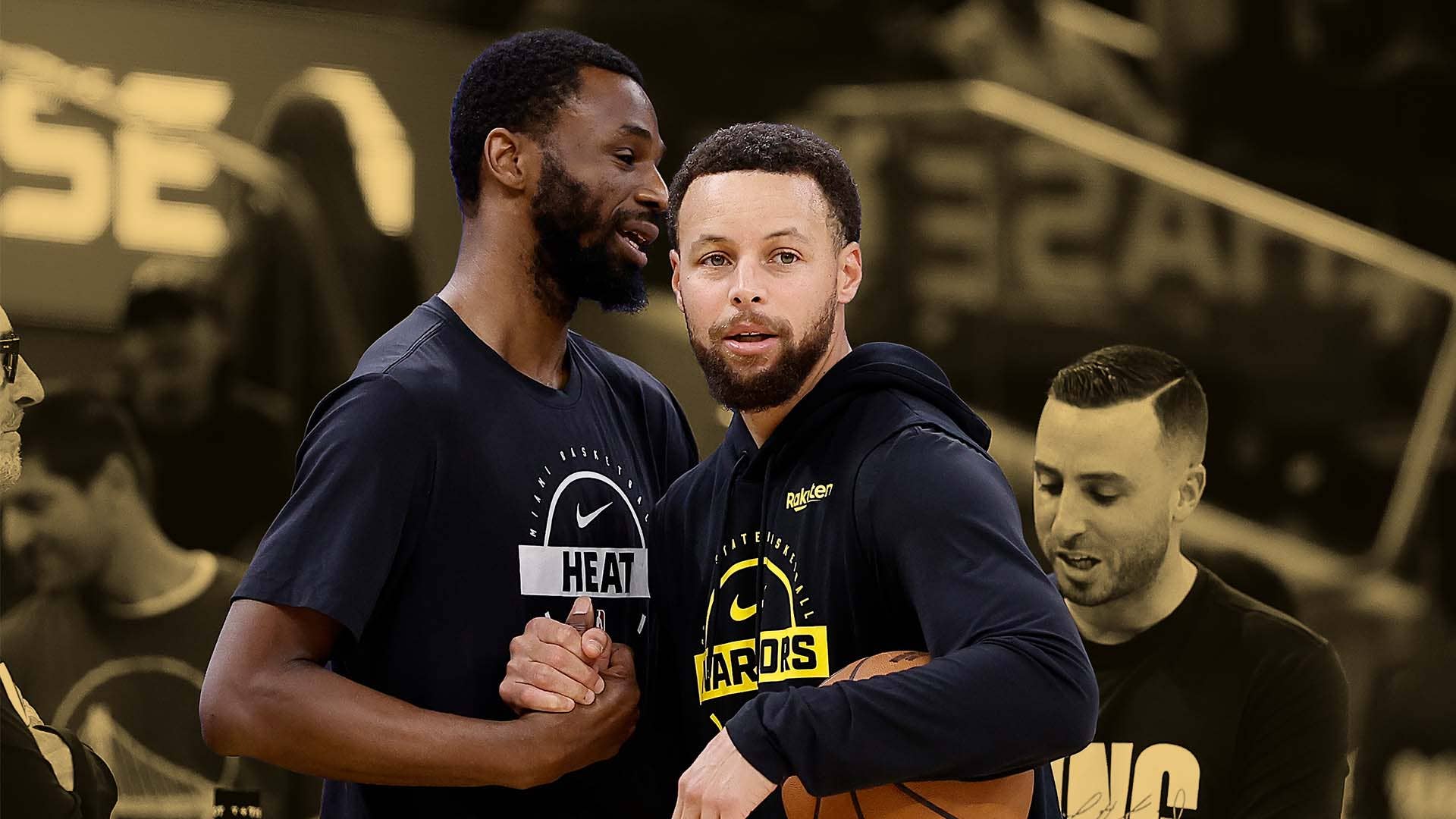
The primary myth surrounding Andrew Wiggins’ hair is that his performance is tied to his hairstyle, specifically that he plays better with braids or cornrows. While fan superstitions and social media memes suggest a correlation between his "braided" look and defensive intensity, statistical analysis confirms his output is driven by team systems and role evolution rather than hair.
Throughout the career of Andrew Wiggins, from his explosive entry into the league as the "Maple Jordan" to his pivotal role in the Golden State Warriors' 2022 championship and his continued veteran presence in 2026, his physical appearance has been a constant point of discussion. For professional athletes, every change in aesthetic is scrutinized by fans looking for signs of a "new era" or a shift in mentality. Andrew Wiggins, perhaps more than most, has seen his various hairstyles—shaved heads, natural afros, and intricate braids—turned into a library of internet folklore.
The Evolution of Andrew Wiggins’ Hairstyles
To understand the myths, one must first look at the timeline of Wiggins’ aesthetic choices. When he was drafted first overall in 2014 by the Cleveland Cavaliers (and promptly traded to the Minnesota Timberwolves), Wiggins sported a clean-cut, short-hair look. This was the "rookie" Wiggins, a player of immense promise and raw athleticism.
As his tenure in Minnesota progressed, Wiggins began to grow his hair out. By the late 2010s, he often wore a natural afro or shorter twists. This period coincided with a polarizing time in his career; while he was a high-volume scorer, critics often questioned his defensive motor and efficiency. When he was traded to the Golden State Warriors in 2020, the shift in his environment was mirrored by a more consistent adoption of braided styles and cornrows.
By the time the Warriors secured the 2022 NBA Championship, the "Braided Wiggins" meme had reached its zenith. Fans claimed the hair was a sign of a "locked-in" defender. In the subsequent seasons leading up to 2026, Wiggins has fluctuated between these styles, but the myths surrounding the "power" of his hair remain a staple of NBA Twitter and sports subreddits.
Myth 1: The "Cornrow Wiggins" Performance Boost
The most persistent myth is the "performance correlation." Fans have long argued that Wiggins is a significantly better player when his hair is braided tightly back. This myth grew out of his performance in the 2022 NBA Playoffs, where he served as the primary defender on stars like Luka Dončić and Jayson Tatum while sporting long braids.
Analyzing the "Braided" Stats
When we look at the data, the myth of the "Hair Power" begins to dissolve under the weight of context. Wiggins’ peak performance in 2022 wasn't a result of his stylist; it was a result of the "Warriors Way." In San Francisco, Wiggins was asked to do less offensively and more defensively.
- Defensive Rating: While his defensive rating improved during his braided years, this correlates directly with playing alongside Draymond Green and under the defensive schemes of Ron Adams.
- Rebounding: Wiggins’ jump in rebounding during the 2022 Finals (averaging nearly 9 rebounds per game) was a matter of scheme and effort, often referred to by coach Steve Kerr as Wiggins "finding another gear."
The myth persists because humans are naturally inclined to find patterns in visual data. A "braided" Wiggins looks more streamlined and aggressive to the casual observer, which reinforces the confirmation bias when he makes a big play.
Myth 2: Aerodynamics and Verticality
A more "pseudo-scientific" myth suggests that Wiggins’ hair length affects his vertical leap or his speed on the court. Some fans have argued that a shorter haircut or tight braids reduce air resistance or "drag," allowing him to maintain his elite second jump—a signature of his game.
The Physics of NBA Hair
In reality, the mass of Wiggins’ hair, even when grown out into an afro or long twists, is negligible compared to his body mass. According to sports biomechanics, the "drag" created by hair at the speeds an NBA player moves (roughly 15–20 mph in short bursts) is non-existent in terms of measurable performance impact.
Furthermore, Wiggins’ vertical leap—measured at 44 inches during his pre-draft days—has remained elite regardless of his hair. The "drag" myth is often used to explain off-nights, suggesting that "long hair" is weighing him down, but physiological fatigue and defensive spacing are the true culprits of a low-scoring or low-rebound game.
Myth 3: The "Softness" vs. "Aggression" Visual Cue
Perhaps the most problematic myth is the psychological one: the idea that Wiggins’ hair reflects his "softness" or "aggression." In the Minnesota era, when Wiggins had shorter hair or a natural fro, he was often labeled as "disengaged." Conversely, the "braided" look in Golden State was equated with "toughness."
Deconstructing the Stereotype
This myth is rooted in the visual tropes of the NBA. Players with braids or dreadlocks are often unfairly categorized as "gritty" or "enforcers," while those with shorter, traditional cuts are seen as "clean-cut" or sometimes "passive." For Wiggins, this narrative was a convenient way for media personalities to track his career arc.
However, Wiggins’ transformation in Golden State was psychological and structural. He moved from being a #1 option (a role he wasn't suited for) to a #3 option and elite "3-and-D" wing. The hair was a coincidental backdrop to a professional maturation process. By 2026, it is clear that Wiggins' "aggression" is tied to his health and his role in the rotation, not the time spent in a stylist's chair.
Myth 4: Hair Style and Injury Secrecy
A niche myth that occasionally surfaces in betting circles is that Wiggins uses his hair to hide or signal physical health issues. Some have theorized that a sudden change to a shaved head or very short hair is a sign of a "reset" following a nagging injury, or that longer hair is used to distract from a lack of facial expression that might give away pain.
There is zero empirical evidence for this. Wiggins’ injury history, including his rib issues in 2023 and various ankle sprains, has been documented through standard team medical reports. NBA players are subject to rigorous health disclosures, and using a hairstyle to "hide" a physical state is a logistical impossibility in the age of high-definition cameras and player-tracking data.
Comparing Wiggins' Career Eras and Hair Styles
The following table breaks down the perceived performance metrics associated with Wiggins’ different "hair eras" up to the current year of 2026.
| Era | Style | Primary Team | Key Achievement | Public Perception |
|---|---|---|---|---|
| 2014-2016 | Short/Fade | Minnesota | Rookie of the Year | High-Potential Scoring Wing |
| 2017-2019 | Mid-length/Afro | Minnesota | Max Extension | "Inconsistent" Star |
| 2020-2022 | Braids/Cornrows | Golden State | NBA Champion / All-Star | Elite Two-Way Defender |
| 2023-2025 | Twists/Braids | Golden State | Veteran Anchor | Vital "Glue" Player |
| 2026 (Present) | Varied | Golden State | Career Longevity | Respected Veteran Leader |
The Impact of Social Media on Athlete Folklore
The "Andrew Wiggins hair" phenomenon is a prime example of how social media creates narratives that eventually become "fact" in the minds of fans. When a player has a breakout game while sporting a new look, the two events are forever linked in the digital archive.
Platforms like X (formerly Twitter) and TikTok rely on "vibes" and visual aesthetics. A slow-motion replay of Wiggins dunking with his braids flying back is more "shareable" than a 10-minute breakdown of his defensive rotations. This has led to the "Game 5 Wiggins" or "Braided Wiggins" becoming a sort of mythical character, separate from the actual person, Andrew Christian Wiggins.
Professional Perspective: The Routine of the Athlete
From a technical standpoint, an athlete's hair is part of their hygiene and comfort routine. Many players, including Wiggins, choose braids or twists because they are low-maintenance during a grueling 82-game season. Braids keep hair out of the eyes and require less daily styling than an afro, which can become compressed or uneven during physical play.
Wiggins himself has rarely commented on these myths, usually dismissing them with a smile. For him, the hair is a personal choice, often influenced by his family and his own comfort. The "mythology" is something he leaves to the fans.
Common Misconceptions About NBA Hair Transitions
Many fans believe that a player cutting their hair is a sign of "getting serious." We saw this with players like Elfrid Payton, whose hair actually interfered with his shooting vision, leading to a legitimate performance increase once he cut it.
However, Wiggins' hair has never been a functional impediment. Unlike Payton, whose hair famously blocked his own view of the rim, Wiggins' styles have always been kept away from his line of sight. Therefore, any "performance change" associated with a haircut is purely psychological for the fans, not functional for the player.
Frequently Asked Questions
Does Andrew Wiggins play better with braids?
Statistically, there is no significant difference in Wiggins’ shooting percentages or defensive stats based solely on his hair. His "best" season in 2022 coincided with him wearing braids, but it also coincided with playing in a championship-caliber system with elite teammates.
Has Wiggins ever addressed the hair myths?
Wiggins has largely ignored the memes, though he has acknowledged in interviews that he feels comfortable with his current looks. He prioritizes styles that are easy to manage during the season.
Did Andrew Wiggins ever have to cut his hair for a team?
No. The NBA does not have a "clean-cut" policy like the New York Yankees in MLB. Players are free to wear their hair in any style, provided it does not pose a safety risk to themselves or others.
Does hair length affect a basketball player's speed?
In the context of basketball, hair length has a zero-net impact on speed. The speeds reached on a basketball court are not high enough for the aerodynamic drag of hair to be a factor in performance.
Why do fans focus so much on Wiggins' hair?
Wiggins has been in the spotlight since high school. Because his personality is relatively quiet and reserved, fans often look to his physical appearance (like his hair or his smile) to "read" his level of engagement or emotion.
Final Recommendations for Fans and Analysts
When evaluating a player like Andrew Wiggins in 2026, it is essential to separate aesthetic "vibes" from athletic reality. While the memes about "Braided Wiggins" are a fun part of NBA culture, they should not replace rigorous analysis of his play.
- Watch the Feet, Not the Hair: Wiggins’ value comes from his lateral quickness and his ability to contest shots without fouling.
- Context Over Coincidence: Always look at the lineup on the floor. Wiggins' success is often a byproduct of the spacing provided by teammates like Stephen Curry or the defensive help from younger core players.
- Appreciate the Person: Hair is an expression of identity. In an era where players are often treated like avatars in a video game, recognizing Wiggins’ hair as a personal style choice rather than a "performance mod" is a more respectful way to engage with the sport.
For more detailed stats on player performance and career splits, you can visit Basketball-Reference or the official NBA stats portal.