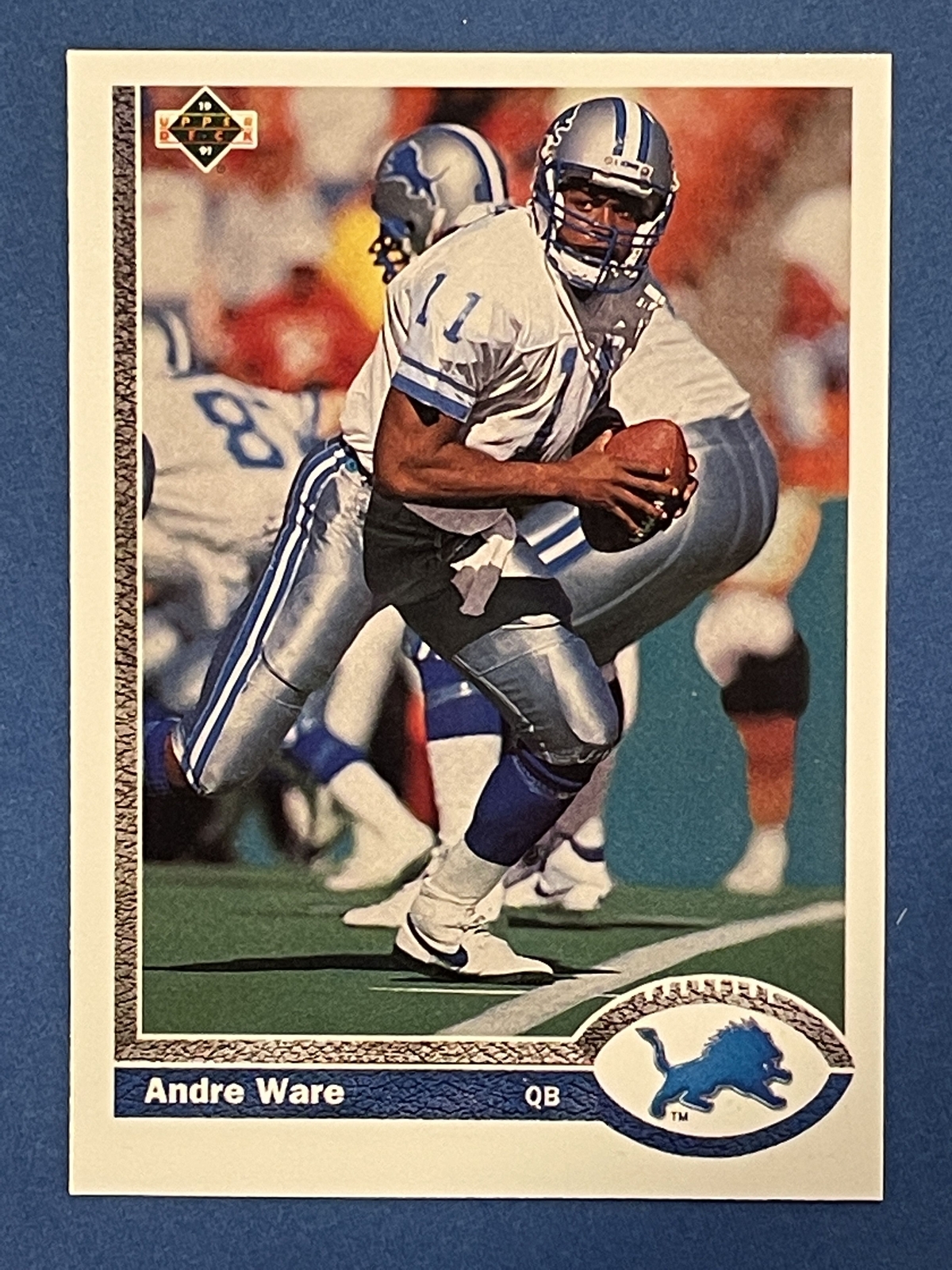
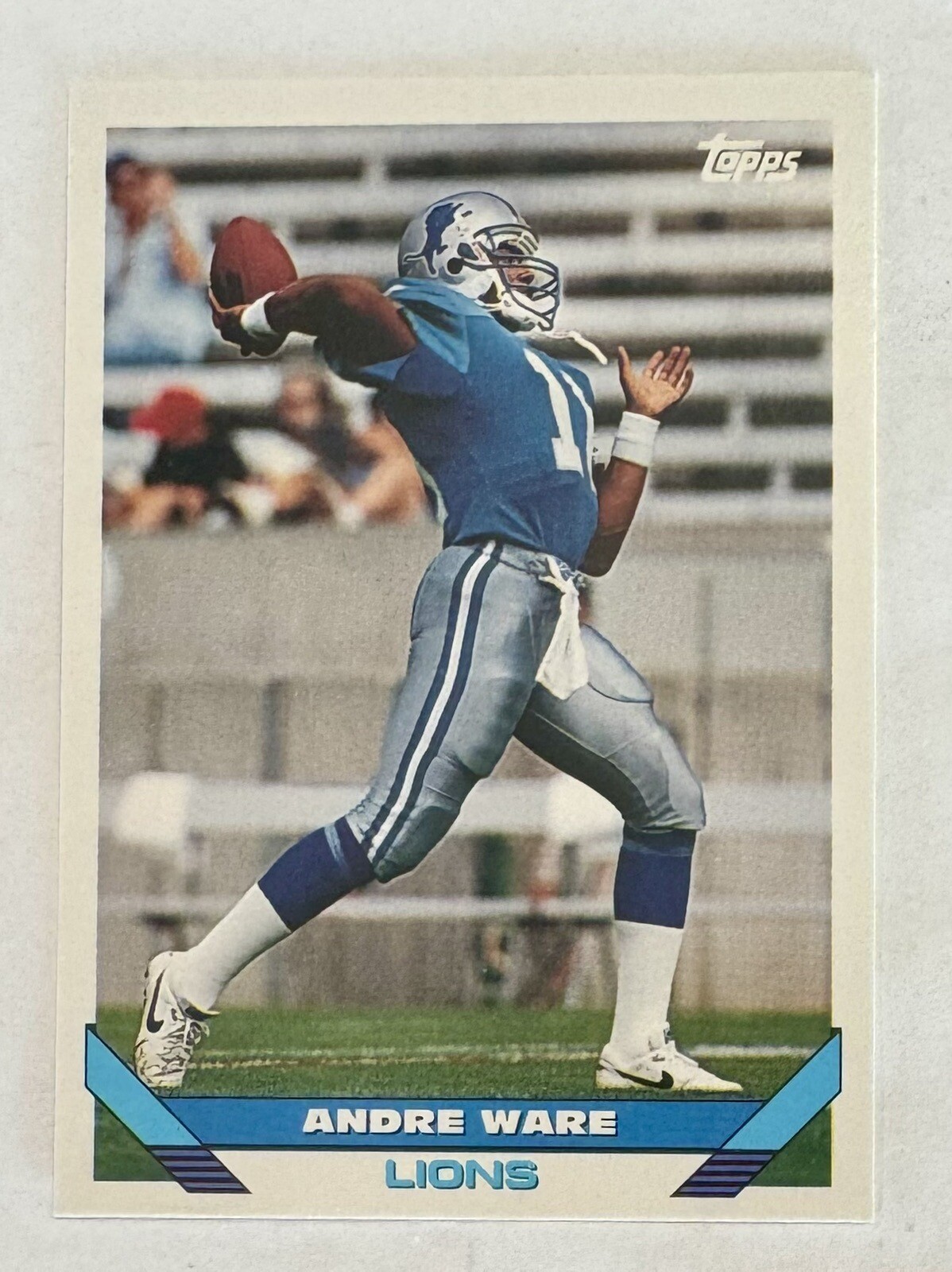
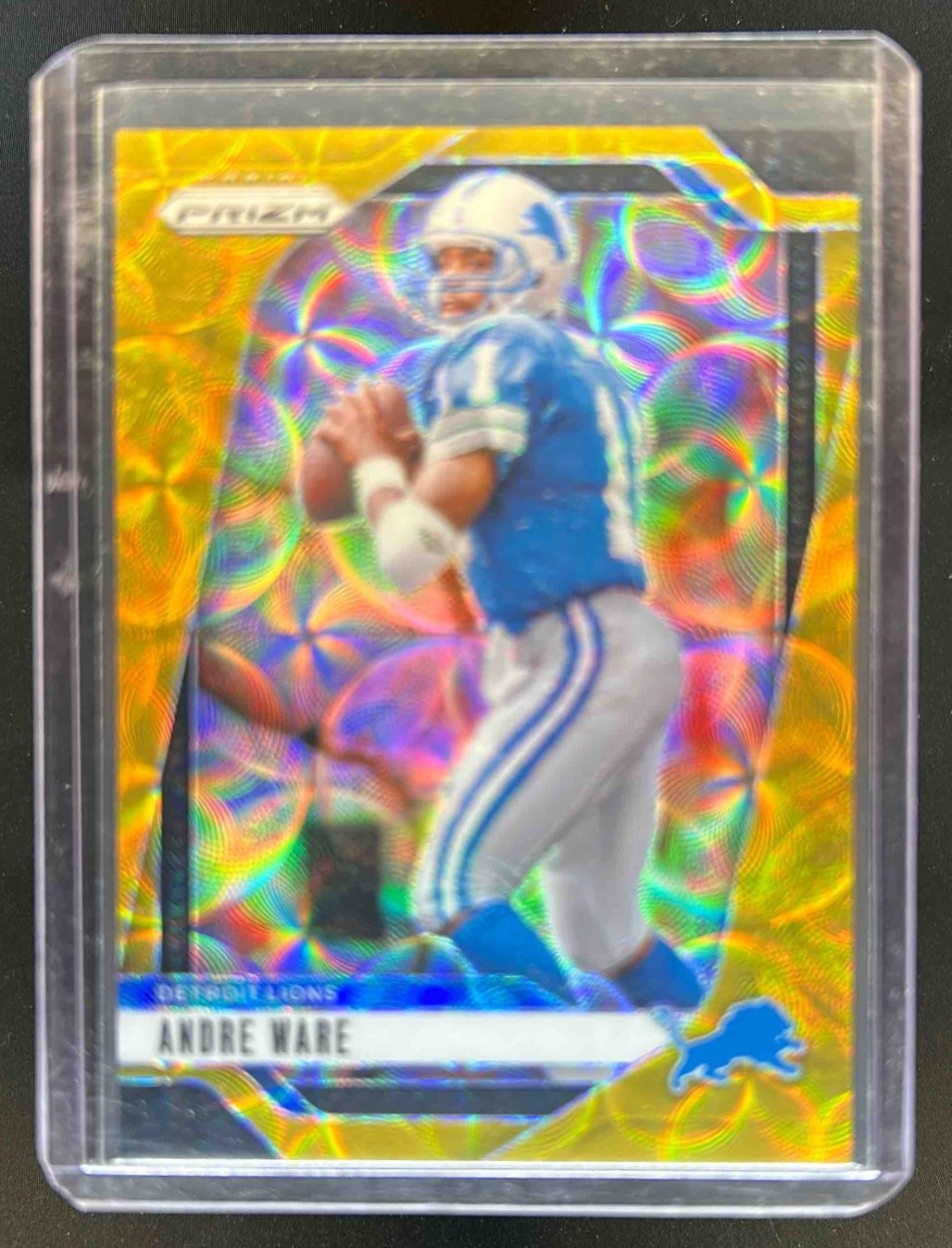
Andre Ware’s tenure with the Detroit Lions remains one of the most fascinating and misunderstood chapters in modern professional football history. Drafted seventh overall in the 1990 NFL Draft after a historic Heisman Trophy-winning season at the University of Houston, Ware arrived in Detroit with unprecedented expectations. Instead of anchoring a long-term franchise turnaround, his career became a lightning rod for discussions regarding offensive system compatibility, front-office dysfunction, and the volatile nature of NFL expectations. Examining his legacy reveals how a combination of coaching misalignment and organizational instability can completely alter the trajectory of a top-tier collegiate talent.
The Collegiate Phenomenon: Run and Shoot Mastery at Houston
To understand the anticipation surrounding Andre Ware’s entry into the NFL, one must first look at his extraordinary collegiate career under head coach Jack Pardee at the University of Houston. Ware was the ultimate orchestrator of the Run and Shoot offense, a scheme that relied heavily on wide-open formations, multiple receiver option routes, and lightning-fast passing reads.
During the historic 1989 season, Ware shattered passing records with astonishing regularity. He threw for 4,699 yards and 46 touchdowns in just 11 games, numbers that completely redefined contemporary college football standards. His performance earned him the Heisman Trophy, making him the first African American quarterback to win the prestigious award outright.
Ware’s collegiate success was not merely a product of system padding; it was driven by elite anticipation, exceptional field vision, and a lightning-quick release. He routinely picked apart opposing defenses by making split-second decisions based on zone coverage adjustments. However, this high-octane collegiate background created a profound tactical chasm between what Ware did best and what professional franchises were structured to execute at the dawn of the 1990s.
The 1990 NFL Draft and the Detroit Lions Selection
The Detroit Lions, under head coach Wayne Fontes and general manager Russ Thomas, held the seventh overall pick in the 1990 NFL Draft. At the time, the Lions were searching for an offensive spark after years of middling performance. Fontes favored an aggressive, dynamic approach, and the front office was captivated by Ware’s historic college numbers and arm talent.
| Draft Detail | Fact / Specification |
|---|---|
| Draft Year | 1990 |
| Overall Selection | 7th Pick, First Round |
| College Team | University of Houston |
| Collegiate Accolades | Heisman Trophy Winner (1989), Consensus All-American |
| Primary Offense at Houston | Run and Shoot |
| Primary Offense in Detroit | Pro-Style / Run-heavy hybrid |
Selecting Ware at number seven seemed like a bold step toward modernizing the franchise's offense. Yet, a critical strategic contradiction existed from day one. Selecting a quarterback whose entire collegiate foundation was built on the Run and Shoot required a total structural commitment to that specific scheme. The Lions, however, were not running the Run and Shoot at the time of his drafting, setting up an immediate philosophical conflict.
Tactical Mismatch: System Incompatibility in Detroit
The most significant factor influencing Andre Ware’s professional legacy was the profound tactical mismatch between his skill set and the offensive scheme deployed by the Detroit Lions. When Ware arrived in Allen Park, the Lions were operating a traditional, run-heavy pro-style offense that heavily utilized running back Barry Sanders.
The Run and Shoot offense requires specific mechanics, route concepts, and a temporal rhythm that differs vastly from standard drop-back passing attacks. Receivers in the Run and Shoot make pre-snap and post-snap adjustments based on reading coverages, requiring deep, telepathic synchronization between the quarterback and his pass-catchers—synchronization that takes years of repetition to build.
Furthermore, the Lions already had incumbent quarterback Rodney Peete on the roster, alongside veteran backup Erik Kramer. This created a crowded quarterback room where repetitions were split, hindering Ware’s development. Instead of tailoring the playbook to maximize Ware’s unique processing speed and aerial accuracy, the coaching staff attempted to shoehorn a spread-offense maestro into a conventional West Coast and power-running framework.
The Controversy of the "Two-Quarterback" System
As Ware struggled to secure the starting job outright, Wayne Fontes and his coaching staff resorted to an unconventional and heavily criticized strategy: the revolving-door quarterback rotation. During the 1990 and 1991 seasons, the Lions frequently rotated Ware, Rodney Peete, and Erik Kramer during games.
This constant shuffling disrupted offensive rhythm and prevented any of the signal-callers from finding consistency. For a young quarterback trying to adjust to the speed, complexity, and disguised coverages of NFL defenses, stability is essential. Pacing in and out of the huddle based on a few series of performance created immense psychological pressure and stunted Ware’s development.
While Erik Kramer eventually led the Lions to a playoff victory during the 1991 season—solidifying his role while Ware watched from the sidelines—the debate over Ware's utilization intensified. Critics argued that Ware was never given a fair, uninterrupted stretch of games to prove his capability as a franchise cornerstone.
Career Statistics and On-Field Reality
Examining Ware’s raw statistics in Detroit illustrates the fragmented nature of his playing time. Over four seasons with the Lions (1990–1993), Ware appeared in 14 games, making six starts.
- Passes Completed / Attempted: 153 / 274 (55.8% completion rate)
- Passing Yards: 1,967 yards
- Touchdowns: 5 passing touchdowns
- Interceptions: 8 interceptions
- QB Rating: 66.8
While these numbers do not reflect the dominance he displayed at Houston, contextualizing them is essential. Ware was rarely afforded the opportunity to throw rhythm passes within a designed scheme tailored to his strengths. Sacks, hurried throws, and the physical toll of playing behind a shifting offensive line further limited his efficacy. After his stint in Detroit, Ware spent time with the Los Angeles Raiders, Jacksonville Jaguars, and in the Canadian Football League (CFL) with the Toronto Argonauts, where he experienced more structural alignment with spread concepts.
Reassessing the Legacy: What Ware’s Era Taught the NFL
In contemporary professional football, Andre Ware’s legacy looks radically different than it did in the mid-1990s. Today, spread offenses, run-pass options (RPOs), and shotgun-heavy formations dominate the modern NFL. Quarterbacks coming out of spread systems are no longer viewed as systemic anomalies requiring years of deprogramming; rather, front offices now routinely tailor entire playbooks to match their rookie signal-callers' collegiate strengths.
In this light, Ware is frequently re-evaluated as a pioneer who arrived decades too early. If a prospect with Ware's precise athletic profile, accuracy, and mental processing speed were drafted in the modern era, teams would immediately install an explosive, spread-based aerial attack to leverage his talents. His struggles in Detroit serve as a cautionary historical case study regarding the dangers of drafting elite schematic talent without a matching offensive architecture.
Post-Playing Career and Broadcasting Impact
Following his retirement from professional play, Ware successfully transitioned into sports media, cementing a respected legacy as an analyst and broadcaster. His deep tactical understanding of football, paired with his articulate delivery, made him a staple of college football coverage.
Ware spent years as an analyst for ESPN and the SEC Network, providing viewers with nuanced breakdowns of passing concepts, quarterback mechanics, and defensive coverages. His analytical perspective is frequently colored by his own experiences as a collegiate superstar navigating the complex realities of professional football. This media career allowed Ware to maintain a profound, positive influence on the sport, helping fans and aspiring athletes understand the intricate chess match occurring on every snap.
Summary of Factors Impacting Ware’s Detroit Tenure
To clearly delineate the variables that shaped Andre Ware's time with the Lions, consider the following structural breakdown:
| Category | Contributing Factor | Impact on Career |
|---|---|---|
| Scheme | Pro-style / Run-heavy offense | Required Ware to adapt away from his college Run and Shoot strengths. |
| Roster Management | Three-way quarterback rotation | Prevented consistency and rhythmic development on game days. |
| Front Office | Drafting without a systemic plan | Created a philosophical mismatch between top draft capital and coaching execution. |
| Surrounding Talent | Elite running game (Barry Sanders) | Placed less reliance on the passing game, narrowing the playbook's vertical scope. |
Frequently Asked Questions
Why did the Detroit Lions draft Andre Ware in 1990?
The Lions drafted Ware seventh overall because of his extraordinary collegiate career at the University of Houston, where he won the Heisman Trophy and shattered NCAA passing records operating the Run and Shoot offense. Head coach Wayne Fontes and the front office coveted his elite arm talent and dynamic playmaking ability to spark the franchise's offense.
Did Andre Ware play in the Canadian Football League?
Yes. After his time in the NFL concluded, Ware extended his professional playing career in the CFL, most notably playing for the Toronto Argonauts. The open, pass-friendly rules and spread-heavy nature of Canadian football aligned more closely with his collegiate background.
How does Andre Ware's career compare to modern NFL quarterbacks?
Ware is widely regarded as a player who played ahead of his time. In the modern NFL, spread offenses and shotgun-heavy passing schemes are standard, and rookies who excelled in college spread systems are given customized playbooks. Ware faced an era where teams forced spread quarterbacks into rigid, traditional pro-style offenses.
What is Andre Ware doing today?
Ware has built a successful post-playing career as a prominent college football broadcaster and television analyst, providing expert commentary and strategic breakdowns for networks like ESPN and the SEC Network.
Why is Ware's time in Detroit considered a "surprise legacy"?
It is considered surprising because a Heisman Trophy-winning quarterback drafted in the top ten is universally expected to become a long-term franchise anchor. Instead, Ware’s tenure became a historic lesson in how poor systemic fit and organizational instability can derail elite talent.
Final Recommendation
For football historians and fans examining the evolution of the quarterback position, analyzing Andre Ware's career offers vital perspective on the importance of offensive scheme alignment. When evaluating modern draft prospects, front offices must ensure that coaching staffs possess the tactical flexibility to build schemes around a player's strengths rather than forcing systemic conformity. Ware's journey underscores that raw talent alone cannot overcome foundational strategic misalignment in professional sports.