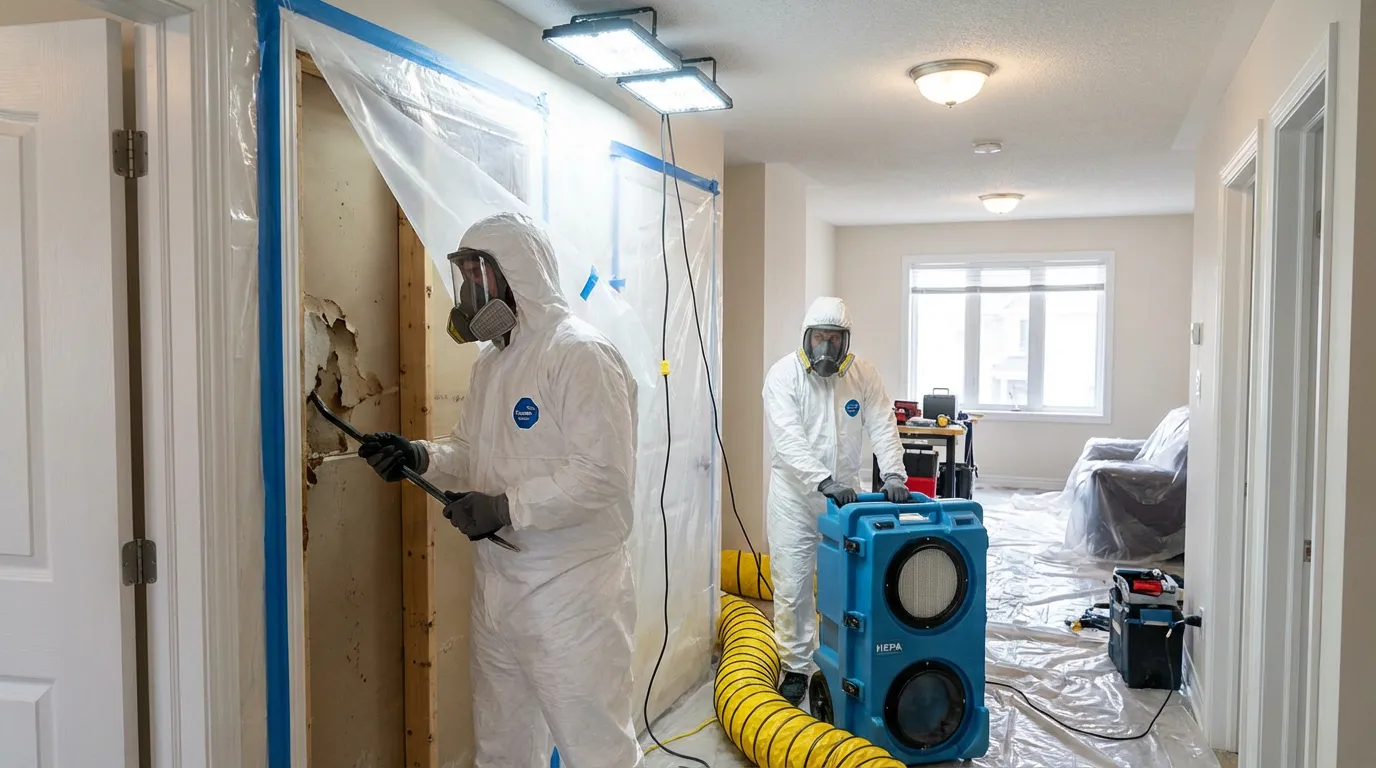
Effective mold remediation requires the physical removal of fungal growth through scrubbing because merely "killing" mold with chemicals is insufficient for safety. Even dead mold spores can remain allergenic and toxic, meaning they must be physically detached and extracted from surfaces to prevent health issues and recurrence. Professional standards prioritize physical agitation to ensure the structural integrity of the material and the health of the occupants.
In the field of environmental restoration in 2026, a common misconception persists that advanced chemical foggers or "miracle" sprays can replace the labor-intensive process of physical scrubbing. However, experts and regulatory bodies emphasize that remediation is a process of removal, not just neutralization. Whether you are dealing with a small patch of mildew in a bathroom or a massive infestation following a basement flood, the mechanics of mold attachment necessitate a hands-on approach.
The Science of Fungal Attachment: Why Killing Isn't Cleaning
To understand why scrubbing is essential, one must first understand the biology of mold. Mold is not a surface-level stain; it is a complex organism that utilizes root-like structures called hyphae to penetrate porous and semi-porous materials. When a homeowner or an inexperienced contractor sprays a biocide on a mold colony, the chemical may terminate the biological activity of the organism, but the physical structure of the mold remains embedded.
The primary danger lies in the fact that mold spores—the "seeds" of the fungus—do not become harmless once they are dead. Dead spores often retain their protein shells and secondary metabolites, known as mycotoxins. These particles are microscopic and can easily become airborne if they are not physically removed. If left on a wall or ceiling, these dead fragments can continue to trigger asthma attacks, allergic rhinitis, and other respiratory complications in sensitive individuals.
Furthermore, dead mold serves as a high-protein food source for future fungal growth. If a moisture problem recurs in the same area, the "corpses" of the previous colony provide a nutrient-rich foundation for new spores to land on and thrive. By scrubbing the surface down to its original state, you remove the "biofilm" that facilitates rapid re-colonization.
The IICRC S520 Standard and the Philosophy of Removal
In the professional restoration industry, the IICRC S520 Standard and Reference Guide for Professional Mold Remediation is the authoritative document. This standard, widely adopted by insurers and certified firms in 2026, explicitly prioritizes the physical removal of mold over the use of gaseous or liquid antimicrobials.
The S520 standard categorizes indoor environments into three "Conditions." Condition 1 is a normal fungal ecology; Condition 2 involves settled spores (indirect growth); and Condition 3 is actual fungal growth. To return a property from Condition 3 to Condition 1, the physical mass of the mold must be eliminated.
Professional remediators utilize the following hierarchy of cleaning:
- HEPA Vacuuming: To remove loose, dry spores before they are disturbed.
- Physical Agitation (Scrubbing): To detach the hyphae and surface growth.
- Final HEPA Vacuuming: To capture the debris loosened during the scrubbing phase.
By following this sequence, the technician ensures that the indoor air quality is protected while the contaminated surface is truly cleaned. Skipping the scrubbing phase essentially leaves the "roots" in the ground, waiting for the next rain.
Tools and Techniques for Effective Physical Remediation
The physical scrubbing of mold is not a generic task; it requires specific tools depending on the substrate being cleaned. Using the wrong tool can either fail to remove the mold or cause unnecessary damage to the building material.
Abrasive Scrubbing Tools
For semi-porous materials like wood framing or concrete, aggressive scrubbing is often required.
- Wire Brushes: These are used on unfinished wood (like attic rafters or crawl space joists) to grind away the surface layer of wood where the mold has taken root.
- Sandpaper and Sanders: In cases of deep penetration, sanding may be necessary to reach "clean" wood.
- Nylon Brushes: Preferred for more delicate surfaces or when applying a detergent solution to loosen the grip of the fungus.
Media Blasting
In large-scale 2026 remediation projects, "scrubbing" is sometimes automated through media blasting. Dry ice blasting or soda blasting acts as a form of high-velocity scrubbing. The particles strike the surface at high speeds, physically knocking the mold off while minimizing moisture introduction. However, even after blasting, manual detailing of corners and crevices is often required.
Wet Scrubbing vs. Dry Scrubbing
Technicians often debate the merits of wet versus dry scrubbing. Wet scrubbing involves using a detergent or a surfactant solution. This is beneficial because the liquid encapsulates the spores, preventing them from becoming airborne during the agitation process. Dry scrubbing (such as using a HEPA-vacuum attachment with a brush) is used when the material is too fragile for moisture or when the mold is in a dormant, powdery state.
Safety Protocols During the Scrubbing Process
Because scrubbing is a high-agitation activity, it is the most dangerous phase of the remediation process regarding cross-contamination. When you scrub a moldy surface, you are effectively launching millions of spores and fungal fragments into the air. Without proper containment, a small cleaning project in the kitchen can contaminate the entire HVAC system and every bedroom in the house.
Containment Barriers
Professional remediators install 6-mil polyethylene plastic barriers to isolate the work area. This is often referred to as "critical containment." In 2026, high-strength, fire-retardant plastics are the industry standard for these barriers.
Negative Air Pressure
To ensure that no dust escapes the containment zone, "Air Scrubbers" (Negative Air Machines) are used. These machines pull air through HEPA filters and exhaust it outside the building. This creates a pressure vacuum; if there is a small leak in the plastic, air will pull into the work zone rather than pushing contaminated air out into the living spaces.
Personal Protective Equipment (PPE)
The person performing the scrubbing must be fully protected. This includes:
- N-95 or P100 Respirators: To prevent inhalation of airborne spores.
- Tyvek Suits: To prevent spores from hitchhiking on clothing to other parts of the home.
- Gloves and Eye Protection: Mold and the chemicals used during the scrubbing process can be corrosive to the skin and mucous membranes.
Material-Specific Scrubbing Strategies
Not all materials react the same way to mold or cleaning efforts. The decision to scrub or discard depends on the porosity of the item.
| Material Type | Examples | Remediation Strategy | Scrubbing Requirement |
|---|---|---|---|
| Non-Porous | Metal, Glass, Hard Plastic | Clean and Sanitize | Light scrubbing with detergent to remove surface biofilm. |
| Semi-Porous | Solid Wood, Concrete, Brick | Physical Removal | Aggressive scrubbing/sanding to remove rooted hyphae. |
| Porous | Drywall, Insulation, Carpet | Discard and Replace | Scrubbing is usually ineffective; roots penetrate too deeply. |
| Textiles | Clothing, Upholstery | Specialty Laundering | Agitation in a high-efficiency wash or professional dry cleaning. |
Why Drywall Often Cannot Be Scrubbed
One of the most common mistakes in DIY remediation is trying to scrub mold off of painted drywall. While the surface might look clean afterward, the paper backing of the drywall is a cellulose-based food source that mold loves. If the mold has penetrated the paint layer, it is likely living inside the gypsum core or on the paper backing against the studs. In these cases, scrubbing is a temporary "band-aid," and the only permanent solution is to cut out the contaminated section at least 12-24 inches beyond the visible growth.
The Role of Antimicrobials and Sealants
If scrubbing is the primary method of removal, where do chemicals fit in? In 2026, antimicrobial solutions are used as adjuncts rather than primary solutions.
- Surfactants: These are used during the scrubbing process to break the surface tension of the mold, making it easier to lift.
- Biocides: These are applied after physical removal to kill any microscopic remnants that might be left in the pores of the material.
- Encapsulants (Sealants): Once the area is scrubbed clean and dried, a fungicidal coating may be applied to wood framing. This "locks down" any remaining microscopic particles and provides a moisture-resistant barrier that discourages future growth. However, applying a sealant over active mold without scrubbing first is a recipe for failure, as the mold can grow underneath the coating.
Verification: How to Know the Scrubbing Was Successful
The final step in any professional remediation project is Post-Remediation Verification (PRV), also known as clearance testing. This is typically performed by an independent third-party Industrial Hygienist, not the contractor who did the scrubbing.
The inspector will perform a "white glove" test—literally checking for any visible dust or debris on the remediated surfaces. If there is visible dust, the project fails. They will also take air samples to compare the indoor spore count to the outdoor spore count. If the scrubbing was done correctly within a contained environment, the indoor air should have significantly lower spore levels than the outside air, and the "signature" of the mold (the specific species) should match the natural outdoor environment.
If a contractor claims they can "fog" your house and skip the scrubbing, they will likely fail a clearance test because the physical structures of the mold will still be present on the surfaces and in the air.
Common Pitfalls in Mold Scrubbing
Even when people realize scrubbing is necessary, they often execute it poorly. One major pitfall is "scrubbing dry." Scrubbing dry mold without a HEPA vacuum running simultaneously or using a wetting agent is the fastest way to contaminate a home. The spores are designed by nature to launch at the slightest disturbance.
Another error is using bleach. According to guidelines from the Environmental Protection Agency (EPA), bleach is generally not recommended for routine mold cleanup. Bleach’s ion structure prevents it from penetrating porous materials like wood; the water in the bleach soaks in (feeding the mold), while the chlorine stays on the surface. Scrubbing with a dedicated fungal detergent or even simple dish soap and water is often more effective than using harsh bleach solutions.
Frequently Asked Questions
Can I just use a high-pressure power washer instead of scrubbing?
While power washing provides physical agitation, it is generally discouraged for indoor mold remediation. The high pressure can drive moisture deep into building materials, creating a larger mold problem in the future. It also aerosolizes spores violently. Scrubbing should be controlled and targeted, with a focus on capturing debris rather than blasting it into the air.
Is "scrubbing" the same as "air scrubbing"?
No. Scrubbing refers to the physical agitation of a surface to remove mold. An "Air Scrubber" is a machine used to filter the air within a room. Both are necessary: you scrub the surface to remove the growth, and you use the air scrubber to catch the particles that the physical scrubbing releases into the atmosphere.
How do I know if the mold has been scrubbed enough?
The surface should be free of all visible staining and debris. On wood, this often means the wood returns to its original light tan color. However, because some mold can stain wood permanently, the "feel" is also important; the surface should be smooth and free of any fuzzy or slimy texture. Professional verification through "tape lift" samples can confirm the absence of hyphae.
Does vinegar work for scrubbing mold?
Vinegar (acetic acid) can be an effective mild antimicrobial for non-porous surfaces. It can help loosen mold during the scrubbing process. However, for serious infestations or porous wood framing, professional-grade surfactants are generally preferred because they are formulated to penetrate more deeply and have a neutral pH that won't damage certain materials.
Can I scrub mold myself if it's a small area?
According to the EPA, if the moldy area is less than 10 square feet (roughly a 3x3 patch), many homeowners can handle the cleanup themselves. However, the requirement for physical scrubbing still applies. You must wear a mask, use a detergent solution, and ensure the area is dried thoroughly within 24 to 48 hours to prevent the mold from returning.
Final Recommendations for 2026
If you are facing a mold issue, remember that cleanliness is the goal, not sterility. You cannot "kill" your way out of a mold problem.
- Identify the moisture source first. If you scrub the mold but don't fix the leak, the mold will return.
- Always use containment. If you are scrubbing more than a tiny patch, use plastic sheeting and negative air to protect the rest of your home.
- Use a HEPA vacuum. Vacuum the area before you scrub, while you scrub if possible, and after you scrub.
- Hire professionals for large areas. If the contamination covers more than 10 square feet or has entered the HVAC system, the complexity of safe physical removal requires specialized equipment and training.
Physical scrubbing remains the cornerstone of mold remediation because it is the only way to ensure that the allergenic and toxic components of the fungus are completely removed from the human environment.