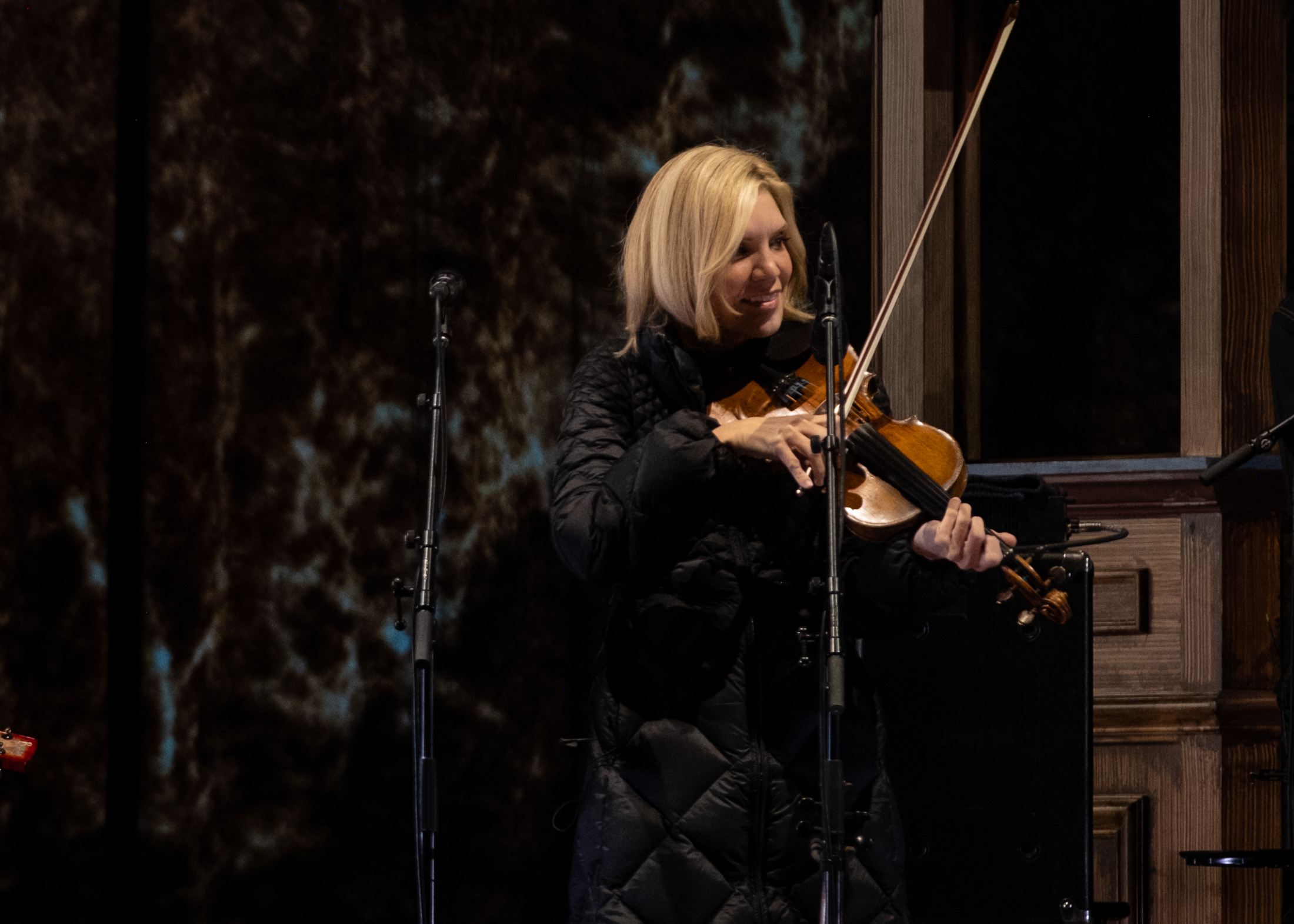
Alison Krauss, the renowned bluegrass musician and multi-Grammy-winning artist, is alive and remains active in her musical career as of 2026. Despite recurring internet rumors and speculative social media posts suggesting otherwise, there is no credible evidence, official statement, or factual basis to support claims that she has passed away. These persistent false reports are part of a broader phenomenon affecting high-profile public figures, driven by algorithmic amplification and the unchecked spread of misinformation on social platforms.
Understanding the Lifecycle of Celebrity Death Hoaxes
Celebrity death hoaxes are a fixture of the modern digital landscape. They typically follow a predictable pattern: a piece of fabricated content—often presented as a "breaking news" snippet, a tribute video, or a doctored screenshot—is uploaded to social media platforms. The goal is frequently to generate click-through traffic to advertisement-heavy websites or simply to harvest engagement through shock value.
For an artist like Alison Krauss, whose professional life involves cycles of high-intensity touring followed by intentional periods of privacy, the conditions are ripe for speculation. When a public figure steps out of the spotlight for a hiatus, some users interpret their silence as evidence of a health crisis or worse. This human tendency to fill information voids with sensationalism is the primary fuel for these rumors. In 2026, the speed at which this information propagates has increased, making it necessary for fans to rely on official channels rather than social media hearsay.
The Role of Algorithmic Amplification
Social media platforms are designed to prioritize high-engagement content. When a rumor about a celebrity’s death begins to trend, the algorithms governing these sites often push the topic to the top of "trending" feeds. This creates a feedback loop: the more people interact with the rumor—even just to ask "is this true?"—the more the algorithm treats the subject as important, exposing it to a larger audience.
Furthermore, these hoaxes often leverage "clickbait" tactics that mimic the visual language of legitimate news organizations. By using grainy photos, somber-toned graphics, or text that appears to be breaking news, malicious actors exploit the fact that many users do not click through to read the content, preferring to react to the headline alone. When thousands of users share a post under the guise of paying their respects, it adds a layer of false legitimacy that can briefly deceive even well-informed followers.
Distinguishing Fact from Fiction: A Verification Checklist
When navigating the internet, it is critical to employ a rigorous verification process before accepting information regarding the status of a celebrity. The following table provides a guide for evaluating the credibility of such claims.
| Feature | Credible News Source | Social Media Rumor |
|---|---|---|
| Source Identity | Established, verifiable news outlets | Unknown, anonymous, or clickbait sites |
| Official Statements | Links to management or PR agencies | References to "sources" without names |
| Visual Style | Consistent branding, professional imagery | Use of "RIP" overlays, low-resolution media |
| URL Structure | Recognizable domain (e.g., .com, .gov) | Misspelled or suspicious subdomains |
| Cross-Referencing | Reported by multiple major outlets | Exists only on one obscure platform |
If a significant event were to occur in the life of a public figure like Alison Krauss, it would be covered by major news networks, national newspapers, and confirmed via official representation. The absence of such reports from these primary sources is the strongest indicator that a social media rumor is fraudulent.
Why Alison Krauss Attracts High-Volume Speculation
Alison Krauss occupies a unique space in the music industry. As one of the most awarded artists in Grammy history, her legacy is substantial, and she maintains a dedicated, multi-generational fan base. High-profile, beloved figures are frequently targets for "tribute baiting," where creators of fake content know that a mention of a star’s name will draw immediate emotional investment from fans.
Additionally, Krauss has historically maintained a degree of privacy regarding her personal life. She does not engage in the constant, real-time documentation of her daily activities that many contemporary social media influencers prioritize. This separation between her private existence and her public artistry creates a vacuum of information that rumor-mills are eager to fill. For the average listener, it is important to remember that a lack of social media activity is a personal choice, not a sign of a life-altering event.
The Impact of Misinformation on Public Discourse
The persistence of these hoaxes has a tangible impact on the public and the industry. First, it causes unnecessary distress to the artist’s family, friends, and colleagues, who are often alerted to these rumors by automated systems or concerned fans. Second, it contributes to a wider climate of digital distrust. When individuals are frequently subjected to "fake news" regarding the deaths of public figures, their ability to discern legitimate reports from malicious ones erodes.
By 2026, the rise of sophisticated AI-generated content has added another layer of complexity. Deepfake imagery and synthetic voice recordings can make a false story appear more realistic than ever before. However, the fundamental rule remains: extraordinary claims require extraordinary evidence. Without an official statement from an artist’s management team or an accredited news organization, any claim regarding a person's death should be treated as entirely false.
How to Confirm the Status of a Public Figure
If you encounter a post claiming a celebrity has died, follow these steps to verify the information:
- Check Official Profiles: Visit the artist’s verified social media pages. Blue checkmarks or official account badges are usually strong indicators of authenticity. Look for recent activity or pinned posts.
- Search Established News Outlets: Use a search engine to look for the claim. If it is not appearing on the front page of major entertainment or national news sites, it is almost certainly a hoax.
- Analyze the Source: If the claim comes from a blog or a social media account you do not recognize, click through to the homepage. If the site is filled with ads, "get rich quick" schemes, or unrelated gossip, it is not a credible source of news.
- Use Fact-Checking Sites: Organizations dedicated to debunking misinformation frequently track celebrity death hoaxes. Searching a celebrity's name alongside the word "hoax" or "fact check" will often lead you to an immediate confirmation that the rumor is false.
Common Misconceptions About Celebrity Privacy
There is a common misconception that celebrities must "prove" they are alive by posting regular updates. This expectation is a byproduct of the parasocial relationships fostered by modern digital media, where fans feel entitled to constant updates on a star's life. In reality, artists like Alison Krauss have every right to remove themselves from the public eye for extended periods.
Professional musicians often spend years in cycles of writing, recording, and touring. When they take time off, it is frequently to recharge, spend time with family, or focus on personal projects. Equating an artist's downtime with a medical emergency or death is a fundamental misunderstanding of the nature of professional musical careers. Respecting an artist's privacy is not only a matter of digital etiquette but a vital step in reducing the prevalence of these damaging rumors.
Frequently Asked Questions
Is it common for celebrities to be the subject of death hoaxes? Yes, it is a very common phenomenon. High-profile individuals, especially those with long-standing careers and deep cultural impact, are frequently targeted by sites looking to exploit their fame for advertising revenue.
Why do these rumors persist if they are easily disproven? They persist because of the viral nature of social media. Many users share these posts out of a sense of shared sadness or concern without verifying the information, inadvertently helping the hoax spread.
Has Alison Krauss addressed these rumors? Historically, public figures rarely address individual death hoaxes because doing so grants them more attention than they deserve. Their management teams generally ignore them, allowing the rumor to die out as it fails to be picked up by credible news outlets.
Are there any official sources I should follow to get accurate news? Follow the official social media channels of the artist and their record label. Additionally, reliable entertainment news outlets that have rigorous editorial standards are the best places to confirm any significant personal news about a celebrity.
What is the best way to respond if I see a post claiming someone has died? The best approach is to report the post to the social media platform as "false information" or "misleading content" and avoid sharing it further, even if you are sharing it to ask about its validity. Sharing only helps the algorithm spread the rumor to more people.
Final Guidance for Fans
The most effective way to combat misinformation regarding Alison Krauss—or any public figure—is to practice digital hygiene. Before engaging with, liking, or sharing any headline that claims a tragedy, take a moment to verify the information through credible, primary, and secondary news sources. In 2026, the responsibility to stop the spread of false content lies with the user. By choosing not to amplify unverified claims, you protect the privacy of the artist and contribute to a healthier, more accurate digital environment. If you do not see a confirmation from an official source, it is safest to assume the rumor is simply another iteration of the persistent and baseless claims that frequently target global icons.