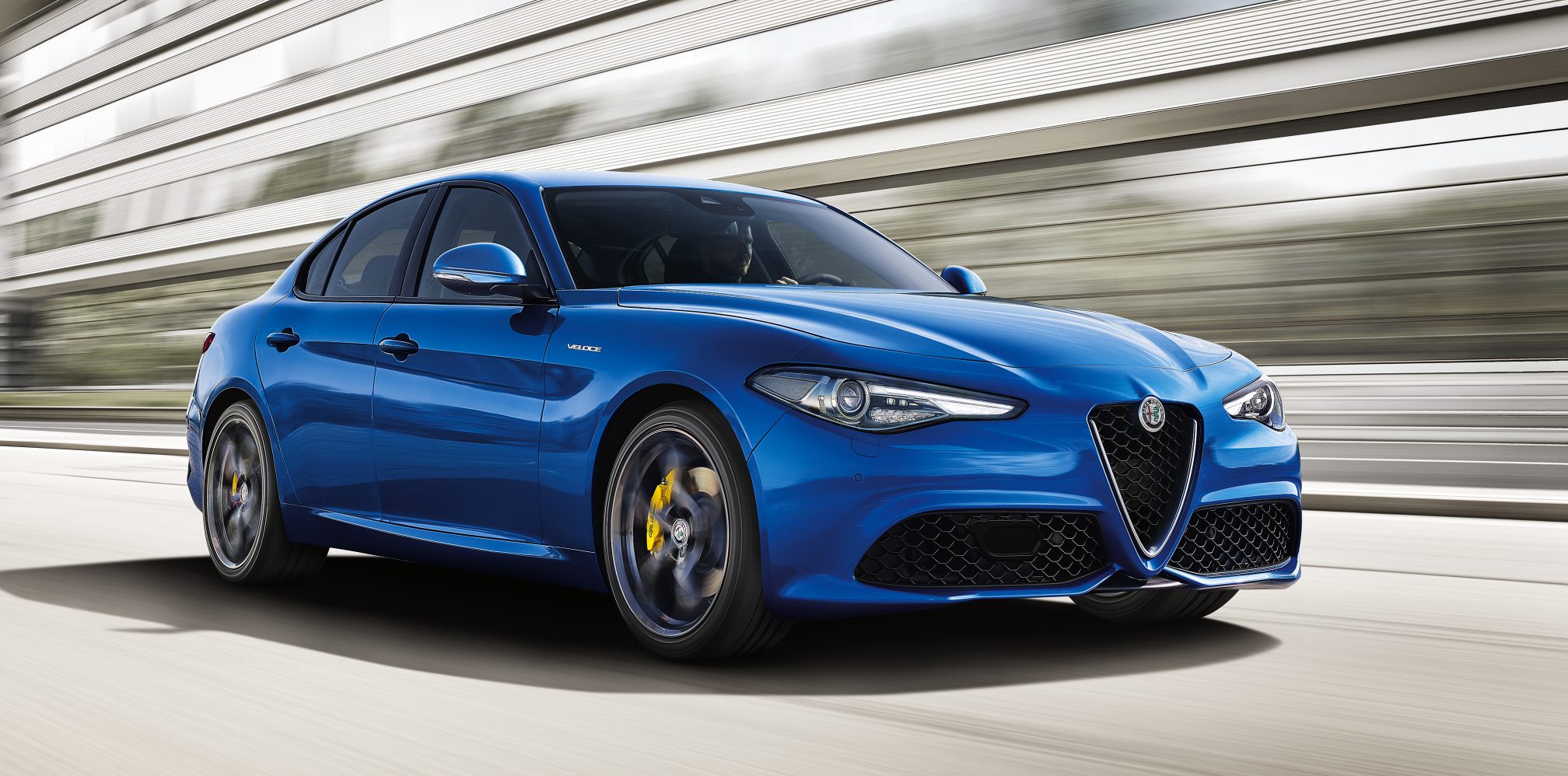
Alfa Romeo is a luxury automotive manufacturer founded in Milan, Italy, in 1910. As of 2026, it remains a cornerstone of Italian industrial heritage, with its global headquarters, design centers, and primary manufacturing facilities located in Italy. The brand is synonymous with Italian engineering, high-performance racing history, and avant-garde aesthetic design.
The Milanese Origins of A.L.F.A.
The story of Alfa Romeo begins not with a single person, but with a collective industrial ambition in the Lombardy region. Founded on June 24, 1910, the company was originally named A.L.F.A., an acronym for Anonima Lombarda Fabbrica Automobili (Lombard Automobile Factory, Public Company). The founders chose Milan as their base, specifically the Portello district, which remained the heart of the company’s operations for decades.
The "Romeo" portion of the name was added in 1915 when Nicola Romeo, an entrepreneur from Naples, took over the company to pivot production toward military hardware for World War I. Post-war, the company returned to car manufacturing, and by 1920, the first car to carry the "Alfa Romeo" badge—the Torpedo 20-30 HP—was released. This merger of Northern industrial precision and Southern entrepreneurial spirit solidified the brand as a national Italian icon.
The geographical identity of Milan is embedded in the company’s very logo. The circular badge features two distinct symbols: the red cross on a white field, which is the emblem of the city of Milan, and the Biscione, a crowned serpent swallowing a man, which was the coat of arms of the House of Visconti, the historic rulers of Milan. Even in 2026, as the brand moves toward a digital future, these symbols remain non-negotiable anchors of its Italian lineage.
Italian Design Philosophy: La Meccanica delle Emozioni
In the world of automotive manufacturing, "Italian-made" carries a specific weight, often described by Alfa Romeo as La Meccanica delle Emozioni (The Mechanics of Emotions). This philosophy dictates that a car should not merely be a tool for transportation but a visceral experience. This approach distinguishes Alfa Romeo from its German or Japanese counterparts, which often prioritize clinical efficiency or reliability over aesthetic passion.
The brand's design language has historically been shaped by legendary Italian design houses (carrozzerie), including:
- Pininfarina: Responsible for the timeless curves of the Spider.
- Bertone: Known for the sharp, aggressive lines of the Giulia GT.
- Zagato: Famous for lightweight, aerodynamic racing bodies and the distinctive "double-bubble" roofs.
As we look at the lineup in 2026, this legacy continues at the Centro Stile Alfa Romeo in Turin. Designers here focus on proportions, "necessary beauty," and a driver-centric cockpit. The goal is to ensure that even as vehicles transition to electric drivetrains (EVs), the silhouette remains unmistakably Italian—sensual, athletic, and devoid of unnecessary ornamentation.
Manufacturing and the "Made in Italy" Commitment
While many global brands have moved production to low-cost regions, Alfa Romeo maintains a significant portion of its manufacturing footprint within the Italian peninsula. This is a strategic choice to preserve the "Made in Italy" label, which is legally protected and signifies a specific level of craftsmanship and origin.
The primary production hubs as of 2026 include:
- Cassino Plant (Lazio Region): This high-tech facility is responsible for the Giorgio platform vehicles, such as the Giulia and Stelvio. It has been modernized to support the STLA Large platform, which powers the brand's latest high-performance electric vehicles.
- Pomigliano d'Arco (Campania Region): Located near Naples, this plant produces the Tonale. It is recognized for its high quality-control standards and its ability to integrate complex plug-in hybrid (PHEV) systems.
- Modena: While primarily the home of Maserati, Alfa Romeo’s limited-edition "Fuoriserie" projects, like the 33 Stradale, often utilize the specialized craft skills found in the Motor Valley region of Emilia-Romagna.
This geographic concentration allows for a tight feedback loop between engineering teams and the factory floor, ensuring that the "Cuore Sportivo" (Sporting Heart) is present in every vehicle, from the assembly of the suspension components to the stitching of the leather interiors.
The 2026 Model Range and Italian Innovation
By 2026, Alfa Romeo has successfully navigated the transition toward electrification while keeping its Italian identity at the forefront. The current lineup reflects a balance between traditional driving dynamics and modern sustainability requirements.
The New Era of Performance
The flagship models, the Giulia and Stelvio, have transitioned into their next generation. Utilizing Italian-engineered battery technology, these vehicles offer industry-leading charging speeds and weight distribution. The focus remains on "functional lightness," a hallmark of Italian racing history where agility is prized over raw horsepower.
The Expansion of the SUV Lineup
The Tonale and the more compact Junior (formerly known as the Milano) represent the brand's entry into the premium crossover segments. Even in these more accessible models, the Italian influence is clear in the "Trilobo" front grille and the "Cannocchiale" (telescope) instrument cluster, which mimics the analog dials of 1960s race cars.
The Halo Projects
The 33 Stradale revival serves as a testament to the brand's commitment to ultra-luxury craftsmanship. Hand-built in Italy, this vehicle offered customers a choice between a twin-turbo V6 and a full electric powertrain, proving that Italian luxury can coexist with future-proof technology.
Detailed Comparison of Italian Production Facilities (2026)
| Facility Location | Key Models Produced (2026) | Regional Specialization | Technology Focus |
|---|---|---|---|
| Cassino | Giulia, Stelvio (Next-Gen) | Large-segment platforms | STLA Large EV Architecture |
| Pomigliano d'Arco | Tonale, Hornet (Platform-share) | Precision assembly | Hybrid & PHEV Integration |
| Turin (Centro Stile) | All Prototypes & Design | Aesthetic R&D | HMI (Human-Machine Interface) |
| Modena (Maserati Lab) | 33 Stradale, Special Projects | Hand-built craftsmanship | Carbon Fiber & Lightweight Alloys |
Racing Heritage: The "Rosso Corsa" DNA
You cannot discuss Alfa Romeo’s Italian roots without mentioning its dominance in early motorsport. Alfa Romeo won the inaugural World Championship for Grand Prix cars in 1925 and the first two Formula 1 World Championships in 1950 and 1951 (with Nino Farina and Juan Manuel Fangio).
This racing pedigree birthed the Quadrifoglio (Four-Leaf Clover) emblem. In 1923, driver Ugo Sivocci painted a clover on his car to ward off bad luck before the Targa Florio race; he won, and the symbol has graced every high-performance Alfa Romeo since. In 2026, the Quadrifoglio sub-brand remains the pinnacle of the lineup, representing the most aggressive Italian tuning of chassis and power delivery.
The brand's involvement in Formula 1 continues to serve as a marketing bridge, linking its high-street road cars to the peak of Italian racing technology. This connection reinforces the "Italian-ness" of the brand in the eyes of a global audience, particularly in emerging markets where racing heritage is a key differentiator.
Corporate Structure: Italian Soul in a Global Group
A common point of confusion is Alfa Romeo’s ownership. Since 2021, Alfa Romeo has been a premium brand within Stellantis, a global automotive conglomerate formed by the merger of PSA Group and Fiat Chrysler Automobiles (FCA).
Despite being part of a multinational entity headquartered in the Netherlands, Alfa Romeo’s operational heart remains in Italy. Stellantis CEO Carlos Tavares has repeatedly emphasized that the "Italian-ness" of Alfa Romeo is its greatest asset. The brand's leadership, design, and marketing teams are primarily Italian, ensuring that the brand does not become a generic "badge-engineered" product.
This structure allows Alfa Romeo to benefit from the massive R&D budgets of a global group while maintaining its distinct Italian character. For instance, while the underlying electrical architecture might be shared with other Stellantis brands, the steering rack, suspension tuning, and interior materials are uniquely calibrated by Italian engineers to meet Alfa Romeo’s specific standards.
Frequently Asked Questions
Is Alfa Romeo still made in Italy?
Yes, the vast majority of Alfa Romeo vehicles are manufactured in Italy. The Giulia and Stelvio are produced at the Cassino plant, and the Tonale is manufactured in Pomigliano d’Arco. While some components are sourced globally, the final assembly and core engineering remain Italian.
Who owns Alfa Romeo in 2026?
Alfa Romeo is owned by Stellantis, one of the world's largest automotive groups. Stellantis was formed by the merger of Fiat Chrysler Automobiles (FCA) and the PSA Group. Within this group, Alfa Romeo sits in the "Premium" cluster alongside Maserati and Lancia.
Why is the Alfa Romeo logo a snake eating a person?
The logo features the Biscione, which was the coat of arms for the Visconti family, who ruled Milan in the 14th century. It depicts a "serpent-dragon" (the Biscione) giving birth to or swallowing a human. It symbolizes power, rebirth, and the brand's deep historical ties to the city of Milan.
Does Ferrari own Alfa Romeo?
No, Ferrari does not own Alfa Romeo. Historically, the two brands were closely linked; Enzo Ferrari began his career as a racing driver and team manager for Alfa Romeo before founding his own company. Both were under the Fiat umbrella for decades, but Ferrari was spun off into an independent company in 2016, while Alfa Romeo remained part of FCA (now Stellantis).
What does the name "Alfa" stand for?
ALFA is an acronym for Anonima Lombarda Fabbrica Automobili. The "Romeo" was added later in 1915 after the entrepreneur Nicola Romeo purchased the company.
Practical Recommendations for Prospective Owners
For those looking to engage with the Italian heritage of the brand in 2026, the following steps are recommended:
- Verify the VIN: If you are purchasing a used or new model and want to confirm its Italian origin, check the Vehicle Identification Number (VIN). Italian-made Alfa Romeos typically have a VIN starting with "ZAR."
- Visit the Museo Storico: If you find yourself in Italy, the Museo Storico Alfa Romeo in Arese (just outside Milan) is the definitive repository of the brand's history. It houses the most significant models from 1910 to the present day.
- Choose the "Veloce" or "Quadrifoglio" Trims: To experience the peak of Italian performance tuning, look for these specific trim levels. They incorporate the most advanced mechanical components, such as limited-slip differentials and active suspensions developed on Italian test tracks like Balocco.
- Embrace the Maintenance Schedule: Italian performance machines are engineered for precision. To preserve the "Cuore Sportivo," ensure that you follow the manufacturer's maintenance guidelines strictly, using genuine Italian-spec fluids and parts where possible.