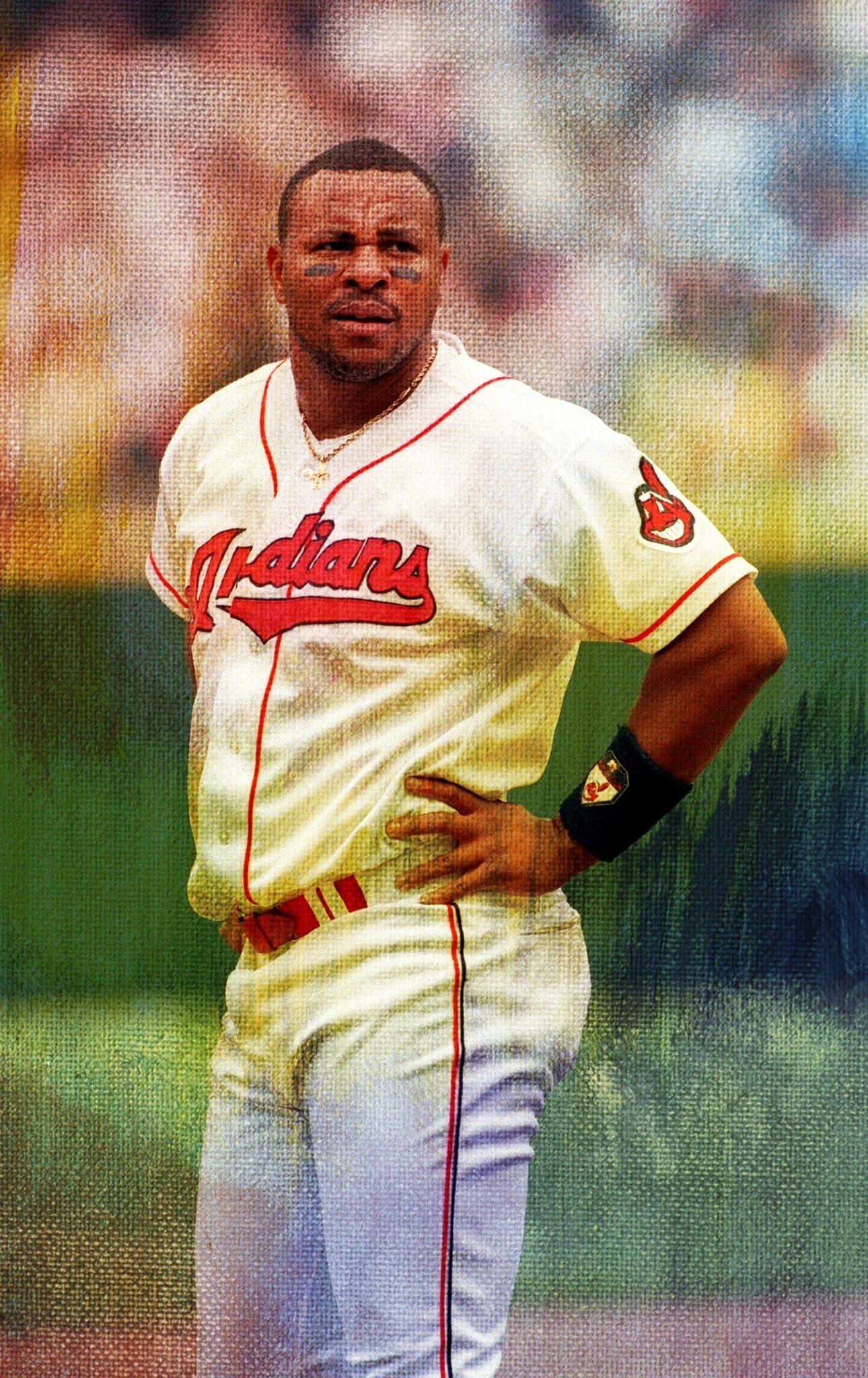
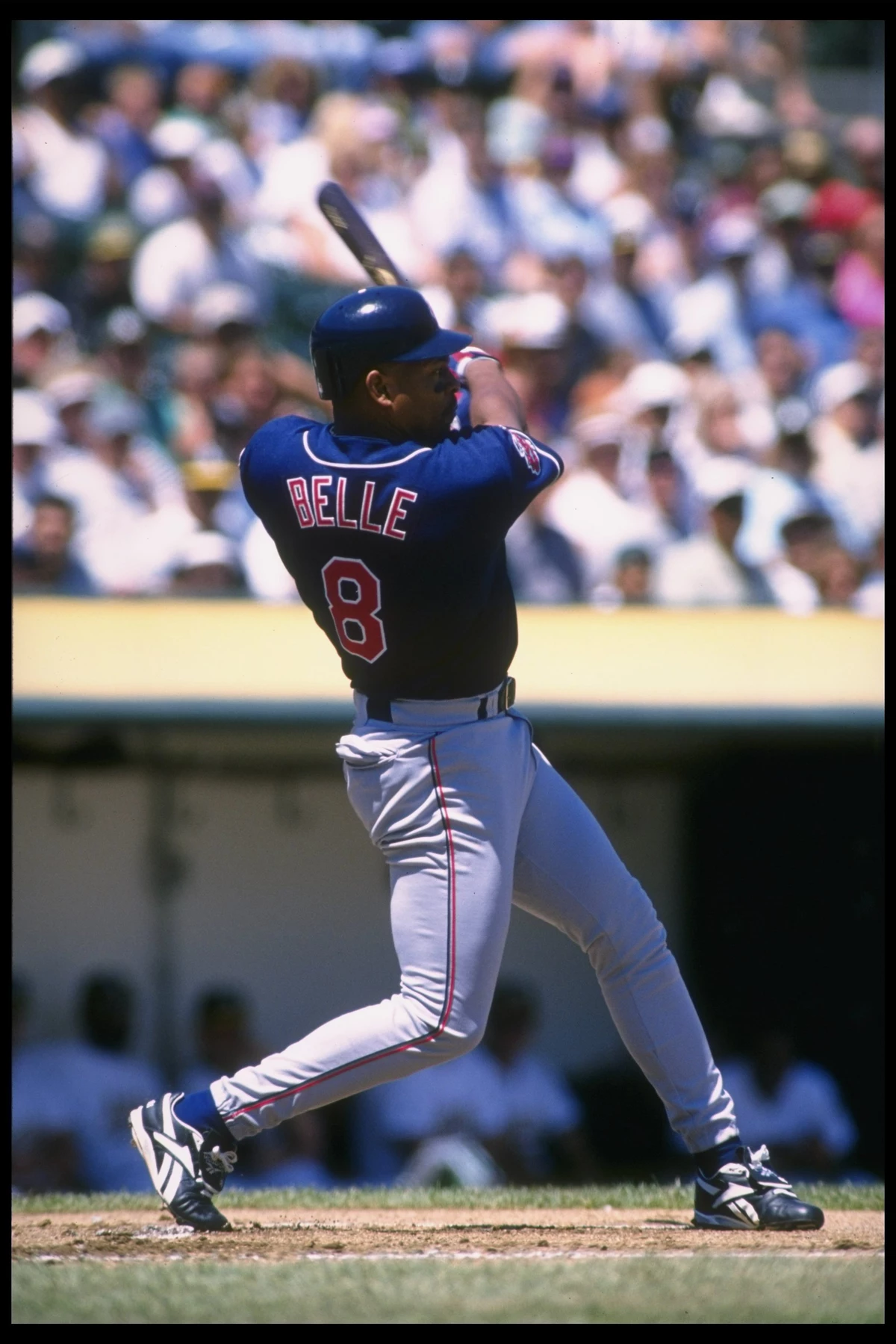
Albert Belle remains one of the most prolific offensive forces in Major League Baseball history, finishing his 12-season career with a .295 batting average, 381 home runs, and 1,239 RBIs. His career is defined by his historic 1995 season, where he became the only player to record 50 doubles and 50 home runs in a single year.
During the 1990s, few hitters inspired as much fear in opposing pitchers as Albert Belle. Known for his intense demeanor and an uncompromising approach at the plate, Belle compiled a statistical resume that, while shortened by injury, rivals the peak production of the greatest sluggers in the Hall of Fame. As we evaluate his standing in 2026, his numbers continue to serve as a benchmark for pure offensive efficiency and power during one of baseball's most competitive eras.
The Statistical Foundation of Albert Belle’s Career
Albert Belle’s MLB career spanned from 1989 to 2000, primarily with the Cleveland Indians, followed by significant stints with the Chicago White Sox and the Baltimore Orioles. Over 1,539 games, Belle accumulated 1,726 hits. His career slugging percentage of .564 and an OPS (On-base Plus Slugging) of .933 place him among the elite tier of modern hitters.
His production was remarkably consistent during his prime. From 1991 through 2000, Belle never hit fewer than 23 home runs in a season, and he surpassed the 30-home run mark eight times. His ability to drive in runs was equally impressive, recording nine seasons with over 100 RBIs. This level of sustained production made him the centerpiece of a Cleveland Indians lineup that dominated the American League Central in the mid-1990s.
Advanced Metrics and Adjusted Value
To understand the weight of Albert Belle’s career stats in MLB, one must look at his adjusted OPS (OPS+). This metric accounts for ballpark factors and the league's overall offensive environment. Belle finished his career with a 144 OPS+, meaning he was 44% better than the average league hitter throughout his career. At his peak in 1995, his OPS+ reached a staggering 177.
His Weighted On-Base Average (wOBA) and isolated power (ISO) also reflect a player who was not merely a beneficiary of a high-scoring era. Belle’s ISO of .269 is indicative of elite "extra-base" power, proving that he was consistently hitting for distance rather than just accumulating singles.
The Historic 1995 Season: The 50/50 Club
The pinnacle of Albert Belle’s statistical achievement occurred in 1995. In a season shortened to 144 games due to the previous year's player strike, Belle accomplished a feat that has never been repeated: hitting 50 doubles and 50 home runs in the same season.
This achievement is a testament to Belle’s unique hitting profile. Most power hitters who reach 50 home runs do so at the expense of doubles, as their swings are optimized for loft and distance. Conversely, high-double hitters often lack the raw strength to clear the fences 50 times. Belle’s ability to spray the ball into the gaps while also possessing the strength to hit balls out of any part of the stadium created a statistical anomaly that remains a high-water mark for offensive versatility.
In 1995, Belle led the American League in:
- Runs scored: 121
- Doubles: 52
- Home runs: 50
- Slugging percentage: .690
- Total bases: 377
Despite these league-leading figures, Belle famously finished second in the MVP voting to Mo Vaughn, a decision that remains a point of contention among baseball historians who argue that Belle's statistics were vastly superior.
Yearly Breakdown of Career Statistics
The following table provides a comprehensive look at Albert Belle’s primary statistical categories across his 12 seasons in the Major Leagues.
| Year | Team | Games | HR | RBI | AVG | OBP | SLG | OPS |
|---|---|---|---|---|---|---|---|---|
| 1989 | CLE | 62 | 7 | 37 | .225 | .270 | .373 | .643 |
| 1990 | CLE | 9 | 1 | 3 | .154 | .179 | .308 | .487 |
| 1991 | CLE | 123 | 28 | 95 | .282 | .323 | .522 | .845 |
| 1992 | CLE | 153 | 28 | 112 | .260 | .333 | .477 | .810 |
| 1993 | CLE | 159 | 38 | 129 | .290 | .370 | .552 | .922 |
| 1994 | CLE | 106 | 36 | 101 | .357 | .438 | .711 | 1.149 |
| 1995 | CLE | 144 | 50 | 126 | .317 | .401 | .690 | 1.091 |
| 1996 | CLE | 158 | 48 | 148 | .311 | .410 | .623 | 1.033 |
| 1997 | CHW | 161 | 30 | 116 | .274 | .332 | .491 | .823 |
| 1998 | CHW | 163 | 49 | 152 | .328 | .399 | .655 | 1.054 |
| 1999 | BAL | 161 | 37 | 117 | .297 | .400 | .541 | .941 |
| 2000 | BAL | 141 | 23 | 103 | .281 | .342 | .474 | .816 |
| Total | -- | 1,539 | 381 | 1,239 | .295 | .369 | .564 | .933 |
Analytical Deep Dive: The Chicago and Baltimore Years
After leaving Cleveland following the 1996 season, Belle signed a record-breaking five-year, $55 million contract with the Chicago White Sox. While his first year in Chicago (1997) was considered a "down" year by his lofty standards, he responded with one of the greatest offensive seasons in franchise history in 1998.
In 1998, Belle hit .328 with 49 home runs and 152 RBIs. His 152 RBIs remain a single-season record for the White Sox. This season showcased Belle’s durability, as he played in all 163 games (including a one-game playoff). His performance in the second half of 1998 was particularly legendary; he hit 31 home runs after the All-Star break, carrying the Chicago offense almost single-handedly.
Belle's transition to the Baltimore Orioles in 1999 continued his streak of 100-RBI seasons. Even as his physical health began to decline due to a degenerative hip condition, his plate discipline improved. In 1999, he drew a career-high 101 walks, contributing to a .400 on-base percentage. This evolution showed that Belle was not just a "free swinger" but a sophisticated hitter capable of adjusting his approach as his physical tools changed.
Defensive Contributions and Baserunning
While Albert Belle is primarily remembered for his career stats in MLB as a hitter, he was a competent left fielder for much of his career. He possessed a strong, accurate arm, often leading or ranking near the top of the league in outfield assists during his time with the Indians. In 1993, he recorded 15 assists, a high number that reflected his aggressiveness and the frequency with which runners attempted to test his arm.
On the basepaths, Belle was surprisingly mobile for a man of his size (6'2", 210 lbs) in his younger years. He recorded double-digit stolen bases in three separate seasons, including a career-high 23 steals in 1993. However, as the 1990s progressed and the wear on his lower body increased, his baserunning became more conservative, eventually leading to his move toward more frequent starts as a designated hitter.
The Forced Retirement: What Could Have Been?
The most significant "what if" regarding Albert Belle’s career stats in MLB involves his premature retirement. Following the 2000 season, at just 34 years old, Belle was diagnosed with degenerative osteoarthritis in his right hip. The condition was so severe that doctors informed him he could no longer perform the rotational movements required for a professional baseball swing.
At the time of his retirement, Belle was still an elite producer, having just finished a season with 23 home runs and 103 RBIs. Had he played even four more seasons at a moderate pace, he was virtually certain to surpass 500 home runs and 1,600 RBIs. His career total of 381 home runs in only 12 seasons suggests that he was on a trajectory to join the inner circle of baseball's all-time greats.
The Hall of Fame Debate
Albert Belle’s candidacy for the National Baseball Hall of Fame is one of the most debated topics among voters and fans. Statistically, his peak is undeniable. He was a five-time All-Star and a five-time Silver Slugger winner. He finished in the top three of MVP voting three times.
The arguments against his induction usually fall into two categories:
- Longevity: His career was cut short, leaving him short of the "magic" milestones like 500 home runs or 2,000 hits.
- Character/Relationship with Media: Belle had a notoriously difficult relationship with the press and the league office, which some believe has negatively influenced voters' perceptions of his on-field value.
However, when comparing his seven-year peak (1992–1998) to other Hall of Famers, Belle often comes out ahead. During that span, he averaged 40 home runs and 124 RBIs per season with a .306 batting average.
Comparison with Contemporaries
To truly appreciate Albert Belle’s career stats in MLB, they must be contextualized alongside his peers. During the 1990s, Belle’s primary rivals for offensive supremacy were Frank Thomas, Ken Griffey Jr., and Barry Bonds.
- vs. Frank Thomas: While Thomas had a higher career OBP and more walks, Belle often matched or exceeded Thomas in raw power and RBI production during their overlapping peaks in the American League.
- vs. Ken Griffey Jr.: Griffey was the superior defender and a more cultural icon, but from 1993 to 1998, Belle’s offensive numbers (specifically OPS and SLG) were frequently superior to Griffey's.
- vs. Barry Bonds: Before Bonds' late-career surge in the early 2000s, Belle was often considered the most dangerous right-handed hitter in the game, paralleling Bonds’ left-handed dominance in the National League.
Belle’s ability to remain in the conversation with these three icons—all of whom are considered among the top 20 players of all time—highlights the sheer caliber of his talent.
FAQs About Albert Belle’s Career Stats
How many times did Albert Belle win the MVP award?
Despite his dominant statistics, Albert Belle never won the American League MVP award. He finished second in 1995, third in 1994 and 1996, and in the top ten in 1993 and 1998. His 1995 season is widely regarded as one of the greatest individual seasons to not result in an MVP trophy.
Did Albert Belle ever lead the league in home runs?
Yes, Albert Belle led the American League in home runs once, during his historic 1995 season, when he hit 50. He also finished in the top five of the league in home runs in 1993, 1994, 1996, and 1998.
What is Albert Belle's career-high in RBIs?
Belle's career-high for RBIs in a single season is 152, achieved in 1998 with the Chicago White Sox. This remains a franchise record for Chicago. He also led the American League in RBIs in 1993 with 129 and in 1996 with 148.
Why did Albert Belle retire so early?
Albert Belle retired following the 2000 season due to a degenerative hip condition (osteoarthritis). The injury made it impossible for him to continue playing at a professional level, and he was placed on the disabled list for the remainder of his contract with the Baltimore Orioles before officially leaving the game.
How many Silver Slugger awards did Albert Belle win?
Albert Belle won five Silver Slugger Awards (1993, 1994, 1995, 1996, and 1998). This award is given to the best offensive player at each position in each league, confirming his status as the premier left fielder of his era.
Final Recommendation for Researchers
For those looking to understand the full scope of Albert Belle's impact, it is recommended to view his stats through the lens of "Peak Value." While his career totals are lower than some contemporaries due to his early retirement, his per-game and per-season production from 1992 to 1999 is among the highest in baseball history. For a deeper dive into his game-by-game splits and advanced analytics, resources such as Baseball-Reference and Fangraphs provide exhaustive breakdowns of his performance against specific pitchers and in high-leverage situations.