Alan Ruck’s film career, spanning over four decades, is defined by his unique ability to portray vulnerability, dry wit, and internal conflict. From his iconic breakout as Cameron Frye in Ferris Bueller’s Day Off to his recent authoritative roles, Ruck’s impact lies in his nuanced exploration of the "overlooked" individual, fundamentally influencing how sidekick and ensemble roles are written and performed in Hollywood.
As of 2026, Ruck stands as one of the most respected character actors in the industry. While many actors struggle to move past a career-defining role early in their lives, Ruck has successfully navigated transitions from teenage angst to blockbuster action, and finally to the "elder statesman" roles that have come to define his modern era. His work serves as a blueprint for longevity in a volatile industry, proving that character depth and comedic timing are timeless assets.
The Formative Years: Redefining the Sidekick in Ferris Bueller’s Day Off
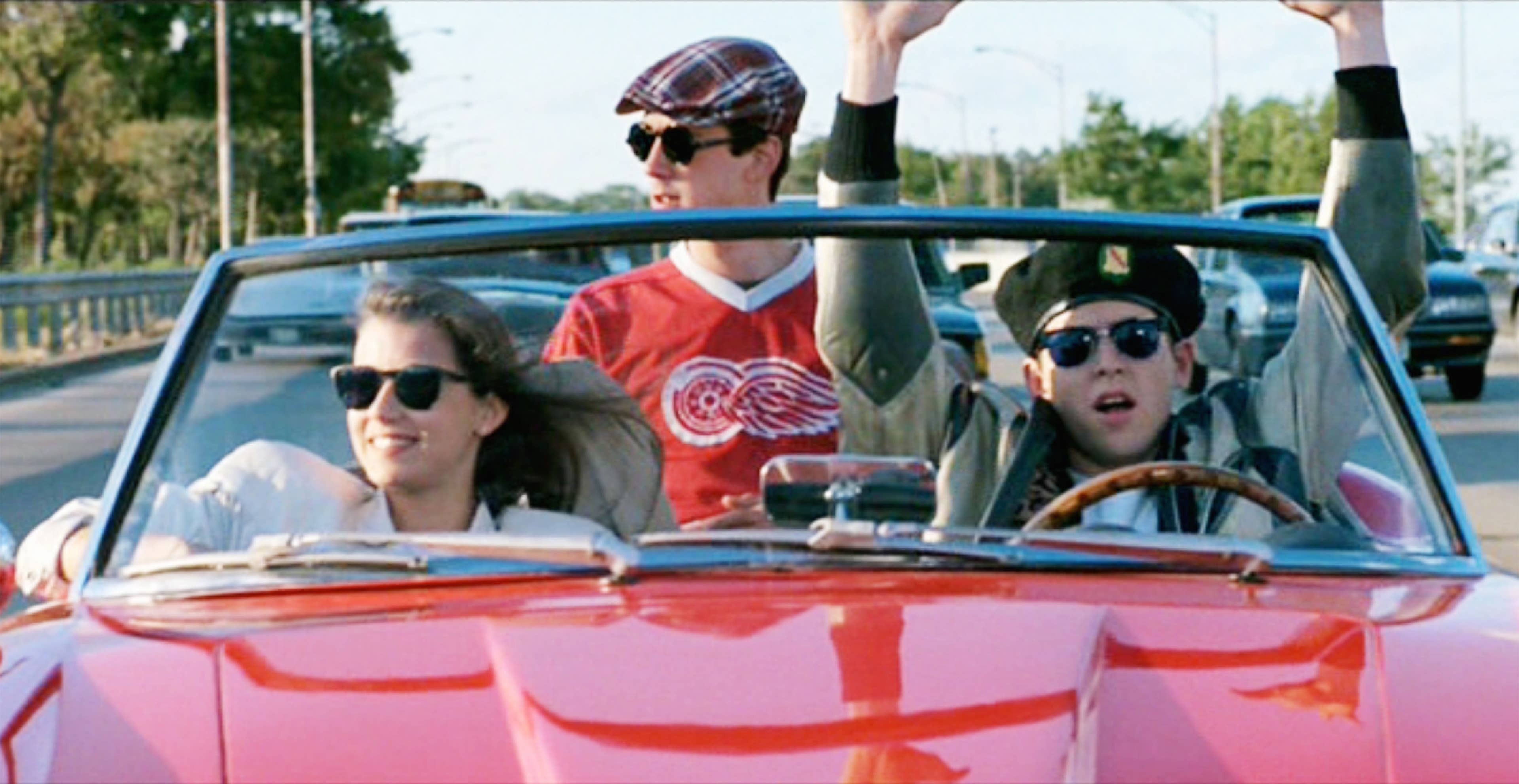
When Ferris Bueller’s Day Off was released in 1986, it was a cultural phenomenon. While Matthew Broderick’s Ferris was the face of the film, it was Alan Ruck’s Cameron Frye who provided the emotional core. Ruck was 29 years old when he played the 17-year-old Cameron, a testament to his ability to inhabit the specific, jittery energy of adolescent anxiety.
The impact of Cameron Frye cannot be overstated. Before this role, the "best friend" in teen comedies was often a one-dimensional comic relief. Ruck transformed Cameron into a complex study of parental neglect and clinical depression. The famous "museum scene," where Cameron stares intensely at Georges Seurat’s A Sunday Afternoon on the Island of La Grande Jatte, remains one of the most analyzed moments in 80s cinema. Ruck conveys a terrifying sense of void without saying a word, a performance choice that shifted the tone of John Hughes' films from mere escapism to relatable human drama.
Cameron’s ultimate act of defiance—the accidental destruction of his father’s 1961 Ferrari 250 GT California Spyder—symbolized a generation’s desire to break free from rigid expectations. Ruck’s performance ensured that the movie was as much about Cameron’s liberation as it was about Ferris’s day of leisure.
The Blockbuster Transition: Speed and Twister
In the 1990s, Alan Ruck transitioned from the introspective roles of his youth into high-stakes blockbuster cinema. His involvement in Speed (1994) and Twister (1996) demonstrated his versatility and his value as an ensemble player who could ground high-concept premises.
In Speed, Ruck played Stephens, a tourist on the ill-fated bus. In an action film defined by Keanu Reeves’ heroism and Sandra Bullock’s grit, Ruck provided the essential perspective of the "everyman." His character’s panic and eventual cooperation served as a mirror for the audience’s own tension. This role was crucial because it proved Ruck could maintain his screen presence alongside massive practical effects and A-list leads without his character feeling like a caricature.
Similarly, in Twister, Ruck played Robert "Rabbit" Nurick, the navigator for the storm-chasing team. Here, his impact was felt through his dry delivery and technical jargon, helping to build the "found family" dynamic that made the film a success. Ruck’s ability to weave humor into life-and-death scenarios became his signature, a trait that would later be exploited to great effect in his television and film work in the 2000s and beyond.
The Character Actor’s Renaissance: From Indie Gems to The Burial
The late 2010s and early 2020s marked a significant "second act" for Ruck. While his work on the television series Succession as Connor Roy brought him a new level of fame, it also reinvigorated his film career. Producers and directors began to leverage his newfound status as a master of the "delusional yet tragic" archetype.
In the 2023 film The Burial, Ruck played Mike Allred. This legal drama, based on a true story, allowed Ruck to flex his muscles in a more traditional, grounded setting. Working alongside Jamie Foxx and Tommy Lee Jones, Ruck’s performance was noted for its understated authority. His impact here was demonstrating that he could inhabit the world of high-stakes litigation and corporate maneuvers with the same ease he once brought to a high school locker room.
Key Films and Their Cultural Impact
The following table highlights the most significant films in Alan Ruck’s filmography and the specific impact each had on the industry or his career trajectory.
| Film Title | Release Year | Role | Cinematic Impact & Significance |
|---|---|---|---|
| Bad Boys | 1983 | Carl Brennan | Ruck’s feature debut; established his ability to handle gritty, dramatic material. |
| Ferris Bueller’s Day Off | 1986 | Cameron Frye | Redefined the "teen sidekick" archetype; introduced themes of mental health in teen film. |
| Three Fugitives | 1989 | Inspector Tener | Showcased Ruck’s ability to perform in "odd-couple" comedic structures. |
| Speed | 1994 | Stephens | Grounded the action genre with a relatable "everyman" performance. |
| Twister | 1996 | Robert 'Rabbit' Nurick | Exemplified the importance of ensemble chemistry in 90s disaster epics. |
| Ghost Town | 2008 | Ghost Dad | Demonstrated Ruck’s range in supernatural comedy and dry humor. |
| The Burial | 2023 | Mike Allred | Cemented his transition into prestigious dramatic roles for a new generation. |
Technical Depth: The Acting Mechanics of Alan Ruck
Ruck’s impact is not just a result of the movies he chooses, but the technical precision he brings to the craft. Acting coaches and film critics often point to Ruck’s "reaction acting" as a masterclass in the form.
- Micro-Expressions: In Ferris Bueller, Ruck’s ability to show Cameron’s internal "short-circuiting" through slight facial twitches and frozen stares added layers to the script that weren't on the page.
- Voice and Cadence: Ruck has a distinctive, slightly nasal yet resonant voice. He uses this to great effect in portraying characters who are either hyper-intellectual or dangerously insecure. His delivery in Twister made complex meteorological dialogue sound natural and urgent.
- Physicality: Ruck often plays characters who feel "stiff" or uncomfortable in their own skin. By maintaining a certain physical rigidity, he conveys a character’s internal tension, making their eventual emotional outbursts—like Cameron’s kick to the Ferrari—feel earned and explosive.
The Broader Cultural Influence of Ruck’s Archetypes
Beyond individual films, Alan Ruck’s career represents a specific type of Hollywood success. He has become the "face" of the elder brother who was never quite enough, the friend who was a little too honest, and the professional who is slightly out of his depth.
The "Cameron Frye Syndrome"
In psychology and film studies, the "Cameron Frye Syndrome" is sometimes used to describe the feeling of being a spectator in one's own life while a more charismatic friend takes the lead. Ruck’s portrayal gave voice to millions of viewers who felt like "the sidekick" in their own social circles. This cultural resonance has kept Ferris Bueller’s Day Off relevant for 40 years, as each new generation finds a piece of themselves in Ruck’s performance.
Sustaining a 40-Year Career
In 2026, Ruck is often cited in industry panels as a model for "the working actor." He avoided the pitfalls of child stardom and the "typecasting trap" by consistently taking roles that required him to be a supporting player. This humility and focus on the work rather than the limelight allowed him to evolve. His impact on the industry is a reminder that the most interesting stories are often told by the people standing just to the left of the protagonist.
Frequently Asked Questions
What is Alan Ruck’s most impactful movie role?
While he has a vast filmography, his role as Cameron Frye in Ferris Bueller’s Day Off (1986) remains his most impactful. It fundamentally changed how teen movies depicted depression and parental pressure. The character's journey from catatonia to self-assertion is considered one of the best character arcs in 80s cinema.
How old was Alan Ruck when he played Cameron Frye?
Alan Ruck was 29 years old during the filming of Ferris Bueller’s Day Off. Despite the age gap between him and his 17-year-old character, his thin frame and nervous energy made him perfectly believable as a high school senior. This is often cited as one of the most successful instances of an older actor playing a teenager.
Did Alan Ruck do his own stunts in Speed and Twister?
While Ruck participated in the intense filming conditions of both movies—such as the vibrating bus in Speed and the debris-filled sets of Twister—the major stunts were handled by professionals. However, Ruck has spoken in interviews about the physical toll of the "bus jump" sequence and the practical effects used to simulate tornadoes, which required the actors to be in the middle of high-wind environments for weeks.
How did his role in Succession impact his film career in the 2020s?
The role of Connor Roy in Succession (2018–2023) acted as a massive catalyst for Ruck’s later film work. It reminded casting directors of his ability to play tragicomic elite figures. This led to more substantial roles in prestigious films like The Burial and Dogman, where he was cast for his ability to portray characters with complex, often hidden, motivations.
What jersey is Alan Ruck wearing in Ferris Bueller?
Ruck wears a Detroit Red Wings jersey (Gordie Howe’s #9) throughout the film. This was a specific character choice; while the movie is set in Chicago, the jersey signifies Cameron’s internal rebellion and his distance from his father, who presumably would have supported Chicago teams. It has since become one of the most recognizable costumes in film history.
Final Recommendation: How to Experience Ruck’s Legacy
To truly understand the impact of Alan Ruck on modern cinema, viewers should engage in a "career-spanning" marathon. Start with Ferris Bueller’s Day Off to see the foundation of his "anxious youth" persona. Follow this with Speed to observe how he integrates into a high-octane ensemble. Finally, watch The Burial (2023) to see the culmination of his years as a character actor.
For students of acting, Ruck’s work provides a vital lesson: the scene is not always about the person talking. By watching Ruck’s reactions when he is not the center of a scene, one can learn the art of "active listening" that makes a performance feel three-dimensional. His legacy is one of consistency, depth, and the quiet power of the supporting player.