Alamogordo, New Mexico, is a high-desert city in the Tularosa Basin that serves as a pivotal intersection for American aerospace achievement, nuclear history, and unique geological wonders. It is best known as the gateway to White Sands National Park and the home of the New Mexico Museum of Space History.
Nestled between the rugged Sacramento Mountains to the east and the shimmering gypsum dunes of White Sands to the west, Alamogordo offers a rare combination of scientific significance and natural beauty. For travelers and historians alike in 2026, the city remains a living laboratory where the echoes of the Manhattan Project meet the future of commercial space flight. Whether you are investigating the origins of the Atomic Age at the Trinity Site or exploring the evolution of rocketry, Alamogordo provides a comprehensive look at how humanity transitioned from Earth-bound pioneers to space-faring explorers.
The Geological Marvel of White Sands National Park
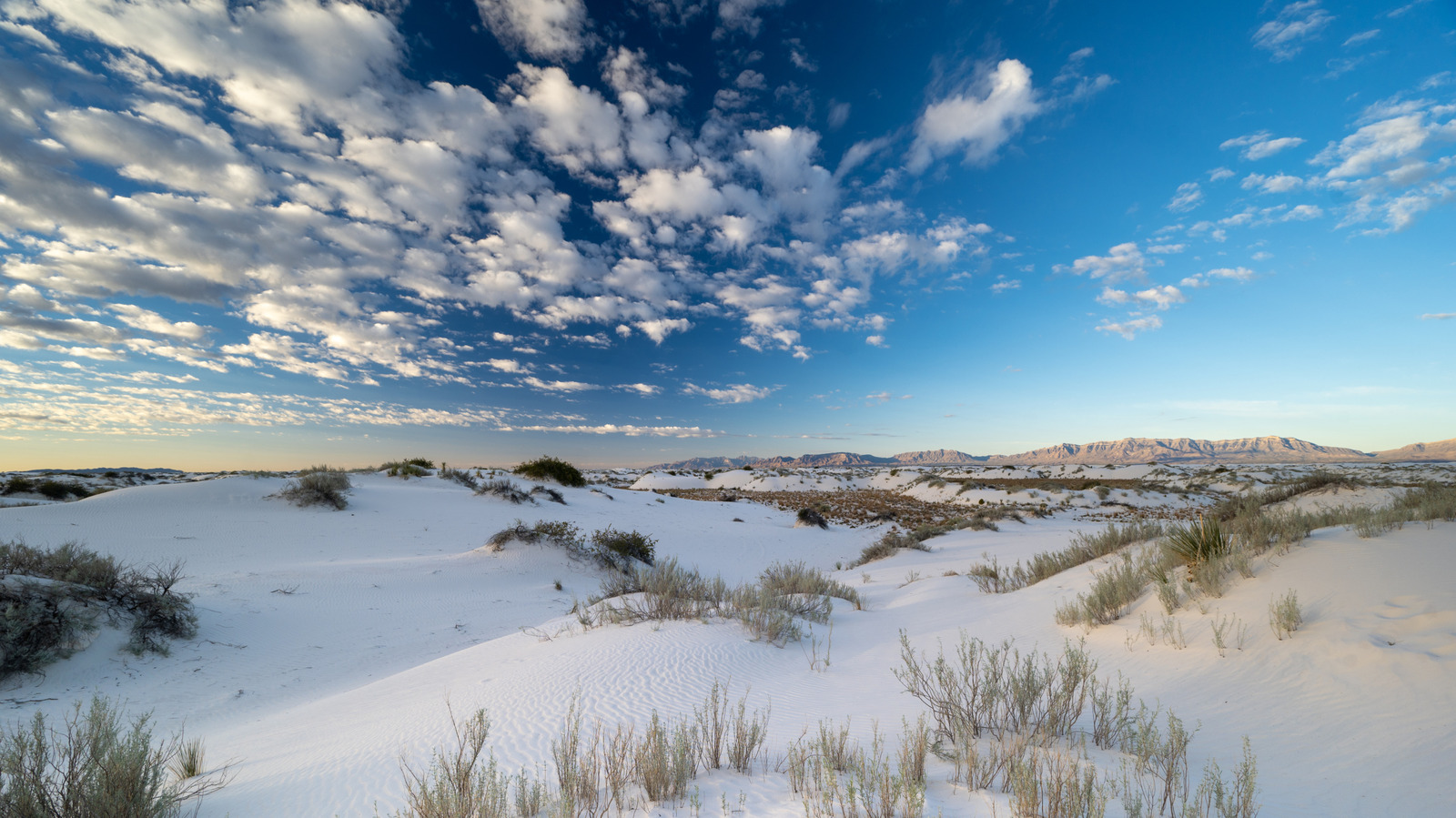
Just 15 miles southwest of Alamogordo lies White Sands National Park, a 275-square-mile field of white gypsum sand dunes. This is the largest gypsum dune field in the world. Unlike most sand, which is composed of quartz, gypsum does not absorb heat from the sun. This allows visitors to walk barefoot on the dunes even during the height of the New Mexico summer, a phenomenon that defines the local outdoor experience.
The park’s history is deeply intertwined with the region's military narrative. White Sands was established as a national monument in 1933 and re-designated as a national park in 2019. It sits within the White Sands Missile Range, a relationship that occasionally leads to temporary road closures during missile tests. This juxtaposition of a pristine natural environment and cutting-edge military technology is a hallmark of the Alamogordo area.
Visitors in 2026 often utilize the Dunes Drive, an eight-mile scenic road that leads into the heart of the dunes. For those seeking more than a scenic drive, the Alkali Flat Trail offers a rigorous five-mile round-trip hike that showcases the stark, otherworldly beauty of the basin. The park also hosts "Full Moon Hikes" and sunset strolls led by rangers, which provide ecological context to how flora and fauna, such as the bleached earless lizard, have adapted to this unique white landscape.
Reaching for the Stars: The New Mexico Museum of Space History
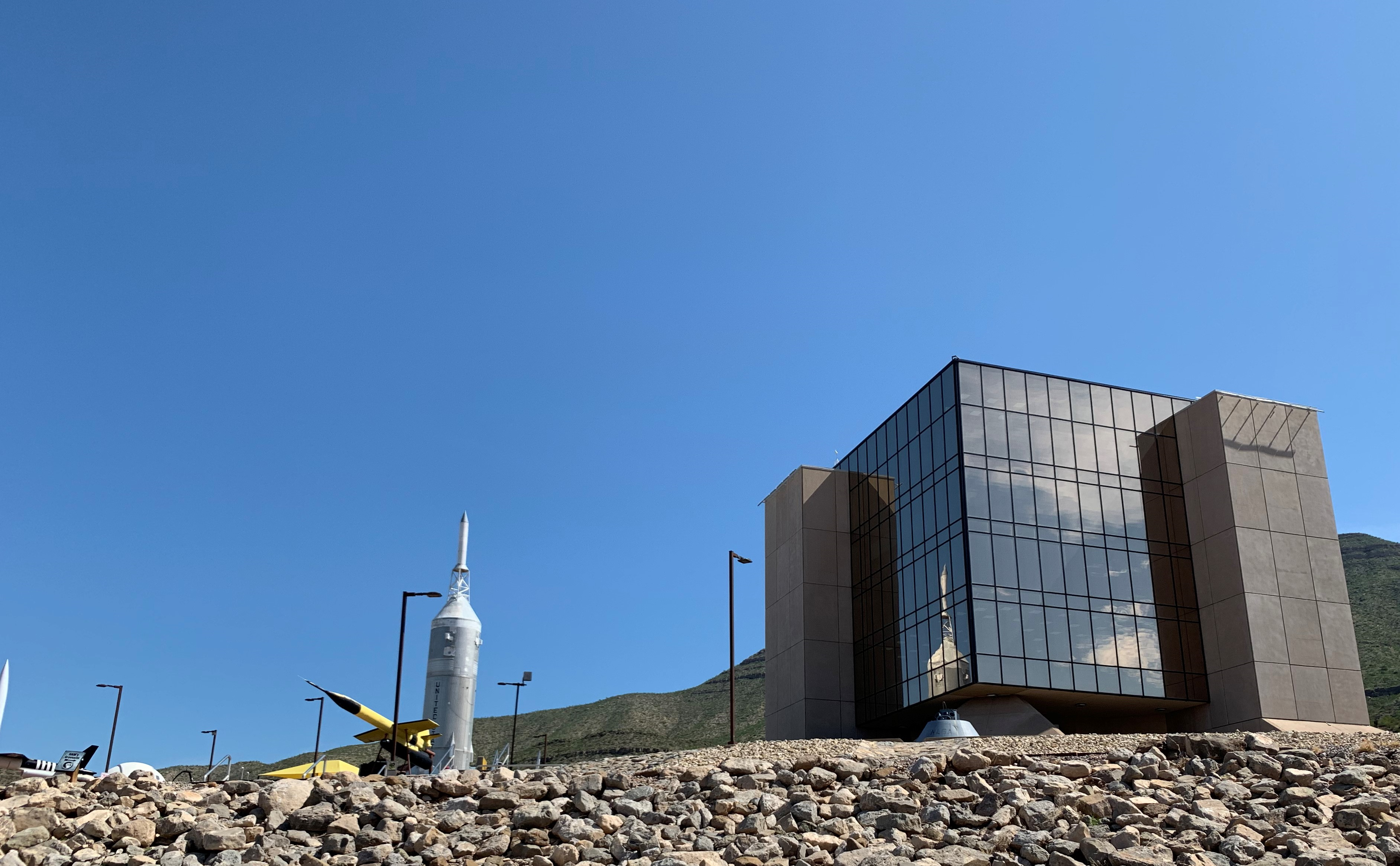
Alamogordo’s identity is perhaps most clearly defined by its contributions to the U.S. space program. The New Mexico Museum of Space History, a Smithsonian Affiliate, sits on a hill overlooking the city and the basin beyond. The facility is not merely a collection of artifacts; it is a monument to the International Space Hall of Fame.
The museum’s four floors cover the breadth of aerospace history, from early Chinese rocketry to the modern era of private space exploration. One of the most significant exhibits is the John P. Stapp Air and Space Park, which features large-scale hardware including the Sonic Wind No. 1 sled. Dr. John Stapp, known as the "fastest man on Earth," used this sled at nearby Holloman Air Force Base to test the effects of high-speed deceleration on the human body, research that was instrumental in developing seat belts and pilot ejection seats.
Outside the museum lies the final resting place of Ham, the first hominid in space. Ham, a chimpanzee who was trained at Holloman, launched aboard a Mercury-Redstone rocket in 1961. His successful mission and safe return paved the way for Alan Shepard’s historic flight. The museum provides a somber and celebratory look at these early pioneers, ensuring that the technical and biological risks of early space flight are well-documented for future generations.
The Dawn of the Atomic Age: Trinity Site
Alamogordo is the nearest major city to the Trinity Site, the location of the first atomic bomb explosion on July 16, 1945. Part of the Manhattan Project, the Trinity test changed the course of human history and military strategy forever. The site is located on the northern end of the White Sands Missile Range.
Due to its status as an active military installation, the Trinity Site is only open to the public twice a year, typically on the first Saturday in April and the first Saturday in October. In 2026, these open houses remain highly sought-after events for history enthusiasts. Visitors can see "Ground Zero," where a commemorative obelisk marks the exact center of the blast, and view "Trinitite," the greenish glass created when the desert sand was melted by the intense heat of the explosion.
The logistical requirements for visiting Trinity Site are strict. Visitors must provide valid identification, and vehicles are often searched upon entry to the missile range. There is no cell service at the site, and the experience is intentionally stark, reflecting the gravity of the events that occurred there. Understanding the Trinity Site is essential for anyone wishing to grasp the full scope of Alamogordo’s role in 20th-century global politics.
Holloman Air Force Base and the Military Influence
The presence of Holloman Air Force Base (HAFB) since 1942 has been the primary economic and cultural engine of Alamogordo. Originally established as Alamogordo Army Air Field, the base evolved into a center for high-altitude research, missile testing, and pilot training.
Today, Holloman is known for its Remotely Piloted Aircraft (RPA) training and its role in the F-16 Viper pilot training missions. The constant hum of aircraft overhead is a reminder of the city's ongoing contribution to national defense. The relationship between the city and the base is symbiotic; many retired military personnel choose to settle in Alamogordo, bringing technical expertise and a global perspective to the local community.
The base also hosts the 846th Test Squadron, which operates the Holloman High Speed Test Track. This world-class facility allows engineers to test weapon systems, components, and materials at supersonic and hypersonic speeds. These tests are critical for the development of next-generation aerospace technology, ensuring that Alamogordo remains relevant in the defense sector well into the mid-21st century.
Agriculture and Local Culture: The Pistachio Capital
While high technology and military history dominate the narrative, Alamogordo is also a center for desert agriculture. The Tularosa Basin’s climate and soil chemistry are surprisingly well-suited for pistachio farming. This has led to the growth of a thriving agritourism sector.
McGinn's PistachioLand is perhaps the most famous of these local ventures. It is home to the "World's Largest Pistachio," a 30-foot-tall concrete sculpture that has become a mandatory photo stop for travelers. Beyond the novelty, the farm provides detailed tours that explain the irrigation and harvesting processes required to maintain orchards in an arid environment. The site also includes a winery, demonstrating how New Mexico’s long history of viticulture (dating back to the 1600s) continues to flourish in the southern part of the state.
| Attraction | Primary Subject | Best Time to Visit | Distance from City Center |
|---|---|---|---|
| White Sands National Park | Geology / Recreation | Late Afternoon (Golden Hour) | 15 Miles |
| Museum of Space History | Aerospace Science | Year-round (Indoor) | 2 Miles |
| Trinity Site | Nuclear History | April / October (First Saturday) | 60 Miles |
| PistachioLand | Agriculture / Food | September (Harvest Season) | 4 Miles |
| Oliver Lee State Park | Pioneer History / Hiking | Spring / Autumn | 12 Miles |
| Toy Train Depot | Railroad History | Weekends | 1 Mile |
Natural Escapes: Oliver Lee Memorial State Park and the Sacramento Mountains
For those looking to understand the pioneer history of the region, Oliver Lee Memorial State Park provides a stark contrast to the high-tech museums. Located at the mouth of Dog Canyon, the park preserves the ranch house of Oliver Lee, a prominent figure in the late 19th-century history of the Tularosa Basin.
The park features a unique "riparian" environment—a lush green zone created by a perennial spring in the middle of the desert. The Dog Canyon Trail is a challenging hike that ascends over 3,000 feet into the Sacramento Mountains, following a route used by the Apache people to evade cavalry.
If the desert heat becomes too intense, a 30-minute drive east on Highway 82 leads to the village of Cloudcroft. Situated at 8,600 feet, Cloudcroft offers a completely different ecosystem of Douglas fir and ponderosa pine. This proximity to the mountains allows Alamogordo residents and visitors to experience a "vertical commute" through several distinct life zones, moving from the Chihuahuan Desert to an alpine forest in less than an hour.
Practical Information for 2026 Visitors
Navigating Alamogordo requires an understanding of its layout and the logistics of its high-security neighbors. The city is primarily laid out along White Sands Boulevard (Highway 54/70), which serves as the main artery for dining, lodging, and commerce.
Travel and Connectivity
The closest major airport is El Paso International Airport (ELP), located approximately 85 miles south. While there is no major commercial air service directly into Alamogordo’s regional airport, several shuttle services operate between El Paso and Alamogordo. Having a rental car is considered essential, as public transportation options are limited and the primary attractions are spread across the basin.
Climate and Timing
In 2026, weather patterns remain typical of the high desert. Summers are hot, with temperatures frequently exceeding 100°F (38°C), while winters are mild during the day but can drop below freezing at night. The monsoon season in July and August can bring sudden, intense thunderstorms and flash floods. Visitors should always carry more water than they think they need, especially when venturing into White Sands or hiking in the mountains.
Safety and Regulations
Because much of the land surrounding Alamogordo is controlled by the Department of Defense, it is vital to respect all signage. Drones are strictly prohibited in White Sands National Park and near Holloman Air Force Base without specific, rare authorizations. When visiting the missile range for scheduled events, strictly follow the established convoy or entry procedures to avoid legal complications.
Frequently Asked Questions
Is it safe to visit the Trinity Site due to radiation?
Yes, it is safe for short visits. While there is still a small amount of residual radiation at the site, the levels are extremely low. A one-hour visit to the Trinity Site results in a radiation dose of about one-half millirem. To put this in perspective, a typical chest X-ray is about 10 millirems, and a round-trip flight from New York to Los Angeles exposes a passenger to about 5 millirems of cosmic radiation.
Why is the sand at White Sands National Park white?
The "sand" is actually gypsum crystals. In most environments, gypsum is water-soluble and would wash away. However, because the Tularosa Basin is an endorheic basin (meaning it has no outlet to the sea), the gypsum remains trapped. When water evaporates, the minerals crystallize. Over thousands of years, wind has broken these crystals into the fine, white grains that form the dunes.
Can you see missile launches from Alamogordo?
Yes, it is quite common to see contrails or even the missiles themselves during scheduled tests at the White Sands Missile Range. However, these tests are not publicized for general viewing due to security and safety protocols. If a major test requires a road closure of Highway 70, the Department of Transportation and the Missile Range public affairs office will provide advance notice.
What is the significance of the Toy Train Depot?
The Toy Train Depot is located in a historic 1898 railway station and serves as a museum for regional railroad history. Alamogordo was originally founded as a planned community to support the El Paso and Northeastern Railroad. The depot houses scale models and artifacts that explain how the railroad allowed the timber industry in the Sacramento Mountains and the mining industry in the basin to flourish.
Are there any restrictions on visiting White Sands National Park in 2026?
The park is generally open daily, but it can be closed for several hours at a time during missile tests on the adjacent range. These closures usually occur on short notice, typically within 24 hours. Visitors are encouraged to check the official National Park Service website or call the visitor center on the morning of their planned visit to confirm the park is accessible.
Next Steps for Your Visit
To make the most of a trip to Alamogordo, plan your itinerary around the specific dates for the Trinity Site open house if you are a history enthusiast. For general visits, aim for the spring or autumn months to enjoy the best hiking weather. Start your journey at the New Mexico Museum of Space History to get a panoramic view of the basin, then head to White Sands National Park for a sunset stroll. Always ensure your vehicle is fueled and you have ample water, as the distances between desert attractions can be deceptive.