Norfolk International Airport (ORF) serves as the primary aviation gateway for Southeastern Virginia and Northeastern North Carolina, hosting a diverse mix of legacy carriers, low-cost airlines, and ultra-low-cost options. In 2026, the airport facilitates non-stop service to over 40 destinations, anchored by major hubs and point-to-point seasonal routes that support the region’s military, tourism, and corporate sectors.
Understanding the Norfolk International Airport (ORF) Ecosystem
Norfolk International Airport occupies a unique niche in the mid-Atlantic aviation market. Unlike larger mega-hubs, ORF is designed for efficiency and regional accessibility, serving the dense population of the Hampton Roads metropolitan area, including Norfolk, Virginia Beach, Newport News, and Chesapeake. By 2026, the airport has solidified its role as a critical infrastructure point, balancing the high-frequency needs of the U.S. military with the increasing demand for leisure travel to the Outer Banks and Virginia’s coastal resorts.
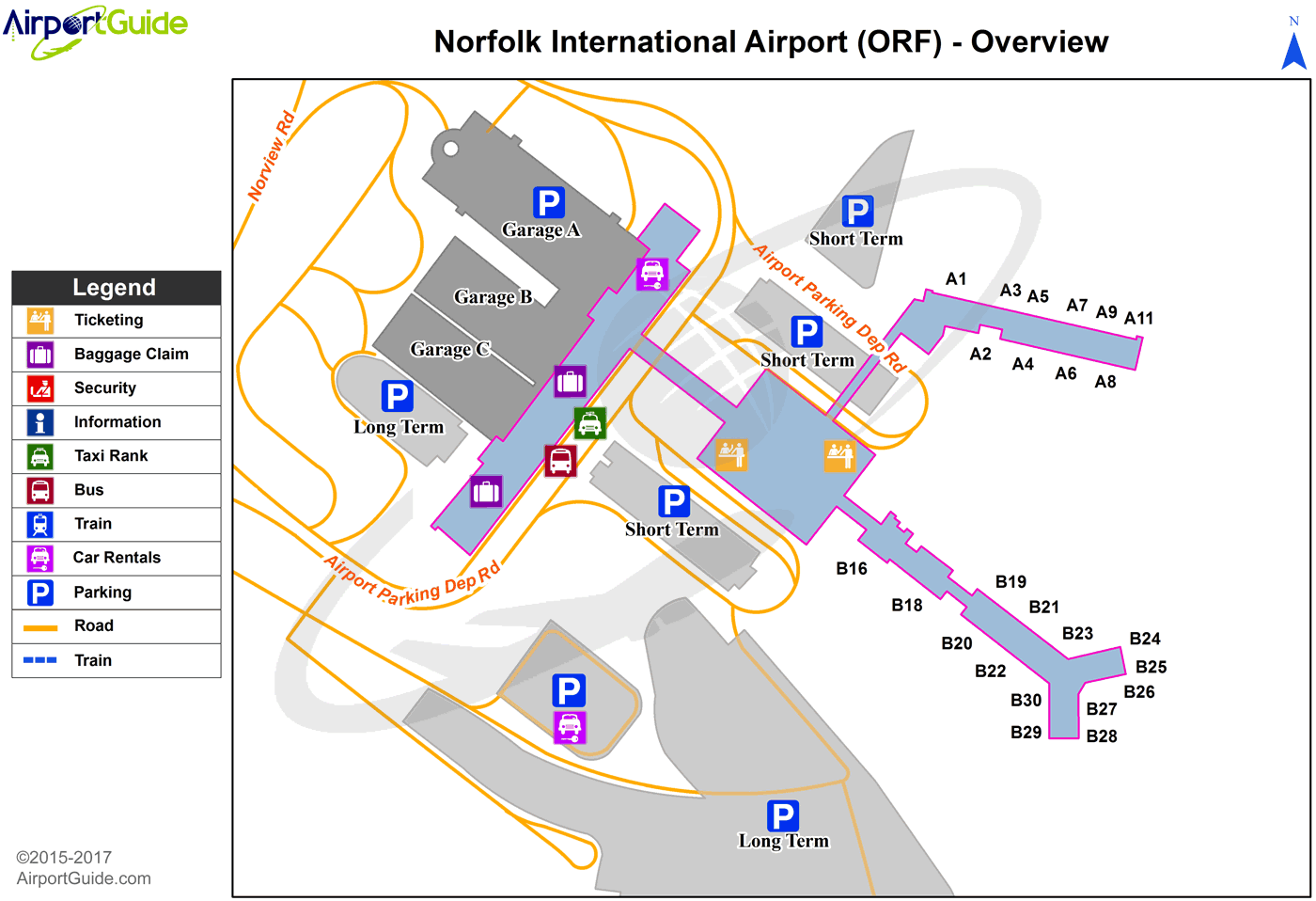
The airport's layout consists of a main terminal area divided into two primary concourses: Concourse A and Concourse B. This separation is more than just geographical; it defines the passenger experience based on the airline chosen. Legacy carriers often occupy specific gates to streamline their hub-and-spoke operations, while newer entrants like Breeze Airways have influenced the airport's expansion strategies. For travelers, understanding which airline operates from which concourse is the first step in navigating the facility effectively, as the two concourses are not connected airside behind security.
Major Legacy Carriers and Hub Connectivity
The backbone of ORF’s flight schedule remains the "Big Three" legacy carriers: American Airlines, Delta Air Lines, and United Airlines. These carriers provide the essential "spoke" flights that connect Norfolk to global networks through their respective hubs.
American Airlines
American Airlines maintains a dominant presence at Norfolk International, primarily operating out of Concourse A. For business travelers and military personnel, American offers high-frequency shuttle-style service to Charlotte Douglas International Airport (CLT) and Philadelphia (PHL). These routes are crucial because they offer the shortest connection times for international departures to Europe and South America. Additionally, American provides daily non-stop service to Dallas/Fort Worth (DFW), which serves as a gateway to the West Coast and Asia. In 2026, American utilizes a mix of regional jets for shorter hops and mainline Boeing 737 or Airbus A320 aircraft for the longer DFW and Chicago O'Hare (ORD) legs.
Delta Air Lines
Delta Air Lines is a preferred carrier for many regional travelers due to its consistent reliability and robust hub at Hartsfield-Jackson Atlanta International Airport (ATL). Delta’s operations at ORF focus heavily on moving passengers through Atlanta, which remains the single most-traveled destination from Norfolk. Beyond Atlanta, Delta provides non-stop flights to New York (LGA and JFK), Detroit (DTW), and Minneapolis-St. Paul (MSP). Delta typically operates from Concourse A, benefiting from modernized gate areas and lounge access nearby.
United Airlines
United Airlines facilitates Westward and Northern travel through its hubs at Washington-Dulles (IAD), Chicago O'Hare (ORD), Newark (EWR), and Houston (IAH). The short flight to Dulles is particularly significant for government contractors and international travelers seeking direct United connections to global capitals. United’s presence in Concourse B is characterized by a high volume of regional partner flights under the United Express brand, though mainline aircraft are frequently used for the Houston and Chicago routes to accommodate higher passenger volumes.
Low-Cost and Ultra-Low-Cost Carrier Operations
The growth of low-cost carriers (LCCs) and ultra-low-cost carriers (ULCCs) has revolutionized pricing at ORF, making air travel more accessible for leisure passengers and families.
Southwest Airlines
Southwest Airlines has long been a staple at Norfolk, providing a "point-to-point" alternative to the hub-and-spoke models of legacy carriers. Operating from Concourse B, Southwest connects Norfolk to major cities like Baltimore/Washington (BWI), Chicago Midway (MDW), Nashville (BNA), and several Florida destinations including Orlando (MCO). One of the primary advantages of Southwest at ORF is the lack of change fees and the "Bags Fly Free" policy, which remains a significant draw for the region’s transient military population moving household goods or gear.
Allegiant Air and Frontier Airlines
Allegiant Air and Frontier Airlines provide budget-friendly, often seasonal, service to niche markets. Allegiant typically focuses on Florida destinations such as Sanford (SFB) and St. Pete-Clearwater (PIE), as well as seasonal routes to the Midwest. Frontier utilizes a similar model, offering low-base fares with unbundled services to hubs like Denver (DEN) and Orlando. These carriers are essential for price-sensitive travelers, though they often operate with lower frequencies—sometimes only two or three times per week.
Spirit Airlines
Spirit Airlines joined the Norfolk market to compete directly on high-volume routes to Florida and the Northeast. By 2026, Spirit has established a reliable schedule at ORF, primarily utilizing Airbus A320neo aircraft. Their presence has historically forced legacy carriers to keep "Basic Economy" pricing competitive on overlapping routes, such as those to Fort Lauderdale (FLL) or Orlando.
The Breeze Airways Impact: Norfolk as a Strategic Base
Perhaps the most significant development in Norfolk’s recent aviation history is the emergence of Breeze Airways. Norfolk serves as one of the primary technical and crew bases for Breeze. Unlike carriers that only fly to hubs, Breeze focuses on "underserved" markets—cities that previously required a connection.
From Norfolk, Breeze provides non-stop access to cities like Hartford (BDL), Providence (PVD), New Orleans (MSY), Charleston (CHS), and even transcontinental flights to the West Coast (Las Vegas and Los Angeles) using their fleet of Airbus A220-300 aircraft. The A220 is a game-changer for ORF, as its range and efficiency allow for long-haul flights from a medium-sized airport without the need for the massive passenger volume required by a Boeing 787 or 777.
Breeze offers a tiered service model (Nice, Nicer, Nicest), which bridges the gap between ultra-low-cost and premium service. Their heavy investment in Norfolk has led to improved terminal facilities and increased local employment, making them a "hometown" favorite for many Hampton Roads residents.
Terminal Assignments and Passenger Navigation
Navigating Norfolk International Airport requires an understanding of the terminal split. While the ticketing and baggage claim areas are centralized, the departure gates are separated.
| Airline | Concourse | Primary Hubs/Destinations | Typical Aircraft |
|---|---|---|---|
| American Airlines | Concourse A | CLT, DFW, PHL, ORD | B737, A319, CRJ-900 |
| Delta Air Lines | Concourse A | ATL, DTW, LGA, JFK, MSP | B717, B737, A321 |
| United Airlines | Concourse B | IAD, ORD, EWR, IAH | E175, B737, A320 |
| Southwest Airlines | Concourse B | BWI, MDW, BNA, MCO, TPA | B737-700, B737-800 |
| Breeze Airways | Concourse B | BDL, PVD, CHS, MSY, LAS, LAX | Airbus A220-300 |
| Allegiant Air | Concourse B | SFB, PIE, PGD | Airbus A320 |
| Spirit Airlines | Concourse A | FLL, MCO, LAS | Airbus A320neo |
| Frontier Airlines | Concourse B | DEN, MCO | Airbus A321ceo/neo |
Concourse A vs. Concourse B
- Concourse A: Generally houses American, Delta, and Spirit. It features several dining options and is known for being slightly more updated in terms of seating and power outlet availability as of 2026.
- Concourse B: Houses United, Southwest, Breeze, Allegiant, and Frontier. Because it serves more low-cost carriers, Concourse B often experiences higher peak-hour foot traffic, especially during holiday weekends and summer vacation periods.
Flight Frequencies and Seasonal Variations
Travelers should be aware that flight schedules at ORF are highly seasonal. During the summer months (May through September), airlines significantly increase capacity to accommodate tourists visiting Virginia Beach and the Outer Banks.
- Summer Peaks: Expect daily non-stop flights to more diverse locations. Carriers like Allegiant and Breeze often add seasonal "sun" routes that may not exist in the winter.
- Winter Reductions: During the winter, some point-to-point routes are suspended or reduced to weekend-only service. However, hub connectivity to Atlanta, Charlotte, and Dulles remains stable year-round to serve the military and business sectors.
- Military Charters: ORF frequently handles non-scheduled military charter flights. While these do not appear on standard commercial boards, they contribute to the overall activity level of the airport.
Ground Transportation and Logistics for Passengers
Getting to and from the airlines at ORF involves several logistical considerations. The airport is located approximately 15-20 minutes from downtown Norfolk and 25-30 minutes from the Virginia Beach oceanfront, depending on traffic.
- Parking: The airport offers a mix of short-term and long-term parking garages, as well as an economy lot. By 2026, the airport has implemented a digital parking reservation system that allows travelers to book spaces in advance—a highly recommended step during peak travel seasons.
- Rideshare and Taxis: Dedicated pickup zones for Uber and Lyft are located outside the baggage claim area. Taxis are also readily available 24/7.
- Car Rentals: The rental car facility is attached to the terminal, allowing passengers to walk from baggage claim to their vehicles without needing a shuttle, which is a significant convenience compared to larger airports.
Future Outlook: Infrastructure and Expansion
As of 2026, Norfolk International Airport is moving forward with several infrastructure projects aimed at improving the airline and passenger experience. This includes the "Master Plan" updates which involve potential concourse expansions and the long-discussed construction of a new parallel runway to increase capacity.
The airport has also invested in environmental sustainability, with several airlines at ORF participating in carbon-offset programs and the airport itself installing more energy-efficient lighting and gate power systems to reduce the "idling" time of aircraft engines. For the passenger, this means a cleaner, more modern facility that can handle the increased volume brought by the expansion of carriers like Breeze and Spirit.
Frequently Asked Questions
Which airlines offer the most non-stop flights from Norfolk?
American Airlines and Delta Air Lines offer the highest frequency of flights through their hubs, but Breeze Airways currently offers the largest number of unique non-stop destinations from Norfolk. Southwest also remains a leader in non-stop volume, particularly to the Northeast and Florida.
How early should I arrive for my flight at ORF in 2026?
For domestic flights, the standard recommendation is 2 hours prior to departure. Despite being a medium-sized airport, security lines at ORF can become congested during early morning "bank" periods (5:00 AM – 7:00 AM) when many legacy carriers depart for their hubs simultaneously. If you have TSA PreCheck, this time can often be reduced, but 2 hours remains the safest margin.
Does Norfolk International Airport have international flights?
While ORF is an "International" airport by designation (meaning it has customs facilities), it primarily serves domestic destinations in 2026. Most passengers traveling internationally will fly from Norfolk to a hub like Dulles (IAD), Charlotte (CLT), or Atlanta (ATL) to clear customs or depart on an overseas leg. Occasional seasonal charters or private international flights utilize the customs facilities.
Are Concourse A and Concourse B connected?
No, the concourses are not connected behind the security checkpoints. If you have a layover or are meeting someone, you must exit the secure area and re-enter through the security checkpoint of the other concourse. This is an important consideration for travelers who might want to visit a specific restaurant or lounge located in the "other" concourse.
Which airline is best for military travelers at ORF?
Southwest Airlines is often favored by military personnel due to its generous baggage policy, which accommodates the heavy gear often carried by service members. However, American and Delta also provide robust support and frequent connections to other military-heavy regions like San Diego, Jacksonville, and Washington D.C.
Practical Recommendations for Travelers
When flying out of Norfolk International Airport in 2026, always verify your gate and concourse at least 24 hours in advance via the airline's mobile app. Because ORF’s concourses are not linked airside, going to the wrong security checkpoint can result in significant delays.
For those seeking the best value, consider comparing Breeze Airways' non-stop routes against the legacy carriers. While a legacy carrier might offer more flight times, a non-stop flight on Breeze can save you 3-4 hours of travel time by avoiding a hub connection. Finally, if you are traveling during the summer or holidays, pre-book your parking online to ensure you have a spot in the garages closest to the terminal, as the economy lots can fill up quickly during peak coastal tourism months.