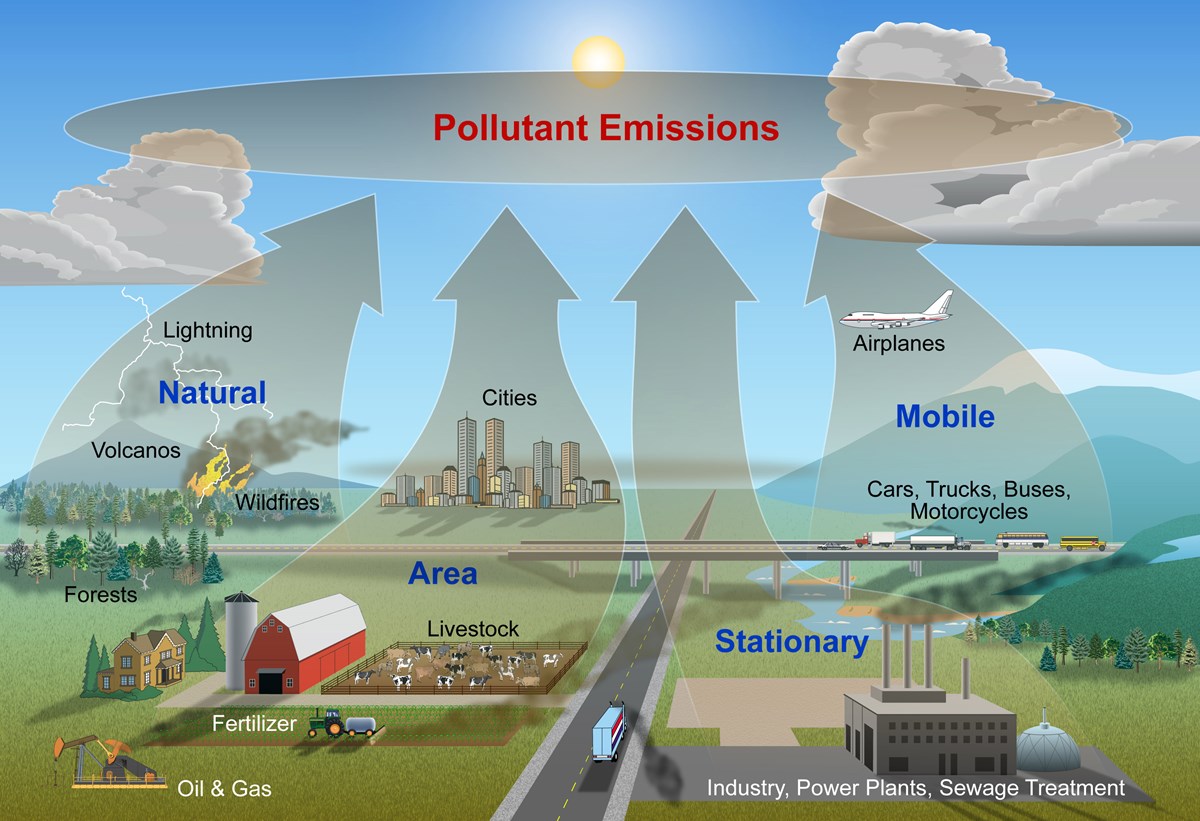
Air pollution impacts the environment by fundamentally altering the chemical and physical properties of our atmosphere, leading to climate change, acid rain, and the degradation of vital ecosystems. These pollutants disrupt nutrient cycles in soil and water, damage plant tissues through oxidative stress, and accelerate biodiversity loss by poisoning habitats and shifting the climatic conditions required for species survival.
As we assess the state of the planet in 2026, the intersection of industrial emissions, agricultural runoff, and transportation exhaust remains the primary driver of environmental instability. While human health is often the focus of air quality discussions, the ecological footprint of atmospheric contamination is arguably more permanent and harder to reverse. From the microscopic level of soil bacteria to the global scale of oceanic currents, air pollution acts as a persistent stressor that weakens the resilience of the natural world.
The Primary Drivers of Environmental Degradation
To understand how air pollution impacts the environment, we must first identify the specific agents of change. "Air pollution" is a broad term encompassing various gases and solid particles. In 2026, regulatory bodies like the Environmental Protection Agency (EPA) and the European Environment Agency (EEA) continue to prioritize "criteria pollutants" because of their profound environmental reach.
Particulate Matter (PM2.5 and PM10)
Particulate matter consists of microscopic solids or liquid droplets that are small enough to be suspended in the air. Beyond health risks, these particles cause significant environmental damage by contributing to "atmospheric dimming." This phenomenon involves particles scattering and absorbing sunlight, which can reduce the amount of solar radiation reaching the Earth's surface, potentially interfering with photosynthesis in plants and altering local weather patterns.
Nitrogen Oxides (NOx) and Sulfur Dioxide (SO2)
These gases are the primary precursors to acid deposition, more commonly known as acid rain. When fossil fuels are burned, NOx and SO2 are released into the atmosphere, where they react with water, oxygen, and other chemicals to form sulfuric and nitric acids. These acids then fall to the ground in wet or dry forms, leading to the acidification of lakes and the leaching of essential nutrients from forest soils.
Ground-Level Ozone (O3)
Unlike the protective ozone layer in the stratosphere, ground-level ozone is a powerful secondary pollutant formed by the reaction of NOx and Volatile Organic Compounds (VOCs) in the presence of sunlight. It is a potent greenhouse gas and a phytotoxic agent, meaning it is directly poisonous to plants, reducing crop yields and forest productivity globally.
The Mechanism of Acid Deposition and Soil Chemistry
One of the most insidious ways air pollution impacts the environment is through the gradual acidification of terrestrial and aquatic systems. Acid rain does not usually kill trees directly; instead, it weakens them by changing the soil chemistry in which they grow.
When acidic precipitation reaches the ground, it initiates a process called cation exchange. The hydrogen ions in the acid rain replace vital nutrients like calcium, magnesium, and potassium on soil particles. These nutrients are then washed away into groundwater, leaving the soil impoverished. Furthermore, acid rain mobilizes aluminum from the soil. In its free state, aluminum is highly toxic to plants and can be washed into streams and lakes, where it becomes lethal to aquatic life.
In 2026, many high-altitude forests in the Appalachian Mountains and parts of Central Europe continue to show signs of "forest dieback" caused by decades of chronic acid deposition. Trees in these regions are more susceptible to disease, insect infestations, and extreme weather because their nutrient foundations have been stripped away by air pollution.
Atmospheric Warming and the Albedo Effect
Air pollution is inextricably linked to climate change, but the relationship is complex. While greenhouse gases like carbon dioxide (CO2) and methane (CH4) trap heat, other pollutants like black carbon (soot) have a more direct physical impact on the environment.
Black carbon is a major component of particulate matter resulting from the incomplete combustion of fossil fuels and biomass. When black carbon particles settle on snow and ice, they darken the surface. This reduces the "albedo effect"—the ability of snow to reflect sunlight back into space. Instead of reflecting energy, the darkened snow absorbs it, accelerating the melting of glaciers and polar ice caps. This feedback loop not only contributes to sea-level rise but also disrupts the thermal balance of the planet, leading to more frequent and severe weather events.
Eutrophication: When Air Pollution Enters the Water
Nitrogen is a necessary nutrient for plant growth, but too much of it—delivered via air pollution—can be catastrophic for aquatic ecosystems. This process is known as atmospheric nitrogen deposition.
When nitrogen oxides from vehicle exhaust and industrial stacks settle into bodies of water, they act as an unintended fertilizer. This leads to eutrophication, a process where an overabundance of nutrients causes massive blooms of algae. These algae blooms block sunlight from reaching underwater plants. When the algae eventually die and decompose, the process consumes the available dissolved oxygen in the water, creating "dead zones" where fish and other aquatic organisms cannot survive.
Major estuaries, such as the Chesapeake Bay in the United States and the Baltic Sea in Europe, have historically struggled with this phenomenon. Even in 2026, despite stricter emission controls, nitrogen deposition remains a significant contributor to the degradation of coastal water quality and the collapse of local fisheries.
Damage to Vegetation and Crop Productivity
Ground-level ozone is perhaps the most damaging air pollutant for global food security. Ozone enters plants through their stomata (tiny pores on the leaves) during normal gas exchange. Once inside, it produces reactive oxygen species that damage plant cells and inhibit photosynthesis.
The environmental impacts on vegetation include:
- Reduced Growth Rates: Stunted development in both commercial crops and natural forests.
- Leaf Injury: Visible "flecking" or "bronzing" of leaves, which reduces the surface area available for energy production.
- Reduced Carbon Sequestration: Weakened forests are less efficient at absorbing CO2 from the atmosphere, creating a negative feedback loop that exacerbates global warming.
Research updated in 2026 indicates that global yields of staple crops like wheat, soybeans, and rice are consistently 5% to 15% lower than they would be in the absence of ground-level ozone pollution. This represents a significant challenge to feeding a growing global population in a changing climate.
Summary of Major Pollutants and Environmental Effects
The following table summarizes the primary air pollutants and the specific ways they impact the natural world.
| Pollutant | Primary Environmental Impact | Mechanism |
|---|---|---|
| Sulfur Dioxide (SO2) | Acid Rain / Acidification | Forms sulfuric acid; lowers pH of water and soil. |
| Nitrogen Oxides (NOx) | Eutrophication & Acid Rain | Provides excess nutrients to water; forms nitric acid. |
| Particulate Matter (PM) | Atmospheric Dimming / Haze | Scatters sunlight; reduces visibility and photosynthesis. |
| Black Carbon | Accelerated Glacial Melting | Lowers albedo of snow; increases heat absorption. |
| Ground-Level Ozone | Phytotoxicity | Damages plant tissues; reduces crop yields. |
| Mercury / Heavy Metals | Bioaccumulation | Settles in water; enters food chain through fish. |
Impacts on Biodiversity and Wildlife
Air pollution impacts the environment by creating "chemical barriers" to species survival. Wildlife species are affected both directly, through inhalation and ingestion, and indirectly, through the loss of their habitats.
Bioaccumulation of Toxins
Heavy metals like mercury are often released into the air through coal combustion. Once airborne, mercury can travel long distances before settling into lakes and oceans. Microorganisms convert it into methylmercury, a highly toxic form that builds up in the tissues of fish. As larger animals eat these fish, the concentration of mercury increases—a process called biomagnification. In 2026, predatory birds, marine mammals, and humans continue to face neurotoxic risks due to this atmospheric pathway of contamination.
Habitat Alteration
For many specialized species, even a slight change in the chemical makeup of their environment can be fatal. Lichens, for example, are highly sensitive to sulfur and nitrogen levels in the air. Their disappearance from a forest is often the first "canary in the coal mine" for air pollution. When these foundational species vanish, the insects and birds that depend on them for food and nesting materials also decline, leading to a cascade of biodiversity loss.
The Role of International Policy and Technology in 2026
As we navigate through 2026, the global response to air pollution has shifted toward integrated climate and air quality strategies. The recognition that "short-lived climate pollutants" (SLCPs) like methane and black carbon contribute both to immediate air quality issues and long-term warming has led to more targeted interventions.
Technological advancements have also played a role. The widespread adoption of electric vehicles (EVs) has significantly reduced urban NOx and VOC levels. However, industrial emissions in developing economies and the persistence of legacy pollutants in soil and water remain significant hurdles. International agreements, such as the Gothenburg Protocol, continue to be updated to set more stringent ceilings on pollutants that cross national borders.
Frequently Asked Questions
Does air pollution affect the ocean?
Yes, air pollution significantly affects the ocean through two main pathways: acidification and nutrient loading. The ocean absorbs about 30% of the CO2 released into the atmosphere, which leads to ocean acidification, harming coral reefs and shellfish. Additionally, atmospheric nitrogen deposition contributes to "dead zones" in coastal areas by fueling harmful algal blooms.
How does air pollution contribute to the extinction of species?
Air pollution contributes to extinction by destroying habitats and food sources. For instance, acid rain can make lakes uninhabitable for certain fish species, and ground-level ozone can kill the native plants that specific pollinators rely on. If a species cannot adapt quickly enough to these chemical changes, its population may collapse.
Can trees clean up air pollution?
Trees act as natural filters by trapping particulate matter on their leaves and absorbing gaseous pollutants like NOx and CO2 through their stomata. However, there is a limit to this capacity. High concentrations of pollutants can overwhelm a tree’s defenses, leading to leaf damage and reduced health, which eventually diminishes its ability to provide these ecosystem services.
Is the "hole" in the ozone layer caused by air pollution?
Yes, the depletion of the stratospheric ozone layer was primarily caused by man-made chemicals known as chlorofluorocarbons (CFCs) and halons. While the Montreal Protocol has successfully phased out most of these substances, leading to the gradual recovery of the ozone layer, some replacement chemicals and ongoing industrial emissions still pose a threat to this vital atmospheric shield.
How long does air pollution stay in the environment?
The "residence time" varies greatly. Large particulate matter may settle in hours, while fine particles (PM2.5) can stay airborne for weeks and travel across continents. Greenhouse gases like CO2 can persist in the atmosphere for centuries, and heavy metals like lead or mercury can remain in soil and sediment for decades or longer, continuing to impact the environment long after the initial emission.
Practical Next Actions for Environmental Protection
Addressing how air pollution impacts the environment requires both systemic change and individual responsibility. For those looking to mitigate their ecological footprint, the following steps are recommended:
- Support Clean Energy Transition: Reducing reliance on coal and oil is the most effective way to lower SO2 and NOx emissions. Support local and national policies that prioritize wind, solar, and geothermal energy.
- Monitor Local Air Quality: Use tools like the AirNow or regional equivalents to understand when pollution levels are high, which can help in making decisions about water and land use in your community.
- Reduce Nitrogen Runoff: In gardening and agriculture, use fertilizers sparingly. Atmospheric nitrogen is already stressing ecosystems; adding excess liquid fertilizer exacerbates the problem of eutrophication in local waterways.
- Advocate for Green Infrastructure: Urban forests and wetlands act as buffers against air pollution. Protecting these areas helps neutralize pollutants before they can reach more sensitive ecosystems.