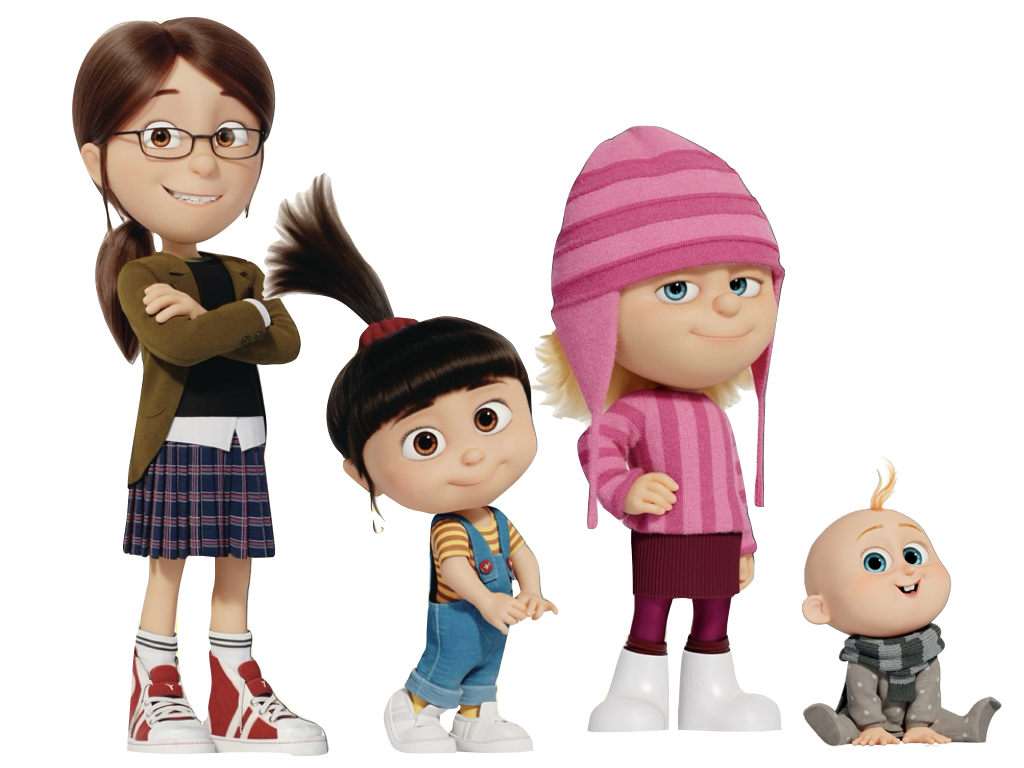
Agnes Gru is the youngest of the three adoptive daughters of Felonious Gru and Lucy Wilde in the Despicable Me franchise. Known for her profound innocence, unwavering optimism, and legendary obsession with unicorns, she serves as the primary catalyst for Gru’s transformation from a world-class supervillain into a devoted father.
The Origin and Background of Agnes Gru
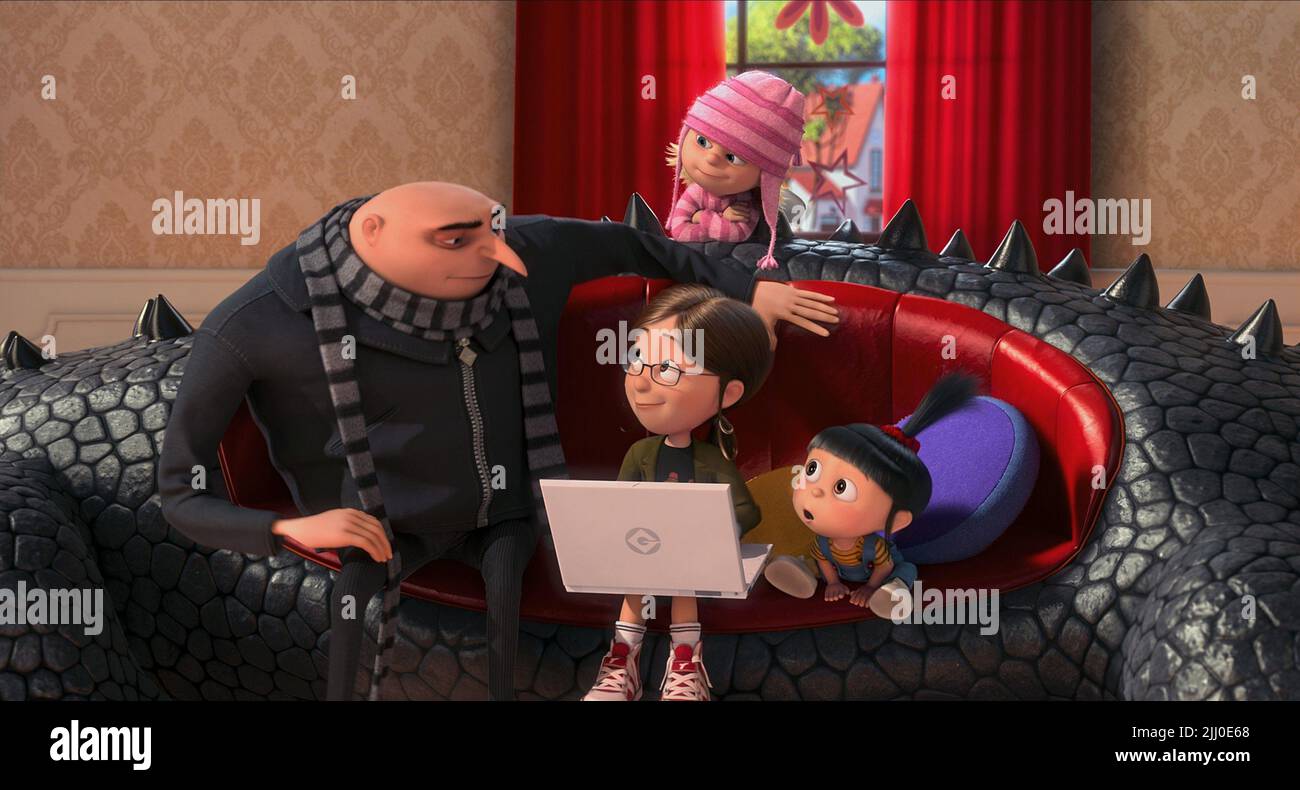
Agnes Gru first appeared in the 2010 cinematic hit Despicable Me as one of three sisters living at Miss Hattie’s Home for Girls. Alongside her older sisters, Margo and Edith, Agnes lived a life of routine and discipline under the strict and often cold supervision of Miss Hattie. While Margo took on the role of the protective protector and Edith embraced a rebellious, tomboyish spirit, Agnes remained the beacon of pure, untainted hope.
In the narrative context of 2026, looking back at over a decade and a half of character development, Agnes remains the most static yet impactful character in the series. Her background is rooted in the typical orphan trope, but her reaction to her circumstances was unique. Instead of becoming cynical, she clung to a world of fantasy, most notably her belief in the existence of unicorns. This belief was not merely a childhood whim but a psychological shield that allowed her to maintain joy in a sterile orphanage environment.
The adoption of Agnes and her sisters was initially a tactical move by Gru to infiltrate Vector’s fortress. However, Agnes was the first to see past Gru’s menacing exterior. While her sisters were skeptical of the "scary man" in the black scarf, Agnes immediately embraced him as a paternal figure, famously handing him a "ticket" to her dance recital almost immediately upon arrival at his lair.
Physical Appearance and Iconic Design
The visual design of Agnes Gru is a masterclass in "cute" character engineering by Illumination Entertainment. Her features are intentionally exaggerated to evoke a protective instinct in the audience, mirroring the effect she has on the character of Gru.
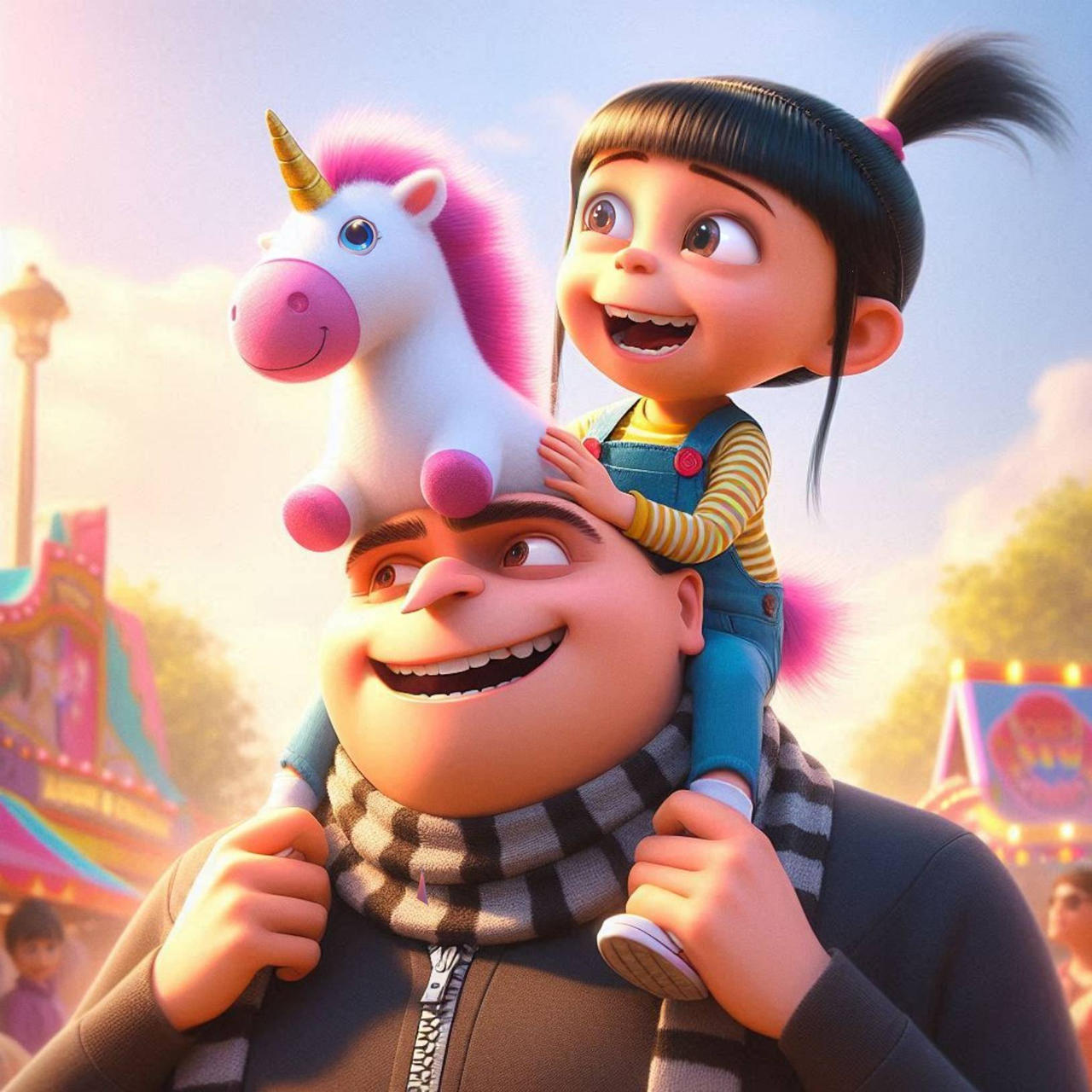
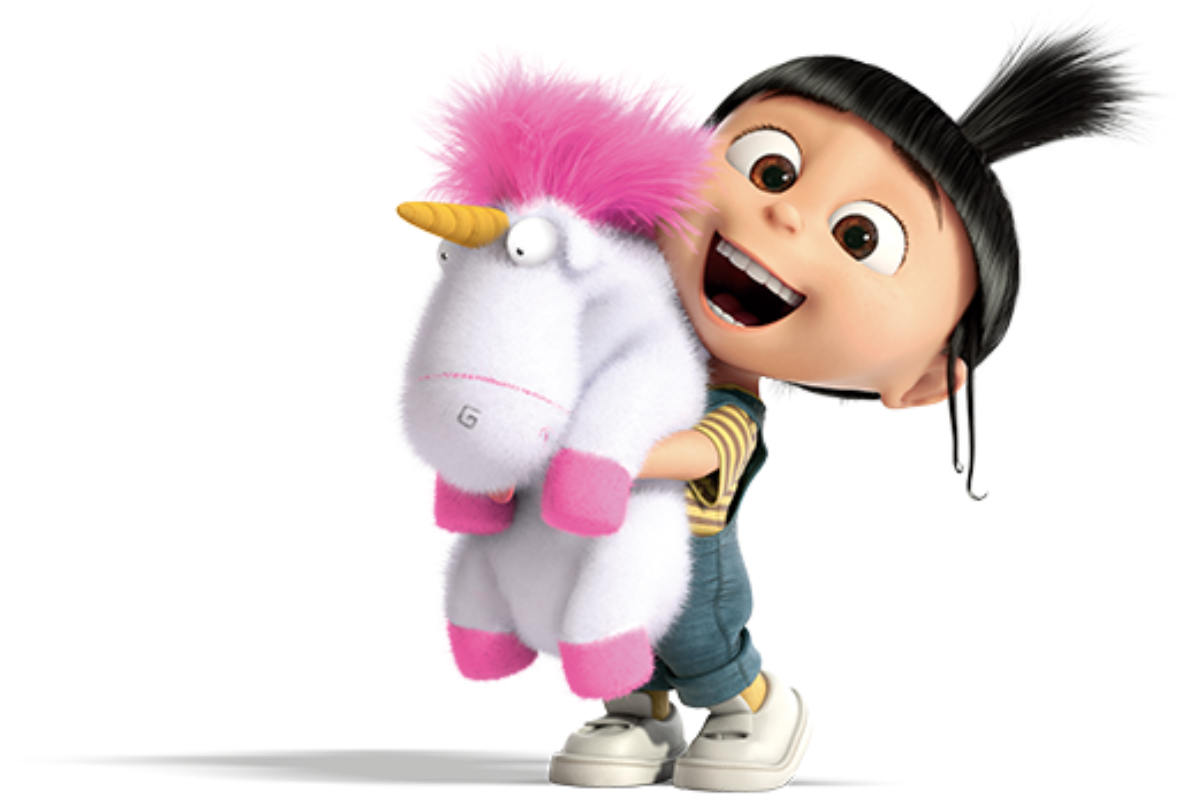
Agnes is consistently depicted with jet-black hair tied into a singular, vertical ponytail that sticks straight up from the top of her head. This "sky-high" ponytail has become her visual trademark, often twitching or bobbing to reflect her emotional state. Her large, expressive dark brown eyes are her primary tool for persuasion—the "puppy dog eyes" that eventually break through Gru’s hardened emotional defenses.
Her attire has remained largely consistent throughout the main films of the franchise:
- The Striped Shirt: A yellow and brown horizontal-striped t-shirt.
- The Overalls: Classic blue denim overalls with silver buttons.
- Footwear: Simple white sneakers with yellow socks.
- Accessories: She is rarely seen without her stuffed unicorn, "Fluffy," particularly in the earlier installments of the franchise.
As of the events documented through Despicable Me 4 (2024), Agnes’s design has seen only minor refinements in texture and lighting due to advancements in animation technology, but her core silhouette remains unchanged to preserve her timeless, youthful appeal.
Personality Traits and Psychological Profile
Agnes represents the "Id" of the three sisters—pure emotion and instinct, untainted by the skepticism of adolescence. Her personality is defined by several core pillars that make her a vital component of the Gru family dynamic.
Unconditional Love and Optimism
Agnes possesses an innate ability to see the good in everyone. This is most evident in her relationship with Gru. In the first film, when Gru is at his most villainous, Agnes treats him with the affection one would show a hero. This unconditional love is what eventually forces Gru to reconcile his identity as a villain with his new role as a father. She does not judge him for his past; she only cares about his presence in her future.
The Unicorn Obsession
Her fixation on unicorns is more than a hobby; it is a defining personality trait. The line, "It’s so fluffy, I’m gonna die!" uttered upon winning a stuffed unicorn at a carnival, became a global cultural phenomenon. Psychologically, the unicorn represents the impossible and the magical—the very things Gru’s world of cold gadgets and schemes lacked. In Despicable Me 3, this trait is explored further when she goes on a quest to find a "real" unicorn, eventually settling for a one-horned goat she names Lucky. This moment highlights her ability to find beauty and fulfillment in reality, even when it doesn't perfectly match her fantasies.
Naivety vs. Emotional Intelligence
While Agnes is often portrayed as naive, she displays a high level of emotional intelligence. She is frequently the one who notices when Gru or Lucy are upset, providing comfort through simple gestures like a hug or a handmade drawing. She understands the "heart" of a situation long before her older sisters have finished analyzing the logistics.
Character Evolution Through the Franchise
While Agnes remains the "youngest child" archetype, her role has shifted as the Gru family has expanded.
Despicable Me (2010)
In the original film, Agnes is the emotional anchor. Her primary function is to break down Gru’s walls. Her insistence on a bedtime story ("Sleepy Kittens") and her disappointment when Gru misses her recital are the pivotal moments that lead to Gru’s redemption.
Despicable Me 2 (2013)
The sequel focuses on Agnes’s desire for a mother figure. Her "Mother’s Day" poem rehearsal is one of the most poignant scenes in the film, highlighting the void left by her lack of a maternal parent. Her immediate acceptance of Lucy Wilde demonstrates her openness to expanding her family unit.
Despicable Me 3 (2017)
In the third installment, Agnes shows a selfless side. When Gru loses his job at the Anti-Villain League, Agnes sells her most prized possession—her stuffed unicorn—at a yard sale to help support the family. This marks a significant moment of maturity, showing that her love for her family outweighs her material obsessions.
Despicable Me 4 (2024)
By the fourth film, Agnes must navigate the arrival of a new family member, Gru Jr. Her role shifts slightly toward that of a protective older sibling, though she still maintains her characteristic innocence. The film explores how she maintains her identity within a now much larger and more chaotic household.
Comparison of the Gru Sisters
To understand Agnes’s specific role, it is helpful to compare her to her sisters, Margo and Edith. Each represents a different stage of childhood and a different challenge for Gru’s parenting.
| Feature | Margo Gru | Edith Gru | Agnes Gru |
|---|---|---|---|
| Birth Order | Eldest | Middle | Youngest |
| Primary Trait | Responsible / Skeptical | Rebellious / Tomboysih | Innocent / Optimistic |
| Color Palette | Green and Black | Pink and Purple | Yellow and Blue |
| Core Interest | Technology and Safety | Martial Arts and Pranks | Unicorns and Fluffiness |
| Role in Family | The "Brain" and Moral Compass | The "Muscle" and Risk-taker | The "Heart" and Emotional Anchor |
| Attitude Toward Gru | Initially suspicious | Indifferent/Amused | Instantly loving |
The Voice Behind the Character
The vocal performance of Agnes is a critical component of her charm. The transition between voice actresses over the years has been handled with careful attention to maintaining the character's specific cadence and pitch.
- Elsie Fisher (2010–2013): Fisher provided the voice for the first two films. Her natural, unpolished delivery was instrumental in making Agnes feel like a real child rather than a scripted character. Her iconic "It's so fluffy!" line was largely a result of her authentic youthful energy.
- Nev Scharrel (2017): As Fisher aged out of the role, Scharrel took over for Despicable Me 3. She successfully mimicked the high-pitched, breathless enthusiasm that fans associated with the character.
- Madison Polan (2024): In the most recent major installment, Polan took over the mantle. By 2026, her portrayal is considered the current standard for the character, continuing the tradition of casting actual children to ensure the performance remains grounded in genuine innocence.
Cultural Impact and Legacy
As of 2026, Agnes Gru remains one of the most recognizable characters in modern animation. Her influence extends far beyond the films themselves.
- The "Fluffy" Meme: The "It's so fluffy!" exclamation remains a staple of internet culture, used across social media platforms to describe anything cute or appealing.
- Merchandising: Agnes is a powerhouse for Illumination’s merchandising arm. The "Fluffy" unicorn toy remains one of the best-selling pieces of animation tie-in merchandise in history, rivaling the Minions themselves.
- Representation of Adoption: While the films are comedies, the portrayal of the bond between Gru and his daughters is often cited by adoption advocates as a positive, if stylized, representation of non-traditional family structures. Agnes’s role as the "bridge" in this process is particularly significant.
Technical Specifications of the Character Profile
For creators, writers, and fans looking at the technical data of Agnes Gru within the franchise lore:
- Full Name: Agnes Gru
- Approximate Age: Permanently depicted between 6 and 8 years old (animation timeline).
- First Appearance: Despicable Me (July 9, 2010).
- Creator: Sergio Pablos (original story), Cinco Paul, and Ken Daurio.
- Home Location: Gru’s Residential Laboratory, Residential Suburbia.
- Key Relationships: Felonious Gru (Father), Lucy Wilde (Mother), Margo (Sister), Edith (Sister), Gru Jr. (Brother), Dr. Nefario (Grandfather figure), Lucky the Goat (Pet).
Frequently Asked Questions
Why is Agnes obsessed with unicorns?
Agnes’s obsession with unicorns represents her purity and her belief in things that are "good" and "magical." In the harsh environment of Miss Hattie's orphanage, the idea of a unicorn served as a source of hope. For the character, unicorns are the ultimate symbol of beauty and fluffiness, which contrasts with the dark, metallic world of Gru’s villainy.
Does Agnes ever find a real unicorn?
In Despicable Me 3, Agnes believes she has found a real unicorn in a forest. However, it is revealed to be a one-horned goat. In a significant moment of character growth, Agnes decides to love the goat (whom she names Lucky) anyway, realizing that real affection is more important than the perfection of a fantasy creature.
Who voices Agnes in the latest movies?
As of the 2024 release of Despicable Me 4, Agnes is voiced by Madison Polan. The role was originally made famous by Elsie Fisher in the first two films, followed by Nev Scharrel in the third. The change in actresses is due to the natural aging of the child performers, as the studio prefers to keep Agnes sounding like a young child.
What is Agnes's role in the Minions movies?
Agnes does not appear as a main character in the Minions prequel films (such as Minions: The Rise of Gru), as those films take place decades before she was born. However, her influence is felt in the franchise's overall shift toward Gru’s eventual soft-hearted nature.
How does Agnes influence Gru's career change?
Agnes is the primary reason Gru leaves the life of crime. Her need for a stable father figure—someone to read her stories, tuck her in, and attend her recitals—forces Gru to prioritize family over world domination. By the time he joins the Anti-Villain League (AVL), his motivations are entirely centered on protecting the world his daughters live in.
Final Recommendations for Fans and Researchers
To fully appreciate the depth of Agnes Gru’s character, one should view the films chronologically, paying close attention to her dialogue in Despicable Me 2. It is in this film that her emotional complexity is most visible as she navigates the desire for a mother. For those interested in character design, the "Art of Despicable Me" books provide excellent insight into how her "sky-high" ponytail and large eyes were developed to maximize her screen presence.
Agnes remains a testament to the power of innocence in storytelling. In a world of complex anti-heroes and high-stakes action, she reminds the audience—and the characters around her—that sometimes, all you need is something fluffy to make the world a better place.