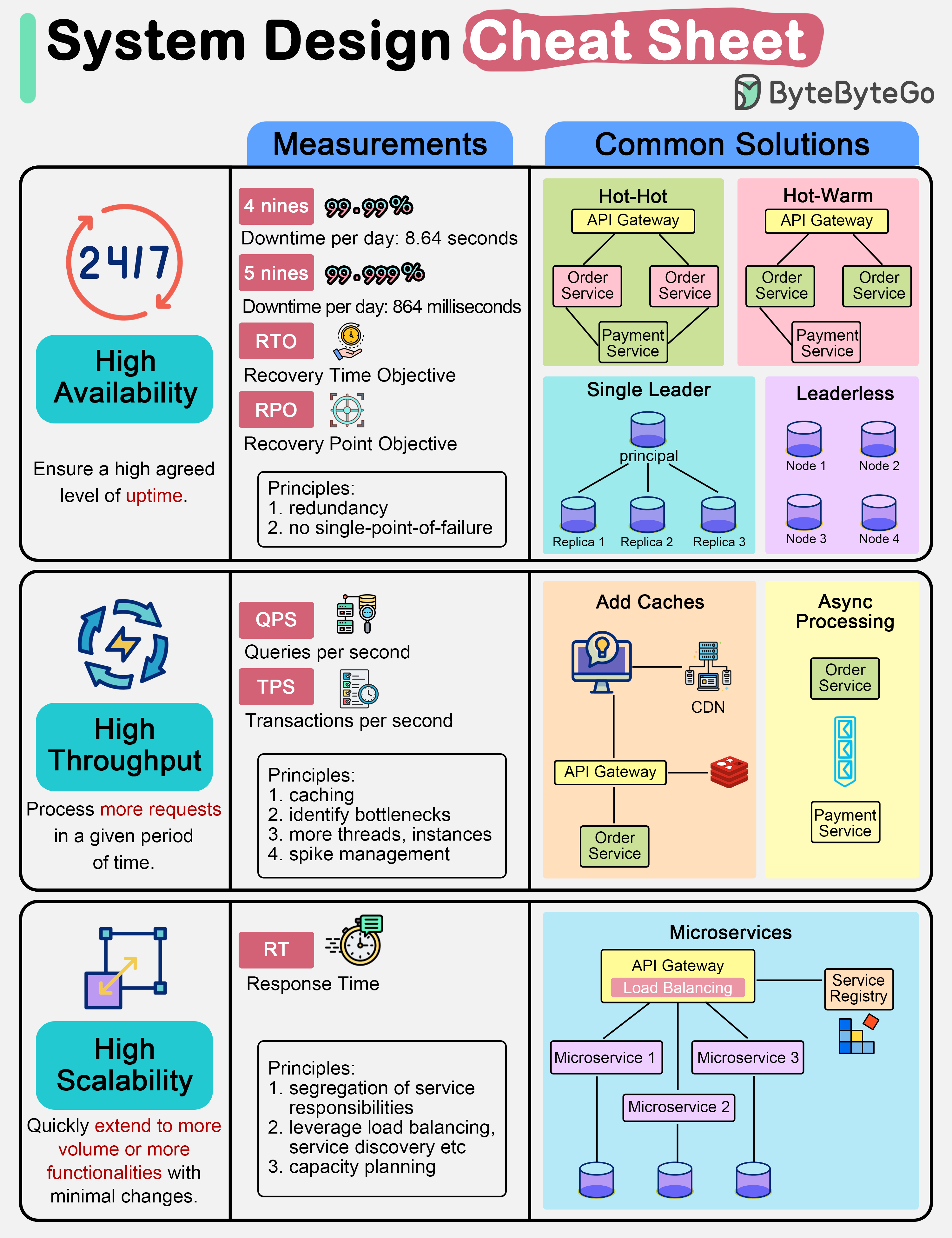
Advanced system design for resilient services focuses on architecting distributed software applications that gracefully handle hardware failures, network partitions, sudden traffic surges, and dependency outages without service degradation. By combining proactive failure modeling, automated healing, strict isolation boundaries, and intelligent traffic management, engineers can build fault-tolerant systems that maintain high availability and data integrity under adverse conditions.
Modern distributed architectures face a continuous barrage of potential disruptions, ranging from transient network blips and database connection saturation to cascading outages across third-party APIs. Traditional monolithic applications relied on vertical scaling and hardware reliability, but contemporary cloud-native environments demand an aggressive assumption of failure.
Advanced system design treats faults not as anomalies to be prevented entirely, but as inevitable events to be mitigated, isolated, and recovered from automatically. Achieving this level of operational resilience requires a fundamental shift in how services communicate, store state, allocate resources, and handle degradation under load.
Core Principles of Distributed Resilience
Building resilient systems starts with acknowledging the fallibility of every component in a network. Distributed systems engineers design applications around several foundational tenets that prevent localized bugs or hardware failures from escalating into global outages.
Design for Failure and Chaos Engineering
The principle of designing for failure requires that every single component—from cache layers to load balancers—be treated as ephemeral and untrustworthy. Engineers build redundancy into every tier, ensuring that the loss of an availability zone or a regional data center does not disrupt core business operations.
Complementing this proactive design approach is Chaos Engineering, popularized by organizations like Netflix. Chaos engineering involves intentionally injecting faults, such as latency spikes, packet loss, or node terminations, into a staging or production environment to test how the system reacts.
By proactively breaking things under controlled conditions, teams validate their monitoring alerts, verify automated failover mechanisms, and discover undocumented bottlenecks before real users experience them.
Loose Coupling and Asynchronous Boundaries
Tight coupling is the primary enemy of resilience. When service A makes a synchronous, blocking network call to service B, any latency or failure in service B immediately cascades into service A, consuming thread pools and exhausting connection limits.
Advanced architectures mitigate this by enforcing loose coupling through asynchronous communication patterns. Message brokers, event streams, and task queues act as buffers between services.
If a downstream billing service goes offline, an upstream checkout service can still accept orders by publishing events to a durable message queue like Apache Kafka or RabbitMQ. Once the billing service recovers, it processes the backlog at its own pace.
This decoupling preserves user-facing availability and prevents sudden write spikes from overwhelming fragile data stores.
Traffic Management and Load Shedding
When a system experiences heavy traffic or partial degradation, protecting the remaining healthy capacity becomes paramount. Unchecked retry storms and traffic floods can easily paralyze an otherwise stable architecture.
Circuit Breakers, Retries, and Timeouts
Network calls in distributed systems must never be infinite or unmanaged. Every outbound request requires strict timeouts to prevent worker threads from hanging indefinitely when a dependency stalls. However, simple timeouts are insufficient when combined with aggressive retry logic.
If a service experiences a temporary dip in performance and 10,000 clients simultaneously retry their failed requests three times, the resulting retry storm can multiply the incoming load by a factor of four, completely crashing the recovering service.
To combat this, engineers implement Circuit Breakers. A circuit breaker sits between a client and a dependency, monitoring failure rates.
- Closed State: Requests flow normally. If failures exceed a configured threshold (e.g., 50% error rate over 10 seconds), the circuit trips.
- Open State: Subsequent requests fail fast locally without hitting the degraded dependency, giving the downstream service breathing room to recover.
- Half-Open State: Periodically, a single test request is allowed through. If it succeeds, the circuit closes; if it fails, it remains open.
Combined with exponential backoff and jitter (randomized delays added to retry intervals), circuit breakers prevent thundering herd phenomena and allow systems to self-heal.
Rate Limiting, Throttling, and Load Shedding
When aggregate demand exceeds system capacity, graceful degradation is superior to total collapse. Rate limiting restricts the number of requests a client can make within a specific time window, using algorithms like Token Bucket or Leaky Bucket.
When absolute resource exhaustion looms, systems must engage in load shedding. Instead of processing every incoming request slowly and eventually timing out, the system drops low-priority traffic outright (such as background analytics ingestion or recommendation fetches) to preserve resources for critical paths like authentication and payment processing.
Fault Isolation and Blast Radius Reduction
Even the most robust applications will occasionally encounter fatal bugs, memory leaks, or unhandled exceptions. Advanced system design minimizes the impact of these failures by containing them within strictly defined blast radiuses.
Bulkheads and Resource Partitioning
Inspired by maritime architecture where a ship's hull is divided into watertight compartments, the bulkhead pattern isolates pools of resources so that a failure in one area cannot sink the entire application.
In software engineering, this means allocating dedicated thread pools, database connection pools, and memory limits to specific clients, tenants, or internal features.
For example, if a multi-tenant SaaS application assigns a dedicated thread pool to each enterprise customer, an abusive query or traffic spike from Tenant A will exhaust only Tenant A's dedicated pool. Tenants B through Z continue operating without noticing any performance degradation.
Without bulkheads, a single noisy neighbor could monopolize shared database connections and take down the entire platform.
Cellular Architecture
At scale, enterprise systems often adopt a cellular architecture. Rather than running one massive, globally shared instance of an application and its database, the system is partitioned into independent, self-contained units called "cells."
Each cell contains its own compute nodes, cache layers, and dedicated database shard, serving a fixed percentage of the total user base.
If a catastrophic database corruption or regional network partition occurs, its impact is strictly confined to the users residing within that specific cell—typically representing 1% to 5% of total traffic. Global availability remains high, and engineering teams can repair or rebuild the isolated cell without endangering the rest of the ecosystem.
Data Consistency and State Management
Designing stateless compute layers is straightforward, but managing persistent state across distributed nodes while maintaining resilience introduces complex consistency challenges.
CAP Theorem and Partition Tolerance
Eric Brewer’s CAP Theorem dictates that a distributed data store can simultaneously provide only two of three guarantees: Consistency (every read receives the most recent write), Availability (every non-failing request receives a non-error response), and Partition Tolerance (the system continues to operate despite network drops between nodes).
Because network partitions in real-world distributed systems are an undeniable physical reality, modern system design requires choosing between Consistency and Availability during a partition (CP vs. AP).
Consensus Algorithms and Distributed Transactions
When strong consistency is required across distributed nodes (such as in financial ledgers or configuration management stores), systems rely on consensus protocols like Raft or Paxos. These algorithms ensure that a cluster of nodes agrees on state transitions even if a minority of nodes fail or network links drop.
For cross-service workflows where distributed transactions across multiple independent databases are necessary, two-phase commit (2PC) protocols often introduce unacceptable latency and locking contention.
Modern resilient systems favor Sagas—an asynchronous sequence of local transactions where each step updates data within a single service and publishes an event. If a later step fails, the saga executes a series of compensating transactions to logically undo the previous work, preserving eventual consistency without locking relational tables.
Observability as a Resilience Pillar
You cannot fix what you cannot see. Advanced system design treats observability not as an afterthought, but as a core architectural requirement that directly influences service uptime.
- Metrics: Numerical values aggregated over time (CPU, RAM).
- Logs: Immutable text records capturing discrete events.
- Traces: End-to-end request flows across microservice boundaries.
The Three Pillars of Observability
A resilient architecture emits rich telemetry data across three distinct pillars:
- Metrics: Aggregated, numerical time-series data (e.g., CPU utilization, memory pressure, request latency percentiles like p99, and error rates) used for high-level health dashboards and automated autoscaling triggers.
- Logs: Timestamped, immutable text records capturing discrete events within an application, essential for debugging specific error stacks and auditing security events.
- Distributed Tracing: The ability to track a single user request as it traverses dozens of microservices, asynchronous queues, and database calls, providing deep visibility into latency bottlenecks and cascading failure origins.
Automated Remediation and Self-Healing
True modern resilience extends beyond alerting human operators at 3:00 AM; it implements automated remediation loops. Using metrics collected from the application layer, orchestration platforms like Kubernetes can automatically drain unhealthy nodes, restart unresponsive pods, or scale out replica sets during traffic surges.
Advanced systems integrate automated canary deployments, where code changes are rolled out to a tiny fraction of traffic while real-time error metrics are evaluated. If error rates exceed baseline thresholds, the deployment automatically rolls back before human intervention is required.
Comparative Matrix of Resilience Patterns
The following table compares key system design patterns used to achieve resilience, outlining their primary mechanisms, ideal use cases, and operational trade-offs.
| Pattern | Primary Mechanism | Ideal Use Case | Operational Trade-off |
|---|---|---|---|
| Circuit Breaker | Fails fast when downstream error rates cross a threshold. | Protecting fragile third-party APIs and microservice chains. | Requires careful tuning of failure thresholds and recovery timeouts. |
| Bulkhead | Isolates resource pools (threads, connections) per tenant or function. | Multi-tenant SaaS platforms and critical core services. | Higher infrastructure overhead and complex capacity planning. |
| Rate Limiter | Restricts incoming request volume using token or leaky buckets. | Public APIs, login endpoints, and public-facing web gateways. | Potential legitimate traffic rejection if limits are set too aggressively. |
| Cellular Architecture | Splits global infrastructure into independent, isolated units. | Ultra-scale cloud applications requiring massive blast radius reduction. | Increased routing complexity and deployment orchestration overhead. |
| Saga Pattern | Executes distributed transactions via local steps and compensations. | Microservice workflows spanning multiple independent databases. | Embraces eventual consistency; requires designing complex rollback logic. |
Frequently Asked Questions
What is the difference between high availability and resilience?
High availability refers to a system's ability to remain accessible for a high percentage of time (e.g., 99.99% uptime), often achieved through redundant hardware. Resilience is a broader concept that encompasses how a system reacts to, absorbs, and recovers from unexpected disruptions, faults, and malicious traffic while maintaining core functionality.
How do circuit breakers prevent cascading failures?
Circuit breakers detect when a downstream service is failing and automatically stop sending requests to it for a designated cooldown period. This prevents client applications from wasting threads and memory on hanging connections, allowing the struggling backend service time to recover without being continuously hammered by retry storms.
When should a system choose eventual consistency over strong consistency?
Eventual consistency is chosen when high availability and low latency are prioritized over immediate data synchronization across all nodes, such as in social media feeds, read-heavy analytics, or large-scale catalog systems. Strong consistency is reserved for use cases where data must be identical everywhere instantly, such as financial ledger transfers and inventory allocation.
Why are retry storms dangerous in distributed systems?
When a dependency experiences temporary latency, multiple clients retrying their failed requests simultaneously can instantly multiply the load on that dependency. This artificial traffic multiplier often prevents the backend from recovering, turning a brief hiccup into a prolonged outage.
What role does chaos engineering play in system design?
Chaos engineering shifts teams from passive defense to active verification. By injecting real-world failures (like network partitions or node crashes) into production or staging environments, engineers validate that their monitoring, autoscaling, and automated failover mechanisms function correctly before an actual incident occurs.
Next Actions and Implementation Recommendations
To transition your architecture toward advanced resilience, begin by auditing your current dependency graph to identify synchronous blocking calls that lack timeouts or circuit breakers. Implement distributed tracing across all microservices to establish baseline latency percentiles and error budgets.
Next, introduce chaos experiments in non-production environments to test how your system reacts to database disconnects and node failures. By systematically eliminating single points of failure and enforcing strict isolation boundaries, you will build services capable of weathering inevitable production disruptions with grace.