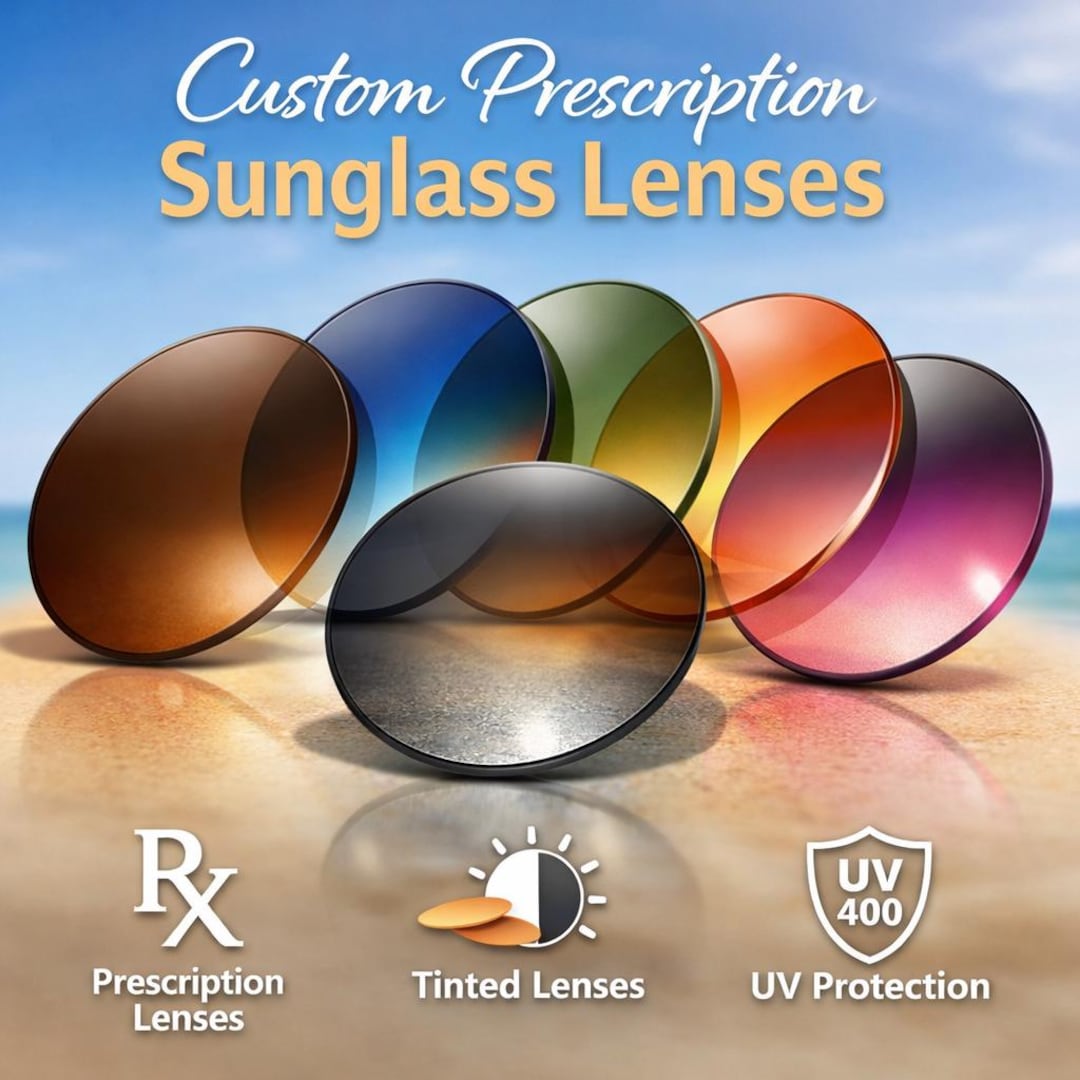
Adding prescription lenses to sunglasses is a practical way to combine vision correction with UV protection, allowing you to maintain visual acuity in bright outdoor environments. This process involves either replacing the existing lenses in a pair of frames you already own or purchasing a new frame-and-lens combination configured to your specific optical requirements. Whether you are looking to retain a favorite pair of designer frames or seeking a cost-effective alternative to purchasing dedicated prescription sunglasses, understanding the technical prerequisites and limitations is essential for a successful outcome.
Understanding the Feasibility of Lens Replacement
Not all sunglasses are suitable for prescription lens replacement. The ability to swap factory lenses for prescription versions depends largely on the frame’s material, curvature (often called "base curve"), and structural integrity.
Frame Material Considerations
Frames constructed from high-quality acetate or specific grades of nylon (such as those used by premium sports eyewear brands) generally handle the pressure of lens mounting well. Conversely, thin metal frames or inexpensive injection-molded plastic frames may be too brittle or structurally weak to hold the weight and pressure of custom-ground prescription lenses. If a frame has been worn extensively, the material may have lost its elasticity, making it prone to snapping when an optician attempts to insert new lenses.
The Role of Base Curve
The "base curve" refers to the degree of curvature of the lens. Standard ophthalmic frames are usually flat (base 2 to 4), while wrap-around sunglasses often feature high base curves (base 6 to 8). If you attempt to put a high-prescription lens into a high-wrap sunglass frame, you may encounter "prism effects," where the light is distorted as it passes through the periphery of the lens, potentially causing headaches or nausea. Some labs specialize in "compensating" for this by calculating the wrap angle into the digital lens design, but this is a complex technical process that not every provider can execute effectively.
Evaluating Potential Solutions
When you decide to add prescription lenses to your sunglasses, you generally have three primary paths. Each carries different implications for cost, convenience, and optical quality.
1. Optician-Facilitated Lab Services
This is the most reliable method for high-end or prescription-heavy needs. By taking your frames to a licensed optician, they can perform a frame inspection to confirm viability. They will then send your frame to a specialized lab that uses automated equipment to measure the frame’s geometry, ensuring the new lenses fit perfectly.
2. Third-Party Lens Replacement Services
Several online retailers specialize in "lens-only" services. You send your frames to them, they fabricate the lenses, and they install them. This is often more affordable than traditional optical shops. However, because you are mailing your frames, you must ensure the company provides adequate insurance and clear communication regarding the risks of breakage during the mounting process.
3. Purchasing Dedicated Prescription Sunglasses
If your current frames are not suitable for modification, purchasing a pair of frames specifically designed for prescription lenses is the safest route. These frames are engineered with the correct depth for lens thickness and the structural support needed to keep the frames aligned, regardless of your specific refractive error.
Technical Requirements and Measurements
To ensure your vision is corrected accurately, providing the correct data is non-negotiable. An updated prescription—ideally less than one year old—is the foundation of the process.
- Pupillary Distance (PD): This measurement is the distance in millimeters between the centers of your pupils. It ensures the optical center of the lens aligns perfectly with your visual axis.
- Segment Height (for Progressives): If you require bifocals or progressive lenses, the lab needs to know exactly where the transition between focal points should occur relative to your lower eyelid.
- Vertex Distance: This is the distance from the back of the lens to the front of your eye. In sunglasses, which may sit further from the face, this measurement is crucial for accurate power calculations.
Comparison of Lens Options
| Feature | Standard Tinted Lenses | Polarized Lenses | Photochromic Lenses |
|---|---|---|---|
| Primary Benefit | Simple glare reduction | Eliminates horizontal glare | Adapts to changing light |
| Best Use Case | Casual, low-budget | Fishing, driving, water sports | All-day indoor/outdoor use |
| Cost | Lowest | Higher | Highest |
| Durability | Varies by material | High (if high-quality) | Moderate |
Preparing Your Frames for Professional Service
If you choose to use an existing frame, the preparation process significantly influences the lab's ability to succeed. Before handing over your frames, perform a thorough inspection. Check the integrity of the hinges and ensure the screw housings are not stripped. If you are sending frames to a mail-in service, document their condition with high-resolution photographs to establish a baseline in the event of transit damage or installation errors.
When selecting a lab or service, prioritize those that offer a "fit guarantee." Because you are retrofitting, there is a small risk that the lenses may not seat perfectly due to slight frame warping over time. A company that accepts these risks and offers a replacement policy provides superior value compared to those that perform the work at the customer's risk.
Potential Challenges and Limitations
Even with professional installation, certain limitations are inherent to the process of adding prescription lenses to sunglasses.
Edge Thickness and Frame Depth
If you have a strong prescription, your lenses will be thicker at the edges. If your chosen frames are thin or shallow, the lenses may protrude significantly, which is not only aesthetically unpleasing but can also make the lenses more susceptible to chipping. Professional opticians often recommend "high-index" materials (such as 1.67 or 1.74) for higher prescriptions to reduce edge thickness, though this increases the overall cost.
Peripheral Distortion
As mentioned regarding base curves, lenses designed for flat frames often perform poorly in curved sunglasses. If you notice a "swimming" sensation when moving your head, it is likely due to the optics failing to account for the angle at which the lens meets your eye. Always verify with your provider whether they use digital surfacing technology, which compensates for these angles by calculating the lens power across the entire surface rather than just the center.
Coating Compatibility
Adding anti-reflective (AR) or mirror coatings to prescription lenses is common, but it can affect the overall look and performance. Mirror coatings are prone to scratching; when applied to a prescription lens, you must be prepared to follow stricter cleaning protocols, such as using only microfiber cloths and lens-specific spray cleaners, to preserve the finish.
Managing Costs and Insurance
Adding prescription lenses to sunglasses can be a significant investment. In many cases, vision insurance plans cover a portion of the cost of the lenses, even if you are providing your own frames.
- Check Your Benefits: Contact your vision insurance provider to see if they offer an "out-of-network" reimbursement or a specific allowance for "add-on" lenses.
- Flexible Spending Accounts (FSA/HSA): Most prescription eyewear, including prescription sunglasses, is considered a qualified medical expense. You can typically use your tax-advantaged account funds to cover the entire cost of the lenses and any related fitting fees.
- Bundle Deals: Many optical retailers provide a discount if you purchase a complete pair (frame plus lenses) rather than having lenses custom-fitted to an old frame. Compare the cost of high-quality lab work against the cost of a new package, as the latter often includes a warranty on the frame itself.
Frequently Asked Questions
Can I put prescription lenses into any pair of sunglasses?
No. Frames with complex shapes, extreme wrap, or material degradation are often unsuitable. Always have a qualified optician examine the frame for structural integrity before proceeding with an order.
Will my vision be as clear as with my regular glasses?
If the lenses are surfaced correctly using digital technology to account for the frame's shape, the vision should be excellent. However, expect a brief adjustment period if you are moving from flat frames to a wrap-around style.
How long does the process take?
When using an online mail-in service, the process typically takes 10 to 14 business days from the time the lab receives your frames. Local opticians may be faster, often completing the job in 5 to 7 business days if they have the equipment on-site.
Should I get polarized lenses?
Polarization is highly recommended for outdoor activities, particularly those involving water, snow, or road driving. It blocks horizontal light waves that cause glare, significantly improving visual comfort.
What if the lenses don't fit?
If you used a reputable service with a fit guarantee, they should rework or remake the lenses at no cost. If you used a third-party service and provided the frames yourself, confirm their policy on "non-adapt" issues or breakage during installation before you ship them.
Next Actions and Recommendations
To ensure the best result, start by having your eyes examined and obtaining a copy of your current prescription, including your Pupillary Distance. If you have a specific pair of sunglasses you love, visit a local independent optical boutique first. The professionals there can provide a hands-on assessment of your frame’s viability and give you an honest appraisal of whether the outcome will meet your expectations. If your frames are in perfect condition and you are confident in your measurements, online specialized labs are a highly efficient, cost-effective alternative. When you receive your glasses, put them on in a well-lit environment and perform a "walk-around" test to ensure there are no uncomfortable peripheral distortions before using them for extended tasks like driving.